The post Organizational Culture: Definition, Importance, and Development appeared first on HKT Consultant.
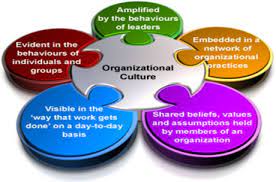
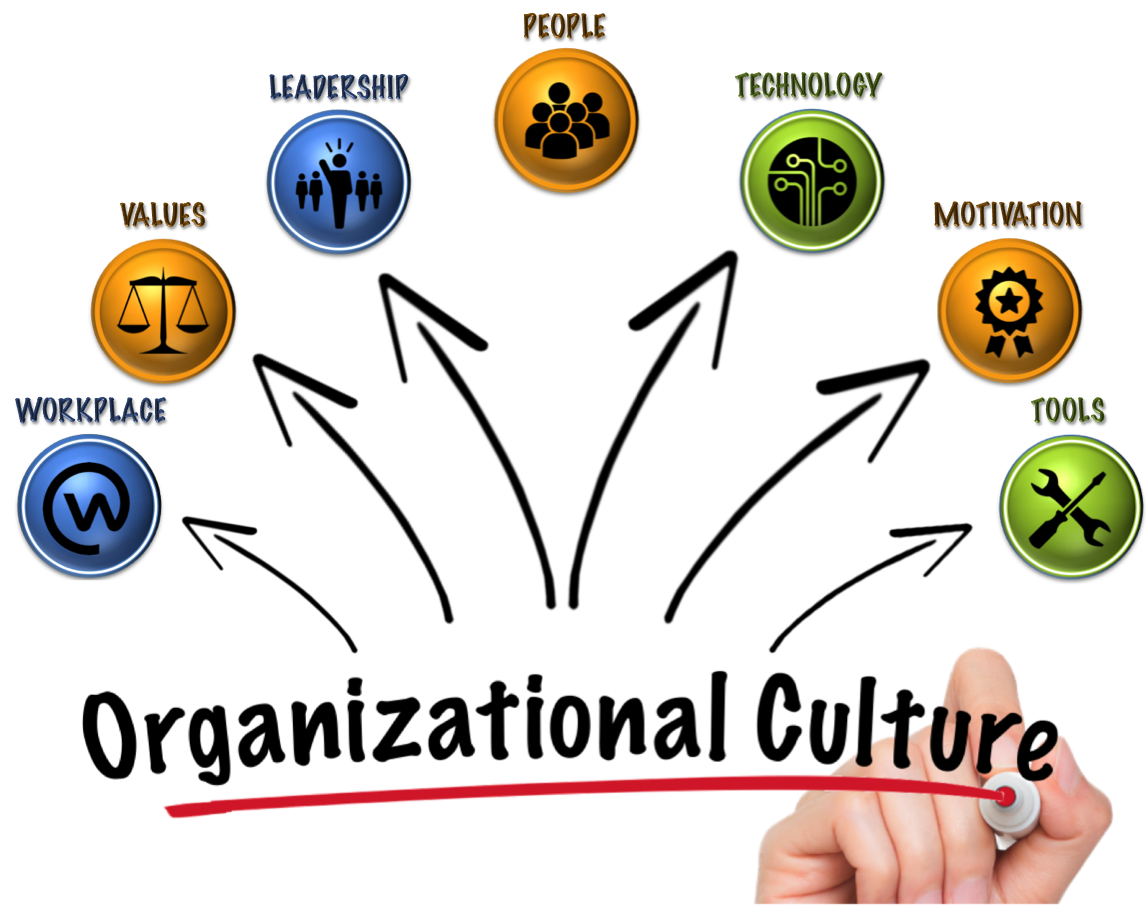
]]>Organizational culture is the collection of values, expectations, and practices that guide and inform the actions of all team members. Think of it as the collection of traits that make your company what it is. A great culture exemplifies positive traits that lead to improved performance, while a dysfunctional company culture brings out qualities that can hinder even the most successful organizations.
Don’t confuse culture with organizational goals or a mission statement, although both can help define it. Culture is created through consistent and authentic behaviors, not press releases or policy documents. You can watch company culture in action when you see how a CEO responds to a crisis, how a team adapts to new customer demands, or how a manager corrects an employee who makes a mistake.
The importance of culture to your company
Organizational culture affects all aspects of your business, from punctuality and tone to contract terms and employee benefits. When workplace culture aligns with your employees, they’re more likely to feel more comfortable, supported, and valued. Companies that prioritize culture can also weather difficult times and changes in the business environment and come out stronger.
Culture is a key advantage when it comes to attracting talent and outperforming the competition. 77 percent of workers consider a company’s culture before applying, and almost half of employees would leave their current job for a lower-paying opportunity at an organization with a better culture. The culture of an organization is also one of the top indicators of employee satisfaction and one of the main reasons that almost two-thirds (65%) of employees stay in their job.
Consider Microsoft and Salesforce. Both technology-based companies are world-class performers and admired brands, and both owe this in part to prioritizing culture. Microsoft, known for its cut-throat competitiveness under Steve Balmer, has been positively transformed by Satya Nadella, who took over as CEO of the company in 2014. He embarked on a program to refine the company culture, a process that upended competitiveness in favor of continuous learning. Instead of proving themselves, employees were encouraged to improve themselves. Today Microsoft’s market cap flirts with $1 trillion and it is again competing with Apple and Amazon as one of the most valuable companies in the world.
Salesforce puts corporate culture front and center and has experienced incredible growth throughout its history. Marc Benioff, Salesforce’s founder and CEO, established philanthropic cultural norms that have guided the company over the past two decades. All new Salesforce employees spend part of their first day volunteering and receive 56 hours of paid time to volunteer a year. This focus on meaning and mission has made Salesforce one of the best places to work in America according to Fortune, and it hasn’t compromised profits either: Salesforce’s stock price has surged year after year at an average of over 26% annually to date.
Organizational CultureSee more from basic to advanced



















The post Organizational Culture: Definition, Importance, and Development appeared first on HKT Consultant.
]]>The post The concept of organizational culture appeared first on HKT Consultant.
]]>Culture is an abstraction, yet the forces that are created in social and organizational situations deriving from culture are powerful. If we don’t understand the operation of these forces, we become victim to them. Cultural forces are powerful because they operate outside of our awareness. We need to understand them not only because of their power but also because they help to explain many of our puzzling and frustrating experiences in social and organizational life. Most importantly, understanding cultural forces enables us to understand ourselves better.
1. What Needs to Be Explained?
Most of us in our roles as students, employees, managers, researchers, or consultants work in and have to deal with groups and organizations of all kinds. Yet we continue to find it amazingly difficult to understand and justify much of what we observe and experience in our organizational life. Too much seems to be “bureaucratic,” “political,” or just plain “irrational.” People in positions of authority, especially our immediate bosses, often frustrate us or act incomprehensibly, and those we consider the “leaders” of our organizations often disappoint us.
When we get into arguments or negotiations with others, we often cannot understand how our opponents could take such “ridiculous” positions. When we observe other organizations, we often find it incomprehensible that “smart people could do such dumb things.” We recognize cultural differences at the ethnic or national level but find them puzzling at the group, organizational, or occupational level. Gladwell (2008) in his popular book Outliers provides some vivid examples of how both ethnic and organizational cultures explain such anomalies as airline crashes and the success of some law firms.
As managers, when we try to change the behavior of subordinates, we often encounter “resistance to change” at a level that seems beyond reason. We observe departments in our organization that seem to be more interested in fighting with each other than getting the job done. We see communication problems and misunderstandings between group members that should not be occurring between “reasonable” people. We explain in detail why something different must be done, yet people continue to act as if they had not heard us.
As leaders who are trying to get our organizations to become more effective in the face of severe environmental pressures, we are sometimes amazed at the degree to which individuals and groups in the organization will continue to behave in obviously ineffective ways, often threatening the very survival of the organization. As we try to get things done that involve other groups, we often discover that they do not communicate with each other and that the level of conflict between groups in organizations and in the community is often astonishingly high.
As teachers, we encounter the sometimes-mysterious phenomenon that different classes behave completely differently from each other even though our material and teaching style remains the same. If we are employees considering a new job, we realize that companies differ greatly in their approach, even in the same industry and geographic locale. We feel these differences even as we walk in the door of different organizations such as restaurants, banks, stores, or airlines.
As members of different occupations, we are aware that being a doctor, lawyer, engineer, accountant, or manager involves not only learning t echnical skills but also adopting certain values and norms that define our occupation. If we violate some of these norms, we can be thrown out of the occupation. But where do these come from and how do we reconcile the fact that each occupation considers its norms and values to be the correct ones? How is it possible that in a hospital, the doctors, nurses, and administrators are often fighting with each other rather than collaborating to improve patient care? How is it possible that employees in organizations report unsafe conditions, yet the organization continues to operate until a major accident happens?
The concept of culture helps to explain all of these phenomena and to “normalize” them. If we understand the dynamics of culture, we will be less likely to be puzzled, irritated, and anxious when we encounter the unfamiliar and seemingly irrational behavior of people in organizations, and we will have a deeper understanding not only of why various groups of people or organizations can be so different but also why it is so hard to change them.
Even more important, if we understand culture better, we will understand ourselves better and recognize some of the forces acting within us that define who we are. We will then understand that our personality and character reflect the groups that socialized us and the groups with which we identify and to which we want to belong. Culture is not only all around us but within us as well.
2. How Does the Concept of Culture Help?
I did not really understand the forces operating in any of these cases until I began to examine my own assumptions about how things should work in these organizations and began to test whether my assumptions fitted those operating in my client systems. This step of examining the shared assumptions in an organization or group and comparing them to your own takes us into “cultural” analysis and will be the focus from here on.
It turned out that in DEC, senior managers and most of the other members of the organization shared the assumption that you cannot determine whether or not something is “true” or “valid” unless you subject the idea or proposal to intensive debate. Only ideas that survive such debate are worth acting on, and only ideas that survive such scrutiny will be implemented. The group members assumed that what they were doing was discovering truth, and, in this context, being polite to each other was relatively unimportant. I become more helpful to the group when I realized this and went to the flip chart and just started to write down the various ideas they were processing. If someone was interrupted, I could ask him or her to restate his or her point instead of punishing the interrupter. The group began to focus on the items on the chart and found that this really did help their communication and decision process. I had finally understood and accepted an essential element of their culture instead of imposing my own. By this intervention of going to the flip chart, I had changed the microculture of their group to enable them to accomplish what their organizational culture dictated.
In Ciba-Geigy, I eventually discovered that there was a strong shared assumption that each manager’s job was his or her private “turf” not to be infringed on. The strong image was communicated that “a person ’s job is like his or her home, and if someone gives unsolicited information, it is like walking into someone’s home uninvited.” Sending memos to people implies that they do not already know what is in the memo, which is seen to be potentially insulting. In this organization, managers prided themselves on knowing whatever they needed to know to do their job. Had I understood this aspect of their culture, I would have asked for a list of the names of the managers and sent the memo directly to them. They would have accepted it from me because I was the paid consultant and expert.
In my Cambridge meetings, different members had different prior experiences in meetings. Those who had grown up with a formal Robert’s Rules of Order system on various other nonprofit boards were adamant that this was the only way to run a meeting. Others who had no history on other boards were more tolerant of my informal style. The members had come from different subcultures that did not mesh. In my human relations training culture, I had learned the value of involving people to get better implementation of decisions and was trying to build that kind of microculture in this group. Only when I adapted my style to theirs was I able to begin to shape the group more toward my preferred style.
In Amoco, I began to understand the resistance of the engineers when I learned that their assumptions were “good work should speak for itself,” and “engineers should not have to go out and sell themselves.” They were used to having people come to them for services and did not have a good role model for how to sell themselves.
In Alpha, I learned that in the safety area, all work units had strong norms and values of self-protection that often over-rode the new requirements imposed on the company by the courts. The groups had their own experience base for what was safe and what was not safe and were willing to trust that. On the other hand, identifying environmental hazards and cleaning them up involved new skills that workers were willing to learn and collaborate on. The union had its own cultural assumption that under no conditions would one “rat out” a fellow union member, and this applied especially in the safety area.
In each of these cases, I initially did not understand what was going on because my own basic assumptions about truth, turf, and group relations differed from the shared assumptions of the members of the organization or group. And my assumptions reflected my “occupation” as a social psychologist and organization consultant, while the group ’s assumptions reflected in part their occupations and experiences as electrical engineers, chemists, nonprofit organization board members, and electrical workers.
To make sense of such situations requires taking a “cultural perspective,” learning to see the world through “cultural lenses,” becoming competent in “cultural analysis” by which I mean being able to perceive and decipher the cultural forces that operate in groups, organizations, and occupations. When we learn to see the world through cultural lenses, all kinds of things begin to make sense that initially were mysterious, frustrating, or seemingly stupid.
Source: Schein Edgar H. (2010), Organizational Culture and Leadership, Jossey-Bass; 4th edition.
The post The concept of organizational culture appeared first on HKT Consultant.
]]>The post Organizational Culture: An Empirically Based Abstraction appeared first on HKT Consultant.
]]>Thus managers speak of developing the “right kind of culture,” a “culture of quality,” or a “culture of customer service,” suggesting that culture has to do with certain values that managers are trying to inculcate in their organizations. Also implied in this usage is the assumption that there are better or worse cultures, stronger or weaker cultures, and that the “right” kind of culture would influence how effective organizations are. In the managerial literature, there is often the implication that having a culture is necessary for effective performance, and that the stronger the culture, the more effective the organization.
Researchers have supported some of these views by reporting findings that certain cultural dimensions do correlate with economic performance, but this research is hard to evaluate because of the many definitions of culture and the variety of indexes of performance that are used (Wilderom, Glunk, and Maslowski, 2000). Consultants and researchers have touted “culture surveys” and have claimed that they can improve organizational performance by helping organizations create certain kinds of cultures, but these claims are often based on a very different definition of culture than the one I will be arguing for here (Denison, 1990; Sackman and Bertelsman, 2006). As we will see, whether or not a culture is “good” or “bad,” “functionally effective,” or not, depends not on the culture alone but on the relationship of the culture to the environment in which it exists.
Perhaps the most intriguing aspect of culture as a concept is that it points us to phenomena that are below the surface, that are powerful in their impact but invisible and to a considerable degree unconscious. Culture creates within us mindsets and frames of reference that Marshak (2006) identified as one of a number of important covert processes. In another sense, culture is to a group what personality or character is to an individual. We can see the behavior that results, but we often cannot see the forces underneath that cause certain kinds of behavior. Yet, just as our personality and character guide and constrain our behavior, so does culture guide and constrain the behavior of members of a group through the shared norms that are held in that group.
Culture as a concept is thus an abstraction. If an abstract concept is to be useful to our thinking, it should be observable yet increase our understanding of a set of events that are otherwise mysterious or not well understood. From this point of view, I will argue that we must avoid the superficial models of culture and build on the deeper, more complex anthropological models. Those models refer to a wide range of observable events and underlying forces, as shown in the following list.
- Observed behavioral regularities when people interact: The language they use, the customs and traditions that evolve, and the rituals they employ in a wide variety of situations (for example, Goffman, 1959, 1967; Jones and others, 1988; Trice and Beyer, 1993; Van Maanen, 1979b).
- Group norms: The implicit standards and values that evolve in working groups, such as the particular norm of “a fair day’s work for a fair day’s pay” that evolved among workers in the Bank Wiring Room in the Hawthorne studies (for example, Homans, 1950; Kilmann and Saxton, 1983).
- Espoused values: The articulated publicly announced principles and values that the group claims to be trying to achieve, such as “product quality” or “price leadership” (for example, Deal and Kennedy, 1982, 1999).
- Formal philosophy: The broad policies and ideological principles that guide a group’s actions toward stockholders, employees, customers, and other stakeholders such as the highly publicized “HP Way” of the Hewlett-Packard Co. (for example, Ouchi, 1981; Pascale and Athos, 1981; Packard, 1995).
- Rules of the game: The implicit, unwritten rules for getting along in the organization, “the ropes” that a newcomer must learn to become an accepted member, “the way we do things around here” (for example, Schein, 1968, 1978; Van Maanen, 1976, 1979b; Ritti and Funkhouser, 1987).
- Climate: The feeling that is conveyed in a group by the physical layout and the way in which members of the organization interact with each other, with customers, or with other outsiders (for example, Ashkanasy, and others 2000; Schneider, 1990; Tagiuri and Litwin, 1968).
- Embedded skills: The special competencies displayed by group members in accomplishing certain tasks, the ability to make certain things that get passed on from generation to generation without necessarily being articulated in writing (for example, Argyris and Schon, 1978; Cook and Yanow, 1993; Henderson and Clark, 1990; Peters and Waterman, 1982; Ang and Van Dyne, 2008).
- Habits of thinking, mental models, and/or linguistic paradigms: The shared cognitive frames that guide the perceptions, thought, and language used by the members of a group and are taught to new members in the early socialization process (for example, Douglas, 1986; Hofstede, 1991, 2001; Van Maanen, 1979b; Senge, Roberts, Ross, Smith, and Kleiner, 1994).
- Shared meanings: The emergent understandings that are created by group members as they interact with each other (for example, Geertz, 1973; Smircich, 1983; Van Maanen and Barley, 1984; Weick, 1995, Weick and Sutcliffe, 2001; Hatch and Schultz, 2004).
- “Root metaphors” or integrating symbols: The ways that groups evolve to characterize themselves, which may or may not be appreciated consciously, but that get embodied in buildings, office layouts, and other material artifacts of the group. This level of the culture reflects the emotional and aesthetic response of members as contrasted with the cognitive or evaluative response (for example, Gagliardi, 1990; Hatch, 1990; Pondy, Frost, Morgan, and Dandridge, 1983; Schultz, 1995).
- Formal rituals and celebrations: The ways in which a group celebrates key events that reflect important values or important “passages” by members such as promotion, completion of important projects, and milestones (Trice and Beyer, 1993, Deal and Kennedy, 1982, 1999).
All of these concepts and phenomena relate to culture and/or reflect culture in that they deal with things that group members share or hold in common, but none of them can usefully be thought of as the culture of a country, organization, occupation, or group. You might wonder why we need the word culture at all when we have so many other concepts such as norms, values, behavior patterns, rituals, traditions, and so on. However, the word culture adds several other critical elements to the concept of sharing. The concept of culture implies structural stability, depth, breadth, and patterning or integration.
1. Structural Stability
Culture implies some level of structural stability in the group. When we say that something is “cultural” we imply that it is not only shared but also stable because it defines the group. After we achieve a sense of group identity, which is a key component of culture, it is our major stabilizing force and will not be given up easily. Culture is something that survives even when some members of the organization depart. Culture is hard to change because group members value stability in that it provides meaning and predictability.
2. Depth
Culture is the deepest, often unconscious part of a group and is therefore less tangible and less visible. From this point of view, most of the categories used to describe culture listed earlier can be thought of as manifestations of culture, but they are not the “essence” of what we mean by culture. Note that when something is more deeply embedded that also lends stability.
3. Breadth
A third characteristic of culture is that after it has developed, it covers all of a group ’s functioning. Culture is pervasive and influences all aspects of how an organization deals with its primary task, its various environments, and its internal operations. Not all groups have cultures in this sense, but the concept connotes that if we refer to “the culture” of a group, we are referring to all of its operations.
4. Patterning or Integration
The fourth characteristic that is implied by the concept of culture and that further lends stability is patterning or integration of the elements into a larger paradigm or “Gestalt” that ties together the various elements and resides at a deeper level. Culture implies that rituals, climate, values, and behaviors tie together into a coherent whole, and this pattern or integration is the essence of what we mean by “culture.” Such patterning or integration ultimately derives from the human need to make our environment as sensible and orderly as we can (Weick, 1995). Disorder or senselessness makes us anxious, so we will work hard to reduce that anxiety by developing a more consistent and predictable view of how things are and how they should be. Thus: “Organizational cultures, like other cultures, develop as groups of people struggle to make sense of and cope with their worlds” (Trice and Beyer, 1993, p. 4).
How then should we think about this “essence” of culture, and how should we formally define it? The most useful way to arrive at a definition of something as abstract as culture is to think in dynamic evolutionary terms. If we can understand where culture comes from, how it evolves, then we can grasp something that is abstract, that exists in a group ’s unconscious, yet that has powerful influences on a group’s behavior.
Any social unit that has some kind of shared history will have evolved a culture. The strength of that culture depends on the length of time, the stability of membership of the group, and the emotional intensity of the actual historical experiences they have shared. We all have a common- sense notion of this phenomenon, yet it is difficult to define it abstractly. The formal definition that I propose and will work with builds on this evolutionary perspective and argues that the most fundamental characteristic of culture is that it is a product of social learning.
Source: Schein Edgar H. (2010), Organizational Culture and Leadership, Jossey-Bass; 4th edition.
The post Organizational Culture: An Empirically Based Abstraction appeared first on HKT Consultant.
]]>The post Organizational culture definition, content and process of socialization or acculturation appeared first on HKT Consultant.
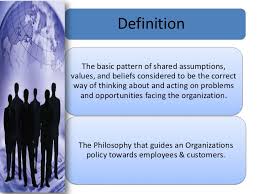
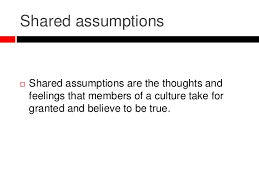
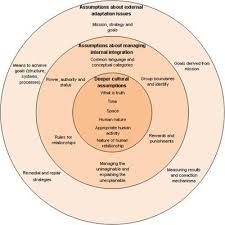
]]>The culture of a group can now be defined as a pattern of shared basic assumptions learned by a group as it solved its problems of external adaptation and internal integration, which has worked well enough to be considered valid and, therefore, to be taught to new members as the correct way to perceive, think, and feel in relation to those problems.
Culture by this definition tends toward patterning and integration. But a given group may not have the kind of learning experiences that allow it to evolve a culture in this sense. There may be major turnover in leaders or members, the mission or primary task may change, the underlying technology on which the group is built may evolve, or the group may split into subgroups that develop their own subcultures leading to what Joanne Martin and her colleagues define as differentiated cultures and/or fragmented cultures (Martin, 2002).
We all know of groups, organizations, and societies where there are beliefs and values that work at cross purposes with other beliefs and values leading to situations full of conflict and ambiguity. But if the concept of culture is to have any utility, it should draw our attention to those things that are the product of our human need for stability, consistency, and meaning. Culture formation, therefore, is always, by definition, a striving toward patterning and integration, even though in many groups, their actual history of experiences prevents them from ever achieving a clear- cut unambiguous paradigm.
2. Culture Content
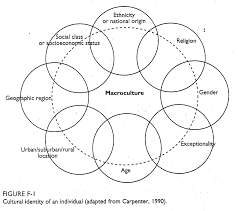
If a group’s culture is that group’s accumulated learning, how do we describe and catalogue the content of that learning? Group and organizational theories distinguish two major sets of problems that all groups, no matter what their size, must deal with: (1) Survival, growth, and adaptation in their environment; and (2) Internal integration that permits daily functioning and the ability to adapt and learn. Both of these areas of group functioning will reflect the macrocultural context in which the group exists and from which are derived broader and deeper basic assumptions about the nature of reality, time, space, human nature, and human relationships. Each of these areas will be explained in detail in later chapters.
3. The Process of Socialization or Acculturation
After a group has a culture, it will pass elements of this culture on to new generations of group members (Louis, 1980; Schein, 1968; Van Maanen, 1976; Van Maanen and Schein, 1979). Studying what new members of groups are taught is, in fact, a good way to discover some of the elements of a culture, but we only learn about surface aspects of the culture by this means. This is especially so because much of what is at the heart of a culture will not be revealed in the rules of behavior taught to newcomers. It will only be revealed to members as they gain permanent status and are allowed into the inner circles of the group where group secrets then are shared.
On the other hand, how people learn and the socialization processes to which they are subjected may indeed reveal deeper assumptions. To get at those deeper levels, we must try to understand the perceptions and feelings that arise in critical situations, and we must observe and interview regular members or “old timers” to get an accurate sense of the deeper-level assumptions that are shared.
Can culture be learned through anticipatory socialization or selfsocialization? Can new members discover for themselves what the basic assumptions are? Yes and no. We certainly know that one of the major activities of any new member when she or he enters a new group is to decipher the operating norms and assumptions. But this deciphering can only be successful through the rewards and punishments that are meted out by old members to new members as they experiment with different kinds of behavior. In this sense, there is always a teaching process going on, even though it may be quite implicit and unsystematic.
If the group does not have shared assumptions, as will sometimes be the case, the new members ’ interaction with old members will be a more creative process of building a culture. But once shared assumptions exist, the culture survives through teaching them to newcomers. In this regard, culture is a mechanism of social control and can be the basis of explicitly manipulating members into perceiving, thinking, and feeling in certain ways (Van Maanen and Kunda, 1989; Kunda, 1992). Whether or not we approve of this as a mechanism of social control is a separate question that will be addressed later.
4. Can Culture Be Inferred from Only Behavior?
Note that the definition of culture that I have given does not include overt behavior patterns, though some such behavior, especially formal rituals, would reflect cultural assumptions. Instead, this definition emphasizes that the shared assumptions deal with how we perceive, think about, and feel about things. We cannot rely on overt behavior alone because it is always determined both by the cultural predisposition (the perceptions, thoughts, and feelings that are patterned) and by the situational contingencies that arise from the immediate external environment.
Behavioral regularities can occur for reasons other than culture. For example, if we observe that all members of a group cower in the presence of a large and loud leader, this could be based on biological reflex reactions to sound and size, individual learning, or shared learning. Such a behavioral regularity should not, therefore, be the basis for defining culture, though we might later discover that, in a given group’s experience, cowering is indeed a result of shared learning and therefore a manifestation of deeper shared assumptions. Or, to put it another way, when we observe behavioral regularities, we do not know whether or not we are dealing with a cultural manifestation. Only after we have discovered the deeper layers that I am defining as the essence of culture can we specify what is and what is not an “artifact” that reflects the culture.
5. Do Occupations Have Cultures?
The definition provided previously does not specify the size or location of the social unit to which it can legitimately be applied. We know that nations, ethnic groups, religions, and other kinds of social units have cultures in this sense. I called these macrocultures. Our experience with large organizations also tells us that even globally dispersed corporations such as IBM or Unilever have corporate cultures in spite of the obvious presence of many diverse subcultures within the larger organization.
But it is not clear whether it makes sense to say that medicine or law or accounting or engineering have cultures. If culture is a product of joint learning leading to shared assumptions about how to perform and relate internally, then we can see clearly that many occupations do evolve cultures. If there is strong socialization during the education and training period and if the beliefs and values learned during this time remain stable as taken-for-granted assumptions even though the person may not be in a group of occupational peers, then clearly those occupations have cultures. For most of the occupations that will concern us, these cultures are global to the extent that members are trained in the same way to the same skill set and values. However, we will find that macrocultures also influence how occupations are defined, that is, how engineering or medicine is practiced in a particular country. These variations make it that much more difficult to decipher in a hospital, for example, what is national, ethnic, occupational, or organizational.
Source: Schein Edgar H. (2010), Organizational Culture and Leadership, Jossey-Bass; 4th edition.
The post Organizational culture definition, content and process of socialization or acculturation appeared first on HKT Consultant.
]]>The post Artifacts – the first levels of organizational culture appeared first on HKT Consultant.
]]>
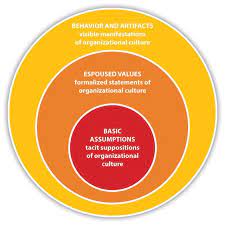
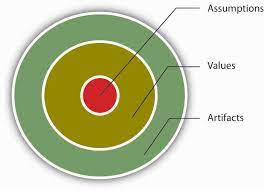
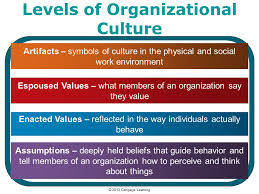
Among these artifacts is the “climate” of the group. Some culture analysts see climate as the equivalent to culture, but it is better thought of as the product of some of the underlying assumptions and is, therefore, a manifestation of the culture. Observed behavior is also an artifact as are the organizational processes by which such behavior is made routine. Structural elements such as charters, formal descriptions of how the organization works, and organization charts also fall into the artifact level.
The most important point to be made about this level of the culture is that it is both easy to observe and very difficult to decipher. The Egyptians and the Mayans both built highly visible pyramids, but the meaning of pyramids in each culture was very different—tombs in one, temples as well as tombs in the other. In other words, observers can describe what they see and feel but cannot reconstruct from that alone what those things mean in the given group. Some culture analysts argue that among the artifacts, you find important symbols that reflect deep assumptions of the culture, but symbols are ambiguous, and you can only test a person’s insight into what something may mean if the person has also experienced the culture at the deeper level of assumptions (Gagliardi, 1990, 1999).
It is especially dangerous to try to infer the deeper assumptions from artifacts alone because a person’s interpretations will inevitably be projections of his or her own feelings and reactions. For example, when you see a very informal, loose organization, you may interpret that as “inefficient” if your own background is based on the assumption that informality means playing around and not working. Or, alternatively, if you see a very formal organization, you may interpret that to be a sign of “l ack of innovative capacity” if your own experience is based on the assumption that formality means bureaucracy and standardization.
If the observer lives in the group long enough, the meanings of artifacts gradually become clear. If, however, you want to achieve this level of understanding more quickly, you must talk to insiders to analyze the espoused values, norms, and rules that provide the day-to-day operating principles by which the members of the group guide their behavior. This kind of inquiry takes you to the next level of cultural analysis.
Source: Schein Edgar H. (2010), Organizational Culture and Leadership, Jossey-Bass; 4th edition.
The post Artifacts – the first levels of organizational culture appeared first on HKT Consultant.
]]>The post Espoused Beliefs and Values – the second levels of organizational culture appeared first on HKT Consultant.
]]>For example, if sales begin to decline in a young business, a manager may say, “We must increase advertising” because of her belief that advertising always increases sales. The group, never having experienced this situation before, will hear that assertion as a statement of that manager’s beliefs and values: “She believes that when one is in trouble it is a good thing to increase advertising.” What the leader initially proposes, therefore, cannot have any status other than a value to be questioned, debated, challenged, and tested.
If the manager convinces the group to act on her belief, the solution works, and the group has a shared perception of that success, then the perceived value that “advertising is good” gradually becomes transformed: first into a shared value or belief and ultimately into a shared assumption (if actions based on it continue to be successful). If this transformation process occurs, group members will tend to forget that originally they were not sure and that the proposed course of action was at an earlier time just a proposal to be debated and confronted.
Not all beliefs and values undergo such transformation. First of all, the solution based on a given value may not work reliably. Only those beliefs and values that can be empirically tested and that continue to work reliably in solving the group’s problems will become transformed into assumptions. Second, certain value domains—those dealing with the less controllable elements of the environment or with aesthetic or moral matters—may not be testable at all. In such cases, consensus through social validation is still possible, but it is not automatic. Third, the strategy/goals of the organization may fall into this category of espoused beliefs in that there may be no way of testing it except through consensus because the link between performance and strategy may be hard to prove.
Social validation means that certain beliefs and values are confirmed only by the shared social experience of a group. For example, any given culture cannot prove that its religion and moral system are superior to another culture’s religion and moral system, but if the members reinforce each others’ beliefs and values, they come to be taken for granted. Those who fail to accept such beliefs and values run the risk of “excommunication”—of being thrown out of the group. The test of whether they work or not is how comfortable and anxiety free members are when they abide by them.
In these realms, the group learns that certain beliefs and values, as initially promulgated by prophets, founders, and leaders, “work” in the sense of reducing uncertainty in critical areas of the group’s functioning. And, as they continue to provide meaning and comfort to group members, they also become transformed into nondiscussible assumptions even though they may not be correlated to actual performance. The espoused beliefs and moral/ ethical rules remain conscious and are explicitly articulated because they serve the normative or moral function of guiding members of the group in how to deal with certain key situations, and in training new members how to behave. Such beliefs and values often become embodied in an ideology or organizational philosophy, which then serves as a guide to dealing with the uncertainty of intrinsically uncontrollable or difficult events.
If the beliefs and values that provide meaning and comfort to the group are not congruent with the beliefs and values that correlate with effective performance, we will observe in many organizations espoused values that reflect the desired behavior but are not reflected in observed behavior (Argyris and Schon, 1978, 1996). For example, a company’s ideology may say that it values people and that it has high quality standards for its products, but its actual record in that regard may contradict what it says. In U.S. organizations, it is common to espouse teamwork while actually rewarding individual competitiveness. Hewlett-Packard’s highly touted “The HP Way” espoused consensus management and teamwork, but in its computer division, engineers discovered that to get ahead they had to be competitive and political (Packard, 1995).
So in analyzing espoused beliefs and values, you must discriminate carefully among those that are congruent with the underlying assumptions that guide performance, those that are part of the ideology or philosophy of the organization, and those that are rationalizations or only aspirations for the future. Often espoused beliefs and values are so abstract that they can be mutually contradictory, as when a company claims to be equally concerned about stockholders, employees, and customers, or when it claims both highest quality and lowest cost. Espoused beliefs and values often leave large areas of behavior unexplained, leaving us with a feeling that we understand a piece of the culture but still do not have the culture as such in hand. To get at that deeper level of understanding, to decipher the pattern, and to predict future behavior correctly, we have to understand more fully the category of basic assumptions.
Source: Schein Edgar H. (2010), Organizational Culture and Leadership, Jossey-Bass; 4th edition.
The post Espoused Beliefs and Values – the second levels of organizational culture appeared first on HKT Consultant.
]]>The post Basic Underlying Assumptions – the third levels of organizational culture appeared first on HKT Consultant.
]]>Basic assumptions, in the sense defined here, have become so taken for granted that you find little variation within a social unit. This degree of consensus results from repeated success in implementing certain beliefs and values, as previously described. In fact, if a basic assumption comes to be strongly held in a group, members will find behavior based on any other premise inconceivable. For example, in a group whose basic assumption is that the individual ’s rights supersede those of the group, members find it inconceivable to commit suicide or in some other way sacrifice themselves to the group even if they had dishonored the group. In a capitalist country, it is inconceivable that someone might design a business organization to operate consistently at a financial loss or that it does not matter whether or not a product works. In an occupation such as engineering, it is inconceivable to deliberately design something that is unsafe; it is a taken-for-granted assumption that things should be safe. Basic assumptions, in this sense, are similar to what Argyris and Schon identified as “theories-in-use”—the implicit assumptions that actually guide behavior, that tell group members how to perceive, think about, and feel about things (Argyris and Schon, 1974, 1996).
Basic assumptions, like theories-in-use, tend to be nonconfrontable and nondebatable, and hence are extremely difficult to change. To learn something new in this realm requires us to resurrect, reexamine, and possibly change some of the more stable portions of our cognitive structure—a process that Argyris and others have called “double-loop learning,” or “frame breaking” (Argyris, Putnam, and Smith, 1985; Bartunek, 1984). Such learning is intrinsically difficult because the reexamination of basic assumptions temporarily destabilizes our cognitive and interpersonal world, releasing large quantities of basic anxiety.
Rather than tolerating such anxiety levels, we tend to want to perceive the events around us as congruent with our assumptions, even if that means distorting, denying, projecting, or in other ways falsifying to ourselves what may be going on around us. It is in this psychological process that culture has its ultimate power. Culture as a set of basic assumptions defines for us what to pay attention to, what things mean, how to react emotionally to what is going on, and what actions to take in various kinds of situations. After we have developed an integrated set of such assumptions—a “thought world” or “mental map”—we will be maximally comfortable with others who share the same set of assumptions and very uncomfortable and vulnerable in situations where different assumptions operate because either we will not understand what is going on, or, worse, we will misperceive and misinterpret the actions of others (Douglas, 1986; Bushe, 2009).
The human mind needs cognitive stability. Therefore, any challenge or questioning of a basic assumption will release anxiety and defensiveness. In this sense, the shared basic assumptions that make up the culture of a group can be thought of both at the individual and group level as psychological cognitive defense mechanisms that permit the group to continue to function. At the same time, culture at this level provides its members with a basic sense of identity and defines the values that provide self-esteem (Hatch and Schultz, 2004). Cultures tell their members who they are, how to behave toward each other, and how to feel good about themselves. Recognizing these critical functions makes us aware why “changing” culture is so anxiety provoking.
To illustrate how unconscious assumptions can distort data, consider the following example. If we assume, on the basis of past experience or education, that other people will take advantage of us whenever they have an opportunity, we expect to be taken advantage of, and we then interpret the behavior of others in a way that coincides with those expectations. We observe people sitting in a seemingly idle posture at their desk and interpret their behavior as “loafing” rather than “thinking out an important problem.” We perceive absence from work as “shirking” rather than “doing work at home.”
If this is not only a personal assumption but also one that is shared and thus part of the culture of an organization, we will discuss with others what to do about our “lazy” workforce and institute tight controls to ensure that people are at their desks and busy. If employees suggest that they do some of their work at home, we will be uncomfortable and probably deny the request because we will figure that at home they would loaf (Bailyn, 1992; Perin, 1991).
In contrast, if we assume that everyone is highly motivated and competent, we will act in accordance with that assumption by encouraging people to work at their own pace and in their own way. If we see someone sitting quietly at their desk, we will assume that they are thinking or planning. If someone is discovered to be unproductive in such an organization, we will make the assumption that there is a mismatch between the person and the job assignment, not that the person is lazy or incompetent. If employees want to work at home, we will perceive that as evidence of their wanting to be productive.
In both cases, there is the potential for distortion, in that the cynical manager will not perceive how highly motivated some of the subordinates really are, and the idealistic manager will not perceive that there are subordinates who are lazy and are taking advantage of the situation. As McGregor noted many decades ago, such assumptions about “human nature” become the basis of management and control systems that perpetuate themselves because if people are treated consistently in terms of certain basic assumptions, they come eventually to behave according to those assumptions to make their world stable and predictable (1960).
Unconscious assumptions sometimes lead to ridiculously tragic situations, as illustrated by a common problem experienced by U.S. supervisors in some Asian countries. A manager who comes from a U.S. pragmatic tradition assumes and takes it for granted that solving a problem always has the highest priority. When that manager encounters a subordinate who comes from a cultural tradition in which good relationships and protecting the superior’s “face” are assumed to have top priority, the following scenario has often resulted.
The manager proposes a solution to a given problem. The subordinate knows that the solution will not work, but his unconscious assumption requires that he remain silent because to tell the boss that the proposed solution is wrong is a threat to the boss ’s face. It would not even occur to the subordinate to do anything other than remain silent or, if the boss were to inquire what the subordinate thought, to even reassure the boss to go ahead and take the action.
The action is taken, the results are negative, and the boss, somewhat surprised and puzzled, asks the subordinate what he would have done or would he have done something different. This question puts the subordinate into an impossible double bind because the answer itself is a threat to the boss’s face. He cannot possibly explain his behavior without committing the very sin he was trying to avoid in the first place—namely, embarrassing the boss. He may even lie at this point and argue that what the boss did was right and only “bad luck” or uncontrollable circumstances prevented it from succeeding.
From the point of view of the subordinate, the boss’s behavior is incomprehensible because to ask the subordinate what he would have done shows lack of self-pride, possibly causing the subordinate to lose respect for that boss. To the boss, the subordinate ’s behavior is equally incomprehensible. He cannot develop any sensible explanation of his subordinate’s behavior that is not cynically colored by the assumption that the subordinate at some level just does not care about effective performance and therefore must be gotten rid of. It never occurs to the boss that another assumption—such as “you never embarrass a superior”—is operating, and that, to the subordinate, that assumption is even more powerful than “you get the job done.”
If assumptions such as these operate only in an individual and represent her idiosyncratic experience, they can be corrected more easily because the person will detect that she is alone in holding a given assumption. The power of culture comes about through the fact that the assumptions are shared and, therefore, mutually reinforced. In these instances, probably only a third party or some cross-cultural experiences could help to find common ground whereby both parties could bring their implicit assumptions to the surface. And even after they have surfaced, such assumptions would still operate, forcing the boss and the subordinate to invent a whole new communication mechanism that would permit each to remain congruent with his or her culture—for example, agreeing that, before any decision is made and before the boss has stuck his neck out, the subordinate will be asked for suggestions and for factual data that would not be face threatening. Note that the solution has to keep each cultural assumption intact. We cannot, in these instances, simply declare one or the other cultural assumption “wrong.” We have to find a third assumption to allow them both to retain their integrity.
I have dwelled on this long example to illustrate the potency of implicit, unconscious assumptions and to show that such assumptions often deal with fundamental aspects of life—the nature of time and space; human nature and human activities; the nature of truth and how we discover it; the correct way for the individual and the group to relate to each other; the relative importance of work, family, and self-development; the proper role of men and women; and the nature of the family.
These kinds of assumptions form the core of macrocultures and will be discussed in detail in Part II, The Dimensions of Culture. We do not develop new assumptions about each of these areas in every group or organization we join. Members of any new group will bring their own cultural learning from prior groups, from their education, and from their socialization into occupational communities, but as the new group develops its own shared history, it will develop modified or new assumptions in critical areas of its experience. It is those new assumptions that then make up the culture of that particular group.
Source: Schein Edgar H. (2010), Organizational Culture and Leadership, Jossey-Bass; 4th edition.
The post Basic Underlying Assumptions – the third levels of organizational culture appeared first on HKT Consultant.
]]>The post Example of Organizational culture: case of Digital Equipment Corp. appeared first on HKT Consultant.
]]>1. Artifacts: Encountering the Company
To gain entry into any of DEC ’s many buildings, you had to sign in with a guard who sat behind a counter where there were usually several people chatting, moving in and out, checking the badges of employees who were coming into the building, accepting mail, and answering phone calls. After signing in, you waited in a small, casually furnished lobby until the person you were visiting came personally or sent a secretary to escort you.
What I recall most vividly from my first encounters with this organization some forty plus years ago is the ubiquitous open office architecture, the extreme informality of dress and manners, a very dynamic environment in the sense of rapid pace, and a high rate of interaction among employees, seemingly reflecting enthusiasm, intensity, energy, and impatience. As I would pass cubicles or conference rooms, I would get the impression of openness. There were very few doors. The company cafeteria spread out into a big open area where people sat at large tables, hopped from one table to another, and obviously were intensely involved in their work even at lunch. I also observed that there were many cubicles with coffee machines and refrigerators in them and that food seemed to be part of most meetings.
The physical layout and patterns of interaction made it very difficult to decipher who had what rank, and I was told that there were no status perquisites such as private dining rooms, special parking places, or offices with special views and the like. The furniture in the lobbies and offices was very inexpensive and functional, and the company was mostly headquartered in an old industrial building that had been converted for their use.
The informal clothing worn by most managers and employees reinforced this sense of economy and egalitarianism.
I had been brought into DEC to help the top management team improve communication and group effectiveness. As I began to attend the regular staff meetings of the senior management group, I was quite struck by the high level of interpersonal confrontation, argumentativeness, and conflict. Group members became highly emotional at the drop of a hat and seemed to get angry at each other, though it was also noticeable that such anger did not carry over outside the meeting.
With the exception of the president and founder, Ken Olsen, there were very few people who had visible status in terms of how people deferred to them. Olsen himself, through his informal behavior, implied that he did not take his position of power all that seriously. Group members argued as much with him as with each other and even interrupted him from time to time. His status did show up, however, in the occasional lectures he delivered to the group when he felt that members did not understand something or were “wrong” about something. At such times, Olsen could become very emotionally excited in a way that other members of the group never did.
My own reactions to the company and these meetings also have to be considered as artifacts to be documented. It was exciting to be attending top management meetings—and surprising to observe so much behavior that seemed to me dysfunctional. The level of confrontation I observed made me quite nervous, and I had a sense of not knowing what this was all about, as I indicated in the example in Chapter One. I learned from further observation that this style of running meetings was typical and that meetings were very common, to the point where people would complain about all the time spent in committees. At the same time, they would argue that without these committees, they could not get their work done properly.
The company was organized as a matrix, one of the earliest versions of this type of organization, in terms of functional units and product lines, but there was a sense of perpetual reorganization and a search for a structure that would “work better.” Structure was viewed as something to tinker with until you got it right. There were many levels in the technical and managerial hierarchy, but I sensed that the hierarchy was just a convenience, not something to be taken very seriously. On the other hand, the communication structure was taken very seriously. There were many committees already in existence, and new ones were constantly being formed; the company had an extensive e-mail network that functioned worldwide, engineers and managers traveled frequently and were in constant telephone communication with each other, and Olsen would get upset if he observed any evidence of under- communication or miscommunication. To make communication and contact easier, DEC had its own “air force” of several planes and helicopters. Ken Olsen was a licensed pilot and flew his own plane to a retreat in Maine for recreation.
Many other artifacts from this organization will be described later, but for the present, this will suffice to give a flavor of what I encountered at DEC. The question now is, what does any of it mean? I knew what my emotional reactions were, but I did not really understand why these things were happening and what significance they had for members of the company. To gain some understanding, I had to get to the next level: the level of espoused beliefs and values.
2. Espoused Beliefs and Values
As I talked to people at DEC about my observations, especially those things that puzzled and scared me, I began to elicit some of the espoused beliefs and values by which the company ran. Many of these were embodied in slogans or in parables that Olsen wrote from time to time and circulated throughout the company. For example, a high value was placed on personal responsibility. If someone made a proposal to do something and it was approved, that person had a clear obligation to do it or, if it was not possible to do, to come back and renegotiate. The phrase “He who proposes, does” was frequently heard around the organization.
Employees at all levels were responsible for thinking about what they were doing and were enjoined at all times to “do the right thing,” which, in many instances, meant being insubordinate. If the boss asked you to do something that you considered wrong or stupid, you were supposed to “push back” and attempt to change the boss’s mind. If the boss insisted, and you still felt that it was not right, then you were supposed to not do it and take your chances on your own judgment. If you were wrong, you would get your wrist slapped but would gain respect for having stood up for your own convictions. Because bosses knew these rules, they were, of course, less likely to issue arbitrary orders, more likely to listen to you if you pushed back, and more likely to renegotiate the decision. So actual insubordination was rarely necessary, but the principle of thinking for yourself and doing the right thing was very strongly reinforced.
It was also a rule that you should not do things without getting “buy- in” from others who had to implement the decision, who had to provide needed services, or who would be influenced by it. Employees had to be very individualistic and, at the same time, very willing to be team players; hence, the simultaneous feeling that committees were a big drain on time but they could not do without them. To reach a decision and to get buy- in, the individual had to convince others of the validity of his or her idea and be able to defend it against every conceivable argument, which caused the high levels of confrontation and fighting that I observed in groups. However, after an idea had stood up to this level of debate and survived, it could then be moved forward and implemented because everyone was now convinced that it was the right thing to do. This took longer to achieve, but led to more consistent and rapid action. If somewhere down the hierarchy the decision “failed to stick” because someone was not convinced that it was “the right thing to do,” that person had to push back, her arguments had to be heard, and either she had to be convinced or the decision had to be renegotiated up the hierarchy.
In asking people about their jobs, I discovered another strong value: each person should figure out what the essence of his or her job is and get very clear about it. Asking the boss what was expected was considered a sign of weakness. If your own job definition was out of line with what the group or department required, you would hear about it soon enough. The role of the boss was to set broad targets, but subordinates were expected to take initiative in figuring out how best to achieve them. This value required a lot of discussion and negotiation, which often led to complaints about time wasting, but, at the same time, everyone defended the value of doing things in this way and continued to defend it even though it created difficulties later in DEC’s life.
I also found out that people could fight bitterly in group meetings, yet be very good friends. There was a feeling of being a tight-knit group, a kind of extended family under a strong father figure, Ken Olsen, which led to the norm that fighting does not mean that people dislike or disrespect each other. This norm seemed to extend even to “bad-mouthing” each other: People would call each other “stupid” behind each others’ backs or say that someone was a real “turkey” or “jerk,” yet they would respect each other in work situations. Olsen often criticized people in public, which made them feel embarrassed, but it was explained to me that this only meant that the person should work on improving his area of operations, not that he was really in disfavor. In fact, people quipped that it was better to have Ken criticize you than not to notice you. Even if someone fell into disfavor, he or she was viewed merely as being in the “penalty box”; stories were told of managers or engineers who had been in this kind of disfavor for long periods of time and then rebounded to become heroes in some other context.
When managers talked about their products, they emphasized quality and elegance. The company was founded by engineers and was dominated by an engineering mentality in that the value of a proposed new product was generally judged by whether the engineers themselves liked it and used it, not by external market surveys or test markets. In fact, customers were talked about in a rather disparaging way, especially those who might not be technically sophisticated enough to appreciate the elegance of the product that had been designed.
Olsen emphasized absolute integrity in designing, manufacturing, and selling. He viewed the company as highly ethical, and he strongly emphasized the work values associated with the Protestant work ethic—honesty, hard work, high standards of personal morality, professionalism, personal responsibility, integrity, and honesty. Especially important was being honest and truthful in their relations with each other and with customers. As this company grew and matured, it put many of these values into formal statements and taught them to new employees. They viewed their culture as a great asset and felt that the culture itself had to be taught to all new employees (Kunda, 1992).
3. Basic Assumptions: The DEC Paradigm
To understand the implications of these values and to show how they relate to overt behavior, we must seek the underlying assumptions and premises on which this organization was based (see Figures 3.1 and 3.2).

The founding group, because of their engineering background, was intensely individualistic and pragmatic in its orientation. They developed a problem-solving and decision-making system that rested on five interlocking assumptions:
- The individual is ultimately the source of ideas and entrepreneurial spirit.
- Individuals are capable of taking responsibility and doing the right thing.
- No one individual is smart enough to evaluate his or her own ideas, so others should push back and get buy-in. (In effect, the group was saying that “truth” cannot be found without debate and that there is no arbitrary way of figuring out what is true unless one subjects every idea to the crucible of debate among strong and intelligent individuals, so individuals must get others to agree before taking action.)
- The basic work of the company is technological innovation and such work is and always should be “fun.”
Without understanding these first four assumptions, we cannot decipher most of the behavior observed, particularly the seeming incongruity between intense individualism and intense commitment to group work and consensus. The fifth interlocking assumption helps to explain how there could be simultaneously (1) intense conflict with authority figures, insubordination, and bad-mouthing of bosses; and (2) intense loyalty to the organization and personal affection across hierarchical boundaries.
- We are one family whose members will take care of each other (implying that no matter how much of a troublemaker an individual was in the decision process, the person was valued in the family and could not be kicked out of it).
Only by grasping these first five assumptions can we understand, for example, why my initial interventions of trying to get the group to be “nicer” to each other in the communication process were politely ignored. I was seeing the group’s “effectiveness” in terms of my values and assumptions of how a “good” group should act. The DEC senior management committee was trying to reach “truth” and make valid decisions in the only way they knew how and by a process that they believed in. The group was merely a means to an end; the real process going on in the group was a basic, deep search for solutions in which they could have confidence because they stood up even after intense debate.
After I shifted my focus to helping them in this search for valid solutions, I figured out what kinds of interventions would be more relevant, and I found that the group accepted them more readily. For example, I began to emphasize agenda setting, time management, clarifying some of the debate, summarizing, consensus testing after the debate was running dry, and a problem- s olving process. The interrupting, the emotional conflicts, and the other behavior I observed initially continued, but the group became more effective in its handling of information and in reaching consensus. It was in this context that I gradually developed the philosophy of being a “process consultant” instead of trying to be an expert on how groups should work (Schein, 1969, 1988, 1999a, 2003).
As I learned more about DEC, I also learned that the cultural DNA contained another five key assumptions, shown in Figure 3.2 . These five additional assumptions reflected some of the group’s beliefs and values pertaining to customers and marketing:

- The only valid way to sell a product is to find out what the customer’s problem is and to solve that problem, even if that means selling less or recommending another company’s products.
- People can and will take responsibility and continue to act responsibly no matter what.
- The market is the best decision maker if there are several product contenders (internal competition was viewed as desirable throughout DEC’s history).
- Even as the company gets very large and differentiated, it is desirable to keep some central control rather than divisionalizing.
- DEC engineers “know best” what a good product is, based on whether or not they personally like working with that product.
These ten assumptions can be thought of as the DEC cultural paradigm—its cultural DNA. What is important in showing these interconnections is the fact that single elements of the paradigm could not explain how this organization was able to function. It was only by seeing the combination of assumptions—around individual creativity, group conflict as the source of truth, individual responsibility, commitment to each other as a family, commitment to innovation and to solving customer problems, and belief in internal competition and central control—that the observable day-to-day behavior could be explained. It is this level of basic assumptions and their interconnections that defines some of the essence of the culture—the key genes of the cultural DNA.
How general was this paradigm in DEC? That is, if we were to study workers in the plants, salesmen in geographically remote units, engineers in technical enclaves, and so on, would we find the same assumptions operating? One of the interesting aspects of the DEC story is that at least for its first twenty or so years, this paradigm would have been observed in operation across all of its rank levels, functions, and geographies. But, as we will also see later, as DEC grew and evolved, some elements of the DEC culture began to change, and the paradigm no longer fit in some parts of the company.
Source: Schein Edgar H. (2010), Organizational Culture and Leadership, Jossey-Bass; 4th edition.
The post Example of Organizational culture: case of Digital Equipment Corp. appeared first on HKT Consultant.
]]>The post Example of three levels of organizational culture: case of Ciba-Geigy appeared first on HKT Consultant.
]]>1. Artifacts-Encountering Ciba-Geigy
My initial encounter with this company was through a telephone call from its head of management development, Dr. Jurg Leupold, inquiring whether I would be willing to give a talk to their annual meeting in Switzerland.
Ciba-Geigy ran annual meetings of their top forty to fifty executives worldwide and had a tradition of inviting one or two outsiders to the three-day meetings held at a Swiss resort. The purpose was to stimulate the group by having outside lecturers present on topics of interest to the company. Dr. Leupold asked me to give lectures and do some structured exercises to improve the group ’s understanding of creativity and to increase “innovation” and “leadership” in the company. Prior to the annual meeting, I was to visit the company headquarters to be briefed, to meet some other key executives—especially Dr. Sam Koechlin the CEO—and to review the other material that was to be presented at the annual meeting. I got the impression that things were highly organized and carefully planned.
I was “briefed” by further phone contacts and learned that the company was run by a board of directors and an internal executive committee of nine people who were legally accountable as a group for company decisions. The chairman of this executive committee, Sam Koechlin, functioned as the CEO, but the committee made most decisions by consensus.
Each member of the committee had oversight responsibility for a division, a function, and a geographic area, and these responsibilities rotated from time to time. Both Ciba and Geigy had long histories of growth and had merged in 1970. The merger was considered to be a success, but there were still strong identifications with the original companies, according to many managers. The CEO of Novartis when I asked him in 2006 how the Ciba-Geigy/Sandoz merger went said: “That merger is going fine but I still have Ciba people and Geigy people!”
My first visit to Ciba – Geigy offered a sharp contrast to what I had encountered at DEC. I was immediately struck by the formality as symbolized by large gray stone buildings, heavy doors that were always closed, and stiff uniformed guards in the main lobby. This spacious, opulent lobby was the main passageway for employees to enter the inner compound of office buildings and plants. It had high ceilings, large heavy doors, and a few pieces of expensive modern furniture in one corner to serve as a waiting area.
I reacted differently to the Ciba-Geigy and DEC environments. I liked the DEC environment more. In doing a cultural analysis, a person’s reactions are themselves artifacts of the culture that must be acknowledged and taken into account. It is undesirable to present any cultural analysis with total objectivity because not only would this be impossible, but a person’s emotional reactions and biases are also primary data to be analyzed and understood.
Upon entering the Ciba-Geigy lobby, I was asked by the uniformed guard to check in with another guard who sat in a glassed-in office. I had to give my name and state where I was from and whom I was visiting. The guard then asked me to take a seat while he did some telephoning and to wait until an escort could take me to my appointed place. As I sat and waited, I noticed that the guard seemed to know most of the employees who streamed through the lobby or went to elevators and stairs leading from it. I had the distinct feeling that any stranger would have been spotted immediately and would have been asked to report as I had been.
Dr. Leupold’s secretary arrived in due course and took me up the elevator and down a long corridor of closed offices. Each office had a tiny nameplate that could be covered over by a hinged metal plate if the occupant wanted to remain anonymous. Above each office was a light bulb, some of which showed red and some green. I asked on a subsequent visit what this meant and was told that if the light was out the person was not in, if it was green it was okay to knock, whereas red meant that the person did not want to be disturbed under any circumstances.
We went around a corner and down another such corridor and did not see another soul during the entire time. When we reached Dr. Leupold ’s office, the secretary knocked discreetly. When he called to come in, she opened the door, ushered me in, then went to her own office and closed the door. I was offered some tea or coffee, which was brought by the secretary on a large formal tray with china accompanied by a small plate of excellent cookies. I mention that they were “excellent” because it turned out that good food was very much part of Ciba-Geigy’s presented identity. Whenever I visited offices in later years in Paris and London, I was always taken to three star restaurants.
Following our meeting, Dr. Leupold took me to the executive dining room in another building, where we again passed guards. This was the equivalent of a first-class restaurant, with a hostess who clearly knew everyone, reserved tables, and provided discreet guidance on the day’s specials. Aperitifs and wine were offered with lunch, and the whole meal took almost two hours. I was told that there was a less fancy dining room in still another building and an employee cafeteria as well, but that this dining room clearly had the best food and was the right place for senior management to conduct business and to bring visitors. Whereas in DEC kitchens and food were used as vehicles to get people to interact with each other, in Ciba-Geigy, food, drink, and graciousness had some additional symbolic meaning, possibly having to do with status and rank.
Various senior officers of the company were pointed out to me, and I noticed that whenever anyone greeted another, it was always with their formal titles, usually Dr. This or Dr. That. Observable differences in deference and demeanor made it fairly easy to determine who was superior to whom in the organization. It was also obvious that the tables in the room were assigned to executives on the basis of status and that the hostess knew exactly the relative status of all her guests.
Throughout my consultation, in moving around the company I always felt a hushed atmosphere in the corridors; a slower, more deliberate pace; and much more emphasis on planning, schedules, and punctuality. Whereas in DEC I got the impression of frantic activity to make the most of what time there was, in Ciba- Geigy time was carefully managed to maintain order. If I had an appointment with a manager at 2 P.M., the person I was with just prior to that meeting would start walking down the hall with me at 1:58 so that we would arrive almost exactly on the dot. Only rarely was I kept waiting if I arrived on time, and if I was even a few minutes late, I had the strong sense that I had to apologize and explain.
Ciba-Geigy managers came across as very serious, thoughtful, deliberate, well prepared, formal, and concerned about protocol. I learned later that whereas DEC allocated rank and salary fairly strictly to the actual job being performed by the individual, Ciba-Geigy had a system of managerial ranks based on length of service, overall performance, and the personal background of the individual rather than on the actual job being performed at a given time. Rank and status therefore had a much more permanent quality in Ciba-Geigy, whereas in DEC, fortunes could rise and fall precipitously and frequently with job assignment.
In Ciba – Geigy meetings, I observed much less direct confrontation and much more respect for individual opinion. Meetings were geared to information transmission rather than problem solving. Recommendations made by managers in their specific area of accountability were generally respected, accepted, and implemented. I never observed insubordination, and I got the impression that it would not be tolerated. Rank and status thus clearly had a higher value in Ciba-Geigy than in DEC, whereas personal negotiating skill and the ability to get things done in an ambiguous social environment had a higher value in DEC.
2. Espoused Beliefs and Values
Beliefs and values tend to be elicited when you ask about observed behavior or other artifacts that strike you as puzzling, anomalous, or inconsistent. If I asked managers in Ciba-Geigy why they always kept their doors closed, they would patiently and somewhat condescendingly explain to me that this was the only way they could get any work done, and they valued work very highly. Meetings were a necessary evil and were useful only for announcing decisions or gathering information. “Real work” was done by thinking things out and that required quiet and concentration. In contrast, in DEC, real work was accomplished by debating things out in meetings!
It was also pointed out to me that discussion among peers was not of great value and that important information would come from the boss. Authority was highly respected, especially authority based on level of education, experience, and rank. The use of titles such as doctor or professor symbolized their respect for the knowledge that education bestowed on people. Much of this had to do with a great respect for the science of chemistry and the contributions of laboratory research to product development.
In Ciba-Geigy, as in DEC, a high value was placed on individual effort and contribution, but in Ciba-Geigy, no one ever went outside the chain of command and did things that would be out of line with what the boss had suggested. In Ciba-Geigy, a high value was placed on product elegance and quality, and, as I discovered later, what might be called product significance. Ciba-Geigy managers felt very proud of the fact that their chemicals and drugs were useful in crop protection, in curing diseases, and in other ways helping to improve the world.
3. Basic Assumptions-The Ciba-Geigy Company Paradigm
Many of the values that were articulated gave a flavor of this company, but without digging deeper to basic assumptions, I could not fully understand how things worked. For example, the artifact that struck me most as I worked with this organization on the mandate to help them to become more innovative was the anomalous behavior around my memos, previously mentioned in Chapter One. I realized that there was very little lateral communication occurring between units of the organization, so that new ideas developed in one unit never seemed to get outside that unit. If I inquired about cross-divisional meetings, for example, I would get blank stares and questions such as “Why would we do that?” Because the divisions were facing similar problems, it would obviously have been helpful to circulate some of the better ideas that came up in my interviews, supplemented with my own ideas based on my knowledge of what went on in other organizations.
Elaborating on the example provided in Chapter One, I wrote a number of memos along these lines and asked my contact client, Dr. Leupold, the director of management development, to distribute them to those managers he thought could most benefit from the information. Because he reported directly to Sam Koechlin, he seemed like a natural conduit for communicating with those divisional, functional, and geographic managers who needed the information I was gathering. When I would return on a subsequent visit to the company and meet with one of the unit managers, without fail I would discover that he did not have the memo, but if he requested it from Dr. Leupold, it would be sent over almost immediately.
This phenomenon was puzzling and irritating, but its consistency clearly indicated that some strong underlying assumptions were at work here. When I later asked one of my colleagues in the corporate staff unit that delivered training and other development programs to the organization why the information did not circulate freely, he revealed that he had similar problems in that he would develop a helpful intervention in one unit of the organization, but that other units would seek help outside the organization before they would “discover” that he had a solution that was better. The common denominator seemed to be that unsolicited ideas were generally not well received.
We had a long exploratory conversation about this observed behavior and jointly figured out what the explanation was. As previously mentioned, at Ciba-Geigy, when a manager was given a job, that job became the private domain of the individual. Managers felt a strong sense of turf or ownership and made the assumption that each owner of a piece of the organization would be completely in charge and on top of his piece. He would be fully informed and make himself an expert in that area. Therefore, if someone provided some unsolicited information pertaining to the job, this was potentially an invasion of privacy and possibly an insult, as it implied that the manager did not already have this information or idea.
The powerful metaphor that “giving someone unsolicited information was like walking into their home uninvited” came from a number of managers in subsequent interviews. It became clear that only if information was asked for was it acceptable to offer ideas. Someone’s superior could provide information, though even that was done only cautiously, but a peer would rarely do so, lest he unwittingly insult the recipient. To provide unsolicited information or ideas could be seen as a challenge to the information base the manager was using, and that might be regarded as an insult, implying that the person challenged had not thought deeply enough about his own problem or was not really on top of his own job.
By not understanding this assumption, I had unwittingly put Dr. Leupold into the impossible position of risking insulting all his colleagues and peers if he circulated my memos as I had asked. Interestingly enough, this kind of assumption is so tacit that even he could not articulate just why he had not followed my instructions. He was clearly uncomfortable and embarrassed about it but had no explanation until we uncovered the assumption about organizational turf and its symbolic meaning.
To further understand this and related behavior, it was necessary to consider some of the other underlying assumptions that this company had evolved (see Figure 3.3). It had grown and achieved much of its success through fundamental discoveries made by a number of basic researchers in the company ’s central research laboratories. Whereas in DEC truth was discovered through conflict and debate, in Ciba -Geigy truth had come more from the wisdom of the scientist/researcher.
Both companies believed in the individual, but the differing assumptions about the nature of truth led to completely different attitudes toward authority and the role of conflict. In Ciba-Geigy, authority was much more respected, and conflict tended to be avoided. The individual was given areas of freedom by the boss and then was totally respected in those areas. If role occupants were not well enough educated or skilled enough to make decisions, they were expected to train themselves. If they performed poorly in the meantime, that would be tolerated for quite a while before a decision might be made to replace them. In both companies, there was a “tenure” assumption that once people were accepted, they were likely to remain unless they failed in a major way.
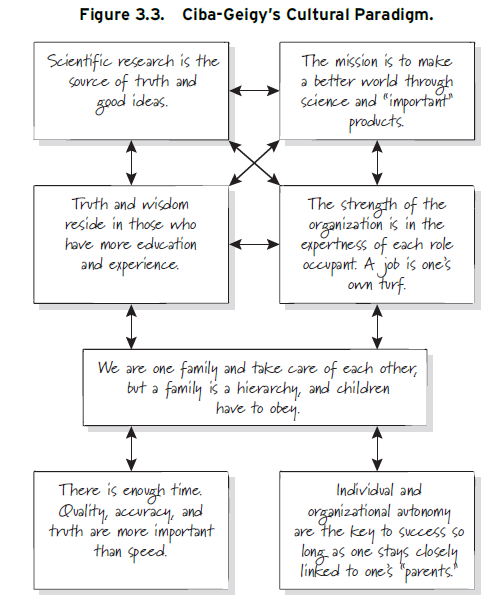
In DEC, conflict was valued and the individual was expected to take initiative and fight for ideas in every arena. In Ciba-Geigy, conflict was suppressed once a decision had been made. In DEC, it was assumed that if a job was not challenging or was not a good match between what the organization needed and what the individual could give, the individual should be moved to a new assignment or would quit anyway. In Ciba-Geigy, the person would be expected to be a good soldier and do the job as best he could, and as long as he was perceived as doing his best he would be kept in the job.
Both companies talked of being families, but the meaning of the word family was quite different in each company. In DEC, the essential assumption was that family members could fight, but they loved each other and could not lose membership. In Ciba-Geigy, the assumption was that parental authority should be respected and that children (employees and subordinate managers) should behave according to the rules and obey their parents. If they did so, they would be well treated, taken care of, and supported by the parents. In DEC, lifetime employment was implicit, while in Ciba-Geigy, it was taken for granted and informally affirmed. In each case, the family model also reflected the wider macrocultural assumptions of the countries in which these companies were located.
After I understood the Ciba-Geigy paradigm, I was able to figure out how to operate more effectively as a consultant. As I interviewed more managers and gathered information that would be relevant to what they were trying to do, instead of attempting to circulate memos to the various branches of the Ciba-Geigy organization through my contact client, I found that if I gave information directly, even if it was unsolicited, it was accepted because I was an “expert.” If I wanted information to circulate, I sent it out to the relevant parties on my own initiative, or, if I thought it needed to circulate down into the organization, I gave it to the boss and attempted to convince him that the information would be relevant lower down. If I really wanted to intervene by having managers do something different, I could accomplish this best by being an expert and formally recommending it to CEO Sam Koechlin. If he liked the idea, he would then order “the troops” to do it. For example, I had given some lectures on “career anchors” illustrating that different people in the organization built their career around different core values, and that jobs should be described not in terms of responsibilities but in terms of their role networks. Koechlin mandated that the top several layers of the organization should do the career anchor exercise and analyze their role networks (Schein, 1978, 2006).
Other facets of the Ciba-Geigy culture will be discussed in later chapters. For example, their patience and their attitude toward time, and their formality along with their ability to be playful and informal during organizational “time outs” are important in understanding how they were able to get their work done.
Source: Schein Edgar H. (2010), Organizational Culture and Leadership, Jossey-Bass; 4th edition.
The post Example of three levels of organizational culture: case of Ciba-Geigy appeared first on HKT Consultant.
]]>The post Macrocultures, subcultures, and microcultures appeared first on HKT Consultant.
]]>Much of what goes on inside an organization that has existed for some time can best be understood as a set of interactions of subcultures operating within the larger context of the organizational culture. These subcultures share many of the assumptions of the total organization but also hold assumptions beyond those of the total organization, usually reflecting their functional tasks, the occupations of their members, or their unique experiences. It is important to note that if those subcultures are based on broader occupations such as medicine or engineering, its members bring into the organization assumptions that have a broader, even international, base. Thus, in a large hospital system, the culture is influenced by the subcultures of the doctors, which reflect not only medicine in general but also the different emphasis of medical education in different countries.
Shared assumptions that create subcultures most often form around the functional units of the organization. They are often based on a similarity of educational background in the members, a shared task, and/or a similarity of organizational experience, what we often end up calling “stove pipes” or “silos.” We all know that getting cross-functional project teams to work well together is difficult because the members bring their functional cultures into the project and, as a consequence, have difficulty communicating with each other, reaching consensus, and implementing decisions in an effective manner. The difficulties of communication across these boundaries arise not only from the fact that the functional groups have different goals but also from the more fundamental issue that the very meaning of the words they use will differ. The word “marketing” means product development to the engineer, studying customers through market research to the product manager, merchandising to the salesman, and constant change in design to the manufacturing manager (Dougherty, 1990). When they try to work together, they often attribute disagreement to personalities and fail to notice the deeper shared assumptions that color how each function thinks.
Another kind of subculture, less often acknowledged, reflects the common experiences of given levels within a hierarchy. Culture arises through shared experiences of success. If first-line supervisors discover ways of managing their subordinates that are consistently successful, they will gradually build up a set of shared assumptions about how to do their job that can be thought of as the “subculture of first-line supervision.” Elders will teach newly promoted supervisors how to perform their roles, and this mentoring will be more powerful than any formal training they might be given. In the same way, middle management and higher levels will develop their own shared assumptions, and, at each level, those assumptions will be taught to newcomers as they get promoted into that level. These hierarchically based subcultures create the communication problems associated with “selling senior management on a new way of doing things,” or “getting budget approval for a new piece of equipment,” or “getting a personnel requisition through.” As each cultural boundary is crossed, the proposal has to be put into the appropriate language for the next higher level and has to reflect the values and assumptions of that higher level (Thomas, 1994). Or, from the point of view of the higher levels, decisions have to be put into a form that lower levels can understand, often resulting in “translations” that actually distort and sometimes even subvert what the higher levels wanted.
Occupational communities also generate cultures that cut across organizations and often become subcultures within organizations (Van Maanen and Barley, 1984; Gladwell, 2008). For example, fishermen around the world develop similar worldviews, as do miners, and the members of any particular industry based on a particular technology. In his popularized account, Gladwell argues persuasively that rice farmers develop a common world view that reflects the difficult requirements of rice farmers just as certain law offices build their practices around the common experiences of their immigrant founders. Shared assumptions derive from common origins, common educational backgrounds, the requirements of a given occupation such as the licenses that have to be obtained to practice, and the shared contact with others in the occupation. I pointed out that DEC was primarily composed of highly trained electrical engineers while Ciba- Geigy had many more chemical engineers and biochemists. Even the various functional cultures that we see in organizations are partly the result of membership in broader cross-organizational occupational communities. Salesmen the world over, accountants, assembly line workers, and, most importantly, engineers, share some basic assumptions about the nature of their work regardless of who their particular employer is at any given time.
We are also increasingly discovering that such similar outlooks across organizations apply to executive managers, particularly CEOs. CEOs face similar kinds of problems across all organizations and in all industries throughout the world. Their connection to the outside world of finance and public relations provides a set of common experiences that shapes their beliefs and values, thus creating yet another subculture. And because executives are likely to have somewhere in their history some common education and indoctrination, they form a common world view, a common set of assumptions about the nature of business and what it takes to run a business successfully. CEOs therefore make up one of the generic subcultures that exist in some form in every organization.
Source: Schein Edgar H. (2010), Organizational Culture and Leadership, Jossey-Bass; 4th edition.
The post Macrocultures, subcultures, and microcultures appeared first on HKT Consultant.
]]>