The post How to Start an Import-Export Business appeared first on HKT Consultant.
]]>Getting into import export business, you can make a significant profit with low investment. And everything can be made from the comfort of your home! You can discover new export business opportunities every day and use them to improve your company. You also have the freedom to make your working schedule. But you have to consider that your working hours will depend a lot on your partners’ hours. And if you are trading internationally, you might need to adjust to different timeframes to maintain good communication with your importers and exporters. The good news is that if you develop such a business from home, you can also take time off whenever it is needed. Another advantage of developing such a business is that you will work with people from different parts of the world. It will make your activity a lot more interesting and less dull than any other domain.
Many importers and exporters started by creating their import export business from home and evolved to be successful business owners. Some of them even became investors in important countries such as those in Africa and developed or supported an entire industry! But to get to this level, you have to master the import export process, and you can gain the experience you need by working from the comfort of your house!
Main contentsSee more






The post How to Start an Import-Export Business appeared first on HKT Consultant.
]]>The post A Brief History of International Trade appeared first on HKT Consultant.
]]>International trade based on the free exchange of goods started as early as 2500 BC. Archaeological discoveries indicate that the Sumerians of Northern Mesopotamia enjoyed great prosperity based on trade by sea in textiles and metals. The Greeks profited by the exchange of olive oil and wine for grain and metal somewhere before 2000 BC.
By around 340 BC, many devices of modern commerce had made their appearance in Greece and its distant settlements: banking and credit, insurance, trade treaties, and special diplomatic and other privileges.
With the decline of Greece, Rome became powerful and began to expand to the East. In the first century AD, the Romans traded with the Chinese along the Silk Road and developed many trade routes and complex trading patterns by sea. However, the absence of peace made traveling unsafe and discouraged the movement of goods, resulting in the loss of distant markets.
By the time of the breakup of the Roman Empire in the fifth century, the papacy (papal supremacy) had emerged as a strong institution in a new and unstable world. The Church’s support (sponsorship) for the crusades (eleventh century) revived international trade in the West through the latter’s discovery and introduction of new ideas, customs, and products from the East. New products such as carpets, furniture, sugar, and spices brought from Egypt, Syria, India, and China stimulated the markets and the growing commercial life of the West. This helped Italian cities such as Venice and Genoa to prosper and to replace Constantinople as the leading center of international commerce. Letters of credit and bills of exchange and insurance of goods in transit were extensively used to accommodate the growing commercial and financial needs of merchants and travelers.
By the end of the fifteenth century, the center of international commerce had moved from the Mediterranean to Western Europe. Spain, Portugal, and, later, Holland became the focal points of international commercial activity. The more developed areas of Europe were changing from a subsistence economy to one relying heavily on imports paid by money or letters of credit.
2. Colonial Period (1500-1900)
With the discovery of America in 1492 and of sea routes to India in 1498, trade flourished, and luxury goods and food products such as sugar, tobacco, and coffee became readily available in the markets of Europe.
The principal motivations behind global expansion (colonization) in the fifteenth century had been to enhance national economic power (mercantilist policy) by exploiting the colonies for the exclusive benefit of the mother country. Colonies were regarded as outposts of the home economy that would reduce trade dependence on rival nations and augment national treasure through exports as well as discoveries of precious metals. This first phase of colonization, which lasted until the advent of the Industrial Revolution in England (1750), was characterized by the following general elements with respect to commerce:
- All commerce between the colonies and the mother country was a national monopoly, meaning all merchandise exports/imports had to be carried by ships of the mother country and pass through specified ports.
- Little encouragement was provided for the development or diversification of indigenous exports. For example, in 1600, precious metals constituted 90% of colonial exports to Spain. In the mid-1650s, British imports from its colonies were mainly concentrated in three primary products: sugar, tobacco, and furs. To protect domestic producers, competing colonial exports were restricted or subject to special duties. The patterns of economic relations were fashioned on the basis of dissimilarity, that is, noncompetitiveness of colonial and metropolitan production.
- Certain enumerated products could be exported only to the mother country or another colony. The policy ensured a supply of strategic foodstuffs and raw materials.
- Private companies in the metropolis received a charter from the government that granted them (i.e., the companies) a monopoly of trade in the colonies. In most cases, the charter also granted complete local administrative authority, ranging from the making of laws and administration of justice to the imposition of taxes. Examples of this include the British East India Company (1600), the Dutch West India Company (1621), and Hudson’s Bay Company (1670).
The second historical phase of overseas expansion (1765-1900) was dictated more by commercial considerations than by the desire for mere territorial gains. Britain emerged as the dominant colonial power and by 1815 had transformed its empire into a worldwide business concern. By the 1860s, the Industrial Revolution had transformed the social and economic structure of England, and mass production dictated an expansion of the market for goods on an international scale. The political economy of mercantilism that had proliferated over the preceding century was gradually replaced by that of free trade. By 1860, Britain had unilaterally repealed the Corn Laws, abolished the Navigation Act restrictions (foreign ships were now permitted to take colonial goods anywhere), as well as the commercial monopolies given to particular companies. Preferential duties on empire goods were gradually abolished. In trade, as in foreign policy, Britain led the free trade ideology based on nondiscrimination.
At the time, Britain was most likely to benefit from free trade because of its industrial and commercial lead over other nations.
3. 1900 to the Present
The major characteristics of economic relations from 1900 until the outbreak of World War I were the further development of trade and the emergence of a world economy. These were also the result of the international migration of people and capital from Europe, particularly Britain, beginning in the 1850s, to other countries such as the United States, Australia, Argentina, Brazil, and Canada. This pattern of world economy provided the industrial economies with new sources of food and raw materials and new markets for exports of manufactures. For example, by 1913, Brazil was the source of two thirds of German coffee imports, whereas North Africa supplied more than half of French imports of wine. However, much of the import trade in Europe was subject to trade restrictions, such as tariffs, to secure home markets for local producers. Even within Britain, there were mounting pressures for the abolition of free trade.
The post-World War I recovery was further delayed by the disruption of trading links, as new nations were created and borders were redrawn. State intervention and restrictive economic policies had been consolidated in Europe and other countries by the end of the war. The U.S. government introduced the Fordney-McCumber Tariff, which imposed high tariffs on agricultural imports, in 1922 and, later, in 1930, the Smoot-Hawley Tariff, which provoked widespread retaliation. Britain imposed high duties on various industrial products, such as precision instruments and synthetic organic chemicals, to encourage domestic production under the Safeguarding of Industries Act, 1921. The volume of world trade in manufactures fell by 35% between 1929 and 1932, and prices also fell by a similar amount. The volume of trade in primary products fell by 15%, but prices fell by about 50%. To alleviate the worst effects of the Depression, countries resorted to more protectionism. This wave of protectionism produced a massive contraction of international trade and further aggravated the Depression. Many of the barriers placed on trade included tariffs and quotas, a variety of price maintenance schemes, as well as arbitrary currency manipulation and foreign exchange controls and management.
To avoid a repetition of the economic situation of the previous two decades, Allied countries met even before the outbreak of World War II to discuss the international financial arrangements that should govern trade and capital movements in the postwar world. In 1944, they established the International Monetary Fund (IMF) and the International Bank for Reconstruction and Development (IBRD). The IMF was to be concerned with facilitating the growth and expansion of global trade through the system of fixed exchange rates, while IBRD was established to promote long-term investment. This was followed by an agreement (the General Agreement on Tariffs and Trade, or the GATT) in 1948 to permit the free flow of goods among nations.
Source: Seyoum Belay (2014), Export-import theory, practices, and procedures, Routledge; 3rd edition.
The post A Brief History of International Trade appeared first on HKT Consultant.
]]>The post Importance of International Trade to the Global Economy appeared first on HKT Consultant.
]]>- Case studies reviewing the experience of the twelve most rapidly growing countries over the past sixty years shows the important contribution of trade in raising employment and incomes (OECD, 2012).
- A survey of 3,032 small and medium-size manufacturing enterprises in Canada over a three-year period (1994-1997) strongly indicates that growth in exports is associated with an increase in jobs (Lefebvre and Lefebvre, 2000).
Even though imports are associated with loss of jobs due to plant closings or production cutbacks of domestic industries, the export-job-generation effect is about 7.5 percent larger than the import-job-loss effect (Belous and Wyckoff, 1987). Most occupations show a net job gain from an equal amount of exports and imports except for blue-collar occupations, which are shrinking in most developed countries due to increasing pressure from low-wage imports.
Exports create high-wage employment. Exporters in the United States, for example, on average pay wages that are some 6 percent higher than nonexporters (Bernard, Jensen, Redding, and Schott, 2007). Imports are also found to have a strong positive effect on wages through their positive effects on productivity. A study led by the Organization for Economic Cooperation and Development (OECD) that looked at a broad sample of countries (1970-2000) shows that workers in the manufacturing sector in open economies benefited from pay rates that were between three and nine times greater than those in closed economies (depending on the region) (Flanagan and Khor, 2012). Another study on wages and trade also finds a strong positive correlation between export intensity and wages. This could be partly explained by the fact that export-intensive sectors tend to show higher levels of productivity than other sectors. It is also consistent with economic theory, which states that industries in which a nation enjoys comparative advantage are likely to be those where workers are more productive and therefore receive higher wages. It also shows that greater import penetration is associated with greater demand elasticity, which reduces workers’ bargaining power (Harless, 2006).
Source: Seyoum Belay (2014), Export-import theory, practices, and procedures, Routledge; 3rd edition.
The post Importance of International Trade to the Global Economy appeared first on HKT Consultant.
]]>The post Determinants of International Trade appeared first on HKT Consultant.
]]>Much of the research literature on imports underlines the importance of high per capita incomes, price of imports, and the exchange rate in determining import levels (Lutz, 1994). For developing countries, however, determinants of import demand also include factors such as government restrictions on imports and availability of foreign exchange. A study exam¬ining the factors influencing import demand in Pakistan from 1959 to 1986 found that the policy of devaluation and raising tariffs was not significant in reducing imports except in the case of imports of machinery and equipment (Sarmand, 1989).
Source: Seyoum Belay (2014), Export-import theory, practices, and procedures, Routledge; 3rd edition.
The post Determinants of International Trade appeared first on HKT Consultant.
]]>The post Volume and Direction of International Trade appeared first on HKT Consultant.
]]>The rapid increase in the growth of world trade after World War II can be traced to in¬creased consumption of goods and services as more people joined the middle class in many countries of the world. Trade liberalization, at both the regional and the international level, has created a global environment that is conducive to the growth and expansion of world trade. New technologies such as computers, telecommunications, and other media also assisted in the physical integration of world markets.
Small countries tend to be more dependent on international trade than larger ones be¬cause they are less able to produce all that they need. Larger countries (in terms of popula¬tion) import fewer manufactured goods on a per capita basis because such countries tend to have a diversified economy that enables them to produce most of their own needs. This is exemplified by the case of the United States, Japan, India, and China, which have low import propensities compared to countries such as Belgium or the Netherlands.
Merchandise trade currently accounts for about four fifths of world trade. The top 10 ex¬porters accounted for just over one half of world merchandise exports (China, United States, Germany, Japan, Netherlands, France, South Korea, Italy, Russia, and Belgium) (Table 1.3). Merchandise trade includes three major sectors: agriculture, mining, and manufactures. Trade in manufactured goods has been the most dynamic component of world merchandise trade. In 2012, the value of world merchandise exports was estimated at $18 trillion (U.S.) compared to that of $4 trillion (U.S.) for services (WTO, 2013).
Industrial market economies account for the largest part of world trade. Trade among these countries is estimated to be approximately 52 percent of global merchandise trade. Over the past few decades, one observes shifting patterns of trade as evidenced by a steady growth in the role of developing countries especially that of emerging economies and i ncreasing levels of trade among developing nations.

Source: Seyoum Belay (2014), Export-import theory, practices, and procedures, Routledge; 3rd edition.
The post Volume and Direction of International Trade appeared first on HKT Consultant.
]]>The post Important Developments in International Trade appeared first on HKT Consultant.
]]>- After the implementation of the Uruguay Round, members of the World Trade Organization (WTO) launched a subsequent round in Doha, Qatar, in 2001 to further reduce trade barriers. The focus of this round has been on the reduction of trade-distorting agricultural subsidies provided by developed countries and the introduction of equitable trade rules for developing nations. The negotiations are at a complete stalemate with no prospect of success in spite of considerable progress on specific issues. In a multipolar world, there are a number of power centers and a proliferation of national interests that erode international consensus across many areas. This is going to impede the development of international trade rules and standards and undermine the role of the WTO as a forum for trade negotiations.
- The current irreconcilable deadlock in the Doha Round has provided additional motivation for countries to engage in bilateral and regional trade agreements. Bilateral and regional agreements require less time to negotiate and provide opportunities for deeper trade policy integration. The United States, for example, has recently launched trade agreements with Asia and European countries (the Trans-Pacific partnership for Asia and the Transatlantic Trade and Investment Partnership with Europe). Many developing countries also perceive such agreements to be the most feasible means for gaining market access as the prospects for completing the Doha negotiations seem more remote. The share of trade among bilateral and regional trade partners is likely to grow in the next few decades.
- Many scholars believe that such bilateral/regional agreements are inferior to the multilateral, nondiscriminatory approach of the WTO. Bilateral/regional trade arrangements discriminate against nonmembers and create a maze of trade barriers that vary for every exporting country: rules of origin, tariff schedules, nontariff barriers such as quotas, and so on. There are concerns that such agreements also work in favor of powerful nations that will sneak in reverse preferences such as protection of intellectual property rights or labor standards.
1. Global Trade Imbalances
- The U.S. current account deficit reached 5 percent of GDP in the last quarter of 2012. Imports exceed exports by about $780 billion (2012). At the same time, the East Asian economies (including Japan) held about $6.1trillion (U.S.) in official foreign exchange reserves out of a global total of $9.2 trillion in 2012. China’s foreign currency reserves alone was estimated at $3.31 trillion (U.S.) by the end of 2012. The Southeast Asian countries’ heavy reliance on exports as a way of sustaining domestic economic growth, weak currencies, and high savings rates has resulted in unsustainable global imbalances. Global imbalances cannot diminish without, inter alia, reducing such excess savings through currency adjustments and/or increased imports in the surplus countries.
- Export-led growth in surplus countries feeds (and is dependent on) debt-led growth in deficit countries. It is impossible for all countries to run surpluses, just as it is impossible for all to run deficits. A country’s trade balance is a reflection of what it spends minus what it produces. In surplus countries, income exceeds their spending, so they lend the difference to countries where spending exceeds income, accumulating international assets in the process. Deficit countries are the flip side of this. They spend more than their income, borrowing from surplus countries to cover the difference, in the process accumulating international liabilities or debts.
- So long as trade deficits remain modest and economies invest the corresponding capital inflows in ways that boost productivity growth, such imbalances are sustainable. But the imbalances we see today are of a different character. First, they are much bigger. The most egregious is that between China and the United States, where China is running a huge trade surplus with the United States ($334 billion in 2012). Many of the other imbalances are between countries of broadly similar levels of economic development, such as those between members of the euro zone or that between Japan and the United States.
- Trade imbalances lead to destabilizing capital flows between economies. For example, the global financial crises of 2007 and the subsequent euro-zone crisis were basically the result of capital flows between countries. Overleveraged banks amplified the problem, but the underlying cause was outflows of capital from economies with excess savings in search of higher returns. The deficit countries that attracted large-scale capital inflows struggled to find productive uses for them: rather than boosting productivity, the inflows pumped up asset prices and encouraged excessive household borrowing.
2. Developing Countries in World Trade
- There has been a steady growth in the role of developing countries in world trade. Between 1995 and 2011, the share of developed nations (value share) in world merchandise trade declined from 69 to 52 percent while that of developing nations increased from 29 percent to 48 percent. Over this period, China’s share alone increased from 2.6 percent to 11 percent. The share of Latin America and the Caribbean also increased from 4.5 percent to 6.2 percent.
- China joined the WTO in 2001. Within three years, its exports doubled, and the country is now the world’s largest merchandise exporter ($1.9 trillion in 2011) and second largest importer of goods ($1.74 trillion in 2011).
- Only a few developing nations have managed to climb up the value chain and diversify their export base to cater to the expanding global market. About 83 percent of the increase in the share of developing countries’ total trade (1995-2010) accrued to a small number of emerging economies: the BRICs (Brazil, Russia, India, and China), Mexico, and South Korea. India, China, and South Korea accounted for about one third of world exports and about two thirds of developing-country exports in 2011.
- Such shifting patterns of trade and the increased demand for primary commodities from rapidly growing economies have strengthened South-South (trade among developing countries) trade and economic cooperation. South-South trade increased at a rate of 14 percent per year (1995-2010) compared to the world average of 9 percent. During the same period, merchandise exports from the developing countries to the developed nations increased by 10 percent per year.
3. Transportation and Security
- About 60 percent (by value) of total world merchandise trade is carried by sea. In volume terms, 75 percent of world merchandise trade is carried by sea, whereas 16 percent is by rail and road (9 percent by pipeline and 0.3 percent by air). Increases in fuel prices could act as a disincentive to exports by raising transportation costs. In air transportation (which is more fuel sensitive than shipping), rising oil prices could severely damage trade in time-sensitive products such as fruits and vegetables and parts in just-in-time production. Faster economic growth in emerging economies is also putting pressure on the limited supply of other raw materials such as copper and coal.
- World air cargo traffic has grown during the past decade due to increased trade in high-value-low-weight cargo, globalization, and associated just-in-time production and distribution systems.
- In light of increasing threats of terrorism, countries have put in place procedures to screen cargo across the entire supply chain. There is an overall attempt to facilitate international trade without compromising national security.
Source: Seyoum Belay (2014), Export-import theory, practices, and procedures, Routledge; 3rd edition.
The post Important Developments in International Trade appeared first on HKT Consultant.
]]>The post The Limitations of Export-Led Growth appeared first on HKT Consultant.
]]>Central to the success of these countries is the promotion of exports. Governments provided credits, restricted competing imports, and developed export marketing institutions. As they increased their exports to wealthy countries, their economies grew at 7 to 8 percent per year.
The export-led model may have worked for a few countries during the time when most developing countries pursed import-substitution policies—substituting domestic production for manufactured goods for the exportation of raw materials. There are a number of limitations to export-led growth when many countries, including China, begin to use it. Here are some of its potential limitations:
- It is difficult for all countries to increase exports by 8 to10 percent per year when the world economy grows at 2 or 3 percent per year. It is not possible for every country to have a trade surplus.
- The major importing nation, the United States, cannot continue to run large trade deficits. Other potential destinations for global exports, South Korea, Japan, and Germany, also rely on an export-promotion policy to sustain economic growth and are not willing to run large deficits.
- China and other East Asian economies have not taken measures to open their markets in order to absorb increasing exports from the rest of the world. In the absence of other sources of economic growth, focusing on the U.S. market is unsustainable in the long run.
- Many multinational corporations are already experiencing flat or shrinking revenue growth due to reduced demand reflecting the natural limitations of export growth (see Table 1.4).

Source: Seyoum Belay (2014), Export-import theory, practices, and procedures, Routledge; 3rd edition.
The post The Limitations of Export-Led Growth appeared first on HKT Consultant.
]]>The post The Impact of the Financial Crisis on Exports appeared first on HKT Consultant.
]]>One of the most striking features of the financial crisis of 2008 was the collapse in international trade. The decline in world exports was much greater than the decline in world GDP Between the first quarter of 2008 and the first quarter of 2009, the real value of GDP fell 4.6 percent while exports plunged 17 percent, which amounts to a decline of $761 billion in nominal terms.
Exports are more sensitive to financial shocks due to the higher default risk and higher working-capital requirements associated with international trade. The need to insure against credit default risk arises because exporters rarely have the capacity or willingness to evaluate default risk and usually turn to banks to provide payment insurance and guarantees. In addition, exporters need more working-capital financing than firms engaged in domestic transactions because of the longer time lags associated with international trade, especially when firms ship by sea. The fact that exporters depend so heavily on financial institutions for working capital and risk insurance suggests that if a credit crunch causes banks to limit trade finance, exports are likely to be affected more than domestic sales. Djankov, Freund, and Pham (2006) found in a sample of 180 countries that the median amount of time it takes from the moment the goods are ready to ship from the factory until the goods are loaded on a ship is twenty-one days. Much of this time is spent dealing with the paperwork and procedures associated with getting goods ready to ship overseas. Similarly, the median amount of time it takes from the moment a typical good arrives in a port until the good arrives in the purchaser’s warehouse is twenty-three days. If we couple this finding with Hummels’s (2001) estimate that the typical good imported into the United States by sea spends twenty days on a vessel, we can see that it is not uncommon for goods to spend approximately two months in transit. Even in OECD countries, which have the most streamlined procedures, it takes eleven days for a good to reach a port or arrive from a port.
These data suggest that firms engaged in international trade are likely to be more reliant than domestic firms on working-capital financing to cover the costs of goods that have been produced but not yet delivered. More than 90 percent of trade transactions involve some form of credit, insurance, or guarantee issued by a bank or other financial institution. Given that banks are the principal suppliers of trade finance, the supply of such financing is likely to be closely tied to the health of the banks. In particular, as the health of banks deteriorates, these financial institutions find it increasingly difficult to raise funds either through interbank borrowing or through the issuance of new bonds or equity.
As these sources of liquidity diminish, unhealthy institutions cut back on their lending. These cutbacks are likely to have a particularly large impact on trade finance because the short maturities of trade finance and its need for constant renewal make it particularly sensitive to a bank’s ability to extend new credit. Moreover, since exports are much more dependent on finance than domestic sales for the reasons already outlined, exports are likely to be harder hit by financial shocks. In the 2008 crisis, the standard measure of the risk premium charged to banks (the difference between interbank offer rates charged to banks and the overnight indexed swap rate [OIS]) jumped sharply, reflecting higher bank borrowing costs. Eighty-eight banks in forty-four countries revealed that the average spreads on letters of credit, export credit insurance, and short- to medium-term trade-related lending rose by 70, 107, and 99 basis points, respectively, in the second quarter of 2009 relative to the fourth quarter of 2007.
The decline in trade finance transactions was caused by a tightening of credit availability at their own institution. The deteriorations in the financial health (or outright bankruptcy) of major players in the trade finance world, including Lehman, AIG, CIT Group, Citigroup, Bank of America, and Wells Fargo, may have made it difficult for these banks to raise money to finance their export clients’ trade credit default risk. The simultaneous collapse in the commercial paper market may have left exporters with few options other than cutting exports if their trade finance providers ran into trouble.
Source: Seyoum Belay (2014), Export-import theory, practices, and procedures, Routledge; 3rd edition.
The post The Impact of the Financial Crisis on Exports appeared first on HKT Consultant.
]]>The post The GATT and the WTO appeared first on HKT Consultant.
]]>Since its inception, the GATT has used certain policies to reduce trade barriers between contracting parties (CPs):
- Nondiscrimination: All CPs must be treated in the same way with respect to import- export duties and charges. According to the most favored nation treatment, each contracting party (CP) must grant to every other CP the most favorable tariff treatment (most-favored nation, or MFN) that it grants to any country with respect to imports and exports of products. Certain exceptions, however, are allowed, such as free-trade areas, customs unions, and other preferential arrangements in favor of developing nations. Once imports have cleared customs, a CP is required to treat foreign imports the same way it treats similar domestic products (the national treatment standard).
- Trade liberalization: The GATT has been an important forum for trade negotiations. It has sponsored periodic conferences among CPs to reduce trade barriers (see International Perspective 2.1). The Uruguay Round (1986-1993) gave rise to the establishment of a permanent trade organization (World Trade Organization or WTO). The most recent round (Doha Round) hopes to reach agreement on other trade distortions such as agricultural subsidies and trade barriers imposed by developing countries on imports of manufactured goods.
- Settlement of trade disputes: The GATT/WTO has played an important role in resolving trade disputes between CPs. In certain cases where a party did not follow GATT’s recommendations, it ruled for trade retaliation that is proportional to the loss or damage sustained. It is fair to state that the existence of the GATT/WTO has been a deterrent to damaging trade wars between nations.
- Trade in goods: The GATT rules apply to all products both imported and exported, although most of the rules are relevant to imports. It was designed primarily to regulate tariffs and related barriers to imports such as quotas, internal taxes, discriminatory regulations, subsidies, dumping, discriminatory customs procedures, and other nontariff barriers. The Uruguay Round (1986-1994) resulted in a new general agreement on trade in services, trade-related aspects of intellectual property (TRIPs), and trade-related investment measures (TRIMs). Thus, CPs have moved beyond the original purpose of the GATT to achieve unrestricted trade in goods, to reduce barriers to trade in services, investment, and to protect intellectual property (Collins and Bosworth, 1994).
The Uruguay Round and WTO
In 1982, the United States initiated a proposal to launch a new round of GATT talks. The major reasons behind the U.S. initiative were (1) to counter domestic pressures for protectionism precipitated by the strong dollar and a rising trade deficit; (2) to improve market access for U.S. products by reducing existing tariff and nontariff barriers to trade; (3) to reverse the erosion of confidence in the multilateral trading system; (4) to extend GATT coverage to important areas such as services, intellectual property, and investment; and (5) to bring developing nations more effectively into the international trading system.
Despite the initial reluctance of many developing nations, the effort culminated in the conclusion of a successful trade negotiation (the Uruguay Round) in 1994. The results of the Uruguay Round can be summarized as follows.
Trade Liberalization
Significant progress was made toward reducing trade barriers in the areas of agriculture and textiles that had long been resistant to reform. Tariff reductions of about 40 percent were achieved. The agreement also opened access to a broad range of government contracts (Government Procurement Agreement). It also provided for the liberalization of the textiles and apparel sector by the end of 2004. Textiles quotas have been removed except for occasional safeguards used to protect a sudden increase in imports.
Trade Rules
The Uruguay Round added new rules relating to unfair trade practices (dumping, subsidies) and the use of import safeguards.
New Issues
The agreement broadened the coverage of the GATT to include areas such as trade in services (General Agreement on Trade in Services, GATS), trade-related aspects of intellectual property (TRIPs), and trade-related investment measures (TRIMS). The GATS establishes rules to liberalize trade in services, which in 2012 was estimated to be almost $4.3 trillion (WTO, 2013). The TRIPs agreement establishes new trade disciplines with regard to the protection and enforcement of intellectual property rights. TRIMs provides for the elimination
of trade-distorting investment requirements such as local content, limitation of ownership, and exports of certain shares of domestic production.
Institutional Reforms
In the area of institutional reform, the Uruguay Round strengthened the multilateral dispute settlement mechanism and established a new and permanent international institution, the World Trade Organization, responsible for governing the conduct of trade relations among its members. The new dispute settlement procedure instituted an appeals procedure, expedited decision making, and encouraged compliance with GATT decisions. Members of the WTO are required to comply with the GATT rules as well as various agreements (rounds) negotiated under GATT auspices.
Source: Seyoum Belay (2014), Export-import theory, practices, and procedures, Routledge; 3rd edition.
The post The GATT and the WTO appeared first on HKT Consultant.
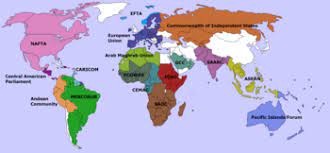
]]>The post Regional Integration Agreements (RIAs) appeared first on HKT Consultant.
]]>The number of RIAs and their share in global trade has been steadily rising over the past decade (Table 2.1). Since January 1995, about 546 RIAs have been reported to the WTO, with 354 currently in effect. A large percentage of these agreements (more than 80 percent) are mostly bilateral free-trade deals (free-trade agreements) intended for market access and do not require a high degree of policy coordination between participating countries. Fewer than 10 percent of the agreements provide for high levels of integration as well as harmonization of trade policies (customs union). (International Perspective 2.2)
Small countries enter into RIAs not only for market access but also to deal more effectively with larger economies in multilateral trade talks and other areas. Although RIAs are not often considered a potential threat to multilateralism, some scholars believe that (1) they lead to large volumes of trade diversion, often leading to substantial welfare losses; (2) they create lobbies and interest groups against multilateral trade liberalization; and (3) their differing regulatory regimes, including rules of origin, pose a challenge to the multilateral trading system (Das, 2004).

The major drivers of RIAs are stated as follows:
- Consolidation of peace, regional security and free market reforms in many countries
- Promotion of deeper levels of economic integration than is available under the WTO (issues pertaining to competition, investment, labor, and the environment)
- Market access and a means of attracting Foreign Direct Investments (FDI). Discriminatory liberalization in favor of partner countries is likely to provide firms (from these countries) with competitive advantages.
- Sluggish progress in multilateral trade talks.
Source: Seyoum Belay (2014), Export-import theory, practices, and procedures, Routledge; 3rd edition.
The post Regional Integration Agreements (RIAs) appeared first on HKT Consultant.
]]>