The post Writing and publishing a scientific paper appeared first on HKT Consultant.
]]>By providing practical, readable, and sometimes humorous guidance, this book enables researchers to gain the knowledge, skills, and confidence to succeed in communicating about their work. The authors not only guide readers in the craft of scientific writing—broken down into the separate tasks of writing the respective sections of a scientific paper and then publishing the paper—but also address important related psychological, ethical, logistical, and cultural considerations in communicating about science.
Chapter topics include composing (and requesting) recommendation letters, writing grant proposals, providing peer review, editing one’s own work, preparing oral presentations and poster presentations, and working with the popular media. This is an essential resource for researchers—both native and non-native users of English—with limited experience writing scientific papers, such as graduate students, postdoctoral fellows, and early-career faculty members.
Main contentsSee more from basic to advanced


Source: Gastel Barbara, Day Robert A. (2016), How to Write and Publish a Scientific Paper, Greenwood; 8th edition.
The post Writing and publishing a scientific paper appeared first on HKT Consultant.
]]>The post What Is Scientific Writing? appeared first on HKT Consultant.
]]>The term scientific writing commonly denotes the reporting of original research in journals, through scientific papers in standard format. In its broader sense, scientific writing also includes communication about science through other types of journal articles, such as review papers summarizing and integrating previously published research. And in a still broader sense, it includes other types of professional communication by scientists—for example, grant proposals, oral presentations, and poster presentations. Related endeavors include writing about science for the public, sometimes called science writing.
2. THE NEED FOR CLARITY
The key characteristic of scientific writing is clarity. Successful scientific experimentation is the result of a clear mind attacking a clearly stated problem and producing clearly stated conclusions. Ideally, clarity should be a characteristic of any type of communication; however, when something is being said for the first time, clarity is essential. Most scientific papers, those published in our primary research journals, are accepted for publication precisely because they do contribute new knowledge. Hence, we should demand absolute clarity in scientific writing.
3. RECEIVING THE SIGNALS
Most people have no doubt heard this question: If a tree falls in the forest and there is no one there to hear it fall, does it make a sound? The correct answer is no. Sound is more than pressure waves, and indeed there can be no sound without a hearer.
And similarly, scientific communication is a two-way process. Just as a signal of any kind is useless unless it is perceived, a published scientific paper (signal) is useless unless it is both received and understood by its intended audience. Thus we can restate the axiom of science as follows: A scientific experiment is not complete until the results have been published and understood. Publication is no more than pressure waves unless the published paper is understood. Too many scientific papers fall silently in the woods.
4. UNDERSTANDING THE SIGNALS
Scientific writing is the transmission of a clear signal to a recipient. The words of the signal should be as clear, simple, and well-ordered as possible. In scientific writing, there is little need for ornamentation. Flowery literary embellishments—metaphors, similes, idiomatic expressions—are very likely to cause confusion and should seldom be used in research papers.
Science is simply too important to be communicated in anything other than words of certain meaning. And the meaning should be clear and certain not just to peers of the author, but also to students just embarking on their careers, to scientists reading outside their own narrow disciplines, and especially to those readers (most readers today) whose native language is other than English.
Many kinds of writing are designed for entertainment. Scientific writing has a different purpose: to communicate new scientific findings. Scientific writing should be as clear and simple as possible.
5. UNDERSTANDING THE CONTEXT
What is clear to a recipient depends both on what is transmitted and how the recipient interprets it. Therefore, communicating clearly requires awareness of what the recipient brings. What is the recipient’s background? What is the recipient seeking? How does the recipient expect the writing to be organized?
Clarity in scientific writing requires attentiveness to such questions. As communication professionals advise, know your audience. Also know the conventions, and thus the expectations, for structuring the type of writing that you are doing.
6. ORGANIZATION AND LANGUAGE IN SCIENTIFIC WRITING
Effective organization is a key to communicating clearly and efficiently in science. Such organization includes following the standard format for a scientific paper. It also includes organizing ideas logically within that format.
In addition to organization, the second principal ingredient of a scientific paper should be appropriate language. This book keeps emphasizing proper use of English because many scientists have trouble in this area. All scientists must learn to use the English language with precision. A book (Day and Sakaduski 2011) wholly concerned with English for scientists is available.
If scientifically determined knowledge is at least as important as any other knowledge, it must be communicated effectively, clearly, in words of certain meaning. The scientist, to succeed in this endeavor, must therefore be literate. David B. Truman, when he was dean of Columbia University, said it well: “In the complexities of contemporary existence the specialist who is trained but uneducated, technically skilled but culturally incompetent, is a menace.”
Given that the ultimate result of scientific research is publication, it is surprising that many scientists neglect the responsibilities involved. A scientist will spend months or years of hard work to secure data, and then unconcernedly let much of their value be lost because of a lack of interest in the communication process. The same scientist who will overcome tremendous obstacles to carry out a measurement to the fourth decimal place will be in deep slumber while a typographical error changes micrograms per milliliter to milligrams per milliliter.
English need not be difficult. In scientific writing, we say, “The best English is that which gives the sense in the fewest short words” (a dictum printed for some years in the Journal of Bacteriology’s instructions to authors). Literary devices, metaphors and the like, divert attention from substance to style. They should be used rarely in scientific writing.
Source: Gastel Barbara, Day Robert A. (2016), How to Write and Publish a Scientific Paper, Greenwood; 8th edition.
The post What Is Scientific Writing? appeared first on HKT Consultant.
]]>The post Historical Perspectives IMRAD organization of scientific papers appeared first on HKT Consultant.
]]>Human beings have been able to communicate for thousands of years. Yet scientific communication as we know it today is relatively new. The first journals were published about 350 years ago, and the IMRAD (introduction, methods, results, and discussion) organization of scientific papers has developed within about the past century.
Knowledge, scientific or otherwise, could not be effectively communicated until appropriate mechanisms of communication became available. Prehistoric people could communicate orally, of course, but each new generation started from essentially the same baseline because, without written records to refer to, knowledge was lost almost as rapidly as it was found.
Cave paintings and inscriptions carved onto rocks were among the first human attempts to leave records for succeeding generations. In a sense, today we are lucky that our early ancestors chose such media because some of these early “messages” have survived, whereas messages on less-durable materials would have been lost. (Perhaps many have been.) On the other hand, communication via such media was incredibly difficult. Think, for example, of the distributional problems the U.S. Postal Service would have today if the medium of correspondence were 100-lb (about 45-kg) rocks. It has enough troubles with 1-oz (about 28-g) letters.
The earliest book we know of is a Chaldean account of the Flood. This story was inscribed on a clay tablet in about 4000 BC, antedating Genesis by some 2000 years (Tuchman 1980).
A medium of communication that was lightweight and portable was needed. The first successful medium was papyrus (sheets made from the papyrus plant and glued together to form a roll sometimes 20 to 40 ft [6-12 m] long, fastened to a wooden roller), which came into use about 2000 BC. In 190 BC, parchment (made from animal skins) came into use. The Greeks assembled large libraries in Ephesus and Pergamum (in what is now Turkey) and in Alexandria. According to Plutarch, the library in Pergamum contained 200,000 volumes in 40 BC (Tuchman 1980).
In AD 105, the Chinese invented paper, the dominant medium of written communication in modern times—at least until the Internet era. However, because there was no effective way of duplicating communications, scholarly knowledge could not be widely disseminated.
Perhaps the greatest single technical invention in the intellectual history of the human race was the printing press. Although movable type was invented in China in about AD 1100 (Tuchman 1980), the Western world gives credit to Johannes Gutenberg, who printed his 42-line-per-page Bible from movable type on a printing press in AD 1455. Gutenberg’s invention was immediately and effectively put to use throughout Europe. By the year 1500, thousands of copies of hundreds of books were printed.
The first scientific journals appeared in 1665, when two journals, the Journal des Sgavans in France and the Philosophical Transactions of the Royal Society of London in England, began publication. Since then, journals have served as the primary means of communication in the sciences. As of 2014, there were nearly 35,000 peer-reviewed journals in science, technology, and medicine, of which more than 28,000 were in English. Altogether, these journals were publishing about 2.5 million articles per year (Ware and Mabe 2015, p. 6). The number of scientific papers published per year has been increasing exponentially (Born- mann and Mutz 2015).
2. THE ELECTRONIC ERA
When many older scientists began their careers, they wrote their papers in pen or pencil and then typed them on a typewriter or had a secretary do so. They or a scientific illustrator drew graphs by hand. They or a scientific photographer took photographs on film. They then carefully packaged a number of copies of the manuscript and sent them via postal service to a journal. The journal then mailed copies to the referees (peer reviewers) for evaluation, and the referees mailed them back with comments. The editor then mailed a decision letter to the scientist. If the paper was accepted, the scientist made the needed revisions and mailed back a final version of the manuscript. A copy editor edited the paper by hand, and a compositor re-keyboarded the manuscript. Once the paper was typeset, a copy was mailed to the scientist, who checked for typographical errors and mailed back corrections. Before the paper was published, the scientist ordered reprints of the paper, largely for fellow scientists who lacked access to libraries containing the journal or who lacked access to a photocopier.
Today the process has changed greatly. Word processors, graphics programs, digital photography, and the Internet have facilitated preparation and dissemination of scientific papers. Journals throughout the world have online systems for manuscript submission and peer review. Editors and authors communicate electronically. Manuscript editors typically edit papers online, and authors electronically receive typeset proofs of their papers for inspection. Journals are available online as well as in print—and sometimes instead of in print; increasingly, accepted papers become available individually online before appearing in journal issues. At some journals, electronic extras, such as appendixes and video clips, supplement online papers. Many journals are openly accessible online, either starting at the time of publication or after a lag period. In addition, readers often can access papers through the authors’ websites or through resources at the authors’ institutions, or the readers can request electronic reprints. Some of the changes have increased the technical demands on authors, but overall, the changes have hastened and eased the publication process and improved service to readers.
Whereas much regarding the mechanics of publication has changed, much else has stayed the same. Items that persist include the basic structure of a scientific paper, the basic process by which scientific papers are accepted for publication, the basic ethical norms in scientific publication, and the basic features of good scientific prose. In particular, in many fields of science, the IMRAD structure for scientific papers remains dominant.
3. THE IMRAD STORY
The early journals published papers that we call descriptive. Typically, a scientist would report, “First, I saw this, and then I saw that,” or “First, I did this, and then I did that.” Often the observations were in simple chronological order.
This descriptive style was appropriate for the kind of science then being reported. In fact, this straightforward style of reporting still is sometimes used in “letters” journals, case reports in medicine, geological surveys, and so forth.
By the second half of the nineteenth century, science was beginning to move fast and in increasingly sophisticated ways. Microbiology serves as an example.
Especially through the work of Louis Pasteur, who confirmed the germ theory of disease and developed pure-culture methods of studying micro-organisms, both science and the reporting of science made great advances.
At this time, methodology became all-important. To quiet his critics, many of whom were fanatic believers in the theory of spontaneous generation, Pasteur found it necessary to describe his experiments in exquisite detail. Because reasonably competent peers could reproduce Pasteur’s experiments, the principle of reproducibility of experiments became a fundamental tenet of the philosophy of science, and a separate methods section led the way t oward the highly structured IMRAD format.
The work of Pasteur was followed, in the early 1900s, by the work of Paul Ehrlich and, in the 1930s, by the work of Gerhard Domagk (sulfa drugs). World War II prompted the development of penicillin (first described by Alexander Fleming in 1929). Streptomycin was reported in 1944, and soon after World War II the mad but wonderful search for “miracle drugs” produced the tetracyclines and dozens of other effective antibiotics.
As these advances were pouring out of medical research laboratories after World War II, it was logical that investment in research would greatly increase. In the United States, this positive inducement to support science was soon (in 1957) joined by a negative factor when the Soviets flew Sputnik around our planet. In the following years, the U.S. government (and others) poured additional billions of dollars into scientific research.
Money produced science, and science produced papers. Mountains of them. The result was powerful pressure on the existing (and the many new) journals. Journal editors, in self-defense if for no other reason, began to demand that manuscripts be concisely written and well organized. Journal space became too precious to be wasted on verbosity or redundancy. The IMRAD format, which had been slowly progressing since the latter part of the nineteenth century, now came into almost universal use in research journals. Some editors espoused IMRAD because they became convinced that it was the simplest and most logical way to communicate research results. Other editors, perhaps not convinced by the simple logic ofIMRAD, nonetheless hopped on the bandwagon because the rigidity of IMRAD did indeed save space (and expense) in the journals and because IMRAD made life easier for editors and referees by indexing the major parts of a manuscript.
The logic of IMRAD can be defined in question form: What question (problem) was studied? The answer is the introduction. How was the problem studied? The answer is the methods. What were the findings? The answer is the results. What do these findings mean? The answer is the discussion.
It now seems clear that the simple logic of IMRAD does help the author organize and write the manuscript, and IMRAD provides an easy road map for editors, referees, and ultimately readers to follow in reading the paper.
Although the IMRAD format is widely used, it is not the only format for scientific papers. For example, in some journals the methods section appears at the end of papers. In some journals, there is a combined results and discussion section. In some, a conclusions section appears at the end. In papers about research in which results of one experiment determine the approach taken in the next, methods sections and results sections can alternate. In some papers, especially in the social sciences, a long literature review section may appear near the beginning of the paper. Thus, although the IMRAD format is often the norm, other possibilities include IRDAM, IMRADC, IMRMRMRD, ILMRAD, and more.
Later in this book, we discuss components of a scientific paper in the order in which they appear in the IMRAD format. However, most of our advice on each component is relevant regardless of the structure used by the journal to which you will submit your paper. Before writing your paper, be sure, of course, to determine which structure is appropriate for the journal to which you will submit it. To do so, read the journal’s instructions to authors and look at papers similar to yours that have appeared in the journal. These actions are parts of approaching a writing project—the subject of our next chapter.
Source: Gastel Barbara, Day Robert A. (2016), How to Write and Publish a Scientific Paper, Greenwood; 8th edition.
The post Historical Perspectives IMRAD organization of scientific papers appeared first on HKT Consultant.
]]>The post Approaching a Writing Project appeared first on HKT Consultant.
]]>The thought of preparing a piece of scientific writing can intimidate even the best writers. However, establishing a suitable mindset and taking an appropriate approach can make the task manageable. Perhaps most basic, remember that you are writing to communicate, not to impress. Readers of scientific papers want to know what you did, what you found, and what it means; they are not seeking great literary merit. If you do good research and present it clearly, you will please and satisfy readers. Indeed, in scientific writing, readers should notice mainly the content, not the style.
Realize that those reading your work want you to do well. They are not out to thwart you. Journal editors are delighted to receive good papers; ditto for the scientists they enlist as referees (peer reviewers) to help evaluate your work. Likewise, if you are a student, professors want you to do well. Yes, these people often make constructive criticisms. But they are not doing so because they dislike you; rather, they do so because they want your work to succeed. Do not be paralyzed by the prospect of criticism. Rather, feel fortunate that you will receive feedback that can help your writing to be its best.
2. PREPARING TO WRITE
In the laboratory, careful preparation helps experiments proceed smoothly and efficiently. Much the same is true of scientific writing. By preparing carefully before you start to compose a manuscript, you can make writing relatively easy and painless. Of course, in our unbiased view, preparing to write should include reading this book and keeping it on hand to consult. (Our publisher suggests buying a copy for your office or lab, a copy to use at home, and maybe one to keep in your car or boat.) But using this book is only a start. The following also can help.
Good writing is largely a matter of effective imitation. Therefore, obtain copies of highly regarded scientific papers in your research area, including papers in the journal to which you plan to submit your current work. Notice how these papers are written. For example: What sections do they include, and in what order? How long do the various sections tend to be? What types of subheadings, if any, tend to be included? How many figures and tables, and what types thereof, are typical? Especially if you are a non-native speaker of English, what seem to be some standard phrases that you could use in presenting your own work? Using published papers as models can prepare you to craft a manuscript that will be suitable to submit.
Successful writing also entails following instructions. Essentially every scientific journal issues instructions to authors. Following these instructions takes much of the guesswork out of writing and can save you from the unpleasant task of rewriting a paper because it did not meet the journal’s specifications. If instructions are long (some journals’ instructions run several pages or more), underline or highlight the key points to remember. Alternatively, you may list, on colored paper so you can easily find them, those points most relevant to the paper you will write. Also consider bookmarking on your computer the journal’s instructions to authors, especially if the instructions encompass links for accessing different parts of their content.
For more detailed guidance—for instance, on nomenclature, reference formats, and grammar—instructions for authors often refer readers to standard style manuals. Among style manuals commonly used in the sciences are the following:
The ACS [American Chemical Society] Style Guide (Coghill and Garson 2006)
AMA [American Medical Association] Manual of Style (Iverson et al. 2007)
The Chicago Manual of Style (2010)
Publication Manual of the American Psychological Association (2010)
Scientific Style and Format (Style Manual Subcommittee, Council of Science Editors 2014)
New editions of these manuals come out from time to time. Increasingly, such manuals are available in online versions as well as in print. Look for the most recent edition of the style manual you will use. Commonly, you can find such style manuals in the reference sections of academic and other libraries. Many libraries also offer online access to style manuals. If you lack easy access, consider investing in the style manual(s) most commonly used in your research field. In any case, be ready to consult such manuals.
If you do not have reference-management software—for example, EndNote, Reference Manager, or RefWorks—now may be a good time to obtain it. Many universities make such software readily available and provide instruction in its use. Further information about such software appears in Chapter 15.
While you are gathering scientific content, ideas for your paper may occur to you. For example, you may think of a point to include in the discussion. Or you may come up with a good way to structure a table. Write down these ideas; consider creating for each section of your paper a file—either paper or electronic— in which to place them. Not only will recording your ideas keep them from escaping your memory, but having such ideas readily available to draw on can get your writing off to a quick start.
Once you have gathered and analyzed your data, speaking can be a fine transition to writing. If possible, present your work at a departmental seminar or local research day. Perhaps give an oral or poster presentation at a conference. Preparing to speak can help in formulating your article. Also, questions from listeners can help you to shape what you will write.
Research typically is a team endeavor. So is reporting on research. In the writing as in the research, different team members commonly take different roles. Sometimes one member drafts the whole paper and the others review and revise it. Other times, different members draft different parts of the paper and then circulate them for review. Whatever the case, clarify beforehand who will do what, and perhaps set a timetable. Maybe consider what software, if any, you will use to facilitate collaboration. Will you share drafts via Dropbox? Will you be using Google Docs? Will you use software designed specifically for academic collaboration? Discuss such matters before starting to write.
To facilitate writing, do lots of pre-writing. For example, stack copies of published papers in the order in which you plan to cite them. Make outlines. List points you wish to make in a given section, and sort and re-sort them until you are pleased with the order. Perhaps make a formal outline. By doing much of the thinking and organization beforehand, you can lower the activation energy needed to write a paper. In fact, such pre-writing can catalyze the writing process so well that you find yourself eager to write.
In preparing to write, realize that sometimes ideas must percolate for a while. If, for example, you cannot come up with an effective way to begin your paper or to structure a section, take a break. Exercise for a while, take a nap, or maybe discuss your work with someone. A solution may then occur to you.
3. DOING THE WRITING
Doing the writing means making time to do it. Most of us in science are busy. If writing must wait until we have extra time, it might never get done. Therefore, block out times to write. Indicate on your calendar or in your personal organizer the times that you have reserved for specific writing projects. Except in emergencies, do not let other tasks impinge on those times. Also, set deadlines. For example, promise yourself that you will draft a given section by Thursday. Or make clear to yourself that you will not leave for vacation until you have submitted a given item.
One highly published professor advocates the following approach (Zerubavel 1999): On a sheet of paper showing your weekly schedule hour by hour, cross out the times you are regularly unavailable—for example, times that you teach, have laboratory meetings, or have personal commitments. Then choose from the remaining times some to reserve for writing. In doing so, consider what times of day you tend to write most effectively. For example, if you are a night person, block out some evenings during which to write each week; perhaps save some morning time for more routine writing-related tasks, such as checking references. If you are a morning person, do the reverse.
When writing, you can start with whatever part of a manuscript you find easiest; there is no rule that you must write the introduction first. Many researchers like to begin by drafting the methods section, which tends to be the most straightforward to write. Many like to begin by drafting the figures and tables. Some like to start by drafting a preliminary reference list—or even the acknowledgments. And many authors leave until last the writing of the title and abstract. Once you have drafted one section, the momentum that you have established can facilitate writing the others. Feel free to draft the remaining sections in whatever order works best for you. Although the structure of Part II of this book parallels that of a scientific paper—with the first chapter addressing “How to Prepare the Title” and the last “How to Cite the References”—you can draft the parts of a scientific paper (and read these chapters) in whatever order works best for you.
Once you have established momentum, beware of dissipating it by interrupting your writing to search for small details. Rather, make notes to find the missing information; to identify them easily, write them in boldface type in your manuscript or use the “new comment” feature in Word. Also, if a manuscript will take more than one session to draft, consider how you can best maintain your momentum from session to session. Some authors like to stop in the middle of a section while still going strong. Before ending their writing session, they jot down the next few points they wish to make. Thus, at their next writing session they can start quickly. Consider taking this approach.

Much like doing a piece of scientific research, crafting a scientific paper typically entails solving a series of problems in order to achieve the overall objective. In writing, as in research, often the problems have more than one reasonable solution, each with advantages and disadvantages. Yet writers sometimes worry that there is “one right way” (Becker 1986). Just how should a given item be worded? In just what format should a given illustration appear? How should a given part of the paper be organized? Often such questions have more than one good answer. Find one that seems reasonable and go with it. If it seems inadequate, or if a better solution occurs to you, you can make changes when you revise your manuscript.
4. REVISING YOUR WORK
Good writing tends to be largely a matter of good revising. No one will see your early drafts, and no one cares how rough they are (a comforting thought to those facing writer’s block). The important thing is to revise your writing until it works well. First revise your writing yourself. Then show it to others and, using their feedback, revise your writing some more.
Revision is not just for students or other beginners. Researchers with long success in publishing revise the papers they write. After a presentation to a scientific-writing class, a well-known scientist and journal editor was asked, “Do you revise your work?” He answered: “If I’m lucky, only about 10 times.”
In revising your work, ask yourself questions such as the following:
- Does the manuscript include all the information it should?
- Should any content be deleted?
- Is all the information accurate?
- Is all the reasoning sound?
- Is the content consistent throughout?
- Is everything logically organized?
- Is everything clearly worded?
- Have you stated your points briefly, simply, and directly? In other words, is everything concise?
- Are grammar, spelling, punctuation, and word use correct throughout?
- Are all figures and tables well designed?
- Does the manuscript comply with the instructions?
Information that can aid in answering some of these questions appears in later chapters of the book. For example, Chapters 10 through 13 describe the appropriate content and organization of the main sections of a scientific paper, and Chapters 30 through 34 address word usage and related subjects. In addition to reading these chapters before you write, consider consulting them as you revise your manuscript. Also, for further guidance, please see Chapter 41, which focuses mainly on editing one’s own work.
Once your manuscript is nearly the best you can make it, show it to others and request their feedback. Years ago, scientists were advised, “Show your manuscript to a guy in your lab, a guy in a lab down the hall, and your wife.” These days, such advice would rightly be viewed as inaccurate and sexist. Yet the concept remains valid. So, consider following this advice: Show your manuscript to an expert in your research specialty, who can help identify technical problems. Also show it to someone in your general field, who can note, for example, items that may be unclear to readers. And show it to an intelligent general reader—for instance, a friend in the humanities—who may identify problems that those interested mainly in the content tend to miss. In addition, consider also showing your manuscript to a professional scientific editor, as discussed in Chapter 41.
After receiving feedback from those reviewing your manuscript, consider how to apply it. Of course, follow those suggestions that you find useful. Even if a suggestion seems unsuitable, keep it in mind. Although you may disagree with it, it may alert you to a problem. For example, if a reader misinterpreted a point, you may try to state it more clearly. Comparing the various readers’ comments may aid in this regard. If only one reader had difficulty with an item, you might dismiss it as a fluke. If, however, multiple readers did so, improvement probably is needed.
Revise your writing thoroughly. But avoid the temptation to keep revising it forever. No manuscript is perfect. Be satisfied with mere excellence. Journal editors and others will be pleased to receive the fine manuscripts you prepare by following the advice in this chapter and the rest of this book.
Source: Gastel Barbara, Day Robert A. (2016), How to Write and Publish a Scientific Paper, Greenwood; 8th edition.
The post Approaching a Writing Project appeared first on HKT Consultant.
]]>The post What Is and how organize a Scientific Paper? appeared first on HKT Consultant.
]]>A scientific paper is a written and published report describing original research results. That short definition must be qualified, however, by noting that a scientific paper must be written in a certain way, as defined by tradition, editorial practice, scientific ethics, and the interplay of printing and publishing procedures.
To properly define “scientific paper,” we must define the mechanism that creates a scientific paper, namely, valid (that is, primary) publication. Abstracts, theses, conference reports, and many other types of literature are published, but such publications do not normally meet the test of valid publication. Further, even if a scientific paper meets all the other tests, it is not validly published if it is published in the wrong place. That is, a relatively poor research report, but one that meets the tests, is validly published if accepted and published in the right place (a primary journal or other primary publication); a superbly prepared research report is not validly published if published in the wrong place. Most of the government literature and conference literature, as well as institutional bulletins and other ephemeral publications, do not qualify as primary literature.
Many people have struggled with the definition of primary publication (valid publication), from which is derived the definition of a scientific paper. The Council of Biology Editors (CBE), now the Council of Science Editors (CSE), arrived at the following definition (Council of Biology Editors 1968, p. 2):
An acceptable primary scientific publication must be the first disclosure containing sufficient information to enable peers (1) to assess observations, (2) to repeat experiments, and (3) to evaluate intellectual processes; moreover, it must be susceptible to sensory perception, essentially permanent, available to the scientific community without restriction, and available for regular screening by one or more of the major recognized secondary services (e.g., currently, Biological Abstracts, Chemical Abstracts, Index Medicus, Excerpta Medica, Bibliography of Agriculture, etc., in the United States and similar services in other countries).
At first reading, this definition may seem excessively complex, or at least verbose. But those who had a hand in drafting it weighed each word carefully and doubted that an acceptable definition could be provided in appreciably fewer words. Because it is important that students, authors, editors, and all others concerned understand what a scientific paper is and what it is not, it may be helpful to work through this definition to see what it really means.
“An acceptable primary scientific publication” must be “the first disclosure.” Certainly, first disclosure of new research data often takes place via oral presentation at a scientific meeting. But the thrust of the CBE statement is that disclosure is more than disgorgement by the author; effective first disclosure is accomplished only when the disclosure takes a form that allows the peers of the author (either now or in the future) to fully comprehend and use that which is disclosed.
Thus, sufficient information must be presented so that potential users of the data can (1) assess observations, (2) repeat experiments, and (3) evaluate intellectual processes. (Are the author’s conclusions justified by the data?) Then, the disclosure must be “susceptible to sensory perception.” This may seem an awkward phrase, because in normal practice it simply means published; however, this definition provides for disclosure not just in terms of printed visual materials (printed journals and the no longer widely used media called microfilm and microfiche) but also in nonprint, nonvisual forms. For example, “publication” in the form of audio recordings, if that publication met the other tests provided in the definition, would constitute effective publication. And, certainly, electronic journals meet the definition of valid publication. What about material posted on a website? Views have varied and can depend on the nature of the material posted. For the most current information, consult materials from professional organizations and journals in your field.
Regardless of the form of publication, that form must be essentially permanent (often not the case for websites), must be made available to the scientific community without restriction (for example, in a journal that is openly accessible online or to which subscriptions are available), and must be made available to information-retrieval services (Biological Abstracts, Chemical Abstracts, MEDLINE, etc.). Thus, publications such as newsletters, corporate publications, and controlled-circulation journals, many of which are of value for their news or other features, generally cannot serve as repositories for scientific knowledge.
To restate the CBE definition in simpler but not more accurate terms, primary publication is (1) the first publication of original research results, (2) in a form whereby peers of the author can repeat the experiments and test the conclusions, and (3) in a journal or other source document readily available within the scientific community. To understand this definition, however, we must add an important caveat. The part of the definition that refers to “peers of the author” is accepted as meaning prepublication peer review. Thus, by definition, scientific papers are published in peer-reviewed publications.
This question of definition has been belabored here for two reasons. First, the entire community of science has long labored with an inefficient, costly system of scientific communication precisely because it (authors, editors, and publishers) have been unable or unwilling to define primary publication. As a result, much of the literature has been buried in meeting abstracts, obscure conference reports, government documents, or books or journals of minuscule circulation. Other papers, in the same or slightly altered form, are published more than once; occasionally, this is due to the lack of definition as to which conference reports, books, and compilations are (or should be) primary publications and which are not. Redundancy and confusion result. Second, a scientific paper is, by definition, a particular kind of document containing specific kinds of information, typically in a prescribed (IMRAD) order. If the graduate student or the budding scientist (and even some of those scientists who have already published many papers) can fully grasp the significance of this definition, the writing task might be a great deal easier. Confusion results from an amorphous task. The easy task is the one in which you know exactly what must be done and in exactly what order it must be done.
2. ORGANIZATION OF A SCIENTIFIC PAPER
A scientific paper is organized to meet the needs of valid publication. It is, or should be, highly stylized, with distinctive and clearly evident component parts. The most common labeling of the component parts, in the basic sciences, is introduction, methods, results, and discussion (hence the acronym IMRAD). Actually, the heading “Materials and Methods” may be more common than the simpler “Methods,” but the latter form was used in the acronym.
Some of us have taught and recommended the IMRAD approach for many years. The tendency toward uniformity has increased since the IMRAD system was prescribed as a standard by the American National Standards Institute, first in 1972 and again in 1979 (American National Standards Institute, 1979a). Some journals use a variation of IMRAD in which methods appear last rather than second. Perhaps we should call this IRDAM. In some journals, details regarding methods commonly appear in figure captions.
The basic IMRAD order is so eminently logical that, increasingly, it is used for many other types of expository writing. Whether one is writing an article about chemistry, archaeology, economics, or crime in the street, the IMRAD format is often the best choice.
This point is generally true for papers reporting laboratory studies and other experiments. There are, of course, exceptions. As examples, reports of field studies in the earth sciences and many clinical case reports in the medical sciences do not readily lend themselves to this kind of organization. However, even in these descriptive papers, the same logical progression from problem to solution is often appropriate.
Occasionally, the organization of laboratory papers must differ. If a number of methods were used to achieve directly related results, it might be desirable to combine the materials and methods and the results into an integrated experimental section. In some fields and for some types of results, a combined results and discussion section is usual or desirable. In addition, many primary journals publish notes or short communications, in which the IMRAD organization is modified.
Various types of organization are used in descriptive areas of science. To determine how to organize such papers and which general headings to use, refer to the instructions to authors of your target journal and look at analogous papers the journal has published. Also, you can obtain general information from appropriate source books. For example, types of medical papers are described by Huth (1999), Peat and others (2002), Taylor (2011), and contributors to a multiauthor guide (Hall 2013); types of engineering papers and reports are outlined by Michaelson (1990) and by Beer and McMurrey (2014). Indeed, even if a paper will appear in the IMRAD format, books on writing in one’s own discipline can be worth consulting. Examples of such books include those in biomedical science by Zeiger (2000); the health sciences by Lang (2010); in chemistry by Ebel, Bliefert, and Russey (2004); and in psychology by Sternberg and Sternberg (2010).
In short, the preparation of a scientific paper has less to do with literary skill than with organization. A scientific paper is not literature. The preparer of a scientific paper is not an author in the literary sense. As an international colleague noted, this fact can comfort those writing scientific papers other than in their native language.
Some old-fashioned colleagues think that scientific papers should be literature, that the style and flair of an author should be clearly evident, and that variations in style encourage the interest of the reader. Scientists should indeed be interested in reading literature, and perhaps even in writing literature, but the communication of research results is a more prosaic procedure. As Booth (1981) put it, “Grandiloquence has no place in scientific writing.”
Today, the average scientist, to keep up with a field, must examine the data reported in a very large number of papers. Also, English, the international language of science, is a second language for many scientists. Therefore, scientists (and of course editors) must demand a system of reporting data that is uniform, concise, and readily understandable.
3. SHAPE OF A SCIENTIFIC PAPER
Imagine that a friend visits your laboratory or office. The friend is unfamiliar with your research and wants to know about it. To orient your friend, first you identify your general research area and say why it is important. Then you state the specific focus of your research, summarize how you gathered your data, and say what you found. Finally you discuss the broader significance of your findings. The friend now has a new understanding—and, if you are lucky, he or she might buy you lunch.
Although intended for readers who are more knowledgeable, a scientific paper should take much the same approach: first providing broad orientation, then focusing narrowly on the specific research, and then considering the findings in wider context. Some have likened this shape for a scientific paper to an hourglass: broad, then narrow, then broad. Keeping this overall structure in mind can aid when writing individual parts of a paper and integrating them into a coherent whole.
4. OTHER DEFINITIONS
If scientific paper is the term for an original research report, how should this be distinguished from research reports that are not original, are not scientific, or somehow fail to qualify as scientific papers? Some specific terms are commonly used: review paper, conference report, and meeting abstract.
A review paper may review almost anything, most typically the recent work in a defined subject area or the work of a particular individual or group. Thus, the review paper is designed to summarize, analyze, evaluate, or synthesize information that has already been published (research reports in primary journals). Although much or all of the material in a review paper has previously been published, the problem of dual publication (duplicate publication of original data) does not normally arise because the review nature of the work is usually obvious—often from the title of the periodical, such as Microbiology and Molecular Biology Reviews or Annual Review of Astronomy and Astrophysics. Do not assume, however, that reviews contain nothing new. From the best review papers come new syntheses, new ideas and theories, and even new paradigms.
A conference report is a paper published in a book or journal as part of the proceedings of a symposium, national or international congress, workshop, roundtable, or the like. Such conferences commonly are not designed for the definitive presentation of original data, and the resultant proceedings (in a book or journal) do not qualify as primary publications. Conference presentations often are review papers, presenting reviews of the recent work of particular scientists or recent work in particular laboratories. Material at some conferences (especially the exciting ones) is in the form of preliminary reports, in which new, original data are presented, often accompanied by interesting speculation. But usually, these preliminary reports do not qualify, nor are they intended to qualify, as scientific papers. Later, often much later, such work may be validly published in a primary journal; by this time, the loose ends have been tied down, essential experimental details have been described (so that a competent worker could repeat the experiments), and previous speculation has matured into conclusions.
Therefore, the vast conference literature that appears normally is not primary. If original data are presented in such contributions, the data can and should be published (or republished) in an archival (primary) journal. Otherwise, the information may essentially be lost. If publication in a primary journal follows publication in a conference report, permission from the original publisher may be needed to reprint figures and other items (see Chapter 19, “Rights and Permissions”), but the more fundamental problem of dual publication normally does not and should not arise.
Meeting abstracts may be brief or relatively extensive. Although they can and generally do contain original information, they are not primary publications, and publication of an abstract should not preclude later publication of the full report.
Traditionally, there was little confusion regarding the typical one-paragraph abstracts published as part of the program or distributed along with the program at a national meeting or international congress. It was usually understood that many of the papers presented at these meetings would later be submitted for publication in primary journals. Sometimes conference organizers request extended abstracts (or synoptics). The extended abstract can supply almost as much information as a full paper; mainly it lacks the experimental detail. However, precisely because it lacks experimental detail, it cannot qualify as a scientific paper.
Those involved with publishing these materials should see the importance of careful definition of the different types of papers. More and more publishers, conference organizers, and individual scientists are agreeing on these basic definitions, and their general acceptance will greatly clarify both primary and secondary communication of scientific information.
Source: Gastel Barbara, Day Robert A. (2016), How to Write and Publish a Scientific Paper, Greenwood; 8th edition.
The post What Is and how organize a Scientific Paper? appeared first on HKT Consultant.
]]>The post Ethics in Scientific Publishing appeared first on HKT Consultant.
]]>Before writing a scientific paper and submitting it to a journal—and indeed, before embarking on your research—you should know the basic ethical norms for scientific conduct and scientific publishing. Some of these norms may be obvious, others not. Therefore, a basic overview is provided below. Graduate students and others seeking further information on ethics in scientific publishing and more broadly in science may do well to consult On Being a Scientist: Responsible Conduct in Research (Committee on Science, Engineering, and Public Policy 2009), which contains both guidance and case studies and is accompanied online by a video. Other resources include ethics chapters in style manuals in the sciences.
2. AUTHENTICITY AND ACCURACY
That research reported in a journal should actually have been done may seem too obvious to mention. Yet cases exist in which the author simply made up data in a paper, without ever doing the research. Clearly, such “dry-labbing,” or fabrication, is unethical. Fiction can be a grand pursuit, but it has no place in a scientific paper.
More subtle, and probably more common, are lesser or less definite deviations from accuracy: omitting outlying points from the data reported, preparing figures in ways that accentuate the findings misleadingly, or doing other tweaking. Where to draw the line between editing and distortion may not always be apparent. If in doubt, seek guidance from a more experienced scientist in your field—perhaps one who edits a journal.
The advent of digital imaging has given unethical researchers new ways to falsify findings. (Journal editors, though, have procedures to detect cases in which such falsification of images seems probable.) And ethical researchers may rightly wonder what manipulations of digital images are and are not valid. Sources of guidance in this regard include recent sets of guidelines for use and manipulation of scientific digital images (Cromey 2010, 2012).
For research that includes statistical analysis, reporting accurately includes using appropriate statistical procedures, not those that may distort the findings. If in doubt, obtain the collaboration of a statistician. Enlist the statistician early, while still planning the research, to help ensure that you collect appropriate data. Otherwise, ethical problems may include wasting resources and time. In the words of R.A. Fisher (1938), “To consult the statistician after an experiment is finished is often merely to ask him to conduct a post mortem examination.”
3. ORIGINALITY
As discussed in the previous chapter, the findings in a scientific paper must be new. Except in rare and highly specialized circumstances, they cannot have appeared elsewhere in the primary literature. In the few instances in which republication of data may be acceptable—for example, in a more extensive case series or if a paper is republished in another language—the original article must be clearly cited, lest readers erroneously conclude that the old observations are new. To republish a paper (either in another language or for readers in another field) permission normally must be obtained from the journal that originally published the paper.
Beginning scientists sometimes wonder whether they may submit the same manuscript to two or more journals simultaneously. After all, a candidate can apply to several graduate programs at once and then choose among those offering acceptance. An analogous situation does not hold for scientific papers. Simultaneous submission wastes resources and is considered unethical. Therefore, begin by submitting your paper only to your first-choice journal. If that journal does not accept your paper, you can then proceed to the next journal on your list.
Originality also means avoiding “salami science” (or, for vegetarians, “cucumber science”)—that is, thinly slicing the findings of a research project, as one might slice a sausage or cuke, in order to publish several papers instead of one (or, in the case of a large research project, many papers instead of a few). Good scientists respect the integrity of their research and do not divide it excessively for publication. Likewise, good hiring committees and promotion committees look at the content of publications, rather than only the number, and so are not fooled by salami science.
4. CREDIT
Good scientists build on each other’s work. They do not, however, take credit for others’ work.
If your paper includes information or ideas that are not your own, be sure to cite the source. Likewise, if you use others’ wording, remember to place it in quotation marks (or to indent it, if the quoted material is long) and to provide a reference. Otherwise, you will be guilty of plagiarism, which the U.S. National Institutes of Health defines as “the appropriation of another person’s ideas, processes, results, or words without giving appropriate credit” (National Institutes of Health 2010). To avoid inadvertent plagiarism, be sure to include information about the source when you copy or download materials others have written. To avoid the temptation to use others’ wording excessively, consider drafting paragraphs without looking directly at the source materials; then look at the materials to check for accuracy.
In journal articles in most fields of science, it is unusual to include quotations from others’ work. Rather, authors paraphrase what others have said. Doing so entails truly presenting the ideas in one’s own way; changing a word or two does not constitute paraphrasing. On rare occasions—for example, when an author has phrased a concept extraordinarily well—quoting the author’s own phrasing may be justified. If you are unsure whether to place in quotation marks a series of words from a publication, do so. If the quotation marks are unnecessary, an editor at the journal can easily remove them. If, however, they are missing but should have been included, the editor might not discover that fact (until, perhaps, a reader later does), or the editor might suspect the fact and send you an inquiry that requires a time-consuming search. Be cautious, and thus save yourself from embarrassment or extra work.
Resources to educate oneself about plagiarism, and thus learn better how to avoid it, include a tutorial from Indiana University (Frick and others 2016), an online guide to ethical writing (Roig 2003), and a variety of materials posted on websites of university writing centers. Another resource to consider is plagiarism-checking software. Such software helps identify passages of writing that seem suspiciously similar to text elsewhere; one can then see whether it does indeed appear to be plagiarized. Such software, such as Turnitin, is available at many academic institutions. Free plagiarism checkers, seemingly of varied quality, also exist. Many journal publishers screen submissions with plagiarism checking software, such as CrossCheck. Consider pre-screening your work yourself to detect and remove inadvertent plagiarism.
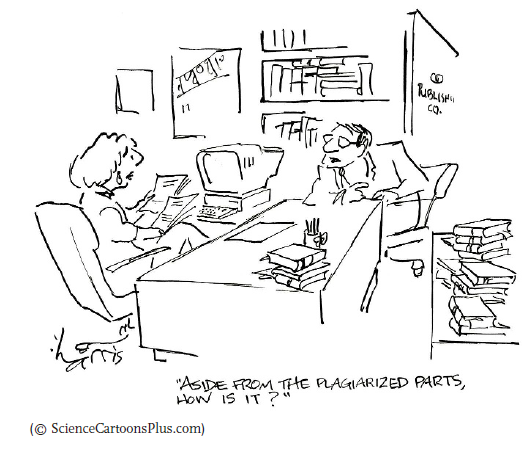
Also be sure to list as an author of your paper everyone who qualifies for authorship. (See Chapter 8 for more in this regard.) Remember as well to include in the acknowledgments those sources of help or other support that should be listed (see Chapter 14).
5. ETHICAL TREATMENT OF HUMANS AND ANIMALS
If your research involves human subjects or animals, the journal to which you submit your paper is likely to require documentation that they were treated ethically. Before beginning your study, obtain all needed permissions with regard to human or animal research. (In the United States, doing so entails having your research protocol reviewed by a designated committee at your institution.)
Then, in your paper, provide the needed statement(s) in this regard. For guidance, see the instructions to authors for the journal to which you are submitting your paper, and use as models papers similar to yours that have appeared in the journal. You may also find it useful to consult relevant sections of style manuals in the sciences. If in doubt, check with the publication office of the journal.
6. DISCLOSURE OF CONFLICTS OF INTEREST
Authors of scientific papers sometimes have conflicts of interest—that is, outside involvements that could, at least in theory, interfere with their objectivity in the research being reported. For example, they may own stock in the company making the product being studied, or they may be consultants to such a company.
Increasingly, it seems, journals are requiring authors to report such conflicts of interest. Some have checklists for doing so, and others ask more generally for disclosure. Journals vary in the degree to which they note conflicts of interest along with published papers (Clark 2005).
Ethics requires honest reporting of conflicts of interest. More importantly, ethics demands that such involvements not interfere with the objectivity of your research. Some scientists avoid all such involvements to prevent even the possibility of seeming biased.
Source: Gastel Barbara, Day Robert A. (2016), How to Write and Publish a Scientific Paper, Greenwood; 8th edition.
The post Ethics in Scientific Publishing appeared first on HKT Consultant.
]]>The post Where to Submit Your Manuscript to academic journals appeared first on HKT Consultant.
]]>Too often, authors write scientific papers and then consider where to publish them. The decision, however, is best made early, before the writing begins. That way, the paper can be geared appropriately to the audience (for example, readers of a general scientific journal, a journal in your discipline as a whole, or a journal in your specialized research field). Also, thus you can initially prepare your manuscript in keeping with the journal’s requirements, rather than having to revise it accordingly. Of course, if your first-choice journal does not accept your paper, you might need to revise your manuscript to suit another journal. But at least you will have avoided a round of revision.
In addition to deciding early on your first-choice journal, decide well. Choosing a journal carefully helps you to reach the most suitable audience, gain appropriate recognition, and avoid needless difficulties with publication. The decision where to submit the manuscript is important. Because of poor choices, some papers are delayed in publication, fail to receive sound review and revision, or lie buried in inappropriate journals. If you submit your manuscript to a poor choice of journal, one of three things can happen—all bad.
First, your manuscript may simply be returned to you, with the comment that your work “is not suitable for this journal.” Often, however, this judgment is not made until after review of the manuscript. A “not suitable” notice after weeks or months of delay is not likely to make you happy.

Second, if the journal is borderline in relation to your work, your manuscript may receive a poor or unfair review because the reviewers (and editors) of that journal may be only vaguely familiar with your specialty area. You may be subjected to the trauma of rejection even though the manuscript would be acceptable to the right journal. Or you could end up with a hassle over suggested revisions that you do not agree with and that do not improve your manuscript. And, if your manuscript really does have deficiencies, you would not be able to benefit from the sound criticism that would come from the editors of the right journal.
Third, even if your paper is accepted and published, your glee will be shortlived if you later find that your work is virtually unknown because it is buried in a publication that few in your intended audience read. Talking with colleagues can help prevent this situation.
Think about the appropriate readership. If, for example, you are reporting a fundamental study in physics, of course you should try to get your paper published in a prestigious international journal. On the other hand, suppose that your study relates to management of a disease found only in Latin America. In that situation, publication in Nature will not reach your audience—the audience that needs and can use your information. You should publish in an appropriate Latin American journal, probably in Spanish.
To start identifying journals to consider, recall what journals have published work similar to yours. The journals publishing the papers that you will cite are often journals to consider. Perhaps ask colleagues to suggest potential publication sites. To help determine whether a journal indeed seems to be a possibility, look in the journal or at its website for statements describing its purpose and scope. Look at some recent issues of the journal to see whether the journal publishes research such as yours and whether the papers are of the type you envision writing.
2. PRESTIGE AND IMPACT
If several journals seem suitable, does it matter which one you choose? Perhaps it shouldn’t matter, but it does. There is the matter of prestige. It may be that progress in your career (job offers, promotions, grants, etc.) will be determined largely by the number of papers you publish. But not necessarily. It may well be that a wise old bird sitting on the faculty committee or the grant review panel will recognize and appreciate quality factors. A paper published in a “garbage” journal simply does not equal a paper published in a prestigious journal. In fact, the wise old bird (and there are quite a few of these in science) may be more impressed by the candidate with one or two solid publications in prestigious journals than by the candidate with 10 or more publications in second- or third-rate journals.
How do you tell the difference? It isn’t easy, and of course there are many gradations. In general, however, you can form reasonable judgments by just a bit of bibliographic research. You will certainly know the important papers that have recently been published in your field. Make it your business to determine where they were published. If most of the real contributions in your field were published in Journal A, Journal B, and Journal C, you should probably limit your choices to those three journals. If Journals D, E, and F, upon inspection, contain only the lightweight papers, each could be eliminated as your first choice, even though the scope is right.
You may then choose among Journals A, B, and C. Suppose that Journal A is an attractive new journal published by a commercial publisher as a commercial venture, with no sponsorship by a society or other organization; Journal B is an old, well-known small journal published by a famous university, hospital, or museum; and Journal C is a large journal published by the principal scientific society in your field. In general (although there are many exceptions), Journal C (the society journal) is probably the most prestigious. It will also have the largest circulation (partly because of quality factors, and partly because society journals are less expensive than others, at least to society members). By publication in such a journal, your paper may have its best chance to make an impact on the community of scholars at whom you are aiming. Journal B might have almost equal prestige, but it might have a very limited circulation, which would be a minus; it might also be very difficult to get into, if most of its space is reserved for in-house material. Journal A (the commercial journal) might well have the disadvantage of low circulation (because of its comparatively high price, which is the result of both the profit aspect of the publisher and the lack of backing by a society or institution with a built-in subscription list). Publication in such a journal may result in a somewhat restricted distribution of your paper.
Be wary of new journals, especially those not sponsored by a society. (In particular, avoid predatory journals, which are discussed later in this chapter.) The circulation may be minuscule, and the journal might fail before it, and your paper, become known to the scientific world. Be wary of publishing in journals that are solely electronic unless you know that those evaluating your work for purposes such as promotion consider those journals as prestigious as journals with printed versions. On the other hand, be wary of publishing in the increasingly few journals that appear only in print, as scientists today expect important scientific literature to be accessible online.
One tool for estimating the relative prestige of journals in a given field is the electronic resource Journal Citation Reports, commonly available through academic libraries. With this resource, you can determine which journals have recently been cited most frequently, both in total and in terms of average number of citations per article published, or impact factor (Garfield 1999). Although not all good journals have impact factors computed, impact factor can be worth considering in judging the prominence of journals. If, in a given field, the average paper in Journal A is cited twice as frequently as the average paper in Journal B, it is likely that researchers find Journal A the more important journal. In some countries and institutions, impact factors of journals in which papers appear are among criteria considered when candidates are evaluated for promotion. However, limitations of the impact factor also should be noted. The impact factor indicates how much the papers in a journal are cited on average— not how much your paper will be cited if it appears in the journal. It does not indicate how much impact other than on citation the papers in a journal have— for example, how much they influence policy or clinical practice. And because different scientific fields have different citation practices, impact factors should not be used to compare importance of journals in different fields. For instance, in biochemistry and molecular biology, in which papers tend to cite many recent papers, the impact factor of the top-cited journal was 32.2 in the year 2014, but in geology it was 4.9. In short, although knowing a journal’s impact-factor ranking in its field can help you assess the scientific importance of a journal, the impact factor does not say everything about the journal’s quality and its suitability for your work. In journal selection as in much else in life, a multidimensional concept cannot validly be reduced to a single number.
Increasingly, experts have emphasized the need to include indicators other than impact factor when assessing the importance of a person’s research. For example, the San Francisco Declaration on Research Assessment (2012), commonly called DORA, calls for using more varied approaches in evaluating research output. These approaches include—in addition to, most importantly, evaluating the scientific content of the article—using multiple journal-based metrics (rather than only impact factor) and looking at article-level metrics. Examples of the latter include how many times an article has been viewed, downloaded, or bookmarked; how much attention it has received in social media and mass media; and how many times and where it has been cited (Tananbaum 2013). Noticing which journals’ articles in your field tend to receive such attention can aid in identifying suitable journals for your papers.

3. ACCESS
Other items to consider when choosing journals can include open access—that is, the provision of articles online free of charge to all who may be interested. One consideration is whether to choose a journal (termed an open-access journal) that immediately provides open access to all its content. At such journals, which do not have subscriptions and so lack this source of income, the costs typically are defrayed at least in part by fees charged to authors. In some countries, these fees commonly are paid from grant funds; it can be wise to consider expected publication costs when preparing the budget for a grant. When authors, such as those in developing countries, cannot afford to pay the fees, the journal may waive or reduce them; if you cannot afford the normal publication fee for an open-access journal in which you hope to publish, contact the journal.
Access-related considerations for publishing in traditional journals can include whether to seek a journal for which the electronic version, initially available only to subscribers, becomes openly accessible relatively fast, for example, in a few months. Also, some journals give authors the option of making their articles freely accessible upon publication in return for paying a fee. Another consideration when publishing in a traditional journal is whether the journal allows rapid posting of articles on authors’ or their institutions’ websites. The website SHERPA/RoMEO (www.sherpa.ac.uk/romeo/) provides information about journals’ policies in such regards.
4. AVOIDING PREDATORY JOURNALS
As noted, open-access journals typically charge authors fees as these journals lack income from subscriptions. Some dishonest people take advantage of this model by claiming to publish valid journals while instead just trying to get authors’ money. These publishers of predatory journals may, for example, post all the papers that they receive, without peer review or editing. Or they might take authors’ money and publish nothing. Submitting papers to such journals advances neither science nor one’s career.
Such journals often market themselves vigorously, filling researchers’ email with invitations to submit papers. How can you recognize, and thus avoid, predatory journals? Clues that a journal might be predatory include promises that seem too good to be true (for example, a guarantee to publish all submissions within a week), a website with many typographical and other errors, inclusion of what seem to be fake metrics (such as “impact index”), and lack of good articles (or any articles at all) on the journal’s website. On the other hand, indications that a journal is likely to be valid include publication of good articles that you already have seen and inclusion of the journal in major bibliographic databases. If you think that a journal might be predatory, consider consulting Beall’s List (scholarlyoa.com/publishers/), compiled by academic librarian Jeffrey Beall. This list of “potential, possible, or probable predatory scholarly open-access publishers” can aid in evaluating one’s suspicions.
Especially if you are inexperienced in publishing, perhaps consult a mentor or senior colleague if you think a journal that you are considering might be predatory. In fact, in any case, such consultation can be wise before finalizing one’s choice of a journal.
5. OTHER FACTORS TO CONSIDER
In choosing a journal, other factors also can merit consideration. One such factor is speed of publication. Increasingly, journals have been publishing papers online before they appear in print or are included in an online issue. You may find it worthwhile to check whether a journal publishes individual articles online first and, if so, how quickly it does so.
The time from acceptance to publication in a journal issue generally reflects the frequency of the journal. For example, the publication lag of a monthly journal is almost always shorter than that ofa quarterly journal. Assuming equivalent review times, the additional delay of the quarterly will range up to 2 or 3 months. Since the publication lag, including the time of editorial review, of many (probably most) monthlies ranges between 4 and 7 months, the lag of the quarterly is likely to run up to 10 months. Remember, also, that many journals, whether monthly, bimonthly, or quarterly, have backlogs. It sometimes helps to ask colleagues what their experience has been with the journal(s) you are considering. If the journal publishes “received for publication” dates, you can figure out for yourself the average lag time.
Even in this electronic age, quality of printing can be a consideration. In biology, the journals published by the American Society for Microbiology and by the Rockefeller University Press traditionally have been especially noted for their high standards in this respect. Whatever your field, look at the reproduction quality of the journal if it will be important to you.
Finally, consider likelihood of acceptance. Clearly, not every paper is important enough and of broad enough interest to appear in Science or Nature. Rather, most papers belong in journals in their disciplines or subdisciplines.
Even within specific fields, some papers are of great enough importance for publication in first-line journals, whereas many others can better find homes elsewhere. In initially submitting your paper, aim high, generally for the broadest and most prestigious journal in which your paper seems to have a realistic chance of publication. To decide on this journal, perhaps look again at candidate journals and consult colleagues. Choosing a journal that is appropriate with regard to subject matter, audience, prestige, access, selectivity, and other factors can help ensure that your paper will be published without undue delay—and that it will be read and recognized by those it should reach.
6. USING INSTRUCTIONS TO AUTHORS
In considering where to submit your paper, you might have looked at some journals’ instructions to authors to learn more about the journals’ scopes, audiences, or requirements. If you have not yet obtained the instructions for the journal you chose, do so before starting to write. Typically, these instructions appear on the website of the journal. In addition, instructions from more than 6,000 biomedical journals can be accessed through the website Instructions to Authors in the Health Sciences, mulford.utoledo.edu/instr. This site also includes links to sets of guidelines that many medical journals follow.
If you do not find instructions to authors immediately, keep looking. Sometimes their location on the journal website is not initially apparent. Also, instructions to authors can have a variety of other names, such as information for authors, guide for authors, and submission instructions. If, after careful searching, you still do not find the instructions, consider asking a more experienced researcher or a librarian for help or contacting the office of the journal. Also, a lack of instructions can be a clue that a journal is predatory rather than legitimate.
Read the instructions for authors thoroughly before starting to prepare your paper. Among questions these instructions may answer are the following:
- Does the journal include more than one category of research article? If so, in what category would yours fit?
- What is the maximum length of articles? What is the maximum length of abstracts?
- Does the journal have a template for articles? If so, how can it be accessed?
- Does the journal post supplementary material online, if applicable? If so, how should this material be provided?
- What sections should the article include? What guidelines should be followed for each?
- What guidelines should be followed regarding writing style?
- How many figures and tables are allowed? What requirements does the journal have for figures and tables?
- In what format should references appear? Is there a maximum number of references?
- In what electronic format should the paper be prepared? Should figures and tables be inserted within the text, or should they appear at the end or be submitted as separate files? Is there an online submission system to use?
Underline, highlight, or otherwise note key points to remember. Then consult the instructions to authors as you prepare the paper. Following the instructions from the outset will save time overall.
Also look carefully at some recent issues of the journal. Pay particular attention to those aspects of editorial style that tend to vary widely from journal to journal. These aspects include the style of literature citation, the use of headings and subheadings, and the design of tables and figures.
Shortly before submitting your manuscript, check the instructions to authors again, and ensure they have been followed. If the instructions include a checklist, use it. By following the instructions carefully, you will facilitate publication of your manuscript from the time you begin to draft it.
Source: Gastel Barbara, Day Robert A. (2016), How to Write and Publish a Scientific Paper, Greenwood; 8th edition.
The post Where to Submit Your Manuscript to academic journals appeared first on HKT Consultant.
]]>The post How to Prepare the Title of a Scientific Paper appeared first on HKT Consultant.
]]>In preparing a title for a paper, you would do well to remember one salient fact: This title will be read by thousands of people. Perhaps few people, if any, will read the entire paper, but many people will read the title, either in the original journal, in one of the secondary (abstracting and indexing) databases, in a search engine’s output, or otherwise. Therefore, all words in the title should be chosen with great care, and their association with one another must be carefully managed. Perhaps the most common error in defective titles, and certainly the most damaging one in terms of comprehension, is faulty syntax (word order).
What is a good title? We define it as the fewest possible words that adequately describe the contents of the paper.
Remember that the indexing and abstracting services depend heavily on the accuracy of the title, as do individual computerized literature-retrieval systems. An improperly titled paper may be virtually lost and never reach its intended audience.
Some authors mistakenly sacrifice clarity in an attempt to be witty. The title of a paper need not, and generally should not, be clever. It must, however, be clear. An example (adapted from Halm and Landon 2007): “Association between
Diuretic Use and Cardiovascular Mortality” could be an adequate title. The authors should resist the temptation to use instead “Dying to Pee.”
2. LENGTH OF THE TITLE
Occasionally, titles are too short. A paper was submitted to the Journal of Bacteriology with the title “Studies on Brucella.” Obviously, such a title was not very helpful to the potential reader. Was the study taxonomic, genetic, biochemical, or medical? We would certainly want to know at least that much.
Much more often, titles are too long. Ironically, long titles are often less meaningful than short ones. A century or so ago, when science was less specialized, titles tended to be long and nonspecific, such as “On the addition to the method of microscopic research by a new way of producing colour-contrast between an object and its background or between definite parts of the object itself” (Rheinberg J. 1896. J. R. Microsc. Soc. 373). That certainly sounds like a poor title; perhaps it would make a good abstract.
Not only scientists have written rambling titles. Consider this one from the year 1705: A Wedding Ring Fit for the Finger, or the Salve of Divinity on the Sore of Humanity with directions to those men that want wives, how to choose them, and to those women that have husbands, how to use them. Ironically, this title appeared on a miniature book (Bernard A. 1995. Now all we need is a title: famous book titles and how they got that way. New York: Norton, p. 58).
Without question, most excessively long titles contain “waste” words. Often, these waste words appear right at the start of the title, words such as “Studies on,” “Investigations on,” and “Observations on.” An opening A, An, or The is also a waste word. Certainly, such words are useless for indexing purposes.
3. NEED FOR SPECIFIC TITLES
Let us analyze a sample title: “Action of Antibiotics on Bacteria.” Is it a good title? In form it is; it is short and carries no excess baggage (waste words). Certainly, it would not be improved by changing it to “Preliminary Observations on the Effect of Certain Antibiotics on Various Species of Bacteria.” However (and this brings us to the next point), most titles that are too short are too short because they include general rather than specific terms.
We can safely assume that the study introduced by the above title did not test the effect of all antibiotics on all kinds of bacteria. Therefore, the title is essentially meaningless. If only one or a few antibiotics were studied, they should be individually listed in the title. If only one or a few organisms were tested, they should be individually listed in the title. If the number of antibiotics or organisms was awkwardly large for listing in the title, perhaps a group name could have been substituted. Examples of more acceptable titles are the following:
“Action of Streptomycin on Mycobacterium tuberculosis.”
“Action of Streptomycin, Neomycin, and Tetracycline on Gram-Positive Bacteria.”
“Action of Polyene Antibiotics on Plant-Pathogenic Bacteria.”
“Action of Various Antifungal Antibiotics on Candida albicans and Aspergillus fumigatus.”
Although these titles are more acceptable than the sample, they are not especially good because they are still too general. If the “Action of” can be defined easily, the meaning might be clearer. For example, the first title might have been phrased “Inhibition of Growth of Mycobacterium tuberculosis by Streptomycin.”
Long ago, Leeuwenhoek used the word “animalcules,” a descriptive but not very specific word. In the 1930s, Howard Raistrick published an important series ofpapers under the title “Studies on Bacteria.” A similar paper today would have a much more specific title. If the study featured an organism, the title would give the genus and species and possibly even the strain. If the study featured an enzyme in an organism, the title would not be anything like “Enzymes in Bacteria.” It would be something like “Dihydrofolate Reductase Produced by Bacillus subtilis.”
4. IMPORTANCE OF SYNTAX
In titles, be especially careful of syntax. Most of the grammatical errors in titles are due to faulty word order.
A paper was submitted to the Journal of Bacteriology with the title “Mechanism of Suppression of Nontransmissible Pneumonia in Mice Induced by Newcastle Disease Virus.” Unless this author had somehow managed to demonstrate spontaneous generation, it must have been the pneumonia that was induced and not the mice. (The title should have read: “Mechanism of Suppression of Nontransmissible Pneumonia Induced in Mice by Newcastle Disease Virus.”)
If you no longer believe that babies result from a visit by the stork, we offer this title (Am. J. Clin. Pathol. 52:42, 1969): “Multiple Infections among Newborns Resulting from Implantation with Staphylococcus aureus 502A.” (Is this the “Staph of Life”?)
Another example (Clin. Res. 8:134, 1960): “Preliminary Canine and Clinical Evaluation of a New Antitumor Agent, Streptovitacin.” When that dog gets through evaluating streptovitacin, we’ve got some work we’d like that dog to look over. A grammatical aside: Please be careful when you use “using.” The word “using” might well be the most common dangling participle in scientific writing. Either there are some more smart dogs, or “using” is misused in this sentence from a manuscript: “Using a fiberoptic bronchoscope, dogs were immunized with sheep red blood cells.”
Dogs aren’t the only smart animals. A manuscript was submitted to the Journal of Bacteriology under the title “Isolation of Antigens from Monkeys Using Complement-Fixation Techniques.”
Even bacteria are smart. A manuscript was submitted to the Journal of Clinical Microbiology under the title “Characterization of Bacteria Causing Mastitis by Gas-Liquid Chromatography.” Isn’t it wonderful that bacteria can use GLC?
5. THE TITLE AS A LABEL
The title of a paper is a label. It normally is not a sentence. Because it is not a sentence, with the usual subject-verb-object arrangement, it is simpler than a sentence (or, at least, shorter), but the order of the words becomes even more important.
Actually, a few journals do permit a title to be a sentence. An example of such a title: “Fruit Flies Diversify Their Offspring in Response to Parasite Infection” (Science 349:747, 2015). One might object to such a title because presence of a verb (in this case, diversify) makes the title seem like a loud assertion. Such a title may sound dogmatic because we are not accustomed to seeing authors present their results in the present tense, for reasons that are discussed in Chapter 30. Rosner (1990, p. 108) gave the name “assertive sentence title” (AST) to this kind of title and presented a number of reasons why such titles should not be used. In particular, ASTs are “improper and imprudent” because “in some cases the AST boldly states a conclusion that is then stated more tentatively in the summary or elsewhere” and “ASTs trivialize a scientific report by reducing it to a one-liner.”
The meaning and order of the words in the title are important to the potential reader who sees the title in the journal table of contents. But these considerations are equally important to all potential users of the literature, including those (probably a majority) who become aware of the paper via secondary sources. Thus, the title should be useful as a label accompanying the paper itself, and it also should be in a form suitable for the machine-indexing systems used by Chemical Abstracts, MEDLINE, and others. In short, the terms in the title should be those that highlight the significant content of the paper.
As an aid to readers, journals commonly print running titles or running heads at the top of each page. Often the title of the journal or book is given at the top of left-facing pages and the article or chapter title is given at the top of rightfacing ages (as in this book). Usually, a short version ofthe title is needed because of space limitations. (The maximum character count is likely to be stated in the journal’s instructions to authors.) It can be wise to suggest an appropriate running title on the title page of the manuscript.
6. ABBREVIATIONS AND JARGON
Titles should almost never contain abbreviations, chemical formulas, proprietary (rather than generic) names, jargon, and the like. In designing the title, the author should ask: “How would I look for this kind of information in an index?” If the paper concerns an effect of hydrochloric acid, should the title include the words “hydrochloric acid,” or should it contain the much shorter and readily recognizable “HCl”? The answer seems obvious. Most of us would look under “hy” in an index, not under “hc.” Furthermore, if some authors used (and journal editors permitted) HCl and others used hydrochloric acid, the user of the bibliographic services might locate only part of the published literature, not noting that additional references are listed under another, abbreviated entry. Actually, the larger secondary services have computer programs that can bring together entries such as deoxyribonucleic acid, DNA, and even ADN (acide deoxyribonucleique). However, by far the best rule for authors (and editors) is to avoid abbreviations in titles. And the same rule should apply to proprietary names, jargon, and unusual or outdated terminology.
7. MORE ABOUT TITLE FORMAT
Many editors are opposed to main title-subtitle arrangements and to hanging titles. The main title-subtitle (series) arrangement was quite common some years ago. (Example: “Studies on Bacteria. IV. Cell Wall of Staphylococcus aureus.”) Today, many editors believe that it is important, especially for the reader, that each published paper “present the results of an independent, cohesive study; thus, numbered series titles are not allowed” (instructions to authors, Journal of Bacteriology). Series papers, in the past, have tended to relate to each other too closely, giving only bits and pieces with each contribution; thus, the reader was severely handicapped unless the whole series could be read consecutively. Furthermore, the series system is annoying to editors because of scheduling problems and delays. (What happens when IV is accepted but III is rejected or delayed in review?) Additional objections are that a series title almost always provides considerable redundancy; the first part (before the roman numeral) is usually so general as to be useless, and the results when the secondary services spin out an index are often unintelligible. (Article titles phrased as questions also can become unintelligible, and so they probably should not be used.)
The hanging title (similar to a series title but with a colon instead of a roman numeral) is considerably better, avoiding some of the problems mentioned. Some journals, especially in the social sciences (Hartley 2007), seem to favor hanging titles, presumably on the grounds that it is helpful to get the most important words of the title up to the front. (Example: “Environmental Science in the Media: Effects of Opposing Viewpoints on Risk and Uncertainty Perceptions” Science Communication 37:287, 2015). Occasionally, hanging titles may aid the reader, but they may appear pedantic, emphasize the general term rather than a more significant term, necessitate punctuation, and scramble indexes.
Use of a straightforward title does not lessen the need for proper syntax, however, or for the proper form of each word in the title. For example, a title reading “New Color Standard for Biology” would seem to indicate the development of color specifications for use in describing plant and animal specimens. However, in the title “New Color Standard for Biologists” (Bioscience 27:762, 1977), the new standard might be useful for study of the taxonomy of biologists, permitting us to separate the green biologists from the blue ones.
Source: Gastel Barbara, Day Robert A. (2016), How to Write and Publish a Scientific Paper, Greenwood; 8th edition.
The post How to Prepare the Title of a Scientific Paper appeared first on HKT Consultant.
]]>The post How to List the Authors and Addresses in your Scientific Paper appeared first on HKT Consultant.
]]>“If you have co-authors, problems about authorship can range from the trivial to the catastrophic” (O’Connor 1991, p. 10).
The easiest part of preparing a scientific paper is simply entering the bylines: the authors and addresses. Sometimes.
We haven’t yet heard of a duel being fought over the order of listing of authors, but there have been instances in which otherwise reasonable, rational colleagues have become bitter enemies solely because they could not agree on whose names should be listed or in what order.
What is the right order? Unfortunately, there are no agreed-upon rules or generally accepted conventions. Some authors, perhaps to avoid arguments among themselves, agree to list their names alphabetically. In the field of mathematics, this practice appears to be standard. Some pairs of researchers who repeatedly collaborate take turns being listed first. If allowed by the journal, sometimes papers include a note indicating that the first two authors contributed equally to the research.
In the past, there was a general tendency to list the head of the laboratory (or, more generally, the head of the research group) as an author whether or not he or she actively participated in the research. Often, the “head” was placed last (second oftwo authors, third ofthree, etc.). As a result, the terminal spot seemed
to acquire prestige. Thus, two authors, neither of whom was head of a laboratory or even necessarily a senior professor, would vie for the second spot. If there were three or more authors, the prestige-seeking author would want the first or last position, but not the one in between.
Commonly, the first author is the person who played the lead role in the research. Qualification to be listed first does not depend on rank. A graduate student, or even an undergraduate, may be listed first if he or she led the research project. And even Nobel laureates are not to be listed first unless their contributions predominate. Multiple authors may then be listed approximately in order of decreasing contribution to the work. In some fields, the head of the laboratory is still often listed last, in which case this position may continue to command particular respect. However, the head should be included only if he or she indeed at least provided guidance. In general, all those listed as authors should have been involved enough to defend the paper or a substantial aspect thereof. Some authors who did not participate substantially in the research have come to regret their inclusion when the reported research was found deficient or even fraudulent.
There is often a tendency to use the laundry-list approach, naming as an author practically everyone in the laboratory. In addition, the trend toward col-laborative research is steadily increasing. Thus, the average number of authors per paper is on the rise.

2. DEFINITION OF AUTHORSHIP
Perhaps we can now define authorship by saying that the listing of authors should include those, and only those, who actively contributed to the overall conceptualization, design, and execution of the research. Further, the authors should normally be listed in order of importance to the research. Colleagues or supervisors should neither ask to have their names on manuscripts nor allow their names to be put on manuscripts reporting research with which they themselves have not been intimately involved. An author of a paper should be defined as one who takes intellectual responsibility for the research results being reported. However, this definition must be tempered by realizing that modern science in many fields is collaborative and multidisciplinary. It may be unrealistic to assume that all authors can defend all aspects of a paper written by contributors from a variety of disciplines. Even so, each author should be held fully responsible for his or her choice of colleagues.
Admittedly, deciding on authorship is not always easy. It is often incredibly difficult to analyze the intellectual input to a paper. Certainly, those who have worked together intensively for months or years on a research problem might have difficulty in remembering who had the original research concept or whose brilliant idea was the key to the success of the experiments. And what do these colleagues do when everything suddenly falls into place as a result of a searching question by the traditional “guy in the next lab” who had nothing whatever to do with the research?
Each listed author should have made an important contribution to the study being reported, with the word important referring to those aspects of the study that produced new information, the concept that defines an original scientific paper.
The sequence of authors on a published paper should be decided, unanimously, before the research is started. A change may be required later, depending on which turn the research takes, but it is foolish to leave this important question of authorship to the very end of the research process.
In some fields, it is not rare to see 10 or more authors listed at the head of a paper. For example, a paper by F. Bulos and others (Phys. Rev. Letters 13:486, 1964) had 27 authors and only 12 paragraphs. Such papers frequently come from laboratories that are so small that 10 people couldn’t fit into the lab, let alone make a meaningful contribution to the experiment. What accounts for the tendency to list a host of authors? There may be several reasons, but one of them no doubt relates to the publish-or-perish syndrome. Some workers wheedle or cajole their colleagues so effectively that they become authors of most or all of the papers coming out of their laboratory. Their research productivity might in fact be meager, yet at year’s end their publication lists might indeed be extensive. In some institutions, such padded lists might result in promotion. Nonetheless, the practice is not recommended. Perhaps a few administrators are fooled, and momentary advantages are sometimes gained by these easy riders. But we suspect that good scientists do not allow dilution of their own work by adding other people’s names for minuscule contributions, nor do good scientists want their own names sullied by addition of the names of a whole herd of lightweights.
To repeat, the scientific paper should list as authors only those who contributed substantially to the work. Unjustified listing of multiple authors adversely affects the real investigators and can lead to bibliographic nightmares. For more on issues relating to the definition of authorship, see Davidoff (2000), Claxton (2005), Scott-Lichter and the Editorial Policy Committee, Council of Science Editors (2012), and International Committee of Medical Journal Editors (2014).
3. DEFINING THE ORDER: AN EXAMPLE
Perhaps the following example will help clarify the level of conceptual or technical involvement that should define authorship.
Suppose that Scientist A designs a series of experiments that might result in important new knowledge, and then Scientist A tells Technician B exactly how to perform the experiments. If the experiments work out and a manuscript results, Scientist A should be the sole author, even though Technician B did all the physical work. (Of course, the assistance of Technician B should be recognized in the acknowledgments.)
Now let us suppose that the experiments just described do not work out. Technician B takes the negative results to Scientist A and says something like, “I think we might get this damned strain to grow if we change the incubation temperature from 24 to 37°C and if we add serum albumin to the medium.” Scientist A agrees to a trial, the experiments this time yield the desired outcome, and a paper results. Technician B also provides some insights that contribute to the interpretation of the results. In this case, Scientist A and Technician B, in that order, should both be listed as authors.
Let us take this example one step further. Suppose that the experiments at 37°C and with serum albumin work, but that Scientist A perceives that there is now an obvious loose end; that is, growth under these conditions suggests that the test organism is a pathogen, whereas the previously published literature had indicated that this organism was nonpathogenic. Scientist A now asks colleague Scientist C, an expert in pathogenic microbiology, to test this organism for pathogenicity. Scientist C runs a quick test by injecting the test substance into laboratory mice in a standard procedure that any medical microbiologist would use and confirms pathogenicity. A few important sentences are then added to the manuscript, and the paper is published. Scientist A and Technician B are listed as authors; the assistance of Scientist C is noted in the acknowledgments.
Suppose, however, that Scientist C gets interested in this peculiar strain and proceeds to conduct a series of well-planned experiments that lead to the conclusion that this particular strain is not just mouse-pathogenic, but is the long- sought culprit in certain rare human infections. Thus, two new tables of data are added to the manuscript, and the results and discussion are rewritten. The paper is then published listing Scientist A, Technician B, and Scientist C as authors. (A case could be made for listing Scientist C as the second author.)
4. SPECIFYING CONTRIBUTIONS
Some journals require a list of which author or authors did what—for example, who designed the research, who gathered the data, who analyzed the data, and who wrote the paper. Some journals publish this list of contributors with the paper. Others just keep it for their own information. Sometimes, there are contributors who are not authors—for example, people who obtained some of the data but did not participate more broadly in the research or who provided technical or other guidance.
Requiring this list of contributions can have at least two advantages. First, it helps ensure that everyone listed as an author deserves to be listed—and that no one who ought to be listed has been left out. Second, if the list is published, it can help readers determine which author to contact for which type of information.
5. PROPER AND CONSISTENT FORM
As to names of authors, the preferred designation normally is given name, middle initial, surname. If an author uses only initials, which has been a regrettable tendency in science, the scientific literature may become confused.
If there are two people named Jonathan B. Jones, the literature services can probably keep them straight (by addresses). But if dozens of people published under the name J. B. Jones (especially if, on occasion, some ofthem use Jonathan B. Jones), the retrieval services have a hopeless task in keeping things neat and tidy. Many scientists resist the temptation to change their names (for example, after marriage) at least in part to avoid confusion in the literature.
Instead of given name, middle initial, and surname, wouldn’t it be better to spell out the middle name? No. Again, we must realize that literature retrieval is a computerized process and that computers can be easily confused. An author with a common name (for example, Robert Jones) might be tempted to spell out his or her middle name, thinking that Robert Smith Jones is more distinctive than Robert S. Jones. However, the resulting double name is a problem. Should the computer index the author as “Jones” or “Smith Jones”? Because double names, with or without hyphens, are common, especially in England and in Latin America, this problem is not an easy one for computers (or for their programmers).
Knowing how to list one’s name on an English-language scientific paper can be difficult for international authors as different languages have different formats for names, and more than one form of transliteration can exist. For authors with Chinese names, an article by Sun and Zhou (2002) offers recommendations. And for authors of a variety of national origins, style manuals can provide guidance, as can editors at journals. Whatever format a scientist chooses, he or she should use it consistently in English-language scientific papers—rather than, for example, using Shou-Chu Qian on some papers, Shouchu Qian on others, and S. Chien on still others.
In general, scientific journals do not print degrees after authors’ names and do not include titles such as Dr. (You know what “B.S.” means. “M.S.” is More of the Same. “Ph.D.” is Piled Higher and Deeper. “M.D.” is Much Deeper.) However, most medical journals do list degrees after the names. Even in medical journals, however, degrees are not given in the references. Contributors should consult the journal’s instructions to authors or a recent issue regarding preferred usage.
6. LISTING THE ADDRESSES
The principles for listing the addresses are simple but often violated. Therefore, authors cannot always be connected with addresses. Most often, however, it has been the style of the journal that creates confusion, rather than sins of commission or omission by the author.
With one author, one address is given (the name and address of the laboratory in which the work was done). If, before publication, the author has moved to a different address, the new address should be indicated in a “present address” footnote.
When two or more authors are listed, each in a different institution, the addresses should be listed in the same order as the authors.
The main probl em arises when a paper is published by, let us say, three authors from two institutions. In such instances, each author’s name and address should include an appropriate designation such as a superior a, b, or c after the author’s name and before (or after) the appropriate address. (Sometimes a journal may just request the affiliation of each author and then do the formatting itself. In this regard as in others, follow the instructions to authors.)

This convention has been useful to readers wanting to know whether an author is at Yale or at Harvard. Clear identification of authors and addresses has been important to several of the secondary services. For these services to function properly, they needed to know whether a paper published by an author with a common name was by the person with that name at Iowa State, Cornell, Cambridge University in England, or Peking University. Only when authors could be properly identified could their publications be grouped together in citation indexes.
7. A SOLUTION: ORCID
Even with addresses, authors can be difficult to distinguish from one another— for example, if two scientists with the same name work at the same institution. Also, some scientists move from one institution to another or do not state their names the same way on all their papers over the years, and so their work is hard to track. Fortunately, a mechanism now exists to unambiguously identify each author.
This mechanism is ORCID, which stands for “Open Researcher and Contributor ID.” An ORCID identifier is a persistent identification number that you can obtain and include with your research communications. When you apply at the ORCID website, you receive a unique identification number and establish an ORCID record online. You can then associate this number with your journal articles, grant proposals, and other writings, both in the future and retroactively. Many journals now ask authors to supply their ORCID identifiers. Information about the ORCID initiative and a link through which to obtain an ORCID identifier appear at orcid.org.
8. PURPOSES OF THE ADDRESSES
Remember that the address serves two purposes. It helps to identify the author; it also indicates how to contact him or her. Because scientists now communicate largely by email, an email address generally should be included at least for the author to whom inquiries about the paper should be conveyed. Some journals use asterisks, footnotes, or the acknowledgments to identify this person. Authors should be aware of journal policy in this regard, and they should decide in advance which author will serve in this role.
The author who should receive inquiries is called the corresponding author. Journals ask that a corresponding author be designated for each paper. The corresponding author typically submits the paper, receives the editor’s decision whether to publish it, submits revisions, works with the editorial office after acceptance (for example, by answering questions from the manuscript editor and checking page proofs), and responds to inquiries from readers. The corresponding author should be someone who expects to be readily reachable during and after the publication process. Opinions vary as to whether being a corresponding author is an honor or just a task.
Unless scientists wish to publish anonymously (or as close to it as possible), full names and a full address should be considered obligatory.
Source: Gastel Barbara, Day Robert A. (2016), How to Write and Publish a Scientific Paper, Greenwood; 8th edition.
The post How to List the Authors and Addresses in your Scientific Paper appeared first on HKT Consultant.
]]>The post How to Prepare the Abstract of a Scientific Paper appeared first on HKT Consultant.
]]>An abstract should be viewed as a miniature version of the paper. The abstract should provide a brief summary of each of the main sections of the paper: introduction, materials and methods, results, and discussion. As Houghton (1975) put it, “An abstract can be defined as a summary of the information in a document.”
“A well-prepared abstract enables readers to identify the basic content of a document quickly and accurately, to determine its relevance to their interests, and thus to decide whether they need to read the document in its entirety” (American National Standards Institute 1979b). The abstract should not exceed the length specified by the journal (commonly, 250 words), and it should be designed to define clearly what is dealt with in the paper. Typically, the abstract should be typed as a single paragraph, as in Figure 9.1. Some journals, however, run “structured” abstracts consisting of a few brief paragraphs, each preceded by a standardized subheading, as in Figure 9.2. Many people will read the abstract, either in the original journal or as retrieved by computer search.
The abstract should (1) state the principal objectives and scope of the investigation, (2) describe the methods employed, (3) summarize the results, and (4) state the principal conclusions. The importance of the conclusions is indicated by the fact that they are often given three times: once in the abstract, again in the introduction, and again (in more detail, probably) in the discussion.

Most or all of the abstract should be written in the past tense because it refers to work done.
The abstract should never give any information or conclusion that is not stated in the paper. Literature must not be cited in the abstract (except in rare instances, such as modification of a previously published method). Likewise, normally the abstract should not include or refer to tables and figures. (Some journals, however, allow or even require the abstract to include a graphic.)

2. TYPES OF ABSTRACTS
The preceding rules apply to the abstracts that are used in primary journals and often without change in the secondary services (Chemical Abstracts, etc.). This type of abstract is often called an informative abstract, and it is designed to condense the paper. It can and should briefly state the problem, the method used to study the problem, and the principal data and conclusions. Often, the abstract supplants the need for reading the full paper; without such abstracts, scientists would not be able to keep up in active areas of research. (However, before citing a paper, you should read it in its entirety because some abstracts— surely not yours, though!—do not convey an entirely accurate picture of the research.) This is the type of abstract that precedes the body of the paper (thus serving as a “heading”) in most journals.
Another type of abstract is the indicative abstract (sometimes called a descriptive abstract). This type of abstract (see Figure 9.3) is designed to indicate the subjects dealt with in a paper, much like a table of contents, making it easy for potential readers to decide whether to read the paper. However, because of the descriptive rather than substantive nature, it can seldom serve as a substitute for the full paper. Thus, indicative abstracts should not be used as “heading” abstracts in research papers, but they may be used in other types of publications, such as review papers, conference reports, and government reports. Such indicative abstracts are often of great value to reference librarians.
An effective discussion of the various uses and types of abstracts was provided by McGirr (1973, p. 4), whose conclusions are well worth repeating: “When writing the abstract, remember that it will be published by itself, and should be self-contained. That is, it should contain no bibliographic, figure, or table references. . . . The language should be familiar to the potential reader. Omit obscure abbreviations and acronyms. Write the paper before you write the abstract, if at all possible.”

Unless a long term is used several times within an abstract, do not abbreviate the term. Wait and introduce the appropriate abbreviation at first use in the text (probably in the introduction).
3. ECONOMY OF WORDS
Occasionally, a scientist omits something important from the abstract. By far the most common fault, however, is the inclusion of extraneous detail.
A scientist once had some terribly involved theory about the relation of matter to energy. He then wrote a terribly involved paper. However, the scientist, knowing the limitations of editors, realized that the abstract of his paper would have to be short and simple if the paper was to be judged acceptable. So, he spent hours and hours honing his abstract. He eliminated word after word until, finally, all of the verbiage had been removed. What he was left with was the shortest abstract ever written: “E = mc2.”
Today, most scientific journals print an abstract before the main text of each paper. Because the abstract precedes the paper itself, and because the editors and reviewers like a bit of orientation, the abstract is almost always the first part of the manuscript read during the review process. Therefore, it is of fundamental importance that the abstract be written clearly and simply. If you cannot make a good impression in your abstract, your cause may be lost. Very often, the reviewer may be perilously close to a final judgment of your manuscript after reading the abstract alone. This could be because the reviewer has a short attention span (often the case). However, if by definition the abstract is simply a very short version of the whole paper, it is only logical that the reviewer will often reach a preliminary conclusion, and that conclusion is likely to be the correct one. Usually, a good abstract is followed by a good paper; a poor abstract is a harbinger of woes to come.
Because an abstract is required by most journals and because a meeting abstract is a requirement for participation in a great many national and international meetings (participation sometimes being determined on the basis of submitted abstracts), scientists should master the fundamentals of abstract preparation.
When writing the abstract, examine every word carefully. If you can tell your story in 100 words, do not use 200. Economically and scientifically, it doesn’t make sense to waste words. The total communication system can afford only so much verbal abuse. Of more importance to you, the use of clear, significant words will impress the editors and reviewers (not to mention readers), whereas the use of abstruse, verbose constructions might well contribute to a check in the “reject” box on the review form.
Here’s an example of an especially brief abstract, which accompanied a paper by M. V. Berry and colleagues (J. Phys. A: Math. Theor. 44:492001, 2011). The title of the paper: “Can apparent superluminal neutrino speeds be explained as a quantum weak measurement?” The abstract: “Probably not.” Should you write abstracts this short? Well, probably not. Normally an abstract should be more informative than this one. But at least, unlike some meandering abstracts, this one answers the question that the research addressed.
4. AKIN TO ABSTRACTS
Some journals include, in addition to abstracts, other components briefly conveying key points to readers, skimmers, or browsers. For example, some journals ask authors to provide a bulleted list of key messages of their articles, either for posting only online or for publication as part of the article as well. Others, for instance, request a nontechnical summary or a brief statement of implications. Some journals require such items to accompany all papers submitted; others request them only for some or all of the papers accepted for publication. Be aware that you may be asked to provide, in essence, an abstract of your abstract.
Source: Gastel Barbara, Day Robert A. (2016), How to Write and Publish a Scientific Paper, Greenwood; 8th edition.
The post How to Prepare the Abstract of a Scientific Paper appeared first on HKT Consultant.
]]>