The post Meta-analysis in management research appeared first on HKT Consultant.
]]>“Meta-analysis is the statistical combination of results from two or more separate studies” (Deeks et al, 2019, chapter 10). When the treatment effect (or effect size) is consistent from one study to the next, meta-analysis can be used to identify this common effect. When the effect varies from one study to the next, meta-analysis may be used to identify the reason for the variation.
Decisions about the utility of an intervention or the validity of a hypothesis cannot be based on the results of a single study, because results typically vary from one study to the next. Rather, a mechanism is needed to synthesize data across studies. Narrative reviews had been used for this purpose, but the narrative review is largely subjective (different experts can come to different conclusions) and becomes impossibly difficult when there are more than a few studies involved. Meta-analysis, by contrast, applies objective formulas (much as one would apply statistics to data within a single study), and can be used with any number of studies.
Pharmaceutical companies use meta-analysis to gain approval for new drugs, with regulatory agencies sometimes requiring a meta-analysis as part of the approval process. Clinicians and applied researchers in medicine, education, psychology, criminal justice, and a host of other fields use meta-analysis to determine which interventions work, and which ones work best. Meta analysis is also widely used in basic research to evaluate the evidence in areas as diverse as sociology, social psychology, sex differences, finance and economics, political science, marketing, ecology and genetics, among others.
Main contentsSee more from basic to advanced




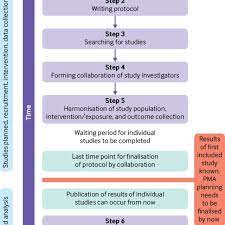
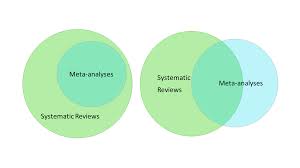


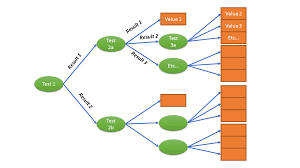

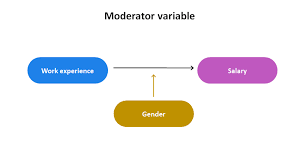
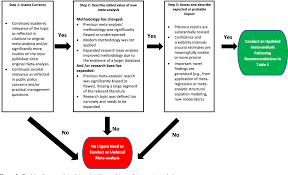




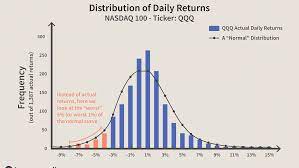


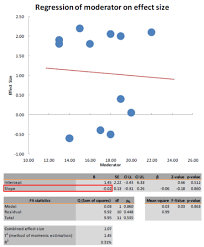
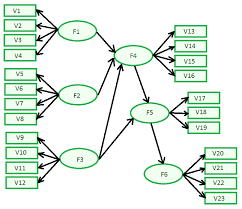
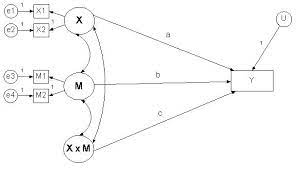
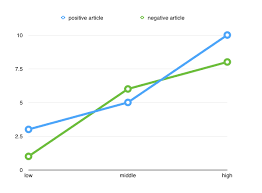
Where does meta-analysis fit in the research process?
Publications
Many journals encourage researchers to submit systematic reviews and meta-analyses that summarize the body of evidence on a specific question, and this approach is replacing the traditional narrative review. Meta-analyses also play supporting roles in other papers. For example, a paper that reports results for a new primary study might include a meta-analysis in the introduction to synthesize prior data and help to place the new study in context.
Planning new studies
Meta-analyses can play a key role in planning new studies. The meta-analysis can help identify which questions have already been answered and which remain to be answered, which outcome measures or populations are most likely to yield significant results, and which variants of the planned intervention are likely to be most powerful.
Grant applications
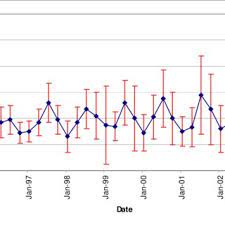
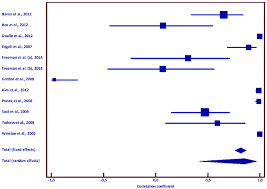
Meta-analyses are used in grant applications to justify the need for a new study. The meta-analysis serves to put the available data in context and to show the potential utility of the planned study. The graphical elements of the meta-analysis, such as the forest plot, provide a mechanism for presenting the data clearly, and for capturing the attention of the reviewers. Some funding agencies now require a meta-analysis of existing research as part of the grant application to fund new research.
The post Meta-analysis in management research appeared first on HKT Consultant.
]]>The post The Need for Research Synthesis in the Social Sciences appeared first on HKT Consultant.
]]>Together, the principles of orderly accumulation and replication of empirical research suggest that scientific knowledge should steadily progress. However, it is reasonable to ask if this is really the case. One obstacle to this progression is that scientists are humans with finite abilities to retain, organize, and synthesize empirical findings. In most areas of research, stud-ies are being conducted at an increasing rate, making it difficult for scholars to stay informed of research in all but the narrowest areas of specialization. I argue that many areas of social science research are in less need of further research than they are in need of organization of the existing research. A second obstacle is that studies are rarely exact replications of one another, but instead commonly use slightly different methods, measures, and/or samples.1 This imperfect replication makes it difficult (1) to separate meaningful differences in results from expectable sampling fluctuations, and (2) if there are meaningful differences in results across studies, to determine which of the several differences in studies account for the differences in results.
An apparent solution to these obstacles is that scientists systematically review results from the numerous studies, synthesizing results to draw conclusions regarding typical findings and sources of variability across studies. One method of conducting such systematic syntheses of the empirical literature is through meta-analysis, which is a methodological and statistical approach to drawing conclusions from empirical literature. As I hope to demonstrate in this book, meta-analysis is a particularly powerful tool in drawing these sorts of conclusions from the existing empirical literature. Before describing this tool in the remainder of the book, in this chapter I introduce some terminology of this approach, provide a brief history of meta-analysis, further describe the process of research synthesis as a scientific endeavor, and then provide a more detailed preview of the remainder of this book.
Source: Card Noel A. (2015), Applied Meta-Analysis for Social Science Research, The Guilford Press; Annotated edition.
The post The Need for Research Synthesis in the Social Sciences appeared first on HKT Consultant.
]]>The post Basic Terminology in Meta-Analysis appeared first on HKT Consultant.
]]>1. Meta-Analysis versus Primary or Secondary Analysis
The first piece of terminology to clarify are the differences among the terms “meta-analysis,” “primary analysis,” and “secondary analysis” (Glass, 1976). The term “primary analysis” refers to what we typically think of as data anal- ysis—when a researcher collects data from individual persons, companies, and so on,2 and then analyzes these data to provide answers to the research questions that motivated the study. The term “secondary analysis” refers to re-analysis of these data, often to answer different research questions or to answer research questions in a different way (e.g., using alternative analytic approaches that were not available when the data were originally analyzed). This secondary data analysis can be performed either by the original researchers or by others if they are able to obtain the raw data from the researchers. Both primary and secondary data analysis require access to the full, raw data as collected in the study.
In contrast, meta-analysis involves the statistical analysis of the results from more than one study. Two points of this definition merit consideration in differentiating meta-analysis from either primary or secondary analysis. First, meta-analysis involves the results of studies as the unit of analysis, specifically results in the form of effect sizes. Obtaining these effect sizes does not require having access to the raw data (which are all-too-often unavailable), as it is usually possible to compute these effect sizes from the data reported in papers resulting from the original, primary or secondary, analysis. Second, meta-analysis is the analysis of results from multiple studies, in which individual studies are the unit of analysis. The number of studies can range from as few as two to as many as several hundred (or more, limited only by the availability of relevant studies). Therefore, a meta-analysis involves drawing inferences from a sample of studies, in contrast to primary and secondary analyses that involve drawing inferences from a sample of individuals. Given this goal, meta-analysis can be considered a form of literature review, as I elaborate next.
2. Meta-Analysis as a Form of Literature Review
A second aspect of terminological consideration involves the place of metaanalysis within the larger family of literature reviews. A literature review can be defined as a synthesis of prior literature on a particular topic. Literature reviews differ along several dimensions, including their focus, goals, perspective, coverage, organization, intended audience, and method of synthesis (see Cooper, 1988, 2009a). Two dimensions are especially important in situating meta-analysis within the superordinate family of literature reviews: focus and method of synthesis. Figure 1.1 shows a schematic representation of how meta-analysis differs from other literature reviews in terms of focus and method of synthesis.
Meta-analyses, like other research syntheses, focus on research outcomes (not the conclusion reached by study authors, which Rosenthal noted are “only vaguely related to the actual results” (1991, p. 13). Reviews focusing on research outcomes answer questions such as “The existing research shows X” or “These types of studies find X, whereas these other types of studies find Y.” Other types of literature reviews have different foci. Theoretical reviews focus on what theoretical explanations are commonly used within a field, attempt to explain phenomena using a novel theoretical alternative, or seek to integrate multiple theoretical perspectives. These are the types of reviews that are commonly reported in, for example, Psychological Review. Survey reviews focus on typical practices within a field, such as the use of particular methods in a field or trends in the forms of treatment used in published clinical trials (e.g., Card & Little, 2007, surveyed published research in child development to report the percentage of studies using longitudinal designs). Although reviews focusing on theories or surveying practices within the literature are valuable contributions to science, it is important to distinguish the focus of meta-analysis on research outcomes from these other types of reviews.

However, not all reviews that focus on research outcomes are metaanalyses. What distinguishes meta-analysis from other approaches to research synthesis is the method of synthesizing findings to draw conclusions. The methods shown in the bottom of Figure 1.1 can be viewed as a continuum from qualitative to quantitative synthesis. At the left is the narrative review. Here, the reviewer evaluates the relevant research and somehow draws con-
elusions. This “somehow” represents the limits of this qualitative, or narrative, approach to research synthesis. The exact process of how the reviewer draws eonelusions is unknown, or at least not artieulated, so there is eon- siderable room for subjectivity in the research conclusions reached. Beyond just the potential for subjective bias to emerge, this approach to synthesizing research taxes the reviewer’s ability to process information. Reviewers who attempt to synthesize research results qualitatively tend to perceive more inconsistency and smaller magnitudes of effects than those performing metaanalytic syntheses (Cooper & Rosenthal, 1980). In sum, the most common method of reviewing research—reading empirical reports and “somehow” drawing conclusions—is prone to subjectivity and places demands on the reviewer that make conclusions difficult to reach.
Moving toward the right, or quantitative direction, of Figure 1.1 are two vote-counting methods, which I have termed informal and formal. Both involve considering the significance of effects from research studies in terms of significant positive, significant negative, or nonsignificant results, and then drawing conclusions based on the number of studies finding a particular result. Informal (also called conventional) vote counting involves simply drawing conclusions based on “majority rules” criteria; so, if more studies find a significant positive effect than find other effects (nonsignificant or significant negative), one concludes that there is a positive effect. A more formal vote-counting approach (see Bushman & Wang, 2009) uses statistical analysis of the expected frequency of results given the type I error rates (e.g., Given a traditional type I error rate of .05, do significantly more than 5% of studies find an effect?). Although vote-counting methods can be useful when information on effect sizes is unavailable, I do not discuss them in this book for two reasons (for descriptions of these vote-counting methods, see Bushman & Wang, 2009). First, conclusions of the existence of effects (i.e., statistical significance) can be more powerfully determined using meta-analytic procedures described in this book. Second, conclusions of significance alone are unsatisfying, and the focus of meta-analysis is on effect sizes that provide information about the magnitude of the effect.3
At the right side of Figure 1.1 is meta-analysis, which is a form of research synthesis in which conclusions are based on the statistical analysis of effect sizes from individual studies.4 I reserve further description of meta-analysis for the remainder of the book, but my hope here is that this taxonomy makes clear that meta-analysis is only one approach to conducting a literature review. Specifically, meta-analysis is a quantitative method of synthesizing empirical research results in the form of effect sizes. Despite this specificity, meta-analysis is a flexible and powerful approach to advancing scientific knowledge, in that it represents a statistically defensible approach to synthesizing empirical findings, which are the foundation of empirical sciences.
Source: Card Noel A. (2015), Applied Meta-Analysis for Social Science Research, The Guilford Press; Annotated edition.
The post Basic Terminology in Meta-Analysis appeared first on HKT Consultant.
]]>The post A Brief History of Meta-Analysis appeared first on HKT Consultant.
]]>There exist several early individual attempts to combine statistically results from multiple studies. Olkin (1990) cites Karl Pearson’s work in 1904 to synthesize associations between inoculation and typhoid fever, and several similar approaches were described from the 1930s. Methods of combining probabilities advanced in the 1940s and 1950s (including the method that became well known as Stouffer’s method; see Rosenthal, 1991). But these approaches saw little application in the social sciences until the 1970s (with some exceptions such as work by Rosenthal in the 1960s; see Rosenthal, 1991).
It was only in the late 1970s that meta-analysis found its permanent place in the social sciences. Although several groups of researchers developed techniques during this time (e.g., Rosenthal & Rubin, 1978; Schmidt & Hunter, 1977), it was the work of Gene Glass and colleagues that introduced the term “meta-analysis” (Glass, 1976) and prompted attention to the approach, especially in the field of psychology. Specifically, Smith and Glass (1977) published a meta-analysis of the effectiveness of psychotherapy from 375 studies, showing that psychotherapy was effective and that there is little difference in effectiveness across different types of therapies. Although the former finding, introduced by Glass, would probably have been received with little disagreement, the latter finding by Smith and Glass was controversial and prompted considerable criticism (e.g., Eysenck, 1978). The controversial nature of Smith and Glass’s conclusion seems to have had both positive and negative consequences for meta-analysis. On the positive side, their convincing approach to the difficult question of the relative effectiveness of psychotherapies likely persuaded many of the value of meta-analysis. On the negative side, the criticisms of this particular study (which I believe were greater than would have been leveled against meta-analysis of a less controversial topic) have often been generalized to the entire practice of meta-analyses. I describe these criticisms in greater detail in Chapter 2.
Despite the controversial nature of this particular introduction of metaanalysis to psychology, the coming years witnessed a rapid increase in this approach. In the early 1980s, several books describing the techniques of metaanalysis were published (Glass, McGraw, & Smith, 1981; Hunter, Schmidt, & Jackson, 1982; Rosenthal, 1984). Shortly thereafter, Hedges and Olkin (1985) published a book on meta-analysis that was deeply rooted in traditional statistics. This rooting was important both in bringing formality and perceived statistical merit to the approach, as well as serving as a starting point for subsequent advances to meta-analytic techniques.
The decades since the introduction of meta-analysis to the social sciences have seen increasing use of this technique. Given its widespread use in social science research during the past three decades, it appears that metaanalysis is here to stay. For this reason alone, scholars need to be familiar with this approach in order to understand the scientific literature. However, understanding meta-analysis is valuable not only because it is widely used; more importantly, meta-analysis is widely used because it represents a powerful approach to synthesizing the existing empirical literature and contributing to the progression of science. My goal in the remainder of this book is to demonstrate this value to you, as well as to describe how one conducts a meta-analytic review.
Source: Card Noel A. (2015), Applied Meta-Analysis for Social Science Research, The Guilford Press; Annotated edition.
The post A Brief History of Meta-Analysis appeared first on HKT Consultant.
]]>The post The Scientific Process of Research Synthesis appeared first on HKT Consultant.
]]>As in any scientific endeavor, the first stage of a literature review is to formulate a problem. Here, the central considerations involve the question that you wish to answer, the constructs you are interested in, and the population about which you wish to draw conclusions. In terms of the questions answered, a literature review can only answer questions for which prior literature exists. For instance, to make conclusions of causality, the reviewer will need to rely on experimental (or perhaps longitudinal, as an approximation) studies; concurrent naturalistic studies would not be able to provide answers to this question. Defining the constructs of interest seems straightforward but poses two potential complications: The existing literature may use different terms or operationalizations for the same construct, or the existing literature may use similar terms to describe different constructs. Therefore, you need to define clearly the constructs of interest when planning the review. Similarly, you must consider which samples will be included in the literature review; for instance, you need to decide whether studies of unique populations (e.g., prison, psychiatric settings) should be included within the review. The advantages of a broad approach (in terms of constructs and samples) are that the conclusions of the review will be more generalizable and may allow for the identification of important differences among studies. However, a narrow approach will likely yield more consistent (i.e., more homogeneous, in the language of meta-analysis) results, and the quantity of literature that must be reviewed is smaller. Both of these features might be seen as advantages or disadvantages, depending on the goals (e.g., to identify average effects versus moderators) and ambition (in terms of the number of studies one is willing to code) of the reviewer.
The next step in a literature review is to obtain the literature relevant for the review. Here, the important consideration is that the reviewer is exhaustive, or at least representative, in obtaining relevant literature. It is useful to conceptualize the literature included as a sample drawn from a population of all possible studies. Adapting this conceptualization (and paralleling well- known principles of empirical primary research) highlights the importance of obtaining a representative sample of literature for the review. If the literature reviewed is not representative of the extant research, then the conclusions drawn will be a biased representation of reality. One common threat to all literature reviews is publication bias (also known as the file drawer problem). This threat is that studies that fail to find significant effects (or that find effects counter to what is expected) are less likely to be published, and therefore less likely to be accessible to the reviewer. To counter this threat, you should attempt to obtain unpublished studies (e.g., dissertations), which will either counter this threat or at least allow you to evaluate the magnitude of this bias (e.g., evaluating whether published versus unpublished studies find different effects). Another threat is that reviewers typically must rely on literature written in a language they know (e.g., English); this excludes literature written in other languages and therefore may exclude most studies conducted in other countries. Although it would be impractical to learn every language in which relevant literature may be written, you should be aware of this limitation and how it impacts the literature on which the review is based. To ensure the transparency of a literature review, the reviewer should report the means by which potentially relevant literature was searched and obtained.
The third, related, stage of a literature review is the evaluation of studies to decide which should inform the review. This stage involves reading the literature obtained in the prior stage (searching for relevant literature) and drawing conclusions regarding relevance. Obvious reasons to exclude works include investigation of constructs or samples that are irrelevant to the review (e.g., studies involving animals when one is interested in human behavior) or failure of the work to provide information relevant to the review (e.g., it treats the construct of interest only as a covariate without providing sufficient information about effects). Less obvious decisions need to be made for works that involve questionable quality or methodological features different from other studies. Including such works may improve the generalizabil- ity of the review but at the same time may contaminate the literature basis or distract from your focus. Decisions at this stage will typically involve refining the problem formulated at the first stage of the review.
The fourth stage is the most time-consuming and difficult: analyzing and interpreting the literature. As mentioned, there exist several approaches to how reviewers draw conclusions, ranging from qualitative to informal or formal vote counting to meta-analysis. For a meta-analysis, this stage involves systematically coding study characteristics and effect sizes, and then statistically analyzing these coded data. As I describe later in this book (Chapter 2) there are powerful advantages to using a meta-analytic approach.
The final stage of the literature review is the presentation of the review, often in written form. Although I suspend detailed recommendations on reporting meta-analyses until later in the book, a few general guidelines should be considered here. First, we should be transparent about the review process and decisions taken. Just as empirical works are expected to present sufficient details so that another researcher could replicate the results, a well- written research synthesis should provide sufficient detail for another scholar to replicate the review. Second, it is critical that the written report answers the original questions that motivated the review, or at least describes why such answers cannot be reached and what future work is needed to provide these answers. A third, related, guideline is that we should avoid a simple study-by-study listing. A good review synthesizes—not merely lists—the literature. Meta-analysis provides a powerful way of drawing valuable information from multiple studies that goes far beyond merely listing their individual results.
Source: Card Noel A. (2015), Applied Meta-Analysis for Social Science Research, The Guilford Press; Annotated edition.
The post The Scientific Process of Research Synthesis appeared first on HKT Consultant.
]]>The post Identifying Goals and Research Questions for Meta-Analysis appeared first on HKT Consultant.
]]>Considering the goal of integration, meta-analyses follow one of two1 general approaches: combining and comparing studies. Combining studies involves using the effect sizes from primary studies to collectively estimate a typical effect size, or range of effect sizes. You will also typically make inferences about this estimated mean effect size in the form of statistical significance testing and/or confidence intervals. I describe these methods in Chapters 8 and 10. The second approach to integration using meta-analysis is to compare studies. This approach requires the existence of variability (i.e., heterogeneity) of effect sizes across studies, and I describe how you can test for heterogeneity in Chapter 8. If the studies in your meta-analysis are heterogeneous, then the goal of comparison motivates you to evaluate whether effect sizes found in studies systematically differ depending on coded study characteristics (Chapter 4) through meta-analytic moderator analyses (Chapter 9).
We might think of combination and comparison as the “hows” of metaanalysis; if so, we still need to consider the “whats” of meta-analysis. The goal of meta-analytic combination is to identify the average effect sizes, and metaanalytic comparison evaluates associations between these effect sizes and study characteristics. The common component of both is the focus on effect sizes, which represent the “whats” of meta-analysis. Although many different types of effect sizes exist, most represent associations between two variables (Chapter 5; see Chapter 7 for a broader consideration). Despite this simplicity, the methodology under which these two-variable associations were obtained is critically important in determining the types of research questions that can be answered in both primary and meta-analysis. Concurrent associations from naturalistic studies inform only the degree to which the two variables co-occur. Across-time associations from longitudinal studies (especially those controlling for initial levels of the presumed outcome) can inform temporal primacy, as an imperfect approximation of causal relations. Associations from experimental studies (e.g., association between group random assignment and outcome) can inform causality to the extent that designs eliminate threats to internal validity. Each of these types of associations is represented as an effect size in the same way in a meta-analysis, but they obviously have different implications for the phenomenon under consideration. It is also worth noting here that a variety of other effect sizes index very different “whats,” including means, proportions, scale reliabilities, and longitudinal change scores; these possibilities are less commonly used but represent the range of effect sizes that can be used in meta-analysis (see Chapter 7).
Crossing the “hows” (i.e., combination and comparison) with the “whats” (i.e., effect sizes representing associations from concurrent naturalistic, longitudinal naturalistic, quasi-experimental, and experimental designs, as well as the variety of less commonly used effect sizes) suggests the wide range of research questions that can be answered through meta-analysis. For example, you might combine correlations between X and Y from concurrent naturalistic studies to identify the best estimate of the strength of this association. Alternatively, you might combine associations between a particular form of treatment (as a two-group comparison receiving versus not receiving) and a particular outcome, obtained from internally valid experimental designs, to draw conclusions of how strongly the treatment causes improvement in functioning. In terms of comparison, you might evaluate the extent to which X predicts later Y in longitudinal studies of different duration in order to evaluate the time frame over which prediction (and possibly causal influence) is strongest. Finally, you might compare the reliabilities of a particular scale across studies using different types of samples to determine how useful this scale is across populations. Although I could give countless other examples, I suspect that these few illustrate the types of research questions that can be answered through meta-analysis. Of course, the particular questions that are of interest to you are going to come from your own expertise with the topic; but considering the possible crossings between the “hows” (combination and comparison) and the “whats” (various types of effect sizes) offers a useful way to consider the possibilities.
Source: Card Noel A. (2015), Applied Meta-Analysis for Social Science Research, The Guilford Press; Annotated edition.
The post Identifying Goals and Research Questions for Meta-Analysis appeared first on HKT Consultant.
]]>The post The Limits of Primary Research and the Limits of Meta-Analytic Synthesis appeared first on HKT Consultant.
]]>1. Limits of Study Design
Experimental designs allow inferences of causality but may be of questionable ecological validity. Certain features of the design of experimental (and quasi-experimental) studies dictate the extent to which conclusions are valid (see Shadish, Cook, & Campbell, 2002). Naturalistic (a.k.a. correlational) designs are often advantageous in providing better ecological validity than experimental designs and are often useful when variables of interest cannot, or cannot ethically, be manipulated. However, naturalistic designs cannot answer questions of causality, even in longitudinal studies that represent the best nonexperimental attempts to do so (see, e.g., Little, Card, Preacher, & McConnell, 2009).
Whatever limits due to study design that exist within a primary study (e.g., problems of internal validity in suboptimally designed experiments, ambiguity in causal influence in naturalistic designs) will also exist in a metaanalysis of those types of studies. For example, meta-analytically combining experimental studies that all have a particular threat to internal validity (e.g., absence of double-blind procedures in a medication trial) will yield conclusions that also suffer this threat. Similarly, meta-analysis of concurrent correlations from naturalistic studies will only tell you about the association between X and Y, not about the causal relation between these constructs. In short, limits to the design that are consistent across primary studies included in a meta-analysis will also serve as limits to the conclusions of the metaanalysis.
2. Limits of Sampling
Primary studies are also limited in that researchers can only generalize the results to populations represented by the sample. Findings from studies using samples homogeneous with respect to certain characteristics (e.g., gender, ethnicity, socioeconomic status, age, settings from which the participants are sampled) can only inform understanding of populations with characteristics like the sample. For example, a study sampling predominantly White, middle- and upper-class, male college students (primarily between 18 and 22 years of age) in the United States cannot draw conclusions about individuals who are ethnic minority, lower socioeconomic status, females of a different age range not attending college, and/or not living in the United States.
These limits of generalizability are well known, yet widespread, in much social science research (e.g., see Graham, 1992, for a survey of ethnic and socioeconomic homogeneity in psychological research). One feature of a well- designed primary study is to sample intentionally a heterogeneous group of participants in terms of salient characteristics, especially those about which it is reasonable to expect findings potentially to differ, and to evaluate these factors as potential moderators (qualifiers) of the findings. Obtaining a heterogeneous sample is difficult, however, in that the researcher must typically obtain a larger overall sample, solicit participants from multiple settings (e.g., not just college classrooms) and cultures (e.g., not just in one region or country), and ensure that the methods and measures are appropriate for all participants. The reality is that few if any single studies can sample the wide range of potentially relevant characteristics of the population about which we probably wish to draw conclusions.
These same issues of sample generalizability limit conclusions that we can draw from the results of meta-analyses. If all primary studies in your meta-analysis sample a similar homogeneous set of participants, then you should only generalize the results of meta-analytically combining these results to that homogeneous population. However, if you are able to obtain a collection of primary studies that are diverse in terms of sample characteristics, even if the studies themselves are individually homogeneous, then you can both (1) evaluate potential differences in results based on sample characteristics (through moderator analyses; see Chapter 9) and (2) make conclusions that are generalizable to this more heterogeneous population. In this way, meta-analytic reviews have the potential to draw more generalizable conclusions than are often tractable within a primary study, provided you are able to obtain studies collectively consisting of a diverse range of participants. However, you should keep in mind the limits of the samples of studies included in your meta-analysis and be cautious not to extrapolate beyond these limits. Most meta-analyses contain some limits—intentional (specified by inclusion/exclusion criteria; see Chapter 3) or unintentional (required by the absence or unavailability—e.g., written in a language that you do not know—of primary research with some populations)—that limit the generalizability of conclusions.
3. Limits of Methodological Artifacts
Researchers planning and conducting primary studies do not intentionally impose methodological artifacts, but these often arise. These artifacts, described in detail in Chapter 6, can arise from imperfect measures (imperfect reliability or validity), sampling homogeneity (resulting in direct or indirect restriction of ranges among variables of interest), or poor data-analytic choices (e.g., artificial dichotomization of continuous variables). These artifacts typically2 attentuate, or diminish, the effect sizes estimated in primary studies. This attenuation leads to lower statistical power (higher rates of type II error) and underestimation of the magnitude—and potentially the impor- tance—of the results.
These artifacts can be corrected in the sense that it is possible to estimate the magnitude of “true” effect sizes disattenuated for these artifacts. In primary studies, this is rarely done, with the exception of those using latent variable analyses to correct for unreliability (see, e.g., Kline, 2005). This correction for attenuation of effect sizes is more common in meta-analyses, though the practice is somewhat controversial and varies across disciplines (see Chapter 6). Whether or not you correct for certain artifacts in your own meta-analyses should guide the extent to which you view these artifacts as potential limits (by attenuating your effect sizes and potentially introducing less meaningful heterogeneity).
4. Limits of Statistical Power
Statistical power refers to the probability of concluding that an effect exists when it truly does. The converse of statistical power is type II error, or failing to conclude that an effect exists when it does. Although this concept of statistical power is rooted in the Null Hypothesis Significance Testing framework (which is problematic, as I describe in Chapter 5), statistical power is also relevant in other frameworks such as reliance on point estimates and confidence intervals in describing results (i.e., low statistical power leads to large confidence intervals).
The statistical power of a primary study depends on several factors, including the type I error rate (i.e., a) set by the researcher, the type of analysis performed, and the magnitude of the effect size within the population. However, because these other factors are typically out of the researcher’s control,3 statistical power is dictated primarily by sample size, where larger sample sizes yield greater statistical power. When planning primary studies, researchers should conduct power analyses to guide the number of participants needed to have a certain probability (often .80) of detecting an effect size of a certain magnitude (for details see, e.g., Cohen, 1969; Kraemer & Thiemann, 1987; Murphy & Myors, 2004).
Despite the potential for power analysis to guide study design, there are many instances when primary studies are underpowered. This might occur because the power analysis was based on an unrealistically high expectation of population effect size, because it was not possible to obtain enough participants due to limited resources or scarcity of appropriate participants (e.g., when studying individuals with rare conditions), or because the researcher failed to perform a power analysis in the first place. In short, although inadequate statistical power is not a problem inherent to primary research, it is plausible that in many fields a large number of existing studies do not have adequate statistical power to detect what might be considered a meaningful magnitude of effect (see, e.g., Halpern, Karlawish, & Berlin, 2002; Maxwell, 2004).
When a field contains many studies that fail to demonstrate an effect because they have inadequate statistical power, there is the danger that readers of this literature will conclude that an effect does not exist (or that it is weak or inconsistent). In these situations, a meta-analysis can be useful in combining the results of numerous underpowered studies within a single analysis that has greater statistical power.4 Although meta-analyses can themselves have inadequate statistical power, they will generally5 have greater statistical power than the primary studies comprising them (Cohn & Becker, 2003). For this reason, meta-analyses are generally less impacted by inadequate statistical power than are primary studies (but see Hedges & Pigott, 2001, 2004 for discussion of underpowered metaanalyses).
Source: Card Noel A. (2015), Applied Meta-Analysis for Social Science Research, The Guilford Press; Annotated edition.
The post The Limits of Primary Research and the Limits of Meta-Analytic Synthesis appeared first on HKT Consultant.
]]>The post Critiques of Meta-Analysis: When Are They Valid and When Are They Not? appeared first on HKT Consultant.
]]>In the remainder of this section, I review some of the most common criticisms of meta-analysis (see also, e.g., Rosenthal & DiMatteo, 2001; Sharpe, 1997). I also attempt to provide an objective consideration of the extent, and under what conditions, these criticisms are valid. At the end of this section, I place these criticisms in perspective by noting that many apply to any literature review.
1. Amount of Expertise Needed to conduct and understand
Although not necessarily a critique, I think it is important first to address a common misperception I encounter: that meta-analysis requires extensive statistical expertise to conduct. Although very advanced, complex methods exist for various aspects of meta-analysis, most meta-analyses do not require especially complicated analyses. The techniques might seem rather obscure or complex when one is first reading meta-analyses; I believe that this is primarily because most of us received considerable training in primary analysis during our careers, but have little if any exposure to meta-analysis. However, performing a basic yet sound meta-analysis requires little more expertise than that typically acquired in a research-oriented graduate social science program, such as the ability to compute means, variances, and perhaps perform an analysis of variance (ANOVA) or regression analysis, albeit with some small twists in terms of weighting and interpretation.6
Although I do not view the statistical expertise needed to conduct a sound meta-analysis as especially high, I do feel obligated to make clear that metaanalyses are not easy. The time required to search adequately for and code studies is substantial (see Chapters 3-7). The analyses, though not requiring an especially high level of statistical complexity, must be performed with care and by someone with the basic skills of meta-analysis (such as provided in Chapters 8-11). Finally, the reporting of a meta-analysis can be especially difficult given that you are often trying to make broad, authoritative statements about a field (see Chapters 13-14). My intention is not to scare anyone away from performing a meta-analysis, but I think it is important to recognize some of the difficulty in this process. However, needing a large amount of statistical expertise is not one of these difficulties for most meta-analyses you will want to perform.
2. Quantitative Analysis May Lack “Qualitative Finesse” of Evaluating Literature
Some complain that meta-analyses lack the “qualitative finesse” of a narrative review, presumably meaning that it fails to make creative, nuanced conclusions about the literature. I understand this critique, and I agree that some meta-analysts can get too caught up in the analyses themselves at the expense of carefully considering the studies. However, this tendency is certainly not inherent to meta-analysis, and there is certainly nothing to preclude the meta-analyst from engaging in this careful consideration.
To place this critique in perspective, I think it is useful to consider the general approaches of qualitative and quantitative analysis in primary research. Qualitative research undoubtedly provides rich, nuanced information that has contributed substantially to understanding in nearly all areas of social sciences. At the same time, scientific progress would be limited if we did not also rely on quantitative methods and on methods of analyzing these quantitative data. Few scientists would collect quantifiable data from dozens or hundreds of individuals, but would instead use a method of analysis consisting of looking at the data and “somehow” drawing conclusions about central tendency, variability, and co-occurrences of individual differences. In sum, there is substantial advantage to conducting primary research using both qualitative and quantitative analyses, or a combination of both.
Extending this value of qualitative and quantitative analyses in primary research to the process of research synthesis, I do not see careful, nuanced consideration of the literature and meta-analytic techniques to be mutually exclusive processes. Instead, I recommend that you rely on the advantages of meta-analysis in synthesizing vast amounts of information and aiding in drawing probabilistic inferential conclusions, but also using your knowledge of your field where these quantitative analyses fall short. Furthermore, metaanalytic techniques provide results that are statistically justifiable (e.g., there is an effect size of a certain range of magnitude; some type of studies provide larger effect sizes than another type), but it is up to you to connect these findings to relevant theories in your field. In short, a good meta-analytic review requires both quantitative methodology and “qualitative finesse.”
3. The “Apples and Oranges” Problem
The critique known as the “apples and oranges problem” was first used as a critique against Smith and Glass’s (1977) meta-analytic combination of studies using diverse methods of psychotherapy in treating a wide range of problems among diverse samples of people (see Sharpe, 1997). Critics charge that including such a diverse range of studies in a meta-analysis yields meaningless results.
I believe that this critique is applicable only to the extent that the metaanalyst wants to draw conclusions about apples or oranges; if you want to draw conclusions only about a narrowly defined population of studies (e.g., apples), then it is problematic to include studies from a different population (e.g., oranges). However, if you wish to make conclusions about a broad population of studies, such as all psychotherapy studies of all psychological disorders, then it is appropriate to combine a diverse range of studies. To extend the analogy: combining apples and oranges is appropriate if you want to draw conclusions about fruit; in fact, if you want to draw conclusions about fruit you should also include limes, bananas, figs, and berries! Studies are rarely identical replications of one another, so including studies that are diverse in methodology, measures, and sample within your metaanalysis has the advantage of improving the generalizability of your conclusions (Rosenthal & DiMatteo, 2001). So, the apples and oranges critique is not so much a critique about meta-analysis; rather, it just targets whether or not the meta-analyst has considered and sampled studies from an appropriate level of analysis.
In considering this critique, it is useful to consider the opportunities for considering multiple levels of analysis through moderator analysis in metaanalysis (see Chapter 9). Evoking the fruit analogy one last time: A metaanalysis can include studies of all fruit and report results about fruit; but then systematically compare apples, oranges, and other fruit through moderator analyses (i.e., do results involving apples and oranges differ?). Further moderator analyses can go further by comparing studies involving, for example, McIntosh, Delicious, Fuji, and Granny Smith apples. The possibility of including diverse studies in your meta-analysis and then systematically comparing these studies through moderator analyses means that the apples and oranges problem is easily addressable.
4. The “File Drawer” Problem
The “file drawer” problem is based on the possibility that the studies included in a meta-analysis are not representative of those that have been conducted because studies that fail to find significant or expected results are hidden away in researchers’ file drawers. Because I devote an entire chapter to this problem, also called publication bias, later in this book (Chapter 11), I do not treat this threat in detail here. Instead, I briefly note that this is indeed a threat to meta-analysis, as it is to any literature review. Fortunately, metaanalyses typically use systematic and thorough methods of obtaining studies (Chapter 3) that minimize this threat, and meta-analytic techniques for detecting and potentially correcting for this bias exist (Chapter 11).
5. Garbage In, Garbage Out
The critique of “garbage in, garbage out” is that the meta-analysis of poor quality primary studies only results in conclusions of poor quality. In many respects this critique is a valid threat, though there are some exceptions. First, we can consider what “poor quality” (i.e., garbage) really means. If studies are described as being of poor quality because they are underpowered (i.e., have low statistical power to detect the hypothesized effect), then metaanalysis can overcome this limitation by aggregating findings from multiple underpowered studies to produce a single analysis that is more powerful. If studies are considered to be of poor quality because they contain artifacts such as using measures that are less reliable or less valid than is desired, or if the primary study authors used certain inappropriate analytic techniques (e.g., artificially dichotomizing continuous variables), then methods of correcting effect sizes might help overcome these problems (see Chapter 6). For these types of “garbage” then, meta-analyses might be able to produce high- quality findings.
There are other types of problems of study quality that meta-analyses cannot overcome. For instance, if all primary studies evaluating a particular treatment fail to assign participants randomly to conditions, do not use double-blind procedures, or the like, then these threats to internal validity in the primary studies will remain when you combine the results across studies in a meta-analysis. Similarly, if the primary studies included in a metaanalysis are all concurrent naturalistic designs, then there is no way that meta-analytic combination of these results can inform causality. In short, the design limitations that consistently occur in the primary studies will also be limitations when you meta-analytically combine these studies.
Given this threat, some have recommended that meta-analysts exclude studies that are of poor study quality, however that might be defined (see Chapter 4). Although this exclusion does ensure that the conclusions you reach have the same advantages afforded by good study designs as are available in the primary studies, I think that uncritically following this advice is misguided for three reasons. First, for some research questions, there may be so few primary studies that meet strict criteria for “quality” that it is not very informative to combine or compare them; however, there may be many more studies that contain some methodological flaws. In these same situations, it seems that the progression of knowledge is unnecessarily delayed by stubborn unwillingness to consider all available evidence. I believe that most fields benefit more from an imperfect meta-analysis than no meta-analysis at all, provided that you appropriately describe the limits of the conclusions of your review. A second reason I think that dogmatically excluding poor quality studies is a poor choice is that this practice assumes that certain imperfections of primary studies result in biased effects, yet does not test this assumption. This leads to the third reason: Meta-analyses can evaluate whether systematic differences in effect sizes emerge from certain methodological features. If you code the relevant features of primary studies that are considered “quality” within your particular field (see Chapter 4), you can then evaluate whether these features systematically relate to differences in the results (effect sizes) found among studies through moderator analyses (Chapter 9). Having done this, you can (1) make statements about how the differences in specific aspects of quality impact the effect sizes that are found, which can guide future design of primary studies; (2) where differences are found, limit conclusions to the types of studies that you believe produce the most valid results; and (3) where differences are not found, have the advantage of including all relevant studies (versus a priori excluding a potentially large number of studies).
6. Are These Problems Relevant Only to Quantitative Reviews?
Although these critiques were raised primarily against the early meta-analyses and have since been raised as challenges primarily against meta-analytic (i.e., quantitative) reviews, most apply to all types of research syntheses. Aside from the first two I have reviewed (meta-analyses requiring extensive statistical expertise and lacking in finesse), which I have clarified as being generally misconceptions, the remainder can be considered as threats to all types of research syntheses (including narrative research reviews) and often all types of literature reviews (see Figure 1.1). However, because these critiques have most often been applied toward meta-analysis, we have arguably considered these threats more carefully than have scholars performing other types of literature reviews. It is useful to consider how each of the critiques I described above threatens both quantitative and other literature reviews (considering primarily the narrative research review), and how each discipline typically manages the problem.
The “apples and oranges” problem (i.e., inclusion of diverse types of studies within a review) is potentially threatening to both narrative and meta-analytic review. However, my impression is that meta-analyses more commonly attempt to draw generalized conclusions across diverse types of primary studies, whereas narrative reviews more often draw fragmented conclusions of the form “These types of studies find this. These other types of studies find this.” If practices stopped there, then the apples and oranges problem could more fairly be applied to meta-analyses than other reviews. However, meta-analysts usually perform moderator analyses to compare the diverse types of studies, and narrative reviews often try to draw synthesized conclusions about the diverse types of studies. Given that both types of reviews typically attempt to draw conclusions at multiple levels (i.e., about fruits in general and about apples and oranges in particular), the critique of focusing on the “wrong” level of generalization—if there is such a thing, versus just focusing on a different level of generalization than another scholar might choose—is equally applicable to both. However, both the process of drawing generalizations across diverse studies and the process of comparing diverse types of studies are more objective and lead to more accurate conclusions (Cooper & Rosenthal, 1980) when performed using meta-analytic versus narrative review techniques.
The “file drawer” problem—the threat of unpublished studies not being included in a review, and the resultant available studies being a biased representation of the literature—is a threat to all attempts to draw conclusions from this literature. In other words, if the available literature is biased, then this bias affects any attempt to draw conclusions from the literature, narrative or meta-analytic. However, narrative reviews almost never consider this threat, whereas meta-analytic reviews routinely consider it and often take steps to avoid it and/or evaluate it (indeed, there exists an entire book on this topic; see Rothstein, Sutton, & Borenstein, 2005b). Meta-analysts typically make greater efforts to systematically search for unpublished literature (and studies published in more obscure sources) than do those preparing narrative reviews (Chapter 3). Meta-analysts also have the ability to detect publication bias through comparison of published and available unpublished studies, funnel plots, or regression analyses, as well as the means to evaluate the plausibility of the file drawer threat through failsafe numbers (see Chapter 11). All of these capabilities are absent in the narrative review.
Finally, the problem of “garbage in, garbage out”—that the inclusion of poor quality studies in a review leads to poor quality results from the review—is a threat to both narrative and meta-analytic reviews. However, I have described ways that you can overcome some problems of the primary studies in meta-analysis (low power, presence of methodological artifacts), as well as systematically evaluate the presumed impact of study quality on results, that are not options in a narrative review.
In sum, the problems that might threaten the results of a meta-analytic review are also threats to other types (e.g., narrative) of reviews, even though they are less commonly considered in other contexts. Moreover, metaanalytic techniques have been developed that partially or fully address these problems; parallel techniques for narrative reviews either do not exist or are rarely considered. For these reasons, although you should be mindful of these potential threats when performing a meta-analytic review, these threats are not limited—and are often less of threats—in a meta-analytic relative to other types of research reviews.
Source: Card Noel A. (2015), Applied Meta-Analysis for Social Science Research, The Guilford Press; Annotated edition.
The post Critiques of Meta-Analysis: When Are They Valid and When Are They Not? appeared first on HKT Consultant.
]]>The post 2.4 Practical Matters: The Reciprocal Relation between Planning and Conducting a Meta-Analysis appeared first on HKT Consultant.
]]>However, such an ordering is somewhat artificial in that it misses the often reciprocal relation between planning and conducting a meta-analytic review. At a minimum, someone planning a meta-analysis almost certainly has read empirical studies in the area that would likely be included in the review, and conclusions that the reader takes from these studies will undoubtedly influence the type of questions asked when planning the meta-analysis.
Beyond this obvious example, I think that much of the process of conducting a meta-analysis is less linear than is typically presented, but more of an iterative, back-and-forth process among the various steps of planning, searching the literature, coding studies, analyzing the data, and writing the results. I do not view this reality as problematic; although we should avoid the practice of “HARKing” (Hypothesizing After Results are Known; Kerr, 1998), we do learn a lot during the process of conducting the meta-analysis that can refine our initial questions. Next, I briefly describe how each of the major steps of searching the literature, coding studies, analyzing the data, and writing the results can provide reasons to revise our initial plans of the meta-analysis.
As I discuss in detail in Chapter 3, an important step in meta-analysis is specifying inclusion/exclusion criteria (i.e., what type of studies will be included in the literature) and searching for relevant literature. This process should be guided by the research questions you wish to answer, but the process might also change your research questions. For example, finding that there is little relevant literature to inform your meta-analysis research questions—either too few studies to obtain a good estimate of the overall effect size or too little variation over levels of moderators of interest—might force you to broaden your questions to include more studies. Conversely, finding that so many studies are relevant to your research question that it is not practical to include all of them might cause you to narrow your research question (e.g., to a more limited sample, type of measure, and/or type of intervention).7
Research questions can also be modified after you begin coding studies (see Chapters 4-7). Not only might your careful reading of the studies lead you to new or modified research questions, but also the more formal process of coding might necessitate changes in your research questions. If studies do not provide sufficient information to compute effect sizes consistently, and it is not possible to obtain this information from study authors, then it may be necessary to abandon or modify your original research questions. If your research questions involve comparing studies (i.e., moderator analyses), you may have to alter this research question if the studies do not provide adequate variability or coverage of certain characteristics. For example, if you were interested in evaluating whether an effect size differs across ethnic groups, but during the coding of studies found that most studies sampled only a particular ethnic group, then you would not have adequate variability across the studies and would have to abandon this particular research question (or else modify it in some way to make it more tractable).
Analyzing the data (see Chapters 8-12) is probably where the most modifications to original study questions will occur. Although you should thoroughly investigate your original research questions, and you should avoid entirely exploratory “fishing expeditions,” you will invariably form new research questions during the data analysis phase. Some of these new questions will be formed as you learn answers to your original questions (e.g., “Having found this, I wonder if . . . ?”), whereas other questions will come from simply looking at the data (e.g., thinking about why a particular study, or set of studies, has discrepant effect sizes). Although both approaches are post hoc, the latter is certainly more exploratory—and therefore more likely to capitalize on chance—than the former. However, both approaches to creating new research questions are valuable, as long as you are upfront about their source when presenting and drawing conclusions from your metaanalysis (see Chapter 13).
As is true of analyzing the data, the process of writing your results may lead to refinement of research questions or even the development of new ones. Furthermore, the process of presenting your findings to colleagues— through either conference presentations or the peer review process—is likely to generate further refinement and creation of research questions.
Source: Card Noel A. (2015), Applied Meta-Analysis for Social Science Research, The Guilford Press; Annotated edition.
The post 2.4 Practical Matters: The Reciprocal Relation between Planning and Conducting a Meta-Analysis appeared first on HKT Consultant.
]]>The post Developing and Articulating a Sampling Frame for Meta-Analysis appeared first on HKT Consultant.
]]>
To illustrate the importance of obtaining an unbiased sample of studies, we can consider the threat of publication bias (discussed in further detail in Chapter 11). The top of Figure 3.2 displays a hypothetical population of effect sizes, with the horizontal (x) axis representing the effect sizes obtained in studies of this population and the vertical (y) axis representing the frequency that studies yield this effect size.1 We see that the mean effect size in this population is somewhere around 0.20 and that there is a certain amount of deviation around this mean due to either sampling fluctuation or unspecified (random) differences. The bottom part of this figure shows the distribution of a biased sample of studies drawn from this population. I have used arrows of different width to represent the likelihood of studies from the population being included in this sample. The arrows to the right are thick to represent studies with large effect sizes being very likely to be included in the sample (i.e., very likely to be found in a search), whereas the arrows to the left are thin to represent studies with small effect sizes being very unlikely to be included in the sample (i.e., likely not found in a search). We can see that this differential likelihood of inclusion by effect sizes results in a biased sample. If you were to meta-analyze studies from this sample, you would find a mean effect size somewhere around 0.30 rather than the 0.20 found in the population. Thus, analysis of this biased sample of studies leads to biased results in a meta-analysis.
The goal of searching and retrieving the literature for a meta-analytic review is to obtain a representative, unbiased collection of studies from which inferences can be made about a larger population of studies. Meta-analyses differ from primary analyses in that your goal is typically to obtain all of the studies comprising this population as it currently exists.2 Whether or not you are successful in obtaining all available studies (and it is not possible to know with certainty that you have), it is still appropriate to consider this set of studies as a sample, from which you might draw inferences about a larger population including studies you did not locate or studies performed in the future (assuming that these studies are part of the same population as those included in your meta-analysis).
This approach, in which you think of the studies included in your metaanalysis as a sample from a population to which you wish to make inferences, has two important implications. First, this conceptualization properly frames the conclusions you draw from results after completing your meta-analysis; this is important in allowing you to avoid either understating or overstating the generalizability of your findings. Second, and more relevant during the planning stages of your review, this conceptualization should guide your criteria for which type of studies should or should not be included in your meta-analysis, as described next.

Source: Card Noel A. (2015), Applied Meta-Analysis for Social Science Research, The Guilford Press; Annotated edition.
The post Developing and Articulating a Sampling Frame for Meta-Analysis appeared first on HKT Consultant.
]]>