The post Understanding research philosophy appeared first on HKT Consultant.
]]>Research philosophy deals with the source, nature and development of knowledge. In simple terms, a research philosophy is belief about the ways in which data about a phenomenon should be collected, analysed and used.
Although the idea of knowledge creation may appear to be profound, you are engaged in knowledge creation as part of completing your dissertation. You will collect secondary and primary data and engage in data analysis to answer the research question and this answer marks the creation of new knowledge.
In essence, addressing research philosophy in your dissertation involves being aware and formulating your beliefs and assumptions. As it is illustrated in figure below, the identification of the research philosophy is positioned at the outer layer of the ‘research onion, accordingly it is the first topic to be clarified in research methodology chapter of your dissertation.
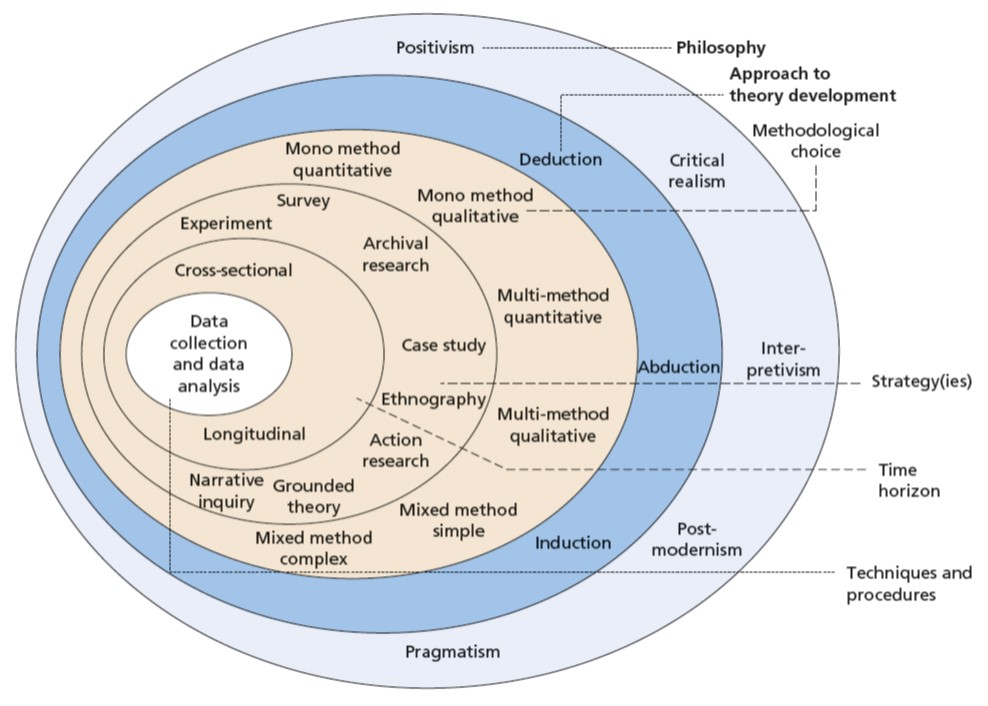
Research philosophy in the ‘research onion’
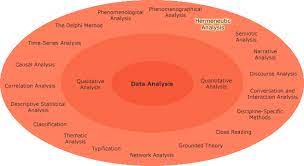
There are different types of research philosophy, which are described below:











Reference
- Saunders, M., Lewis, P., & Thornhill, A. (2009). Research methods for business students (5th ed., pp. 1–617). England: Pearson. Retrieved from http://ebooks.narotama.ac.id/files/Research Methods for Business Students (5th Edition)/Cover %26 Table of Contents – Research Methods for Business Students (5th Edition).pdf.
The post Understanding research philosophy appeared first on HKT Consultant.
]]>The post Four elements as foundation of the research process appeared first on HKT Consultant.
]]>The answer to the second question lies with the purposes of our research—in other words, with the research question that our piece of inquiry is seeking to answer. It is obvious enough that we need a process capable of fulfilling those purposes and answering that question.
There is more to it than that, however. Justification of our choice and particular use of methodology and methods is something that reaches into the assumptions about reality that we bring to our work. To ask about these assumptions is to ask about our theoretical perspective.
It also reaches into the understanding you and I have of what human knowledge is, what it entails, and what status can be ascribed to it. What kind of knowledge do we believe will be attained by our research? What characteristics do we believe that knowledge to have? Here we are touching upon a pivotal issue. How should observers of our research— for example, readers of our thesis or research report—regard the outcomes we lay out before them? And why should our readers take these outcomes seriously? These are epistemological questions.
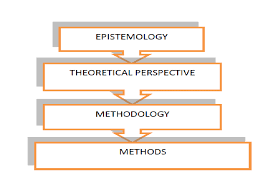
Already our two initial questions have expanded. We find ourselves with four questions now:
- What methods do we propose to use?
- What methodology governs our choice and use of methods?
- What theoretical perspective lies behind the methodology in question?
- What epistemology informs this theoretical perspective?
At issue in these four questions are basic elements of any research process, and we need to spell out carefully what we mean by each of them.
- Methods: the techniques or procedures used to gather and analyse data related to some research question or hypothesis.
- Methodology: the strategy, plan of action, process or design lying behind the choice and use of particular methods and linking the choice and use of methods to the desired outcomes.
- Theoretical perspective: the philosophical stance informing the methodology and thus providing a context for the process and grounding its logic and criteria.
- Epistemology: the theory of knowledge embedded in the theoretical perspective and thereby in the methodology.
In social research texts, the bulk of discussion and much of the terminology relate in one way or another to these four elements. What one often finds, however, is that forms of these different process elements are thrown together in grab-bag style as if they were all comparable terms. It is not uncommon to find, say, symbolic interactionism, ethnography and constructionism simply set side by side as ‘methodologies’, ‘approaches’, ‘perspectives’, or something similar. Yet they are not truly comparable. Lumping them together without distinction is a bit like talking about putting tomato sauce, condiments and groceries in one basket. One feels compelled to say, ‘Hang on a moment! Tomato sauce is one of many forms of condiment. And all condiments are groceries. Let’s do some sorting out here’. Similarly, one may feel urged to do some sorting out when confronted by items like symbolic interactionism, ethnography and constructionism all slung together.
Ethnography, after all, is a methodology. It is one of many particular research designs that guide a researcher in choosing methods and shape the use of the methods chosen. Symbolic interactionism, for its part, is a theoretical perspective that informs a range of methodologies, including some forms of ethnography. As a theoretical perspective, it is an approach to understanding and explaining society and the human world, and grounds a set of assumptions that symbolic interactionist researchers typically bring to their methodology of choice. Constructionism1 is an epistemology embodied in many theoretical perspectives, including symbolic interactionism as this is generally understood. An epistemology, we have already seen, is a way of understanding and explaining how we know what we know. What all this suggests is that symbolic interactionism, ethnography and constructionism need to be related to one another rather than merely set side by side as comparable, perhaps even competing, approaches or perspectives.
So there are epistemologies, theoretical perspectives and methodologies. If we add in methods, we have four elements that inform one another, as depicted in Figure 1.

One or other form of constructionism is the epistemology found, or at least claimed, in most perspectives other than those representing positivist and post-positivist paradigms. As we have just noted, the epistemology generally found embedded in symbolic interactionism is thoroughly constructionist in character. So, if we were to write down the four items we are talking about, we would be justified in drawing an arrow from constructionism to symbolic interactionism to indicate this relationship. Ethnography, a methodology that sprang in the first instance from anthropology and anthropological theory, has been adopted by
symbolic interactionism and adapted to its own purposes. For that reason, our next arrow may go from symbolic interactionism to ethnography. Ethnography, in turn, has its methods of preference. Participant observation has traditionally been accorded pride of place. So, out with the pen for yet another arrow. Here, then, we have a specific example of an epistemology, a theoretical perspective, a methodology and a method, each informing the next as suggested in Figure 2.
The textbooks describe several epistemological positions, quite a number of theoretical stances, many methodologies, and almost coundess methods. An attempt to list a representative sampling of each category might result in something like Table 1. (But note the several ‘etceteras’ occurring in this table. It is not an exhaustive listing.)

To denote another typical string, an arrow could start with ‘objectivism’. Objectivism is the epistemological view that things exist as meaningful entities independently of consciousness and experience, that they have truth and meaning residing in them as objects (‘objective’ truth and meaning, therefore), and that careful (scientific?) research can attain that objective truth and meaning. This is the epistemology underpinning the positivist stance. Research done in positivist spirit might select to engage in survey research and employ the quantitative method of statistical analysis (see Figure 3). Once again the arrows go across the columns from first to last.
Table 1


What purpose can these four elements serve?
For one thing, they can help to ensure the soundness of our research and make its outcomes convincing. Earlier we recognised the need to justify the methodologies and methods employed in our research. Setting forth our research process in terms of these four elements enables us to do this, for it constitutes a penetrating analysis of the process and points up the theoretical assumptions that underpin it and determine the status of its findings.
How might we oudine our research proposal in these terms?
1. Research methods
First, we describe the concrete techniques or procedures we plan to use. There will be certain activities we engage in so as to gather and analyse our data. These activities are our research methods.
Given our goal of identifying and justifying the research process, it is important that we describe these methods as specifically as possible. To this end, we will not just talk about ‘carrying out interviews’ but will indicate in very detailed fashion what kind of interviews they are, what interviewing techniques are employed, and in what sort of setting the interviews are conducted. We will not just talk about ‘participant observation’ but will describe what kind of observation takes place and what degree of participation is involved. We will not just talk about ‘identifying themes in the data’ but will show what we mean by themes, how the themes emerge, how they are identified, and what is done with them when they do.
2. Research methodology
We now describe our strategy or plan of action. This is the research design that shapes our choice and use of particular methods and links them to the desired outcomes.
What is called for here is not only a description of the methodology but also an account of the rationale it provides for the choice of methods and the particular forms in which the methods are employed. Take ethnographic inquiry, for instance. Ethnographic inquiry in the spirit of symbolic interactionism seeks to uncover meanings and perceptions on the part of the people participating in the research, viewing these understandings against the backdrop of the people’s overall worldview or ‘culture’. In line with this approach, the researcher strives to see things from the perspective of the participants. It is this that makes sense of the researcher’s stated intention to carry out unstructured interviews and to use a non-directive form of questioning within them.
Next we describe the philosophical stance that lies behind our chosen methodology. We attempt to explain how it provides a context for the process and grounds its logic and criteria.
Inevitably, we bring a number of assumptions to our chosen methodology. We need, as best we can, to state what these assumptions are. This is precisely what we do when we elaborate our theoretical perspective. Such an elaboration is a statement of the assumptions brought to the research task and reflected in the methodology as we understand and employ it. If, for example, we engage in an ethnographic form of inquiry and gather data via participant observation, what assumptions are embedded in this way of proceeding? By the very nature of participant observation, some of the assumptions relate to matters of language and issues of intersubjectivity and communication. How, then, do we take account of these assumptions and justify them? By expounding our theoretical perspective, that is, our view of the human world and social life within that world, wherein such assumptions are grounded.
Symbolic interactionism is a theoretical perspective that grounds these assumptions in most explicit fashion. It deals direcdy with issues such as language, communication, interrelationships and community. As we shall see in more detail in Chapter 4, symbolic interactionism is all about those basic social interactions whereby we enter into the perceptions, attitudes and values of a community, becoming persons in the process. At its heart is the notion of being able to put ourselves in the place of others—the very notion we have already expressed in detailing our methodology and have catered for in the choice and shaping of our methods.
3. Epistemology
Finally, we need to describe the epistemology inherent in the theoretical perspective and therefore in the methodology we have chosen.
The theoretical perspective we have described is a way of looking at the world and making sense of it. It involves knowledge, therefore, and embodies a certain understanding of what is entailed in knowing, that is, how we know what we know. Epistemology deals with ‘the nature of knowledge, its possibility, scope and general basis’ (Hamlyn 1995, p. 242). Maynard (1994, p. 10) explains the relevance of epistemology to what we are about here: ‘Epistemology is concerned with providing a philosophical grounding for deciding what kinds of knowledge are possible and how we can ensure that they are both adequate and legitimate’. Hence our need to identify, explain and justify the epistemological stance we have adopted.
There are, of course, quite a range of epistemologies. For a start, there is objectivism. Objectivist epistemology holds that meaning, and therefore meaningful reality, exists as such apart from the operation of any consciousness. That tree in the forest is a tree, regardless of whether anyone is aware of its existence or not. As an object of that kind (‘objectively’, therefore), it carries the intrinsic meaning of ‘tree-ness’. When human beings recognise it as a tree, they are simply discovering a meaning that has been lying there in wait for them all along. We might approach our piece of ethnographic research in that spirit. Much of the early ethnography was certainly carried out in that spirit. In this objectivist view of ‘what it means to know’, understandings and values are considered to be objectified in the people we are studying and, if we go about it in the right way, we can discover the objective truth.
Another epistemology—constructionism—rejects this view of human knowledge. There is no objective truth waiting for us to discover it. Truth, or meaning, comes into existence in and out of our engagement with the realities in our world. There is no meaning without a mind. Meaning is not discovered, but constructed. In this understanding of knowledge, it is clear that different people may construct meaning in different ways, even in relation to the same phenomenon. Isn’t this precisely what we find when we move from one era to another or from one culture to another? In this view of things, subject and object2 emerge as partners in the generation of meaning.
We will be discussing objectivism in the context of positivism and post-positivism. We will deal with constructionism at some length (Chapter 3) since it is the epistemology that qualitative researchers tend to invoke. A third epistemological stance, subjectivism, comes to the fore in structuralist, post-structuralist and postmodernist forms of thought (and, in addition, often appears to be what people are actually describing when they claim to be talking about constructionism). In subjectivism, meaning does not come out of an interplay between subject and object but is imposed on the object by the subject. Here the object as such makes no contribution to the generation of meaning. It is tempting to say that in constructionism meaning is constructed out of something (the object), whereas in subjectivism meaning is created out of nothing. We humans are not that creative, however. Even in subjectivism we make meaning out of something. We import meaning from somewhere else. The meaning we ascribe to the object may come from our dreams, or from primordial archetypes we locate within our collective unconscious, or from the conjunction and aspects of the planets, or from religious beliefs, or from . . . That is to say, meaning comes from anything but an interaction between the subject and the object to which it is ascribed.
Much more can be said about possible epistemological stances, and the three we have referred to are not to be seen as watertight compartments. Hopefully, enough has been said here for us to recognise that epistemology bears mightily on the way we go about our research. Is there objective truth that we need to identify, and can identify, with precision and certitude? Or are there just humanly fashioned ways of seeing things whose processes we need to explore and which we can only come to understand through a similar process of meaning making? And is this making of meaning a subjective act essentially independent of the object, or do both subject and object contribute to the construction of meaning? Embedded in these questions is a range of epistemological stances, each of which implies a profound difference in how we do our researching and how we present our research outcomes.
Source: Michael J Crotty (1998), The Foundations of Social Research: Meaning and Perspective in the Research Process, SAGE Publications Ltd; First edition.
The post Four elements as foundation of the research process appeared first on HKT Consultant.
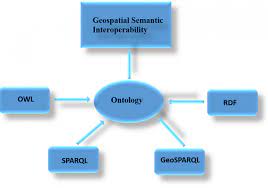
]]>The post What about ontology? appeared first on HKT Consultant.
]]>Ontology is the study of being. It is concerned with ‘what is’, with the nature of existence, with the structure of reality as such. Were we to introduce it into our framework, it would sit alongside epistemology informing the theoretical perspective, for each theoretical perspective embodies a certain way of understanding what is (ontology) as well as a certain way of understanding what it means to know (epistemology).
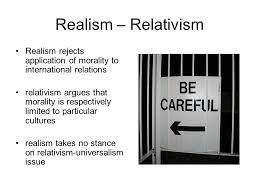
Ontological issues and epistemological issues tend to emerge together. As our terminology has already indicated, to talk of the construction of meaning is to talk of the construction of meaningful reality. Because of this confluence, writers in the research literature have trouble keeping ontology and epistemology apart conceptually. Realism (an ontological notion asserting that realities exist outside the mind) is often taken to imply objectivism (an epistemological notion asserting that meaning exists in objects independently of any consciousness). In some cases we even find realism identified with objectivism. Guba and Lincoln (1994, p. 108) certainly posit a necessary link between the two when they claim that ‘if, for example, a “real” reality is assumed, the posture of the knower must be one of objective detachment or value freedom in order to be able to discover “how things really are” and “how things really work’”. In the chapters that follow, you and I will be listening to a large number of scholars who disagree with this position. Heidegger and Merleau-Ponty, for instance, frequendy invoke a ‘world always already there’, but they are far from being objectivists.
True enough, the world is there regardless of whether human beings are conscious of it. As Macquarrie tells us (1973, p. 57): ‘If there were no human beings, there might still be galaxies, trees, rocks, and so on— and doubdess there were, in those long stretches of time before the evolution of Homo sapiens or any other human species that may have existed on earth’. But what kind of a world is there before conscious beings engage with it? Not an intelligible world, many would want to say. Not a world of meaning. It becomes a world of meaning only when meaning-making beings make sense of it.
From this point of view, accepting a world, and things in the world, existing independendy of our consciousness of them does not imply that meanings exist independently of consciousness, as Guba and Lincoln seem to be saying. The existence of a world without a mind is conceivable. Meaning without a mind is not. Realism in ontology and constructionism in epistemology turn out to be quite compatible. This is itself an example of how ontological issues and epistemological issues arise together. Given that state of affairs, it would seem that we can deal with the ontological issues as they emerge without expanding our schema to include ontology.
This is borne out when we look at literature that plays up the importance of the ontological dimension in research. In many instances the authors are not talking about ontology at all. Blaikie (1993, p. 6), for example, acknowledges that the ‘root definition of ontology is the “science or study of being’”. However, ‘for the purposes of the present discussion’, he takes ontology to mean ‘the claims or assumptions that a particular approach to social enquiry makes about the nature of social reality’ (p. 6). This, in itself, is unexceptionable. We need to recognise, however, that this is no longer ontology in its philosophical sense. Blaikie’s use of the term roughly corresponds to what you and I are calling ‘theoretical perspective’. It refers to how one views the world.
Blaikie tells us that positivism ‘entails an ontology of an ordered universe made up of atomistic, discrete and observable events’ (p. 94). He tells us that, in the ontology of critical rationalism (the approach launched by Karl Popper), nature and social life ‘are regarded as consisting of essential uniformities’ (p. 95). He tells us that interpretivism ‘entails an ontology in which social reality is regarded as the product of processes by which social actors together negotiate the meanings for actions and situations’ (p. 96). This is stretching the meaning of ontology well and truly beyond its boundaries.
It would seem preferable to retain the usage of ‘theoretical perspective’ and reserve the term ‘ontology’ for those occasions when we do need to talk about ‘being’. This is something you and I cannot avoid doing when we come to grapple with, say, the philosophy of Martin Heidegger, for that is a radical ontology and needs to be dealt with in stricdy ontological terms. Happy days ahead!
In the Middle Ages, the great ontological debate was between realists and nominalists and concerned the extramental reality, or irreality, of ‘universals’. Are there, for example, just individual human beings or does ‘humankind’ have real existence too? Does humankind as such denote a reality in the world or is it just something that exists only in the mind? In more recent centuries, the major ontological debate has been between realists and idealists and concerns the extramental reality, or irreality, of anything whatsoever. While neither debate is without relevance to an analysis of the research process, it still seems the case that ontological issues can be dealt with adequately without complicating our four-column schema further by expressly introducing ontology.
Source: Michael J Crotty (1998), The Foundations of Social Research: Meaning and Perspective in the Research Process, SAGE Publications Ltd; First edition.
The post What about ontology? appeared first on HKT Consultant.
]]>The post In all directions of the research process appeared first on HKT Consultant.
]]>First of all, there are few restrictions on where these left-to-right arrows may go. Any limitations that exist would seem to relate to the first two columns. We need to rule out drawing an arrow from constructionism or subjectivism to positivism (or, therefore, postpositivism), since positivism is objectivist by definition. Without a thoroughly objectivist epistemology, positivism would not be positivism as we understand it today. Nor would we want to draw an arrow from objectivism or subjectivism to phenomenology. Constructionism and phenomenology are so intertwined that one could hardly be phenomenological while espousing either an objectivist or a subjectivist epistemology. And postmodernism well and truly jettisons any vestiges of an objectivist view of knowledge and meaning. Other than that, as we draw our arrows from column to column, it would seem that ‘the sky’s the limit’. Certainly, if it suits their purposes, any of the theoretical perspectives could make use of any of the methodologies, and any of the methodologies could make use of any of the methods. There are typical strings, to be sure, and we have noted two of them in Figure 2 and Figure 3, but ‘typical’ does not mean ‘mandatory’.
Secondly, we can draw arrows from a particular item to more than one item in the column to the right. Historically, objectivism, constructionism and subjectivism have each informed quite a number of different perspectives. Similarly, one theoretical perspective often comes to be embodied in a number of methodologies. Symbolic interactionism is a case in point. It has informed both ethnography and grounded theory and we might well draw arrows from that theoretical perspective to each of those methodologies. Again, while critical inquiry will certainly be linked to action research, we can also draw an arrow from critical inquiry to ethnography. Yes, the critical form of inquiry has come to be embodied in ethnography too, transforming it in the process. Now it is no longer a characteristically uncritical form of research that merely seeks to understand a culture. It is critical ethnography, a methodology that strives to unmask hegemony and address oppressive forces. In the same way, there can be a feminist ethnography or a postmodernist ethnography.
Still, we should not be so carried away with our sense of freedom in drawing arrows from left to right that we forget to draw arrows in other directions as well. Our arrows can fly from right to left too. In terms of what informs what, going from left to right would seem a logical progression. At the same time, in describing our piece of research, we found our starting point in methods and methodology. This suggests that, to mark the chronological succession of events in our research, the arrows may need to be drawn from right to left as well.
Certainly, they may. Not too many of us embark on a piece of social research with epistemology as our starting point. ‘I am a constructionist. Therefore, I will investigate . . .’ Hardly. We typically start with a real- life issue that needs to be addressed, a problem that needs to be solved, a question that needs to be answered. We plan our research in terms of that issue or problem or question. What, we go on to ask, are the further issues, problems or questions implicit in the one we start with? What, then, is the aim and what are the objectives of our research? What strategy seems likely to provide what we are looking for? What does that strategy direct us to do to achieve our aims and objectives? In this way our research question, incorporating the purposes of our research, leads us to methodology and methods.
We need, of course, to justify our chosen methodology and methods. In the end, we want outcomes that merit respect. We want the observers of our research to recognise it as sound research. Our conclusions need to stand up. On some understandings of research (and of truth), this will mean that we are after objective, valid and generalisable conclusions as the outcome of our research. On other understandings, this is never realisable. Human knowledge is not like that. At best, our outcomes will be suggestive rather than conclusive. They will be plausible, perhaps even convincing, ways of seeing things—and, to be sure, helpful ways of seeing things—but certainly not any ‘one true way’ of seeing things. We may be positivists or non-positivists, therefore. Either way, we need to be concerned about the process we have engaged in; we need to lay that process out for the scrutiny of the observer; we need to defend that process as a form of human inquiry that should be taken seriously. It is this that sends us to our theoretical perspective and epistemology and calls upon us to expound them incisively. From methods and methodology to theoretical perspective and epistemology, then. Now our arrows are travelling from right to left.
Speaking in this vein sounds as if we create a methodology for ourselves—as if the focus of our research leads us to devise our own ways of proceeding that allow us to achieve our purposes. That, as it happens, is precisely the case. In a very real sense, every piece of research is unique and calls for a unique methodology. We, as the researcher, have to develop it.
If that is the case, why are we bothering with the plethora of methodologies and methods set forth for us so profusely that they seem like William James’s ‘blooming, buzzing confusion’? Why don’t we just sit down and work out for ourselves how we are to go about it?
In the end, that is precisely what we have to do. Yet a study of how other people have gone about the task of human inquiry serves us well and is surely indispensable. Attending to recognised research designs and their various theoretical underpinnings exercises a formative influence upon us. It awakens us to ways of research we would never otherwise have conceived of. It makes us much more aware of what is possible in research. Even so, it is by no means a matter of plucking a methodology off the shelf. We acquaint ourselves with the various methodologies. We evaluate their presuppositions. We weigh their strengths and weaknesses. Having done all that and more besides, we still have to forge a methodology that will meet our particular purposes in this research. One of the established methodologies may suit the task that confronts us. Or perhaps none of them do and we find ourselves drawing on several methodologies, moulding them into a way of proceeding that achieves the outcomes we look to. Perhaps we need to be more inventive still and create a methodology that in many respects is quite new. Even if we tread this track of innovation and invention, our engagement with the various methodologies in use will have played a crucial educative role.
Arrows right to left as well as left to right. What about arrows up and down? Yes, that too. Renowned critical theorist Jurgen Habermas carried on a debate with hermeneuticist Hans-Georg Gadamer over many years and out of that interplay there developed for Habermas a ‘critical hermeneutics’. Here we have critical theory coming to inform hermeneutics. In our four-column model, the arrow would rise up the same column (‘theoretical perspective’) from critical inquiry to hermeneutics. Similarly, we can talk of critical feminism or feminist critical inquiry, of postmodernist feminism or postmodernist critical inquiry. There is plenty of scope for arrows up and down.
Source: Michael J Crotty (1998), The Foundations of Social Research: Meaning and Perspective in the Research Process, SAGE Publications Ltd; First edition.
The post In all directions of the research process appeared first on HKT Consultant.
]]>The post The great divide between the qualitative research and quantitative research appeared first on HKT Consultant.
]]>Our model suggests that this divide—objectivist research associated with quantitative methods over against constructionist or subjectivist research associated with qualitative methods—is far from justified. Most methodologies known today as forms of ‘qualitative research’ have in the past been carried out in an utterly empiricist, positivist manner. This is true, as we have already noted, of the early history of ethnography. On the other hand, quantification is by no means ruled out within nonpositivist research. We may consider ourselves utterly devoted to qualitative research methods. Yet, when we think about investigations carried out in the normal course of our daily lives, how often measuring and counting turn out to be essential to our purposes. The ability to measure and count is a precious human achievement and it behoves us not to be dismissive of it. We should accept that, whatever research we engage in, it is possible for either qualitative methods or quantitative methods, or both, to serve our purposes. Our research can be qualitative or quantitative, or both qualitative and quantitative, without this being in any way problematic.
What would seem to be problematic is any attempt to be at once objectivist and constructionist (or subjectivist). On the face of it, to say that there is objective meaning and, in the same breath, to say that there is no objective meaning certainly does appear contradictory. To be sure, the postmodernist world that has grown up around us calls all our cherished antinomies into question, and we are invited today to embrace ‘fuzzy logic’ rather than the logic we have known in the past with its principle of contradiction. Nevertheless, even at the threshold of the 21st century, not too many of us are comfortable with such ostensibly blatant contradiction in what we claim.
To avoid such discomfort, we will need to be consistendy objectivist or consistently constructionist (or subjectivist).
If we seek to be consistently objectivist, we will distinguish scientifically established objective meanings from subjective meanings that people hold in everyday fashion and that at best ‘reflect’ or ‘mirror’ or ‘approximate’ objective meanings. We will accept, of course, that these subjective meanings are important in people’s lives and we may adopt qualitative methods of ascertaining what those meanings are. This is epistemologically consistent. It has a downside, all the same. It makes people’s everyday understandings inferior, epistemologically, to more scientific understandings. In this way of viewing things, one cannot predicate of people’s everyday understandings the truth claims one makes for what is scientifically established.
If we seek to be consistendy constructionist, we will put all understandings, scientific and non-scientific alike, on the very same footing. They are all constructions. None is objective or absolute or truly generalisable. Scientific knowledge is just a particular form of constructed knowledge designed to serve particular purposes—and, yes, it serves them well. Constructionists may indeed make use of quantitative methods but their constructionism makes a difference. We need to ask ourselves, in fact, what a piece of quantitative research looks like when it is informed by a constructionist epistemology. What difference does that make to it? Well, for a start, it makes a big difference to the truth claims proffered on its behalf, all the more so as one moves towards subjectivism rather than constructionism. No longer is there talk of objectivity, or validity, or generalisability. For all that, there is ample recognition that, after its own fashion, quantitative research has valuable contributions to make, even to a study of the farthest reaches of human being.
Is this scaffolding proving helpful? If so, let us go on to examine the items in some of its columns. We will confine ourselves to the first two columns. We will look at epistemological issues and issues relating to theoretical perspectives.
As already foreshadowed, the epistemological stance of objectivism will be considered in the context of positivism, with which it is so closely allied. Constructionism, as the epistemology claimed in most qualitative approaches today, deserves extended treatment. Our discussion of the constructionist theorising of knowledge will set it against the subjectivism only too often articulated under the rubric of constructionism and found self-professedly in much structuralist, poststructuralist and postmodernist thought.
After our discussion of positivism, the theoretical perspectives we go on to study are interpretivism, critical inquiry, feminism and postmodernism. Thinking about postmodernism will make it necessary for us to delve also into structuralism and post-structuralism.
As we discuss these perspectives and stances, we should remind ourselves many times over that we are not exploring them for merely speculative purposes. You and I will allow ourselves to be led at times into very theoretical material indeed. Nevertheless, we will refuse to wear the charge of being abstract intellectualisers, divorced from experience and action. It is our very inquiry into human experience and action that sends us this far afield. The long journey we are embarking upon arises out of an awareness on our part that, at every point in our research—in our observing, our interpreting, our reporting, and everything else we do as researchers—we inject a host of assumptions. These are assumptions about human knowledge and assumptions about realities encountered in our human world. Such assumptions shape for us the meaning of research questions, the purposiveness of research methodologies, and the interpretability of research findings. Without unpacking these assumptions and clarifying them, no one (including ourselves!) can really divine what our research has been or what it is now saying.
Performing this task of explication and explanation is precisely what we are about here. Far from being a theorising that takes researchers from their research, it is a theorising embedded in the research act itself. Without it, research is not research.
Source: Michael J Crotty (1998), The Foundations of Social Research: Meaning and Perspective in the Research Process, SAGE Publications Ltd; First edition.
The post The great divide between the qualitative research and quantitative research appeared first on HKT Consultant.
]]>The post Positivism: the march of science appeared first on HKT Consultant.
]]>In Chapter 1 we tried our hand at establishing some relationships among these elements. We connected epistemologies to perspectives to methodologies to methods. In the history of the natural and social sciences, some connections of this kind occur more frequendy than others. Certainly, as we look back over the last century-and-a-half, there is one very common string that emerges across our columns. It starts with objectivism (as epistemology), passes through positivism (as theoretical perspective), and is found, historically, informing many of the methodologies articulated within social research.
This positivist perspective encapsulates the spirit of the Enlightenment, the self-proclaimed Age of Reason that began in England in the seventeenth century and flourished in France in the century that followed. Like the Enlightenment that gave it birth, positivism offers assurance of unambiguous and accurate knowledge of the world. For all that, we find it adopting a number of guises. This chapter is concerned with the various meanings that positivism has assumed throughout the history of the concept and with the post-positivism that has emerged to attenuate its claims without rejecting its basic perspective.
Source: Michael J Crotty (1998), The Foundations of Social Research: Meaning and Perspective in the Research Process, SAGE Publications Ltd; First edition.
The post Positivism: the march of science appeared first on HKT Consultant.
]]>The post Positivism appeared first on HKT Consultant.
]]>These latter terms were used by Comte himself, following his mentor Henri de Saint-Simon. One of Comte’s major works is the six-volumed Cours de philosophie positive, which appeared between 1830 and 1842. However, by the time Comte began talking of positive philosophy and positive science, the terms already had a very long history. They can be found centuries earlier in the writings of Francis Bacon (1561-1626).
‘Positive science’ sounds strange to our ears. We may have to resist the temptation to ask what negative science would look like. Yet, if positive is not being used here in contradistinction to negative, in what sense is it being used? To answer that question, we need to look to the traditional use of the word in comparable terms such as ‘positive religion’ and ‘positive law’. There the word serves to distinguish positive religion from natural religion and positive law from natural law.
Natural religion? This is religion that people reason their way to. They work out the existence of God (or of many gods), the duty of divine worship, and so on, by rational argument based on their knowledge of the world. It is styled ‘natural’ because it is seen to stem from the nature of things. Positive religion, to the contrary, is not the outcome of speculation. It is essentially something that is posited. What is posited, thereby forming the starting point and foundation for positive religion, is divinely revealed truth. Positive religion is not arrived at by reasoning. It is a ‘given’.
Positive law, too, finds its basis in something that is posited. In this case, what has been posited is legislation enacted by a lawgiver. Drawing its authority from an existing code of prescriptions and proscriptions, positive law contrasts sharply with the traditional notion of natural law. While the concept of natural law has a long and ambiguous history, for our purposes here it can be seen as a complex of responsibilities and obligations that, starting from the nature of the world and human nature within the world, people reason their way to. Once again, it is ‘natural’ because it is seen to stem from the nature of things. Thus, actions seen as wrongful in terms of natural law are considered to be wrong by their very nature. As the old principle has it, such acts are ‘prohibited because they are evil’ (prohibita quia mala). On the other hand, an action considered wrongful in terms of positive law is not regarded as wrong in itself. It is wrong because it has been forbidden by a legislator. In other words, acts of that kind are ‘evil because they are prohibited’ (mala quia prohibita). The concept of positive law is very different. Here there is no cerebral process reasoning about nature or natures. Positive law, like positive religion, is founded on a ‘given’.
What does all this have to do with science? Quite a lot, as it happens. Those speaking and writing of ‘positive science’ were using the word in the same vein. They were talking of a science—scientia, ‘knowledge’— that is not arrived at speculatively (as in the metaphysics of philosophical schools) but is grounded firmly and exclusively in something that is posited. The basis of this kind of science is direct experience, not speculation. Rather than proceeding via some kind of abstract reasoning process, positive science proceeds by a study of the ‘given’ (in Latin datum or, in the plural, data).
For many adherents of positive science (‘positivists’, therefore), what is posited or given in direct experience is what is observed, the observation in question being scientific observation carried out by way of the scientific method. This is certainly the understanding of positivism that prevails today. Although this contemporary understanding assigns a quite definite meaning to positivism, it is not in itself a univocal concept. As many as twelve varieties of positivism have been distinguished by some authors. There is not scope here to deal with the whole bewildering array of positivisms, but we can perhaps touch on some important historical forms that positivism has assumed.
1. COMTE’S POSITIVISM
Auguste Comte (1798-1857) saw himself at all times as a scientist. A largely self-taught and independent scientist, to be sure, for his formal training was short-lived and he never held an academic post of any standing. In 1814 he began studies at France’s leading scientific school, the Ecole Polytechnique in Paris. Less than two years after his enrolment, student unrest led to the closure of the school and a far- reaching reorganisation of its program. When it opened its doors once more, Comte did not seek readmission but devoted himself instead to private tutoring in mathematics.
Much more influential than his year or two at the Ecole Polytechnique was his association from 1817 to 1824 with Henri de Saint-Simon. A bizarre, yet fascinating, figure in French intellectual life around the turn of the nineteenth century, Saint-Simon had a longstanding concern for the reconstruction of society. He was convinced that no worthwhile social reorganisation could take place without the reconstruction of intellectual understanding. What Comte imbibed from Saint-Simon was, above all else, this concern for the emergence of a stable and equitable society—and therefore for the development of its sine qua non, a valid and comprehensive social science. Despite his bitter parting from Saint-Simon and a total rejection of his mentoring, this goal continued to inspire all of Comte’s subsequent endeavours. To the positivism of his science he brought a passionate zeal for social reform. His dedication to society’s wellbeing was as fervent as that of any religious zealot and led him in the end to promulgate an utterly secular Religion of Humanity, incorporating a priesthood and liturgical practice all its own. For all the disdain he evinced for the ‘theological stage’ of societal development and for the religious aspirations of Saint-Simon’s latter days, and notwithstanding his eagerness for a thoroughly ‘positive’ science to replace the ratiocinations of the philosophers, there are metaphysical and quasi-religious assumptions aplenty in what Comte wrote and did. It was certainly on the basis of a well-elaborated worldview that he felt able to call upon all people to become positivists and thereby play their part in establishing the just society.
The kind of social reorganisation Comte envisages requires the human mind to function at its very best. This, he feels, can happen only when all have embraced one scientific method. True enough, there is no one general law obtaining in all the sciences to give them substantive unity. Comte is no reductionist. Nevertheless, there is a universality of method that can unify the practice of science. The scientific method he has in mind is the method emanating from positivism. Not that it is a uniform method to be woodenly applied. Rather, it is a flexible method that succeeds in remaining homogeneous in a multitude of contexts. It is this desire for unity-via-method that moves Comte to set all the sciences in a hierarchy, leading from the most basic science—mathematics— through astronomy, and then physics, to chemistry and biology, culminating in what he sees as the highest science of all, his beloved sociology. Hence Comte’s belief that scientific method retains the same essential features whether one is speaking of the natural sciences or the human sciences.
What are these essential features of the scientific method?
Given the contemporary identification of positivism with quantitative methods of research, and in view of Comte’s known skills in mathematics, one might be forgiven for expecting the essential features of his scientific method to be couched in mathematical terms. That would be a mistake, nonetheless.
When Comte talks about positivism, it cannot too often be stressed that he means an attitude of mind towards science and the explanation of man, nature, and society, and not some predilection for mathematical precision, especially not in sociology. In fact, Comte expressly makes a distinction between the search for certainty in science and the mistaken search for numerical precision. (Simpson 1982, p. 69)
Comte, in fact, warns against the dangers of an overly mathematical approach. ‘The most perfect methods may, however, be rendered deceptive by misuse and this we must bear in mind. We have seen that mathematical analysis itself may betray us into substituting signs for ideas, and that it conceals inanity of conception under an imposing verbiage’ (in Simpson 1982, p. 80).
Nor is Comte to be linked to some crude kind of objectivism. For him, scientific knowledge is not a matter of grasping an objective meaning independent of social thought and social conditions. Comte recognised, like Marx (and like Hegel before Marx), that human consciousness is determined by ‘the social’. There is an interdependence here, as Simpson points out in expounding Comte’s thought on this matter:
Only long struggles for positivistic ideology by men of foresight serve to achieve social conditions under which metaphysical propositions give way to positivistic ones. Conversely, the positivistic stage is reached in any science—and especially in sociology—through a continual reorganization of society made possible by the pursuit of sociology and its application to practical problems, particularly problems in the organization of knowledge, its propagation, and its being passed on from
Comte’s quarry is the order he believes can be found in the world. Not for him the quest for first causes and last ends so beloved of the metaphysicians. Whether one is focused on nature or society, his positive science bids us look instead to ‘laws’ that can be scientifically established; that is, to facts that regularly characterise particular types of beings and constant relationships that can be shown to obtain among various phenomena. The direct methods whereby these laws can be established scientifically are observation, experiment and comparison.
At long last! This is finally beginning to sound like what we have always known as positivism. Yet even here we find Comte warning us, ‘No social fact can have any scientific meaning till it is connected with some other social fact; without such connection it remains a mere anecdote, involving no rational utility’ (in Simpson 1982, p. 78). Nor by ‘experiment’ does he necessarily mean what we know today as controlled experimentation. He includes under this rubric the study of events that just happen to happen and over which the sociologist has no control. And the ‘comparison’ he suggests is multifaceted: it includes cross-cultural comparison and especially historical comparison. Comte is, in fact, eminendy historical in his approach. As Raymond Aron puts it (1965, p. 70), Comte holds that ‘the different phases of human history are characterized by their way of thinking, and the present and final stage will be marked by the universal triumph of positive thought’.
Auguste Comte is seen as the founder of positivism. He did not see himself in that light. As he understood his role, it was that of passing on a torch that had been lit centuries before his time. Certainly, what he had to say about observation and experiment and the establishment of scientific laws can be found centuries earlier in Bacon. Yet, whether we see Comte as the source or merely the channel, it appears clear enough that positivism has changed dramatically since he first appropriated the word. One of the factors in its evolution has been its passing from the hands of working scientists to those of theoretical scientists and philosophers. The former are anxious to determine whether they can use in the human sciences the methods that are being used in the natural sciences. The latter’s concern is different. It has to do direcdy with epistemology and logic. It is a concern to determine what truth claims can be made about scientific findings—or, indeed, about anything.
2. THE VIENNA CIRCLE AND LOGICAL POSITIVISM
The roots of the Vienna Circle lie in discussions that began in the first decade of the twentieth century, involving social philosopher Otto Neurath, mathematician Hans Hahn and physicist Philip Frank. The Circle came to prominence in the 1920s when Moritz Schlick assumed its leadership. Schlick, who had begun his academic life as a physicist, turned to philosophy and in 1922 was appointed to the chair of philosophy of the inductive sciences at the University of Vienna. It was the discussions that took place within the Vienna Circle, and between the Vienna Circle and its counterparts at Warsaw and Berlin, that gave birth to the philosophy of logical positivism.
The Vienna Circle flourished throughout the 1920s but the coming of Nazism spelled its doom, most of its members being Jewish or Marxist (or both). Many went abroad in the early 1930s, Schlick was assassinated on the steps of the University of Vienna in 1936, and the Circle was officially dissolved in 1938. Its voice was not stifled, however. In fact, the scattering of Circle members—Rudolf Carnap to Chicago, Kurt Godel to Princeton, Otto Neurath and Friedrich Waisman to Oxford, and so on—served to ensure that logical positivism had world-wide impact. Even before the demise of the Vienna Circle, its philosophy had been popularised in the English-speaking world by A.J. Ayer’s Language, Truth and Logic, which appeared in 1936.
What was the Vienna Circle’s focus of interest, then? As we have seen, Comte and his associates wanted to introduce the methods of the natural sciences to the practice of the social sciences. Now the Vienna Circle was seeking to introduce the methods and exactitude of mathematics to the study of philosophy (as had already happened in the field of symbolic logic).
The Circle certainly appeared to have the expertise it needed for this task. Within its membership, besides an array of empiricist philosophers, there were a number of individuals with outstanding expertise in the field of mathematics (Godel, for one) and logic (Rudolf Carnap, for instance). There were also eminent scientists whose science was highly mathematical in character.
The work of Gotdob Frege, Bertrand Russell and Alfred North Whitehead provided the Vienna Circle with an infrastructure for their discussions in the field of logic. An even more important influence on its developing philosophy was the thought of Ludwig Wittgenstein (1889- 1951). Wittgenstein, a native of Vienna, came into contact with the Circle in the late 1920s. His Tractatus Logico-Philosophicus, published in 1921, had been studied intensely by several members of the Vienna Circle and the Circle shared his interest in the logical analysis of propositions. Wittgenstein’s thought was probably not fully understood within the Vienna Circle and, in any case, he went on to reverse his position quite radically, as his posthumous work Philosophical Investigations dramatically reveals. All this notwithstanding, the early Wittgensteinian position was a crucial influence in the development of the Circle’s viewpoint. Its membership constructed from it a basis for linking truth to meaning in a way that allows no pathway to genuine knowledge other than that of science. Thereby they excluded metaphysics, theology and ethics from the domain of warrantable human knowledge.
One of the notions drawn from Wittgenstein was what came to be known as the Verification principle’ (or ‘principle of verifiability’). Schlick and Ayer embraced this principle enthusiastically and made it a central tenet of logical positivism. According to the verification principle, no statement is meaningful unless it is capable of being verified.
How does one verify a statement, then? As logical positivism would have it, there are only two ways.
In some cases, a statement can be verified because what is predicated of the subject is nothing more than something included in the very definition of the subject. A very obvious instance of this would be the statement, ‘A doe is a female deer’. This can be verified simply by examining the definition of a doe. Mathematical statements can also be seen in this light. Two-plus-two equals four’, or ‘three-plus-one equals four’, is a statement in this category, since the term ‘four’ is one that we have created to stand for ‘two-plus-two’ and ‘three-plus-one’. Following terminology that derives from Immanuel Kant, such statements are known as analytic statements. An analytic proposition is one whose ascription of a predicate to a subject can be verified, and its meaningfulness thereby established, simply via an analysis of what the subject is.
Analytic statements are far from earth-shattering. They do no more than spell out what is already contained, or not contained, in the definition of the subject. To say that ‘A’ is ‘A’, or that ‘not-A’ is not ‘A’ is hardly an almighty contribution to human knowledge. Logical positivists would agree. Analytic propositions are either tautologies or contradictions. Nothing more, nothing less. On this accounting, logic and mathematics are merely formal in character. They are quite empty of factual content. In the language of the early Wittgenstein, their content is ‘senseless’.
‘Senseless’ does not mean ‘nonsense’. The early Wittgenstein and the logical positivists reserve the latter epithet for non-analytic, or synthetic, statements that prove incapable of verification. As one would expect from what has been said already, synthetic statements are propositions in which what is predicated of the subject is not included in its definition. Something new is being said about the subject, therefore. Not surprisingly, it is in synthetic statements that logical positivism is primarily interested.
Can synthetic statements be verified and thereby rendered meaningful? If so, how? The logical positivists have a clear-cut answer. Synthetic propositions are verified by experience—and only by experience. Experience? Here too logical positivism is quite definite. Experience means sense-data. What we experience through our senses (immediately, or by way of the instruments of science that extend the operation of our senses) is verified knowledge. This knowledge is ‘factual’—and facts are what logical positivism is concerned with before all and above all.
It is, of course, the role of science to establish facts. Philosophy has the task of clarifying and analysing propositions made in the wake of scientific findings.
This line of thought excludes metaphysics, ethics, aesthetics and religion from the purview of genuine philosophy. Metaphysical viewpoints, ethical values, aesthetic judgments and religious beliefs are, as such, unverifiable in the empirical manner demanded by logical positivism. They do not deal in facts and are therefore of no interest to logical positivism. Emotionally, perhaps even spiritually, they may be of great value to people, but cognitively they are meaningless—nonsense, even.
From the viewpoint of logical positivism, the philosopher and the scientist must remain ever alert to the cognitive meaninglessness of views and beliefs of this kind. A clear disjunction must be maintained at all times between fact and value. If we want to deal in human knowledge that has validated meaning, the pathway is that of observation and experiment invoking the evidence of the senses. We need to be thoroughgoing empiricists. (Logical positivism is also known as logical empiricism, although some reserve this latter term more stricdy for the combination of traditional empiricism and symbolic logic, whether in logical positivism or elsewhere.)
Since physics is the science where such thoroughgoing empiricism is most obvious, we should not be surprised that logical positivism makes particular use of its language. It uses the language of physics both as a tool for analysing and clarifying philosophical issues and as a way to unify scientific terminology. This reflects a certain reductionism within logical positivism: the other disciplines or areas of study are considered to be built upon, and to derive their validity from, the findings of empirical science.
3. Positivism today
Quite clearly, the meaning of the term ‘positivism’ has changed and grown over time. So much so that, from the standpoint of the Vienna Circle and in terms of the contemporary understanding of positivism, its acknowledged founder, Auguste Comte, hardly makes the grade.
In the history of ideas, the pathway trodden by positivism turns out to be long, tortuous and complex. Logical positivism has obviously played a major role in developing the concept of positivism that obtains at the present time. For a while, logical positivism looked set not only to dominate the understanding of science but also, in some places at least, to occupy centre stage within the discipline of philosophy itself. Of course, there have been many other factors in the development of the contemporary understanding of positivism. Rather than tracing that development in close detail, we will have to be content to set down positivism’s principal features as it is most generally understood today.
One thing is certain: positivism is linked to empirical science as closely as ever. The logical positivists have always been great lovers of science. It has been said of them that they are infatuated with science. Be that as it may, the positivist spirit at the present time continues to adhere to a philosophy of science that attributes a radical unity to all the sciences and sets few bounds to what science is capable of achieving.
Since the time of the Enlightenment, a melioristic spirit has been abroad. There is a widespread notion that we are on a path of inevitable progress. ‘Every day, in every way, I’m getting better and better’—Emile Coue’s famous dictum parallels a comparable optimism at the societal and even global level. Positivism not only shares this optimistic faith in progress but also presents scientific discovery, along with the technology it begets, as the instrument and driving force of the progress being achieved.
This supreme confidence in science stems from a conviction that scientific knowledge is both accurate and certain. In this respect scientific knowledge contrasts sharply with opinions, beliefs, feelings and assumptions that we gain in non-scientific ways. The principal point of difference is the alleged objectivity of scientific knowledge. It is unlike the subjective understandings we come to hold. Those subjective understandings may be of very great importance in our lives but they constitute an essentially different kind of knowledge from scientifically established facts. Whereas people ascribe subjective meanings to objects in their world, science really ‘ascribes’ no meanings at all. Instead, it discovers meaning, for it is able to grasp objective meaning, that is, meaning already inherent in the objects it considers. To say that objects have such meaning is, of course, to embrace the epistemology of objectivism. Positivism is objectivist through and through. From the positivist: viewpoint, objects in the world have meaning prior to, and independendy of, any consciousness of them.
From this same viewpoint, scientists are required to keep the distinction between objective, empirically verifiable knowledge and subjective, unverifiable knowledge very much in mind. It emerges as the distinction between fact and value and founds the goal of value-neutral science, which positivistically minded scientists tend to uphold with a significant degree of fervour.
What kind of world, then, is the world of the positivist? Were we to answer, ‘A mathematised world’, we would find ourselves in good company. We would be following the lead given by Edmund Husserl, the founder of phenomenology. Husserl (1970b) attributes this alleged mathematisation of the world to Galileo, in the first instance. He recalls how Galileo dealt with attributes in which there is a clearly subjective element. Such attributes (colour, taste and smell, for instance) he refused to accept as real properties, dismissing them instead as mere secondary properties and not the concern of the scientist. For Galileo, the primary properties of things—‘real’ properties, therefore—are those that can be measured and counted and thereby quantified. Size, shape, position, number—only properties like these make the grade scientifically. The real world, for the Galilean scientist, is a quantifiable world.
This scientific world is not, of course, the everyday world that people experience. Not even scientists experience it that way in their everyday mode of being. Various authors have considered the example of Tycho Brahe and Johannes Kepler standing together on a hill at sunrise. These two seventeenth-century astronomers held very different views. Brahe thought that the sun circles the earth; Kepler believed that the earth circles the sun. As they watch the sun appear at daybreak, what do they see? Does Brahe see the sun move above the earth’s horizon, while Kepler sees the horizon dip below the sun? Norwood Russell Hanson (1972) makes a case for this being so. Others, such as Gerhart and Russell (1984) demur, asserting that, whatever the differences in their scientific stance, Brahe’s and Kepler’s human experience of a sunrise will be the same in this respect. Most would surely agree. We may believe that the earth is round, and ‘Flat Earthers’ may be our favourite epithet for people we judge to be behind the times—yet, unless we are doing something like buying a round-the-world air ticket, we do think and act as if the earth were flat. And we are expected to do so. In buying a road map for my trip from Adelaide to Cairns, I would be looked at askance were I to complain to the supplier that the map I am given is flat and not curved.
In other words, the world addressed by positivist science is not the everyday world we experience. As Husserl points out, the scientific world is an abstraction from the ‘lived’ world; it has been distilled from the world of our everyday experiences, distances us from the world of our everyday experiences, and takes us further still from the world of immediate experience lying behind our everyday experiences. Science imposes a very tight grid on the world it observes. The world perceived through the scientific grid is a highly systematic, well-organised world. It is a world of regularities, constancies, uniformities, iron-clad laws, absolute principles. As such, it stands in stark contrast with the uncertain, ambiguous, idiosyncratic, changeful world we know at first hand.
Making this scientific abstraction from lived reality is not to be criticised. It serves eminendy useful purposes, as the history of science and the development of technology witness so forcefully. While there is a downside to the achievements of science and this needs to be kept in mind as well, most of us have abundant reason to be grateful to science.
If we want to quarrel with the positivist view, our quarrel will not be, in the first instance, with what positivist science does. Rather, it will have to do with the status positivism ascribes to scientific findings. Articulating scientific knowledge is one thing; claiming that scientific knowledge is utterly objective and that only scientific knowledge is valid, certain and accurate is another. Since the emergence of positivist science, there has never been a shortage of philosophers and social scientists calling upon it to rein in its excessive assumptions and claims. Many of these philosophers and social scientists have operated out of a quite different epistemology and worldview. As the twentieth century got underway, however, more and more scientists ‘from within’ added a chorus of their own. Without necessarily jettisoning the objectivism inherent in positivism, these insiders have challenged its claims to objectivity, precision and certitude, leading to an understanding of scientific knowledge whose claims are far more modest. This is a less arrogant form of positivism. It is one that talks of probability rather than certainty, claims a certain level of objectivity rather than absolute objectivity, and seeks to approximate the truth rather than aspiring to grasp it in its totality or essence.
This more or less attenuated form of positivism is known today as post-positivism.3
Source: Michael J Crotty (1998), The Foundations of Social Research: Meaning and Perspective in the Research Process, SAGE Publications Ltd; First edition.
The post Positivism appeared first on HKT Consultant.
]]>The post Post-positivism appeared first on HKT Consultant.
]]>Heisenberg, a German scientist, is one of the founders of ‘quantum theory’. He articulates an ‘uncertainty principle’ which well and truly calls into question positivist science’s claims to certitude and objectivity. According to Heisenberg’s principle, it is impossible to determine both the position and momentum of a subatomic particle (an electron, for instance) with any real accuracy. Not only does this preclude the ability to predict a future state with certainty but it suggests that the observed particle is altered in the very act of its being observed, thus challenging the notion that observer and observed are independent. This principle has the effect of turning the laws of physics into relative statements and to some degree into subjective perceptions rather than an expression of objective certainties.
Bohr, a Dane, received the 1922 Nobel Prize in Physics for his work on the structure of the atom. Like Heisenberg, Bohr is concerned with uncertainty but he has a different view about the nature of the uncertainty in question. Heisenberg’s argument is epistemological: in pointing to science’s inability to determine subatomic dynamics with accuracy, he locates this limitation in the very way in which we humans know what we know. For Bohr, however, the limitation is ontological rather than epistemological: it is due not to how humans know but to how subatomic particles are. In fine, these particles need to be seen as a kind of reality different from the reality we are used to dealing with. In thinking or talking about them, we need a new set of concepts. We cannot simply take classical concepts like position and momentum and apply them with accuracy to particles. The traditional concepts may, of course, be the best we have, and we may have no alternative but to make do with them. Yet, we should not succumb too easily to the tyranny of prevailing concepts. Bohr urges us to complement their use with other kinds of description that offer a different frame for our considerations. However successful we may be in doing that, the essentially ambiguous character of human knowledge, including scientific knowledge, cannot be sidestepped, as Bohr’s whole discussion underlines very cogendy.
The impact of Heisenberg’s and Bohr’s thought has been far- reaching. These scientists sound a note of uncertainty within what has been a very self-confident philosophy of positivist science. That note comes to echo even more loudly as other thinkers begin to address similar issues within science.
One of the factors prompting this concern with epistemology and the philosophy of science has been the recognition that a contradiction exists in scientific practice. There is a chasm between what science purports to do and what it actually does. For all the positivist concern that statements be verified by observation before being accepted as meaningful, a host of elaborate scientific theories have emerged whose development clearly requires the acceptance of much more than direct conclusions from sense-data. Many of the so-called ‘facts’ that serve as elements of these theories are not direcdy observed at all. Instead, they have been quite purposefully contrived and introduced as mere heuristic and explanatory devices. This is true of alleged ‘entities’ such as particles, waves and fields. Scientists act as if these exist and function in the way they postulate and, in terms of their purposes, this may prove an effective way to proceed. In this situation, it is very easy to go on to reify4 these presumptions. Yet, by positivism’s own criteria, such reification is unjustified.
What is emerging in this line of thought is the picture of scientists actively constructing scientific knowledge rather than passively noting laws that are found in nature. This has clear implications for the status that scientific knowledge deserves to have ascribed to it. Many thinkers —philosophers or scientists, or both—have not been slow to point out these implications.
1. POPPER’S PRINCIPLE OF FALSIFICATION
Sir Karl Popper (1902-94) was bom in Vienna. In the 1930s, like so many other figures we are considering here, he was forced by Nazism’s advent to power to quit his native land. After a brief period in England, he spent the years of World War II in New Zealand, returning to England in 1946 and serving as a professor at the London School of Economics from 1949 to 1969.
Popper is interested in the philosophical and political implications of genuinely scientific work. He contrasts scientific work with what is done in the ‘pseudo-sciences’ and tries to draw a clear line of demarcation between the two. His early ideas are found in The Logic of Scientific Discovery and The Open Society and Its Enemies. Later works include Objective Knowledge: An Evolutionary Approach and The Self and Its Brain, the latter coauthored with J.C. Eccles.
Despite early association with the Vienna Circle, Popper offers a view of human knowledge very different from that of logical positivism. Not for him any limiting of valid knowledge to statements capable of empirical verification. How, then, does he see scientific knowledge being established? We find a clue to that in the tide of yet another of his books, Conjectures and Refutations: The Growth of Scientific Knowledge. Instead of scientists proceeding by way of observation and experimentation, thereby pinpointing scientific laws evident in nature itself, Popper sees them engaging in a continual process of conjecture and falsification. An advance in science is not a matter of scientists making a discovery and then proving it to be right. It is a matter of scientists making a guess and then finding themselves unable to prove the guess wrong, despite strenuous efforts to do so.
In putting this position forward, Popper is taking issue with the scientific method as it has been traditionally understood. In fact, he is challenging one of its pivotal notions. He is confronting head on the role that scientific method ascribes to induction. Induction is the process whereby a general law is established by accumulating particular instances. For example, because scientists find time and time again that water boils at 100°C, at least under certain definable conditions, they have felt confident in ascribing to this ‘fact’ the status of a universal law of physics. Not everyone has shared their confidence. Eighteenth-century philosopher David Hume characterised that confidence as a matter of psychology but not an outcome of logic. We might boil water a thousand times and find in every case that it boils at 100°C; but in Hume’s view this provides no logical justification for the belief that it must always boil at 100°C. To assume that it must is to assume a world in which the regularities we perceive today will remain unchanged in the future. That is an assumption, not an empirically established truth. A number of later philosophers, Bertrand Russell and CD. Broad among them, side with Hume in this, seeing induction as very much the weak link in the chain of empiricist science. Scientists may be as empirical as they like in their observations and experiments; yet they must reckon with the consideration—an unpalatable consideration, perhaps—that a non- empirical logical principle remains intrinsic to scientific method.
Popper’s solution to this impasse is to substitute falsification for verification at the heart of scientific method. No matter how many examples we muster in support of a general principle, we are unable, logically, to prove it true in absolute terms; yet it takes only one example at variance with a general law to prove, logically and in absolute terms, that it is false. So Popper believes that, in engaging in observation and experiment, scientists are called upon not to prove a theory (they can never do that) but to try to prove it wrong.
For the Baconian understanding of science as an inductive process Popper has substituted the idea of science as hypothetico-deductive. Scientific method is like this: (a) scientific theories are proposed hypothetically; (b) propositions are deduced from these theories; and (c) the propositions are then tested, that is, every effort is made to prove them false. It is this falsifiability that sets scientific claims apart from non-scientific or pseudo-scientific claims. A theory or hypothesis not open to refutation by observation and experiment cannot be regarded as scientific. With this goal of falsification in view, Popper recommends that all scientific theories be presented as clearly as possible so as to lay them wide open to refutation.
It is only when propositions deduced from scientific theory have survived every attempt to refute them that the theory can be provisionally accepted as true. Here the operative word is ‘provisionally’. The conviction that no theory can ever be definitively accepted as true lies at the heart of Popper’s philosophy. As he put it (1959, p. 280), ‘every scientific statement must remain tentative for ever’.
All this evinces a very different picture of science, and of the scientist, from the one we find at large among the positivists.
First, in the search for scientific truth, there is a place for guesswork, intuition, the following up of ‘hunches’. Not for Popper the image of the scientist as the detached observer of nature. In fact, he does not believe such disinterested observation is possible. Observation takes place within the context of theory and is always shaped by theory. All our observing is done within a horizon of expectations and is therefore necessarily selective.
Second, on Popper’s accounting, what is put forward as scientific truth turns out to be, not something shown to be true, but simply something that scientists have so far been unable to prove false. This turns scientific truths into merely provisional statements. ‘Our science’, warns Popper (1959, p. 278), ‘is not knowledge (episteme): it can never claim to have attained truth, or even a substitute for it, such as probability’.
Science is not a system of certain, or well-established, statements; nor is it a system which steadily advances towards a state of finality …
The old scientific ideal of episteme—of absolutely certain, demonstrable knowledge—has proved to be an idol… It may indeed be corroborated, but every corroboration is relative to other statements which, again, are tentative. Only in our subjective experiences of conviction, in our subjective faith, can we be ‘absolutely certain’ …
Science never pursues the illusory aim of making its answers final, or even probable. Its advance is, rather, towards the infinite yet attainable aim of ever discovering new, deeper, and more general problems, and of subjecting its ever tentative answers to ever renewed and ever more rigorous tests. (Popper 1959, pp. 278, 280, 281)
On that accounting, Olympian dogmatism would seem entirely out of place among Popperian scientists. One would expect of scientists, instead, a large measure of tentativeness, perhaps even a measure of humility.
Where does one find these Popperian scientists? There are humble scientists, to be sure, and scientists often put their hypotheses forward quite tentatively in the first place. Still, on the whole they do seem to be looking for verification rather than falsification, and the observer of the scientific scene is hard put to find any widespread and impassioned effort to prove scientific theories wrong. This is particularly true of the broader, more fundamental, realm of theory. This is rarely called into question. Even in the face of conflicting evidence scientists only too often cling to theory in a quite determined fashion. Obviously, and unsurprisingly, it takes more than falsification to break scientists loose from what they have known and experienced as the very matrix of their thought and practice. Achieving that, some would want to say, takes nothing short of revolution.
2. KUHN’S ‘SCIENTIFIC REVOLUTIONS’
Possibly the most influential book in modern-day philosophy of science is The Structure of Scientific Revolutions.
The ideas contained in this book were developed by Thomas Kuhn (1922-96) while he was a graduate student in theoretical physics at Harvard University. What provided the impetus and starting point for this work was an invitation Kuhn received from University President James B. Conant to do some lecturing in science. The course in question was for undergraduates majoring in the humanities and it was put to Kuhn that he should take an historical perspective. So he turned to the history of science to see what lessons it might hold for scientists today.
This is new territory for Kuhn and the lessons he comes to glean from history are not of the kind he has been anticipating. Led back to Aristode’s Physics, he is struck forcefully by what he sees as an utter disparity between Aristotelian physics and the physics of Newton. Not a difference of degree but a difference of kind. Not inchoate, less-formed notions in Aristotle that are later to be developed and brought to fruition in Newton. No, these two sets of ideas appear to him so different as to be incomparable. As Kuhn sees it, Aristotle and Newton do not stand at different points on a continuum; they are not even within the same spectrum.
Accordingly, Kuhn concludes, the thought of Newton cannot have grown and developed out of the thought of Aristotle. At some point, the basis and essential elements of Aristotelian physics must have been jettisoned and replaced by a whole new way of seeing things. There has to have been a revolution in scientific thinking.
It is this insight that leads Kuhn to the thesis he develops in The Structure of Scientific Revolutions. There, and elsewhere, he takes a much more historical and sociological perspective than philosophers of science before him. He begins by looking direcdy at scientists and what they do, whether they be scientists of the past or scientists of the present. Where Popper’s philosophising and his focus on logic lead him to see scientists and the process of scientific research in terms of what they ought to be rather than what they are, Kuhn’s starting point leads him at once to question the alleged objectivity and value-free neutrality of scientific discovery.
What Kuhn never ceases to emphasise is that scientists do their work in and out of a background of theory. This theory comprises a unitary package of beliefs about science and scientific knowledge. It is this set of beliefs that Kuhn calls a paradigm. It is an overarching conceptual construct, a particular way in which scientists make sense of the world or some segment of the world.
For scientists in general, the prevailing paradigm is the matrix that shapes the reality to be studied and legitimates the methodology and methods whereby it can be studied. More than that, the prevailing paradigm is quite simply taken for granted within the contemporary scientific ethos. Any challenges that are mounted tend, at the start at least, to be dismissed out of hand. Normal science, Kuhn says, ‘often suppresses fundamental novelties because they are necessarily subversive of its basic commitments’ (1970, p. 5). Thus, the paradigm establishes the parameters and sets the boundaries for scientific research and, in the ordinary course of events, scientific inquiry is carried out stricdy in line with it. At most, scientists will attempt to solve problems in ways that refine the paradigm and extend its scope. Even Popperian science, fiercely focused as it is on refuting the alleged findings of science, takes place in accordance with the dictates of the ruling paradigm. Such science—science in keeping with the paradigm of the day—is what Kuhn is calling ‘normal science’. He sees it as a ‘sort of puzzle-solving activity in which … most physical scientists are normally engaged’ (1977, pp. 221-2). As he puts it, ‘normal research, even the best of it, is a highly convergent activity based firmly upon a setded consensus acquired from scientific education and reinforced by subsequent life in the profession’ (1977, p. 227). Kuhn goes so far as to characterise normal science as ‘a complex and consuming mopping up operation’ (1977, p. 188). It ‘aims to elucidate the scientific tradition in which [the scientist] was raised rather than to change it’ (1977, p. 234).
There comes a time, however, when the paradigm proves inadequate. Findings are proposed that cannot be explained within the context of the paradigm that prevails. When anomalies like this arise, ‘nature has somehow violated the paradigm-induced expectations that govern normal science’ (Kuhn 1970, pp. 52-3). It is a time of crisis. New findings are being put forward in such cogent or widespread fashion, and theories espoused so fervendy, that they succeed in calling the paradigm itself into question. The process is often helped on its way by the impact of a revolutionary scientist—usually, Kuhn thinks, a younger person not schooled so long or so deeply in the paradigm guiding current scientific inquiry. Through factors such as these, it comes to be accepted that a whole new way of viewing reality is called for. It is time for a ‘paradigm shift’.
In this period of change, what emerges within science is a ‘willingness to try anything, the expression of explicit discontent, the recourse to philosophy and to debate over fundamentals’ (Kuhn 1970, p. 91). Normal science is being turned on its head and an era of ‘extraordinary science’ is being ushered in. It is this development that Kuhn styles a scientific revolution.
Once one begins to think in this fashion, it is not difficult to find revolutions enough in the history of science. Galileo (and the Leaning Tower of Pisa?) destroying forever the Aristotelian view that bodies fall at a speed proportional to their weight. Copernicus and his heliocentrism prevailing over earth-centred Ptolemeian astronomy. Lavoisier’s oxygen theory of combustion replacing Becher’s hypothesis of phlogiston. Darwin’s theory of natural selection overthrowing forms of scientific theorising that base themselves on a world governed by design. Einstein’s theory of relativity shaking the foundations of Newtonian physics. And so on. These are not mere changes within science that leave science itself very much as it was. These are changes of science. They alter forever the way scientists see the world they are trying to explain. For Kuhn, then, the history of science is not a story of steady advance through adding new data to those already in hand and gradually developing existing theory. Instead, the significant changes in science appear to have occurred through radical shifts in the way scientists view reality.
How have these shifts in perspective come about? Certainly, many non-scientific factors have played a part. Kuhn effectively relates the ‘doing’ of science to the broader sweep of history and to social factors and social change. Just as effectively, he links scientific effort to the interests, and the psychology, of both the scientific community and individual scientists. Because of this, his influential line of thought constitutes a further loosening of the hold positivism has taken on scientific thought and research. The picture Kuhn paints is not a picture of objective, valid, unchallengeable findings emerging from scientists working with detachment and in a spirit of unalloyed scientific dedication. To the contrary, scientific endeavour, as Kuhn conceives it, is a very human affair. Human interests, human values, human fallibility, human foibles—all play a part.
If one accepts Kuhn’s picture of things, it becomes very hard to sustain an image of science as a ‘garden enclosed’. Kuhn’s arguments make it impossible to elevate the work of the scientist over that of other professionals. Science now appears as run of the mill as any other human activity. Seen in the light of his arguments, how can science remain on the pedestal where the logical positivists have enshrined it? Change in science, it would seem, takes place in very much the same way as it occurs elsewhere—in art, say, or politics. It certainly does not necessarily come about in a disciplined or orderly fashion. Often, it just seems to ‘happen’, coming about in makeshift and fortuitous ways. In ‘anarchic’ fashion, perhaps? Could one go so far as to say that? Yes, even that.
3. FEYERABEND’S ‘FAREWELL TO REASON’
It is Paul Feyerabend (1924-94) who describes scientific progress as ‘anarchic’. Science, he tells us, ‘is an essentially anarchic enterprise’ (Feyerabend 1993, p. 9). This is not a criticism. For Feyerabend, working in anarchic fashion is simply the way things have to be. Rather than decrying scientific anarchism, we should embrace it warmly and celebrate it fervendy, for it is necessary for the progress of science and the development of culture. Scientific progress may mean different things to different people, but Feyerabend’s thesis is ‘that anarchism helps to achieve progress in any one of the senses one cares to choose’ (1993, p. 18). He goes on to oudine for us ‘an anarchistic methodology and a corresponding anarchistic science’ (1993, p. 13). Already we may be glimpsing why Feyerabend has so often been referred to as the enfant terrible of late twentieth-century philosophy of science.
Feyerabend too was bom in Vienna. He originally studied physics but, after working under Popper, he came to the fore as a philosopher of science in the 1960s. He spent several decades in Britain and the United States before becoming professor of the philosophy of science in Zurich, a post he filled for the last fifteen years of his life.
Feyerabend starts off reasonably close to the position of Popper, his one-time mentor and fellow Austrian. However, his forceful style of presentation provokes, even at the start, an accusation that has never been levelled at Popper—the charge of being an enemy of science. If Feyerabend’s critics brand him anti-science on the basis of his early thought, they very soon find further and more explosive ammunition in what he goes on to say and write. He moves not only well beyond Popper but even beyond Kuhn. One way in which he does so is in his attitude to ‘normal science’. For all his talk of normal science as a ‘mopping up operation’, and notwithstanding its failure to challenge the mling paradigm, Kuhn never fails to uphold the importance of its problemsolving function. Feyerabend, on the contrary, is thoroughly suspicious of this unchallenged continuance of normal science, alleging that it is based on indoctrination and constitutes a threat to academic freedom.
While Feyerabend may not be anti-science, he leaves no doubt about how he views the adulation traditionally offered to science.
On the other hand, we can agree that in a world full of scientific products scientists may be given a special status just as henchmen had a special status at times of social disorder or priests had when being a citizen coincided with being a member of a single universal Church. (Feyerabend 1993, p. 250)
In all this, Feyerabend insists that his quarry is positivism, not science as such. What he is questioning radically is the role of reason in science. He tides one of his books Farewell to Reason. Not that he is descending into wild irrationalism. He is querying the role of reason as it is generally understood. As he goes to some pains to emphasise in his posthumous autobiography, Killing Time, he is not denigrating reason as such but only attacking petrified and tyrannical versions of it. Feyerabend’s basic position is that, since science cannot be grounded philosophically in any compelling way, scientific findings are no more than beliefs and we should not privilege them over other kinds of belief —even Voodoo! Voodoo, in fact, ‘has a firm though still not sufficiently understood material basis’, writes Feyerabend, as he calls for a ‘pluralistic methodology’ (1993, pp. 36, 38).
Science, then, is ‘much more “sloppy” and “irrational” than its methodological image’ and ‘the attempt to make science more “rational” and more precise is bound to wipe it out’ (Feyerabend 1993, p. 157). In Feyerabend’s judgment, ‘what appears as “sloppiness”, “chaos” or “opportunism” . . . has a most important function in the development of those very theories which we today regard as essential parts of our knowledge of nature’ (1993, pp. 157-8). Hence his likening of the scientific anarchist to ‘an undercover agent who plays the game of Reason in order to undercut the authority of Reason’ (Feyerabend 1993, p. 23). He is influenced here by the Austrian satirists Johann Nestroy and Karl Kraus and by Dadaism, that nihilistic movement earlier this century which stressed the absurd and the unpredictable in artistic creation. Feyerabend stresses the absurd and the unpredictable in scientific knowledge.
Anything goes, then? Feyerabend does boldly say as much. He even describes this as the only principle ‘that can be defended under all circumstances and in all stages of human development’ (Feyerabend 1993, pp. 18-19). Yet he has norms of his own. For one thing, he demands that scientists test out their perceptions. The willingness to do this constitutes the difference between science and non-science (or, in his more forthright terms, between the domains of the respectable thinker and the crank). Adopting a certain point of view means a starting point for research, not some kind of conclusion. Cranks will flady deny that any issue exists or will be content to defend their position, but the respectable thinker thoroughly tests out the usefulness of the viewpoint, taking full account of factors that seem to favour its opponents. As one would expect from what has been said of Feyerabend already, he does not identify the respectable thinker simply with the person who is faithful to the accepted line in science. One example of this is his refusal to dismiss creationism out of hand as a crank viewpoint and his opposition to its exclusion from school curricula. If people are willing to test out their perceptions and have them tested out by others, they are respectable thinkers, no matter how unconventional their thinking, and they have a place in the generation of human knowledge.
How, then, should scientists test out their perceptions? By counterinduction. Counterinductive measures are not Popper-style attempts to falsify theories and hypotheses. ‘Methodologists may point to the importance of falsifications’, Feyerabend writes scathingly, ‘but they blithely use falsified theories’ (1993, p. 50). No, we need rules that will ‘enable us to choose between theories which we have already tested and which are falsified’ (Feyerabend 1993, p. 51). Counterinduction is just such a ‘measuring-stick’. Rather than an attempt to prove something false, it is a calling of ‘commonly-used concepts’ into question by developing something with which they can be compared.
Therefore, the first step in our criticism of customary concepts and customary reactions is to step outside the circle and either to invent a new conceptual system, for example, a new theory, that clashes with the most carefully established observational results and confounds the most plausible theoretical principles, or to import such a system from outside science, from religion, from mythology, from the ideas of incompetents, or the ramblings of madmen. (Feyerabend 1993, pp. 52-3)
Ideas of incompetents? Ramblings of madmen? Obviously, anything does go! Feyerabend’s point, of course, is that, if we want to examine something we are using all the time, we cannot discover it from the inside. We need, he tells us, ‘an external standard of criticism’, ‘a set of alternative assumptions’ (Feyerabend 1993, p. 22). This is his strategy of counterinduction. Counterinduction is ‘both a fact—science could not exist without it—and a legitimate and much needed move in the game of science’ (Feyerabend 1993, p. 53).
Behind this stance is Feyerabend’s recognition that scientific thinking, like all human thought, is historically conditioned through and through.
However, the material which a scientist actually has at his disposal, his laws, his experimental results, his mathematical techniques, his epistemological prejudices, his attitude towards the absurd consequences of the theories which he accepts, is indeterminate in many ways, ambiguous, and never fully separated from the historical background. (Feyerabend 1993, p. 51)
Ideas being historically conditioned and never absolute, Paul Feyerabend believes in pushing them to their extremes. In Three Dialogues on Knowledge, a series of dialogues based on the Socratic model, he reveals that, when he comes across unusual ideas, he tries them out. His way of trying them out is to push them to the limit. There is’, he tells us (1991, p. 50), ‘not a single idea, no matter how absurd and repulsive, that has not a sensible aspect, and there is not a single view, no matter how plausible and humanitarian, that does not encourage and then conceal our stupidity and our criminal tendencies’. Many would be comfortable enough with this thought when it is applied to cultural understandings and socio-political stances. People find it far more challenging when applied, as Feyerabend intends it to be applied, to scientific ‘truths’. The point is, of course, that Feyerabend refuses to accept the distinction. For him, scientific truths are no less cultural in character, and no less socio-political in origin, than any other of the beliefs we hold. He tells us, in fact, that ‘rationalists clamouring for objectivity and rationality are just trying to sell a tribal creed of their own’ (Feyerabend 1987, p. 301).
Feyerabend, along with Popper and Kuhn, has had an impact. Positivism, as we have seen, postulates the objective existence of meaningful reality. It considers such meaningful reality to be value- neutral, ahistorical and cross-cultural. It believes that, if one goes about it in the right way, one can identify such reality with certitude. What people like Popper, Kuhn and Feyerabend have done is to question one or other, or all, of these tenets in quite radical fashion.
In the wake of their considerations, some have come to reject positivism and the objectivism that informs it and to adopt a constructionist view of meaningful reality. Others remain within the positivist camp but temper very significandy the status they ascribe to their findings, the claims they make about them. It is not possible, they have come to recognise, to find some Archimedean point from which realities in the world can be viewed free from any influence of the observer’s standpoint. They admit that, no matter how faithfully the scientist adheres to scientific method, research outcomes are neither totally objective nor unquestionably certain. They may claim a higher level of objectivity and certitude for scientific findings than for other opinions and beliefs, but the absoluteness has gone and claims to validity are tentative and qualified.
It is this humbler version of the scientific approach, one that no longer claims an epistemologically or metaphysically privileged position, that has come to be known as post-positivism.
Reporting our research requires us to set forth the research process we have engaged in and to do so faithfully and comprehensively. It is, after all, our account of the research process that establishes the credentials of our research. Why should anyone set store by what we are asserting as a result of our investigation? And what store should anyone set by it? The only satisfactory answer to these questions is, ‘Look at the way we have gone about it’. The process itself is our only justification. For that reason, expounding our research process, including its more theoretical moorings (or, if you prefer, the assumptions we bring to our methodology and methods), assumes obvious and crucial importance.
What store should anyone set by our research findings? Even in putting the question, we sense another question coming to the fore—and a prior question, into the bargain. What store are we asking people to set by our research findings? After all, we may be presenting our findings as objective truths, claiming validity, perhaps generalisability, on their behalf. In that case, we are calling upon people to accept our findings as established fact, or at least as close to established fact as our research has enabled us to reach. On the other hand, we may be offering our findings as interpretation. It is a certain spin we have put on the data. In that case we are inviting people to weigh our interpretation, judge whether it has been soundly arrived at and is plausible (convincing, even?), and decide whether it has application to their interests and concerns.
In other words, we may be presenting our research in positivist terms or non-positivist terms. Let us say it again: it is a matter of positivism vs non-positivism, not a matter of quantitative vs qualitative. It is possible for a quantitative piece of work to be offered in non-positivist form. On the other hand, there is plenty of scope for qualitative research to be understood positivistically or situated in an overall positivist setting, and, therefore, for even self-professed qualitative researchers to be quite positivist in orientation and purpose. When investigators talk, as they often do, of exploring meanings by way of qualitative methods and then ‘confirming’ or ‘validating’ their findings by a quantitative study, they are privileging the latter in a thoroughgoing positivist manner. What turns their study into a positivist piece of work is not the use of quantitative methods but the attribution of objectivity, validity and generalisability to quantitative findings.
Accordingly, our consideration of positivism and post-positivism in this chapter turns out to be relevant enough. Called upon to set forth our research process incisively and unequivocally, we find ourselves unable to do that without, for a start, confronting the objectivist understanding of meaning and the positivist understanding of reality—and declaring our hand.
Source: Michael J Crotty (1998), The Foundations of Social Research: Meaning and Perspective in the Research Process, SAGE Publications Ltd; First edition.
The post Post-positivism appeared first on HKT Consultant.
]]>The post Constructionism: the making of meaning appeared first on HKT Consultant.
]]>What, then, is constructionism? It is the view that all knowledge, and therefore all meaningful reality as such, is contingent upon human practices, being constructed in and out of interaction between human beings and their world, and developed and transmitted within an essentially social context.
Source: Michael J Crotty (1998), The Foundations of Social Research: Meaning and Perspective in the Research Process, SAGE Publications Ltd; First edition.
The post Constructionism: the making of meaning appeared first on HKT Consultant.
]]>The post The construction of meaningful reality appeared first on HKT Consultant.
]]>Accepting that the world we experience, prior to our experience of it, is without meaning does not come easy. What the ‘commonsense’ view commends to us is that the tree standing before us is a tree. It has all the meaning we ascribe to a tree. It would be a tree, with that same meaning, whether anyone knew of its existence or not. We need to remind ourselves here that it is human beings who have construed it as a tree, given it the name, and attributed to it the associations we make with trees. It may help if we recall the extent to which those associations differ even within the same overall culture. ‘Tree’ is likely to bear quite different connotations in a logging town, an artists’ setdement and a treeless slum.
What constructionism claims is that meanings are constructed by human beings as they engage with the world they are interpreting. Before there were consciousnesses on earth capable of interpreting the world, the world held no meaning at all.
You may object that you cannot imagine a time when nothing existed in any phenomenal form. Were there not volcanoes, and dust-storms and starlight long before there was any life on Earth? Did not the sun rise in the East and set in the West? Did not water flow downhill, and light travel faster than sound? The answer is that if you had been there, that is indeed the way the phenomena would have appeared to you. But you were not there: no one was. And because no one was there, there was not —at this mindless stage of history—anything that counted as a volcano, or a dust-storm, and so on. I am not suggesting that the world had no substance to it whatsoever. We might say, perhaps, that it consisted of ‘worldstuff’. But the properties of this worldstuff had yet to be represented by a mind. (Humphrey 1993, p. 17)
From the constructionist viewpoint, therefore, meaning (or truth) cannot be described simply as ‘objective’. By the same token, it cannot be described simply as ‘subjective’. Some researchers describing themselves as constructionist talk as if meanings are created out of whole cloth and simply imposed upon reality. This is to espouse an out-and-out subjectivism and to reject both the existentialist concept of humans as beings-in-the-world and the phenomenological concept of intentionality. There are strong threads within structuralist, post-structuralist and postmodernist thought espousing a subjectivist epistemology but constructionism is different. According to constructionism, we do not create meaning. We construct meaning. We have something to work with. What we have to work with is the world and objects in the world.
As Heidegger and Merleau-Ponty repeatedly state, the world is ‘always already there’. The world and objects in the world may be in themselves meaningless; yet they are our partners in the generation of meaning and need to be taken seriously. It is surely important, and liberating, to distinguish theory consistent with experienced reality from theory that is not. Objectivity and subjectivity need to be brought together and held together indissolubly. Constructionism does precisely that.
In this respect, constructionism mirrors the concept of intentionality. Intentionality is a notion that phenomenology borrowed from Scholastic philosophy and in its turn has shared with other orientations. It was the renowned nineteenth-century psychologist and philosopher Franz Brentano who invoked the Scholastic concept of intentionality. Brentano’s student and acknowledged founder of phenomenology Edmund Husserl went on to make it the pivotal concept of his philosophy.
Brentano recalls (1973, p. 88) that, in medieval philosophy, all mental phenomena are described as having ‘reference to a content, direction toward an object’. Consciousness, in other words, is always consciousness of something. ‘In presentation something is presented, in judgment something is affirmed or denied, in love loved, in hate hated, in desire desired and so on.’
It is important to note that ‘intentionality’ and ‘intentional’ as used here have nothing to do with purpose or deliberation. The root stem of these words is the Latin tendere, which means ‘to tend’—in the sense of ‘moving towards’ or ‘directing oneself to’. Here ‘in-tending’ is not about choosing or planning but about reaching out into (just as ‘ex-tending’ is about reaching out from). Intentionality means referentiality, relatedness, directedness, ‘aboutness’.
The basic message of intentionality is straightforward enough. When the mind becomes conscious of something, when it ‘knows’ something, it reaches out to, and into, that object. In contrast to other epistemologies at large towards the end of the nineteenth century, intentionality posits a quite intimate and very active relationship between the conscious subject and the object of the subject’s .consciousness. Consciousness is directed towards the object; the object is shaped by consciousness. As Lyotard expresses it:
There is thus no answer to the question whether philosophy must begin with the object (realism) or with the ego (idealism). The very idea of phenomenology puts this question out of play: consciousness is always consciousness of, and there is no object which is not an object for. There is no immanence of the object to consciousness unless one corelatively assigns the object a rational meaning, without which the object would not be an object for. Concept or meaning is not exterior to Being; rather, Being is immediately concept in itself, and the concept is Being for itself. (1991, p. 65)
Later phenomenologists, working within the context of an existentialist philosophy, make the process far less cerebral. Not only is consciousness intentional, but human beings in their totality are intentionally related to their world. Human being means being-in-the- world. In existentialist terms, intentionality is a radical interdependence of subject and world.
Because of the essential relationship that human experience bears to its object, no object can be adequately described in isolation from the conscious being experiencing it, nor can any experience be adequately described in isolation from its object. Experiences do not constitute a sphere of subjective reality separate from, and in contrast to, the objective realm of the external world—as Descartes’ famous ‘split’ between mind and body, and thereby between mind and world, would lead us to imagine. In the way of thinking to which intentionality introduces us, such a dichotomy between the subjective and the objective is untenable. Subject and object, distinguishable as they are, are always united. It is this insight that is captured in the term ‘intentionality’.
To embrace the notion of intentionality is to reject objectivism. Equally, it is to reject subjectivism. What intentionality brings to the fore is interaction between subject and object. The image evoked is that of humans engaging with their human world. It is in and out of this interplay that meaning is bom.
It may be helpful to consider what literary critic and linguistics exponent Stanley Fish has to say. In a well-known essay (1990), Fish recalls a summer program in which he was teaching two courses. One explored the relationship between linguistics and literary criticism. The other was a course in English religious poetry. The sessions for both courses were held in the same classroom and they followed one after the other.
One morning, when the students in the first course had left the room, Fish looked at a list of names he had written on the blackboard. It was the assignment he had set for the students. The people listed were authors whose works the students were expected to consult before the next class. One of the names listed had a question mark after it, because Fish was not sure whether it was spelled correcdy.
Fish went to the board, drew a frame around the names and wrote ‘p. 43’ above the frame. When the students in the second course filed into the room for their class, what confronted them on the blackboard was what we see in Figure 4.
Fish began this second class for the day by drawing the students’ attention to the list of names. He informed them that it was a religious poem of the kind they had been studying and invited them to interpret it.
The students were equal to the task. The first student to speak commented on the shape of the poem. The poem was a hieroglyph, he surmised, but was it in the shape of an altar or a cross? After this promising start, other students were not slow to follow suit. ‘Jacobs’ came to be related to Jacob’s ladder, an Old Testament allegory for the Christian’s ascent into heaven. It is linked in the list to ‘Rosenbaum’—rose tree in German and surely an allusion to the Virgin Mary, who is often depicted as a rose without thorns and promotes Christians’ ascent into heaven through the redemptive work of her son, Jesus. Redemption is effected above all through Christ’s suffering and death, symbolised in his being crowned with thorns (corrupted to ‘Thome’?). The reference to Levi (see ‘Levin’) is not surprising: the tribe of Levi was the priesdy tribe and Jesus, after all, is the Great High Priest of the New Testament. ‘Ohman’ could be given at least three readings (hence the question mark?): it might be ‘omen’ or ‘Oh Man!’ or simply ‘Amen’. The students also noted that both Old and New Testaments are represented in the poem, three of the names being Jewish, two Gentile, and one ambiguous. Perhaps this ambiguity is the reason for the question mark after it. And so on.
In the wake of this exercise, Fish asks the question that he uses to shape the tide of his essay: How do you recognise a poem when you see one? In this case, the students are not led to recognise the poem as a poem because of particular distinguishing features. The act of recognition comes first. They are told it is a poem. They are invited at the start to address the list on the board with ‘poetry-seeing eyes’. Having done that, they are able to detect particular significances in the object as a poem. Fish concludes that reading of any kind is along these same lines, that is, not ‘a matter of discerning what is there’ but ‘Of knowing how to produce what can thereafter be said to be there’ (1990, pp. 182- 3).
‘Just a moment! ’, some might want to argue. This list does have a meaning and the members of the first class did, in fact, discern ‘what is there’. The list is an assignment.
Fish remains unimpressed. ‘Unfortunately, the argument will not hold because the assignment we all see is no less the product of interpretation than the poem into which it was turned. That is, it requires just as much work, and work of the same kind, to see this as an assignment as it does to see it as a poem’ (Fish 1990, p. 184).
All right, then. It is not an assignment either. But it is a list of names.
We can read it as a list of names and that, surely, is to discern ‘what is there’. No, not even that, Fish assures us. ‘In order to see a list, one must already be equipped with the concepts of seriality, hierarchy, subordination, and so on’ (Fish 1990, p. 186). These have to be learned and one cannot see a list without learning them. The meaning of list, as of anything else, is not just ‘there’. Instead, making meaning is always an ‘ongoing accomplishment’. ‘The conclusion, therefore, is that all objects are made and not found and that they are made by the interpretive strategies we set in motion’ (Fish 1990, p. 191).
In Fish’s story we find human beings engaging with a reality and making sense of it. Obviously, it is possible to make sense of the same reality in quite different ways. Not that we need to be taught that lesson. Moving from one culture to another, as no doubt most of us have done at one time or another, provides evidence enough that strikingly diverse understandings can be formed of the same phenomenon. Yet there are always some who stand ready to dismiss other interpretations as merely quaint viewpoints that throw the ‘true’ or ‘valid’ interpretation into clearer relief. What constructionism drives home unambiguously is that there is no true or valid interpretation. There are useful interpretations, to be sure, and these stand over against interpretations that appear to serve no useful purpose. There are liberating forms of interpretation too; they contrast sharply with interpretations that prove oppressive. There are even interpretations that may be judged fulfilling and rewarding—in contradistinction to interpretations that impoverish human existence and stunt human growth. ‘Useful’, ‘liberating’, ‘fulfilling’, ‘rewarding’ interpretations, yes. ‘True’ or ‘valid’ interpretations, no.
There is another lesson that Fish’s example drives home, even if Fish does not make it explicit. It is something we have already noted. The object may be meaningless in itself but it has a vital part to play in the generation of meaning. While Fish’s students are innovative in making sense of the list of names conceived as a religious poem, the particular names that happen to be on the list play a key role. The students, Fish observes (1990, p. 184), ‘would have been able to turn any list of names into the kind of poem we have before us now’. What he does not point out, though he would surely agree, is that they would make different sense of a different list. With different names to engage with, the religious significances they develop would not be the same. It is therefore not a question of conjuring up a series of meanings and just imposing them on the ‘poem’. That is subjectivism, not constructionism. The meanings emerge from the students’ interaction with the ‘poem’ and relate to it essentially. The meanings are thus at once objective and subjective, their objectivity and subjectivity being indissolubly bound up with each other. Constructionism teaches us that meaning is always that.
No mere subjectivism here. Constructionism takes the object very seriously. It is open to the world. Theodor Adorno refers to the process involved as ‘exact fantasy’ (1977, p. 131). Imagination is required, to be sure. There is call for creativity. Yet we are not talking about imagination running wild or untrammelled creativity. There is an ‘exactness’ involved, for we are talking about imagination being exercised and creativity invoked in a precise interplay with something. Susan Buck- Morss (1977, p. 86) finds in Adorno’s exact fantasy ‘a dialectical concept which acknowledged the mutual mediation of subject and object without allowing either to get the upper hand’. It is, she insists, the attention to the object that ‘separated this fantasy from mere dream-like fabrication’.
Bringing objectivity and subjectivity together and holding them together throughout the process is hardly characteristic of qualitative research today. Instead, a rampant subjectivism seems to be abroad. It can be detected in the turning of phenomenology from a study of phenomena as the immediate objects of experience into a study of experiencing individuals. It is equally detectable in the move taking place in some quarters today to supplant ethnography with an ‘autoethnography’.
Description of researchers as bricoleurs is also a case in point. Denzin and Lincoln (1994) have made ‘researcher-as-bricoleur’ the leitmotif of the massive tome they have edited. They devote some columns to it in their opening chapter, refer to it in each of their introductions to the various sections of the book, and return to it in their concluding chapter. Denzin’s own chapter The art and politics of interpretation’ also invokes the notion of the researcher-as-bricoleur.
Denzin and Lincoln begin their treatment of the researcher-as- bricoleur by citing Levi-Strauss’s The Savage Mind. This is to the effect that the bricoleur is ‘a Jack of all trades, or a kind of professional do-it- yourself person’ (Denzin and Lincoln 1994, p. 2). Now the idea of a Jack (or Jill?) of all trades or a do-it-yourself person certainly puts the spodight on the multiple skills and resourcefulness of the individual concerned. This is precisely what Denzin and Lincoln seek to emphasise from start to finish. Bricoleurs, as these authors conceive them, show themselves very inventive in addressing particular tasks. The focus is on an individual’s ability to employ a large range of tools and methods, even unconventional ones, and therefore on his or her inventiveness, resourcefulness and imaginativeness. So the researcher-as-bricoleur ‘is adept at performing a large number of diverse tasks’ and ‘is knowledgeable about the many interpretive paradigms (feminism, Marxism, cultural studies, constructivism) that can be brought to any particular problem’ (Denzin and Lincoln 1994, p. 2).
Given this understanding of bricoleur, it is not surprising that Denzin and Lincoln should characterise bricolage as ‘self-reflexive’, a description they draw from Nelson, Treichler and Grossberg (1992, p. 2) writing about cultural studies. When the Jacks and Jills of all trades learn that a job has to be done—they have just finished their carpentry around the door and have painted the ceiling, and now they learn that the toilet is blocked and requires some rather intricate plumbing work—yes, such bricoleurs would tend to be self-reflexive. ‘Can I do it?’ becomes the burning question.
Interestingly, the bricoleur described by Denzin and Lincoln is not the bricoleur described by Claude Levi-Strauss, even though he is the principal reference they give for the notion. The words they quote to describe the bricoleur, ‘a Jack of all trades, or a kind of professional do- it-yourself person’, come from a translator’s footnote (Levi-Strauss 1966, p. 17). In that footnote, the sentence cited is preceded by the statement, ‘The “bricoleur” has no precise equivalent in English’. And the sentence quoted is not given in full. The rest of the sentence reads: ‘but, as the text makes clear, he [the bricoleur] is of a different standing from, for instance, the English “odd job man” or handyman’.
What we find in Levi-Strauss’s text, in fact, is a very different understanding of bricoleur. Consequendy, the ‘analogy’ drawn from it (to use Levi-Strauss’s term) carries a very different message. In The Savage Mind, the bricoleur is not someone able to perform a whole range of specialist functions or even to employ unconventional methods. It is the notion of a person who makes something new out of a range of materials that had previously made up something different. The bricoleur is a makeshift artisan, armed with a collection of bits and pieces that were once standard parts of a certain whole but which the bricoleur, as bricoleur, now reconceives as parts of a new whole. Levi-Strauss provides an example. The bricoleur has a cube-shaped piece of oak. It may once have been part of a wardrobe. Or was it part of a grandfather clock? Whatever its earlier role, the bricoleur now has to make it serve a quite different purpose. It may be used as ‘a wedge to make up for the inadequate length of a plank of pine’ (Levi-Strauss 1966, p. 18). Or perhaps it ‘could be a pedestal—which would allow the grain and polish of the old wood to show to advantage’ (1966, pp. 18-19).
Engaged in that kind of project, bricoleurs are not at all ‘selfreflexive’. To the contrary, they are utterly focused on what they have to work with. The question is not, ‘Can I do it? Do I have the skills?’. Rather, the question is, ‘What can be made of these items? What do they lend themselves to becoming?’. And answering that depends on the qualities found in the items to hand. It is a matter of what items are there and what are not. It is a matter of the properties each possesses—size, shape, weight, colour, texture, britdeness, and so on. The last thing bricoleurs have in mind at this moment is their own self. Imaginativeness and creativity are required, to be sure, but an imaginativeness and creativity to be exercised in relation to these objects, these materials. An ice cream carton, two buttons, and a coat hanger— I’m supposed to make something of that? Self-reflexive? No, not at all. Nothing is further from self-reflexion than bricolage. There the focus is fairly and squarely on the object. True bricoleurs are people constandy musing over objects, engaged precisely with what is not themselves, in order to see what possibilities the objects have to offer. This is the image of the bricoleur to be found in Levi-Strauss.
Consider him at work and excited by his project. His first practical step is retrospective. He has to turn back to an already existent set made up of tools and materials, to consider or reconsider what it contains and, finally and above all, to engage in a sort of dialogue with it and, before choosing between them, to index the possible answers which the whole set can offer to his problem. He interrogates all the heterogeneous objects of which his treasury is composed to discover what each of them could ‘signify’ and so contribute to the definition of a set which has yet to materialize (Levi-Strauss 1966, p. 18)
A dialogue with the materials. Interrogating all the heterogeneous objects. Indexing their possible uses. This preoccupation with objects is mirrored in Levi-Strauss’s assertion that the bricoleur ‘might therefore be said to be constantly on the look out for “messages’” (1966, p. 20).
In their last page of text (1994, p. 584), Denzin and Lincoln come to acknowledge just a litde of all this. They state that ‘bricoleurs are more than simply jacks-of-all-trades; they are also inventors’. They write of bricoleurs having to ‘recycle used fabric’, to ‘cobble together stories’. Even here, however, the emphasis remains on the bricoleur’s inventiveness as ‘the demand of a resdess art’. In this further exposition of the bricoleur, there is still no hint of Levi-Strauss’s preoccupation with objects.
Why such preoccupation with objects? Because they are the limiting factor. They are, warns Levi-Strauss, ‘pre-constrained’. The possibilities they bear ‘always remain limited by the particular history of each piece and by those of its features which are already determined by the use for which it was originally intended or the modifications it has undergone for other purposes’ (Levi-Strauss 1966, p. 19). The uses to which they might be put must accord with what they are. The ability needed by the bricoleur is the ability to ‘re-vision’ these bits and pieces, casting aside the purposes which they once bore and for which they were once designed and divining very different purposes that they may now serve in new settings.
In short, the image of the researcher-as-bricoleur highlights the researcher’s need to pay sustained attention to the objects of research. This is much more to the fore than the need for versatility or resourcefulness in the use of tools and methods. Research in constructivist vein, research in the mode of the bricoleur, requires that we not remain straitjacketed by the conventional meanings we have been taught to associate with the object. Instead, such research invites us to approach the object in a radical spirit of openness to its potential for new or richer meaning. It is an invitation to reinterpretation.
It is precisely this preoccupation with the object that we find in Walter Benjamin and Theodor Adorno. In Benjamin’s form of inquiry, Adorno claims (1981, pp. 240-1), ‘the subjective intention is seen to be extinguished’ and the ‘thoughts press close to its object, seek to touch it, smell it, taste it and so thereby transform itself. Benjamin, in fact, is driven to ‘immerse himself without reserve in the world of multiplicity’. Adorno is the same:
What is ultimately most fascinating in Adorno’s Negative Dialectics is the incessantly formulated appeal that thought be conscious of its nonsovereignty, of the fact that it must always be molded by material that is by definition heterogeneous to it. This is what Adorno calls the ‘mimetic moment’ of knowledge, the affinity with the object What interests him most of all is to impose on thought respect for the nuance, the difference, individuation, requiring it to descend to the most minuscule and infinitesimal detail. (Tertulian 1985, p. 95)
A focus of this kind on the object is hardly characteristic of our times. ‘No age has been so self-conscious’, writes E.M. Cioran. What he calls our ‘psychological sense’ has ‘transformed us into spectators of ourselves’. He finds this reflected in the modem novel, wherein he finds ‘a research without points of references, an experiment pursued within an unfailing vacuity’. It does not look outwards to an object. ‘The genre, having squandered its substance, no longer has an object.’ (Cioran 1976, pp. 139-40).
To the narrative which suppresses what is narrated, an object, corresponds an askesis& of the intellect, a meditation without content. . . The mind discovers itself reduced to the action by virtue of which it is mind and nothing more. All its activities lead it back to itself, to that stationary development which keeps it from catching on to things. (Cioran 1976, p. 141)
Far removed from what Cioran is describing here, constmctionism does not suppress the object but focuses on it intently. It is by no means a stationary development. It is meditation with content. It well and truly catches on to things.
Constmctionism is not subjectivism. It is curiosity, not conceit.
Source: Michael J Crotty (1998), The Foundations of Social Research: Meaning and Perspective in the Research Process, SAGE Publications Ltd; First edition.
The post The construction of meaningful reality appeared first on HKT Consultant.
]]>