Uname:Linux info 3.0 #1337 SMP Tue Jan 01 00:00:00 CEST 2000 all GNU/Linux

Qualitative Research – HKT Consultant https://phantran.net/category/methodology/qualitative-research Sun, 18 Sep 2022 10:21:22 +0000 en-US hourly 1 https://wordpress.org/?v=7.0 https://phantran.net/wp-content/uploads/2021/02/cropped-Logo-HKT-500-x-400-32x32.png Qualitative Research – HKT Consultant https://phantran.net/category/methodology/qualitative-research 32 32 Qualitative Research: Definition, Types, Methods and Examples https://phantran.net/qualitative-research-definition-types-methods-and-examples.htm Mon, 09 Sep 2019 02:23:05 +0000 https://phuongphapnghiencuu.com/?p=8348 Qualitative research is defined as a market research method that focuses on obtaining data through open-ended and conversational communication. This method is not only about “what” people think but also “why” they think so. For example, consider a convenience store looking to improve its patronage. A systematic observation concludes that the number of men visiting this store are more. One good method to determine why women were not visiting the store is to conduct an in-depth interview of potential customers in the category.

The post Qualitative Research: Definition, Types, Methods and Examples appeared first on HKT Consultant.

]]>

What is qualitative research?

Qualitative research is defined as a market research method that focuses on obtaining data through open-ended and conversational communication.

This method is not only about “what” people think but also “why” they think so. For example, consider a convenience store looking to improve its patronage. A systematic observation concludes that the number of men visiting this store are more. One good method to determine why women were not visiting the store is to conduct an in-depth interview of potential customers in the category.

For example, on successfully interviewing female customers, visiting the nearby stores and malls, and selecting them through random sampling, it was known that the store doesn’t have enough items for women and so there were fewer women visiting the store, which was understood only by personally interacting with them and understanding why they didn’t visit the store, because there were more male products than female ones.

Qualitative research is based on the disciplines of social sciences like psychology, sociology, and anthropology. Therefore, the qualitative research methods allow for in-depth and further probing and questioning of respondents based on their responses, where the interviewer/researcher also tries to understand their motivation and feelings. Understanding how your audience takes decisions can help derive conclusions in market research.

Types of qualitative research methods with examples

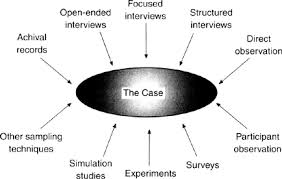
Qualitative research methods are designed in a manner that help reveal the behavior and perception of a target audience with reference to a particular topic. There are different types of qualitative research methods like an in-depth interview, focus groups, ethnographic research, content analysis, case study research that are usually used.

The results of qualitative methods are more descriptive and the inferences can be drawn quite easily from the data that is obtained.

Qualitative research methods originated in the social and behavioral sciences. Today our world is more complicated and it is difficult to understand what people think and perceive. Online qualitative research methods make it easier to understand that as it is more communicative and descriptive.

The following are the qualitative research methods that are frequently used. Also, read about qualitative research examples:

1. One-on-one interview:

Conducting in-depth interviews is one of the most common qualitative research methods. It is a personal interview that is carried out with one respondent at a time. This is purely a conversational method and invites opportunities to get details in depth from the respondent.

One of the advantages of this method provides a great opportunity to gather precise data about what people believe and what their motivations are. If the researcher is well experienced asking the right questions can help him/her collect meaningful data. If they should need more information the researchers should ask such follow up questions that will help them collect more information.

These interviews can be performed face-to-face or on phone and usually can last between half an hour to two hours or even more. When the in-depth interview is conducted face to face it gives a better opportunity to read the body language of the respondents and match the responses.

2. Focus groups: A focus group is also one of the commonly used qualitative research methods, used in data collection. A focus group usually includes a limited number of respondents (6-10) from within your target market.

The main aim of the focus group is to find answers to the “why” “what” and “how” questions. One advantage of focus groups is, you don’t necessarily need to interact with the group in person. Nowadays focus groups can be sent an online survey on various devices and responses can be collected at the click of a button.

Focus groups are an expensive method as compared to the other online qualitative research methods. Typically they are used to explain complex processes. This method is very useful when it comes to market research on new products and testing new concepts.

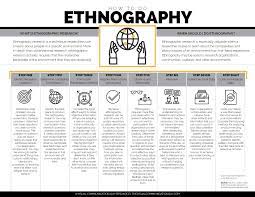
3. Ethnographic research: Ethnographic research is the most in-depth observational method that studies people in their naturally occurring environment.

This method requires the researchers to adapt to the target audiences’ environments which could be anywhere from an organization to a city or any remote location. Here geographical constraints can be an issue while collecting data.

This research design aims to understand the cultures, challenges, motivations, and settings that occur. Instead of relying on interviews and discussions, you experience the natural settings first hand.

This type of research method can last from a few days to a few years, as it involves in-depth observation and collecting data on those grounds. It’s a challenging and a time-consuming method and solely depends on the expertise of the researcher to be able to analyze, observe and infer the data.

4. Case study research: The case study method has evolved over the past few years and developed into a valuable qual research method. As the name suggests it is used for explaining an organization or an entity.

This type of research method is used within a number of areas like education, social sciences and similar. This method may look difficult to operate, however, it is one of the simplest ways of conducting research as it involves a deep dive and thorough understanding of the data collection methods and inferring the data.

5. Record keeping: 

This method makes use of the already existing reliable documents and similar sources of information as the data source. This data can be used in new research. This is similar to going to a library. There one can go over books and other reference material to collect relevant data that can likely be used in the research.

6. Process of observation:

Qualitative Observation is a process of research that uses subjective methodologies to gather systematic information or data. Since, the focus on qualitative observation is the research process of using subjective methodologies to gather information or data. Qualitative observation is primarily used to equate quality differences.

Qualitative observation deals with the 5 major sensory organs and their functioning – sight, smell, touch, taste, and hearing. This doesn’t involve measurements or numbers but instead characteristics.

Qualitative research: data collection and analysis

A. Qualitative data collection

Qualitative data collection allows collecting data that is non-numeric and helps us to explore how decisions are made and provide us with detailed insight. For reaching such conclusions the data that is collected should be holistic, rich, and nuanced and findings to emerge through careful analysis.

  1. Whatever method a researcher chooses for collecting qualitative data, one aspect is very clear the process will generate a large amount of data. In addition to the variety of methods available, there are also different methods of collecting and recording the data.

For example, if the qualitative data is collected through a focus group or one-to-one discussion, there will be handwritten notes or video recorded tapes. If there are recording they should be transcribed and before the process of data analysis can begin.

  1. As a rough guide, it can take a seasoned researcher 8-10 hours to transcribe the recordings of an interview, which can generate roughly 20-30 pages of dialogues. Many researchers also like to maintain separate folders to maintain the recording collected from the different focus group. This helps them compartmentalize the data collected.
  2. In case there are running notes taken, which are also known as field notes, they are helpful in maintaining comments, environmental contexts, nonverbal cues etc. These filed notes are helpful and can be compared while transcribing audio recorded data. Such notes are usually informal but should be secured in a similar manner as the video recordings or the audio tapes.

B. Qualitative data analysis

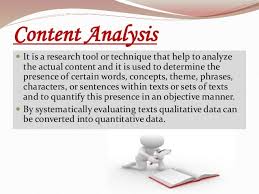
Qualitative data analysis such as notes, videos, audio recordings images, and text documents. One of the most used methods for qualitative data analysis is text analysis.

Text analysis is a  data analysis method that is distinctly different from all other qualitative research methods, where researchers analyze the social life of the participants in the research study and decode the words, actions, etc.

There are images also that are used in this research study and the researchers analyze the context in which the images are used and draw inferences from them. In the last decade, text analysis through what is shared on social media platforms has gained supreme popularity.

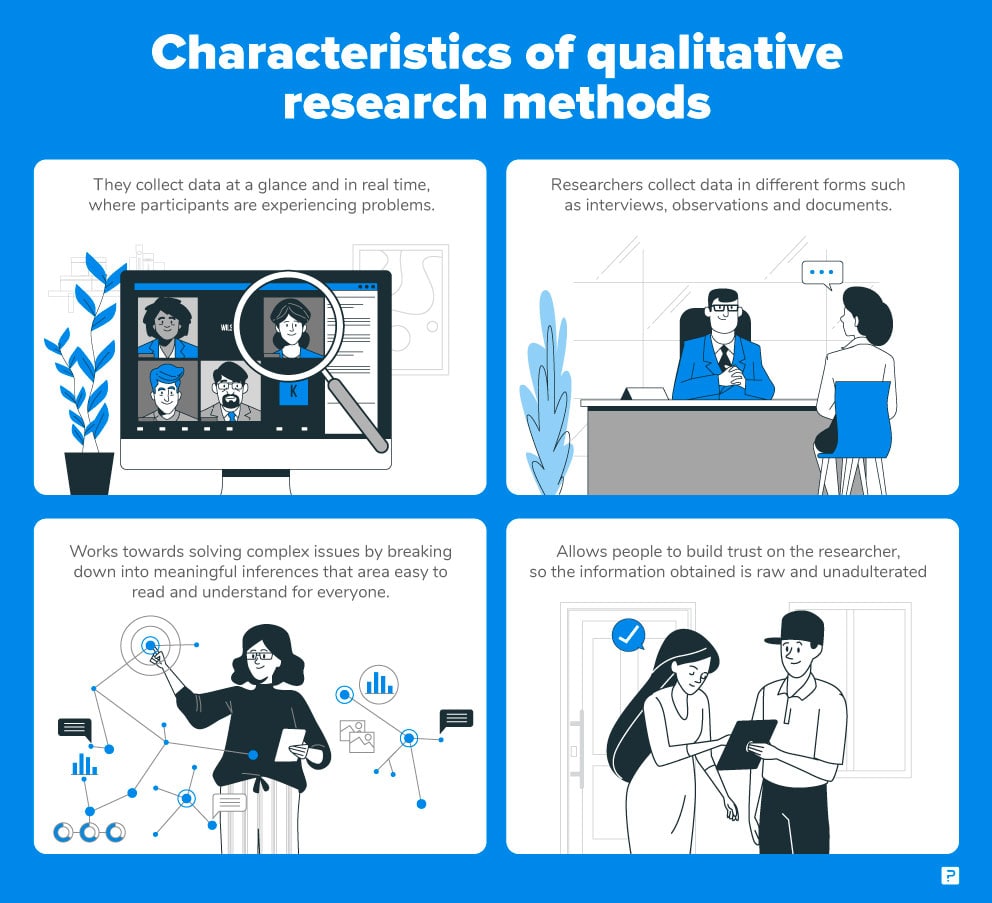
Characteristics of qualitative research methods

  1. Qualitative research methods usually collect data at the sight, where the participants are experiencing issues or problems. These are real-time data and rarely bring the participants out of the geographic locations to collect information.
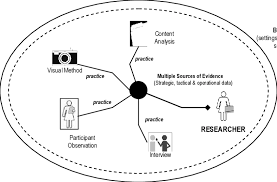
  2. Qualitative researchers typically gather multiple forms of data, such as interviews, observations, and documents, rather than rely on a single data source.
  3. This type of research method works towards solving complex issues by breaking down into meaningful inferences, that is easily readable and understood by all.
  4. Since it’s a more communicative method, people can build their trust on the researcher and the information thus obtained is raw and unadulterated.

When to use qualitative research

Researchers make use of qualitative research techniques when they need to capture accurate, in-depth insights. It is very useful to capture “factual data”. Here are some examples of when to use qualitative research.

  • Developing a new product or generating an idea.
  • Studying your product/brand or service to strengthen your marketing strategy.
  • To understand your strengths and weaknesses.
  • Understanding purchase behavior.
  • To study the reactions of your audience to marketing campaigns and other communications.
  • Exploring market demographics, segments, and customer groups.
  • Gathering perception data of a brand, company, or product.

Qualitative research methods vs quantitative research methods

The basic differences between qualitative research methods and quantitative research methods are simple and straightforward. They differ in:

  • Their analytical objectives
  • Types of questions asked
  • Types of data collection instruments
  • Forms of data they produce
  • Degree of flexibility
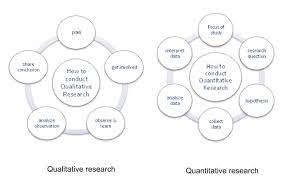
Attributes Qualitative research methods Quantitative research methods
Analytical objectives This research method focuses on describing individual experiences and beliefs. Quantitative research method focuses on describing the characteristics of a population.
Types of questions asked Open-ended questions Closed-ended questions
Data collection Instrument Use semi-structured methods such as in-depth interviews, focus groups, and participant observation Use highly structured methods such as structured observation using questionnaires and surveys
Form of data produced Descriptive data Numerical data
Degree of flexibility Participant responses affect how and which questions researchers ask next Participant responses do not influence or determine how and which questions researchers ask next

The post Qualitative Research: Definition, Types, Methods and Examples appeared first on HKT Consultant.

]]>
Qualitative methods: what and why use them? https://phantran.net/qualitative-methods-what-and-why-use-them.htm Mon, 09 Sep 2019 04:28:04 +0000 https://phuongphapnghiencuu.com/?p=7856 Qualitative methods, as the name indicates, are methods that do not involve measurement or statistics.  Because the natural sciences have had such resounding success with quantitative methods, qualitative methods are sometimes looked down upon as less scientific.  That is, of course, a mistake.  Qualitative methods have been in use in philosophy, sociology, and history for centuries, and

The post Qualitative methods: what and why use them? appeared first on HKT Consultant.

]]>
Qualitative methods, as the name indicates, are methods that do not involve measurement or statistics.  Because the natural sciences have had such resounding success with quantitative methods, qualitative methods are sometimes looked down upon as less scientific.  That is, of course, a mistake.  Qualitative methods have been in use in philosophy, sociology, and history for centuries, and many of the famous studies we refer to in psychology classes every day were actually qualitative!

One qualitative method that goes back a long way is the case study.  When physicians like Sigmund Freud became interested in psychological problems, they continued their tradition of writing and publishing descriptions of their most interesting patients, the treatments they attempted to use, and the progress of the disorder.  Much of the content of abnormal psychology, for example, is built upon these case studies.

Another example is the méthode clinique or clinical method.  This method was particularly well used by Jean Piaget and his followers.  The basic idea is to present a person (in Piaget’s case, usually a young child) with a situation or problem for them to deal with.  The researcher observes how they handle the situation and asks them questions to try to understand the thought processes they are using.  Another version of the méthode clinique is called experimental phenomenology.  One study, for example, asked chess masters and novices to think out loud while playing chess, and analyzed the differences in approach.  One more example is the method of introspection used by Wilhelm Wundt — often considered the founder of scientific psychology — and his students.  Researchers paid careful attention to their own perceptions of simple events like colors, and noted changes in their perceptions following changes in the events.

Probably the oldest qualitative method is naturalistic observation.  This has been used by biologists who study animals in the wild (ethologists) for centuries, and by sociologists studying people’s behavior for nearly as long.  The idea of naturalistic observation is to step back from the situation and make every effort not to interfere.  A biologist studying birds, for example, may construct a blind — a small hut covered with natural materials — so as not to disturb the birds.  Child psychologists often observe children in a similar way.  In experimental schools, the children are often so used to being observed that the researchers don’t even have to hide!  Recently, video and audio technology has allowed us to do the same with people.  Unfortunately, the ethics of spying on people is very questionable!

A variation on naturalistic observation used by some sociologists and psychologists is called participant observation.  A sociologist who is interested in studying the lifestyles of people in some subculture (say a motorcycle gang) may actually join the subculture and interact with the people.  Many anthropologists use this technique as well.  In most cases, it is clear to all that the researcher is not really a part of the group, but sometimes the researcher hides his identity as a researcher.

One of the most useful qualitative techniques is interviewing.  It is often a part of all of the preceding methods.  Contrary to what many people believe, interviewing is not easy.  In fact, it is a rare person who is truly skillful at interviewing.  You have to be very careful not to listen to the person you interview through any prejudiced ideas you might have.  You have to make sure you are not leading the person in the direction you would like them to go.  You have to make sure you don’t misinterpret what they say.  In other words, you need to be very aware of your own biases!

Many researchers using qualitative methods adhere to a school of thought called phenomenology, and refer to their methods as phenomenological methods.  Phenomenology is the study of the contents of consciousness — phenomena — and phenomenological methods are ways of describing and analyzing these contents.  Originally, the methods focussed on describing one’s own thought, feelings, and perceptions.  For example, researchers would investigate their own experiences of an emotion such as anger, or cognitive processes like making a decision.  As you can imagine, the problem of biases are even more difficult to handle in these kind of studies.  Many people, if asked about their experiences of anger, might say something like “I could feel the adrenaline flowing through my veins!”  Unfortunately, that is a prejudicial statement based on people’s common knowledge about the presence of adrenaline.  In fact, nobody actually feels adrenaline in their veins!  We may feel muscle tension, or the hair raising in our necks, or a change in our hearing — but not adrenaline in our  veins.

As time went on, other ways of investigating phenomena were added.  For example, the researcher might ask other people to write what are called protocols — naïve descriptions of their experiences — and use them for analysis.  This is done, for example, when the researcher wants to investigate something he or she doesn’t have personal experience with, such as a schizophrenics verbal hallucinations.

There are arguments for and against the use of qualitative methods.  The most common criticisms of qualitative methods revolve around the problem of bias mentioned above:  It is much easier for biases to creep into qualitative studies than into quantitative ones.  The great advantage of measurement is that, once we have agreed upon what constitutes a measure (say, a meter stick), everyone can use it and be fairly confident that what they measure is what anyone else would measure.  If, on the other hand, we say “this looks like navy blue to me,” someone else might say “no, I think it’s purple,” and another person “no, it’s clearly royal blue!”

The arguments for qualitative methods revolve around realism.  Measures do not encompass the whole of an event.  You can ask people to rate their anxiety, but how much will that tell you about what they are actually feeling?  How do you measure something like love or hate?  Or think about the anthropologist looking at a culture:  Does counting the number of artifacts or timing rituals tell you much about their meaning to the people involved?  Or consider a person’s personality:  Do scores on personality tests tell you much about a person’s life or experiences?  Qualitative researchers would say not much!

Although quantitative methods are still preferred in psychology, more and more people are acknowledging that qualitative methods also have an important place.  Not everything about human beings can be understood by measurement, or in laboratories, or by using rats and pigeons.

Numerous specific research methods/instruments are used when conducting qualitative research.

  • Case Studies
  • Conversation Analysis
  • Field Studies
  • Focus Groups
  • Interviews
  • Naturalistic Observation
  • Participant Observation
  • Ethnography
  • Phenomenology
  • Autoethnography- This bibliography is compiled from a section of Heather Forest’s ILA on Autoethnography & Storytelling. It includes citations for several peer review journal articles that describe recent autoethnographic studies.
  • Grounded Theory Methods Folder- This bibliography contains references historical and recent books on grounded theory methodology and symbolic interactionalism.
  • Critical Discourse Analysis- Books, chapters, journal articles, whole journals, & dissertations.

The post Qualitative methods: what and why use them? appeared first on HKT Consultant.

]]>
Difference Between Qualitative and Quantitative Research https://phantran.net/difference-between-qualitative-and-quantitative-research.htm Mon, 09 Sep 2019 08:38:28 +0000 https://phuongphapnghiencuu.com/?p=8318 If the subject into which you conduct research is a scientific subject or topic, then the research methods include experiments, tests, the study of many other results of different experiments performed earlier about the topic or the subject and the like. On the other hand, research methodology about the scientific topic involves the techniques regarding

The post Difference Between Qualitative and Quantitative Research appeared first on HKT Consultant.

]]>

If the subject into which you conduct research is a scientific subject or topic, then the research methods include experiments, tests, the study of many other results of different experiments performed earlier about the topic or the subject and the like.

On the other hand, research methodology about the scientific topic involves the techniques regarding how to go about conducting the research, the justification of the use of particular tools of research, advanced techniques that can be used in performing the experiments, and the like.

A method is what you did. It is a simple description. You selected, for example, 100 rats and measured their weights. You fed some rats and some not.

A week later, you measured their weights again.

The methodology is why that should give you a meaningful result and why you used some specified method and not some other one.

This would, in particular, include the way you have controlled for errors, e.g., why you fed the rats for a week rather than a month and why 100 rats you thought were enough.

The table below summarizes the primary differences between the research methods and research methodology.

Quantitative research Qualitative research
Research method seeks to answer: what did the researcher use to complete his research. Research methodology seeks to answer: how did the researcher complete his study.
Research methods are the techniques and tools by which you research a subject or a topic. Methodology explains and justifies the techniques and tools by which you may proceed with your research.
Research methods involve the tasks of conducting experiments, tests, surveys, and the like utilizing the knowledge and skills learned through research methodology. Research methodology involves the learning of various techniques to conduct research and acquiring knowledge to perform tests, experiments, surveys, and critical analysis.
The research method aims at finding solutions to research problems. Research methodology ensures the employment of the correct procedures to solve the problems.
Research methods are the end of any scientific or non-scientific research. Research methodology paves the way to choose appropriate research methods and thus is the beginning of any research.

The post Difference Between Qualitative and Quantitative Research appeared first on HKT Consultant.

]]>
Interviews: Types and Methods in Management Research https://phantran.net/types-and-methods-of-interviews-in-management-research.htm Wed, 23 Oct 2019 08:13:19 +0000 https://phuongphapnghiencuu.com/?p=8441 An interview is generally a qualitative research technique which involves asking open-ended questions to converse with respondents and collect elicit data about a subject. The interviewer in most cases is the subject matter expert who intends to understand respondent opinions in a well-planned and executed series of questions and answers. Interviews are similar to focus groups and surveys

The post Interviews: Types and Methods in Management Research appeared first on HKT Consultant.

]]>
An interview is generally a qualitative research technique which involves asking open-ended questions to converse with respondents and collect elicit data about a subject. The interviewer in most cases is the subject matter expert who intends to understand respondent opinions in a well-planned and executed series of questions and answers. Interviews are similar to focus groups and surveys when it comes to garnering information from the target market but are entirely different in their operation – focus groups are restricted to a small group of 6-10 individuals whereas surveys are quantitative in nature. Interviews are conducted with a sample from a population and the key characteristic they exhibit is their conversational tone.

Fundamental Types of Interviews in Research

A researcher has to conduct interviews with a group of participants at a juncture in the research where information can only be obtained by meeting and personally connecting with a section of their target audience. Interviews offer the researchers with a platform to prompt their participants and obtain inputs in the desired detail. There are three fundamental types of interviews in research:

  • Structured Interviews:

Structured interviews are defined as research tools that are extremely rigid in their operations are allows very little or no scope of prompting the participants to obtain and analyze results. It is thus also known as a standardized interview and is significantly quantitative in its approach. Questions in this interview are pre-decided according to the required detail of information.

Structured interviews are excessively used in survey research with the intention of maintaining uniformity throughout all the interview sessions.

They can be closed-ended as well as open-ended – according to the type of target population. Closed-ended questions can be included to understand user preferences from a collection of answer options whereas open-ended can be included to gain details about a particular section in the interview.

Advantages of structured interviews:

  • Structured interviews focus on the accuracy of different responses due to which extremely organized data can be collected. Different respondents have different type of answers to the same structure of questions – answers obtained can be collectively analyzed.
  • They can be used to get in touch with a large sample of the target population.
  • The interview procedure is made easy due to the standardization offered by structured interviews.
  • Replication across multiple samples becomes easy due to the same structure of interview.
  • As the scope of detail is already considered while designing the interview, better information can be obtained and the researcher can analyze the research problem in a comprehensive manner by asking accurate research questions.
  • Since the structure of the interview is fixed, it often generates reliable results and is quick to execute.
  • The relationship between the researcher and the respondent is not formal due to which the researcher can clearly understand the margin of error in case the respondent either degrees to be a part of the survey or is just not interested in providing the right information.

Disadvantages of structured interviews:

  • Limited scope of assessment of obtained results.
  • The accuracy of information overpowers the detail of information.
  • Respondents are forced to select from the provided answer options.
  • The researcher is expected to always adhere to the list of decided questions irrespective of how interesting the conversation is turning out to be with the participants.
  • A significant amount of time is required for a structured interview.

Learn more: Market Research

  • Semi-Structured Interviews:

Semi-structured interviews offer a considerable amount of leeway to the researcher to probe the respondents along with maintaining basic interview structure. Even if it is a guided conversation between researchers and interviewees – an appreciable flexibility is offered to the researchers. A researcher can be assured that multiple interview rounds will not be required in the presence of structure in this type of research interview.

Keeping the structure in mind, the researcher can follow any idea or take creative advantage of the entire interview. Additional respondent probing is always necessary to garner information for a research study. The best application of semi-structured interview is when the researcher doesn’t have time to conduct research and requires detailed information about the topic.

Advantages of semi-structured interviews:

  • Questions of semi-structured interviews are prepared before the scheduled interview which provides the researcher with time to prepare and analyze the questions.
  • It is flexible to an extent while maintaining the research guidelines.
  • Researchers can express the interview questions in the format they prefer, unlike the structured interview.
  • Reliable qualitative data can be collected via these interviews.
  • Flexible structure of the interview.

Learn more: Quantitative Data

Disadvantages of semi-structured interviews:

    • Participants may question the reliability factor of these interviews due to the flexibility offered.
    • Comparing two different answers becomes difficult as the guideline for conducting interviews is not entirely followed. No two questions will have the exact same structure and the result will be an inability to compare are infer results.
  • Unstructured Interviews:

Also called as in-depth interviews, unstructured interviews are usually described as conversations held with a purpose in mind – to gather data about the research study. These interviews have the least number of questions as they lean more towards a normal conversation but with an underlying subject.

The main objective of most researchers using unstructured interviews is to build a bond with the respondents due to which there are high chances that the respondents will be 100% truthful with their answers. There are no guidelines for the researchers to follow and so, they can approach the participants in any ethical manner to gain as much information as they possibly can for their research topic.

Since there are no guidelines for these interviews, a researcher is expected to keep their approach in check so that the respondents do not sway away from the main research motive. For a researcher to obtain the desired outcome, he/she must keep the following factors in mind:

  • Intent of the interview.
  • The interview should primarily take into consideration the participant’s interest and skills.
  • All the conversations should be conducted within permissible limits of research and the researcher should try and stick by these limits.
  • The skills and knowledge of the researcher should match the purpose of the interview.
  • Researchers should understand the do’s and don’ts of unstructured interviews.

Advantages of Unstructured Interviews:

  • Due to the informal nature of unstructured interviews – it becomes extremely easy for researchers to try and develop a friendly rapport with the participants. This leads to gaining insights in extreme detail without much conscious effort.
  • The participants can clarify all their doubts about the questions and the researcher can take each opportunity to explain his/her intention for better answers.
  • There are no questions which the researcher has to abide by and this usually increases the flexibility of the entire research process.

Disadvantages of Unstructured Interviews:

  • As there is no structure to the interview process, researchers take time to execute these interviews.
  • The absence of a standardized set of questions and guidelines indicates that the reliability of unstructured interviews is questionable.
  • In many cases, the ethics involved in these interviews are considered borderline upsetting.

Learn more: Qualitative Market Research

Methods of Research Interviews:

There are three methods to conduct research interviews, each of which is peculiar in its application and can be used according to the research study requirement.

Personal Interviews:

Personal interviews are one of the most used types of interviews, where the questions are asked personally directly to the respondent. For this, a researcher can have a guide online surveys to take note of the answers. A researcher can design his/her survey in such a way that they take notes of the comments or points of view that stands out from the interviewee.

Advantage:

  • Higher response rate.
  • When the interviewees and respondents are face-to-face, there is a way to adapt the questions if this is not understood.
  • More complete answers can be obtained if there is doubt on both sides or a particular information is detected that is remarkable.
  • The researcher has an opportunity to detect and analyze the interviewee’s body language at the time of asking the questions and taking notes about it.

Disadvantages:

  • They are time-consuming and extremely expensive.
  • They can generate distrust on the part of the interviewee, since they may be self-conscious and not answer truthfully.
  • Contacting the interviewees can be a real headache, either scheduling an appointment in workplaces or going from house to house and not finding anyone.
  • Therefore, many interviews are conducted in public places, such as shopping centers or parks. There are even consumer studies that take advantage of these sites to conduct interviews or surveys and give incentives, gifts, coupons, in short; There are great opportunities for online research in shopping centers.
  • Among the advantages of conducting these types of interviews is that the respondents will have more fresh information if the interview is conducted in the context and with the appropriate stimuli, so that researchers can have data from their experience at the scene of the events, immediately and first hand. The interviewer can use an online survey through a mobile device that will undoubtedly facilitate the entire process.

Telephonic Interviews:

Telephonic interviews are widely used and easy to combine with online surveys to carry out research effectively.

Advantages:

  • To find the interviewees it is enough to have their telephone numbers on hand.
  • They are usually lower cost.
  • The information is collected quickly.
  • Having a personal contact can also clarify doubts, or give more details of the questions.

Disadvantages:

  • Many times researchers observe that people do not answer phone calls because it is an unknown number for the respondent, or simply already changed their place of residence and they cannot locate it, which causes a bias in the interview.
  • Researchers also face that they simply do not want to answer and resort to pretexts such as they are busy to answer, they are sick, they do not have the authority to answer the questions asked, they have no interest in answering or they are afraid of putting their security at risk.
  • One of the aspects that should be taken care of in these types of interviews is the kindness with which the interviewers address the respondents, in order to get them to cooperate more easily with their answers. Good communication is vital for the generation of better answers.

Email or Web Page Interviews:

Online research is growing more and more because consumers are migrating to a more virtual world and it is best for each researcher to adapt to this change.

The increase in people with Internet access has made it popular that interviews via email or web page stand out among the types of interviews most used today. For this nothing better than an online survey.

More and more consumers are turning to online shopping, which is why they are a great niche to be able to carry out an interview that will generate information for the correct decision making.

Advantages of email surveys:

  • Speed in obtaining data
  • The respondents respond according to their time, at the time they want and in the place they decide.
  • Online surveys can be mixed with other research methods or using some of the previous interview models. They are tools that can perfectly complement and pay for the project.
  • A researcher can use a variety of questions, logics, create graphs and reports immediately.

Undoubtedly, the objective of the research will set the pattern of what types of interviews are best for data collection. Based on the research design, a research can plan and test the questions, for instance, if the questions are the correct and if the survey flows in the best way.

In addition there are other types of research that can be used under specific circumstances, for example in the case of no connection or adverse situations to carry out surveyors, in these types of occasions it is necessary to conduct a field research, which can not be considered an interview if not rather a completely different methodology.

To summarize the discussion, an effective interview will be one that provides researchers with the necessary data to know the object of study and that this information is applicable to the decisions researchers make.

The post Interviews: Types and Methods in Management Research appeared first on HKT Consultant.

]]>
Observation Methods – Definition, Types, Examples, Advantages https://phantran.net/observation-methods-definition-types-examples-advantages.htm Wed, 23 Oct 2019 08:38:33 +0000 https://phuongphapnghiencuu.com/?p=8473 The observation method is described as a method to observe and describe the behavior of a subject. As the name suggests, it is a way of collecting relevant information and data by observing. It is also referred to as a participatory study because the researcher has to establish a link with the respondent and for

The post Observation Methods – Definition, Types, Examples, Advantages appeared first on HKT Consultant.

]]>

The observation method is described as a method to observe and describe the behavior of a subject. As the name suggests, it is a way of collecting relevant information and data by observing. It is also referred to as a participatory study because the researcher has to establish a link with the respondent and for this has to immerse himself in the same setting as theirs. Only then can he use the observation method to record and take notes.

Meaning and examples

Observation method is used in cases where you want to avoid an error that can be a result of bias during evaluation and interpretation processes. It is a way to obtain objective data by watching a participant and recording it for analysis at a later stage.

Observation method in data collection can be

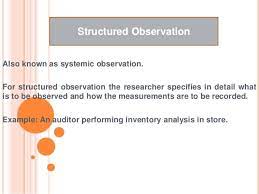
  • Structured observation method – This is a systematic observation method where data is collected as per a pre-defined schedule. The specific variable is used in this method for data collection.
  • Unstructured observation method – The unstructured observation method is conducted in a free and open manner without using any pre-determined objectives, schedules or variables.

Sampling methods for Observational Data

The researcher has a vital role to play as he will have to collect, record and classify the data appropriately. The primary sampling methods are

  • Event sampling – In the event sampling observation method the researcher decides beforehand what events or behavior he will record and which ones he is going to ignore
  • Time sampling – In the time sampling observation method, the researcher chooses the time when he will observe. He makes a record of the occurrence only in the specified and pre-determined period
  • Target-time or instantaneous sampling –  In the target-time or instantaneous sampling observation method, the researcher decides beforehand the moments when the observation will happen and will be recorded at that moment. Everything that happens before or after that moment is of no consequence hence is typically ignored

Types of observation method

The different types of observation method are as follows:

1) Controlled observations

The controlled observation is carried out in a closed space. It is the researcher who has the authority to decide the place and the time where and when the observation will take place. He also decides who the participants will be and in what circumstances will he use the standardized process.

The participants are chosen for a variable group randomly. The researcher observes and records a detailed and descriptive data of behavior and divides it into a distinct category. Sometimes the researcher codes the action as per an agreed scale by using a behavior schedule. The coding can include letters or numbers or a range to measure behavior intensity and describe its characteristics.

The collected data is often turned into statistics. In a controlled observation method, the participants are informed by the researcher about the aim of the research. This makes them aware of being observed. The researcher avoids direct contact during the observation method and generally uses a two-way mirror to observe and record details.

Advantages of controlled observation method

  1. The data and information received from a controlled observation method are structured and analytical. It is thus easy to analyze it quickly and is considered less time-consuming than the other observation methods
  2. Other researchers can easily replicate the report that has been created through the controlled observation method. They use a similar observation schedule, and this makes it easy to test for reliability.
  3. As the controlled observation method is several quick observations can be conducted within a short time frame. Thus the researcher can collect large samples which makes it easier for him to generalize a large population

Limitations of controlled observation method 

  1. The controlled observation method lacks validity because when the participants are aware of being observed their behavior will automatically change

2) Naturalistic observations

Social scientists and psychologists generally use the naturalistic observation method. The process involves observing and studying the spontaneous behavior of the participants in open or natural surroundings. The role of the researcher is to find and record whatever he can see and observe in natural habitat.

Advantages of naturalistic observation method 

  1. When a participant is in a natural habitat, his flow of behavior is natural and not forced.
  2. The studies have gained better ecological validity than the controlled observation method
  3. The naturalistic observation method is used by the researchers to create new ideas. The researcher has the chance to observe the total situation and can find avenues that other people have not thought about

Limitations of naturalistic observation methods

  1. The naturalistic observation method facilitates observations on a micro-scale. It often lacks a representative sample and thus cannot help the researcher in making a generalization that relates to a broader society
  2. In this type of observation method, the researcher needs proper training to recognize aspects that are significant and worth attention.
  3. The observations through naturalistic observation method are not as reliable as the researcher wants them to be because it is not possible to control some variables. This is why other researchers cannot similarly repeat the study or research.
  4. Establishing the cause and effect relationship is not possible because the researcher cannot manipulate the variables

3) Participant observations

The participant observation method is often considered a variant of the naturalistic observation method because it has some similarities with it. The point of difference is that the researcher is not a distant observer anymore because he has joined the participants and become a part of their group. He does this to get a more in-depth and greater insight into their lives.

The researcher interacts with other members of the group freely, participates in their activities, studies their behavior and acquires a different way of life. Participant observation can be overt or covert.

  1. Overt –When the researcher asks permission from a group to mingle the observation method is known as overt. He does so by revealing his true purpose and real identity to the group with whom he wants to mingle
  2. Covert– When the researcher does not show either his true identity or real meaning to the group he wants to join then the observation is known as covert. He keeps both concealed and takes on a false role and identity to enter and mingle in the group. He generally acts as if he is a genuine member of that group

Advantages of Participant Observation methods

  1. It is easy to study and observe the natural behavior of the participants in the group by becoming a part of that group. The respondents generally do not know that they are being observed and behavior recorded, so they are not restrained or constrained in their activities and behavior
  2. The researcher becomes understanding by following the events of the respondents from such a close angle.
  3. During the participant observation method, the researcher develops a good and healthy relationship with the respondents. This rapport helps him to participate in all the activities and make observations with a detached mind
  4. The participant observation method helps the research to observe the actual behavior of the respondents and create an inclusive and intensive case study of that group
  5. Actual participation in the activities provides the researcher with an opportunity to converse freely with other members about various events, their meaning and their importance to them. He gains an in-depth knowledge which would not have been possible only by observation.

Limitations of Participant Observation methods

  1. It is challenging to work undercover. For example, the researcher will have only to observe and not record in front of others because he will not want to blow his cover. He relies heavily on his memory which can be faulty at times
  2. Sometimes the researcher becomes too involved in the intricacies of that group. There is a higher chance of losing his objectivity because his reporting will be selective and dependent on his memory
  3. The emotional participation of the researcher can result in bias interpretation. He will be influenced to some degree and a time might come when he would start supporting them unconditionally because their views and behavior will ultimately become his. This will result in a personal viewpoint of the scenario and not an objective or scientific report
  4. In the participant observation method, the researcher’s experience becomes intense because of his proximity to the group members but the range becomes limited
  5. The researcher misses many vital points because of his familiarity
  6. Proximity with the group will involve him in group factionalism, and he will have to take sides. He then loses his objectivity as an impartial observer with whom everyone is ready to cooperate.

Advantages of Observation Method

  • Provides direct access to research phenomena
  • By observing firsthand, the researcher can collect, check and record accurate data
  • Greater flexibility in terms of application
  • Generate a permanent record of phenomena and the researcher or others can refer with it later
  • The organization method is one of the simplest methods of data collection. It does not require too much technical knowledge
  • The observation method is one of the best ways to formulate a hypothesis. The researcher can observe and come to know about the activities, perceptions, likes and dislikes to form a theory on his subject
  • Observation method is one of the most common methods used in all sciences and is very easy to follow and accept
  • In some instances observation is the only available tool to collect essential data and information
  • The observation method does not require the willingness of the participant to record. The researcher can observe from a distance and record his findings

Disadvantages of Observation Method

  • Faces a severe disadvantage because it takes a longer time frame compared to other data collection methods
  • There is a chance of higher observer bias in the observation method
  • Several personal behaviors are not open for observation and this proves a limitation in case of observation method
  • There is a higher chance of the observer influencing the behavior of a sample group elements
  • Uncertainties of the event cannot determine the actual time when the event will take place, and this is why every occurrence that is open to observation cannot be observed
  • Many of the incidents are abstract like love, affection and the researcher can’t gain an exact and correct account of those
  • The social phenomena generalization made by observation are not considered reliable as it cannot be used for lab experiments
  • In some cases, it is seen that two persons observing the same phenomena come at different results and this can lead to faulty perceptions
  • Observation method is considered an expensive affair as it requires hard effort, plenty of time and high cost

The post Observation Methods – Definition, Types, Examples, Advantages appeared first on HKT Consultant.

]]>
Case Study Methodology in Management Research https://phantran.net/case-study-methodology-in-management-research.htm Wed, 23 Oct 2019 08:54:17 +0000 https://phuongphapnghiencuu.com/?p=8479 Case studies are a popular research method in business area. Case studies aim to analyze specific issues within the boundaries of a specific environment, situation or organization. A case study involves an up-close, in-depth, and detailed examination of a particular case or cases, within a real-world context. For example, case studies in medicine may focus on an

The post Case Study Methodology in Management Research appeared first on HKT Consultant.

]]>
Case studies are a popular research method in business area. Case studies aim to analyze specific issues within the boundaries of a specific environment, situation or organization.

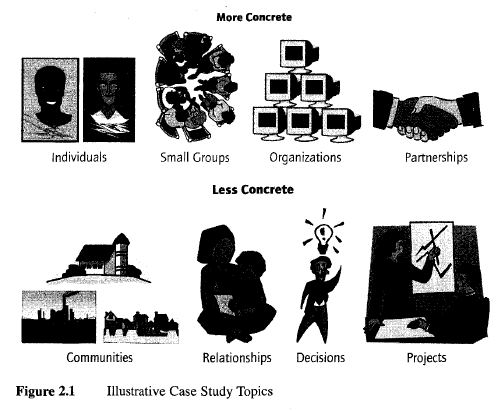
A case study involves an up-close, in-depth, and detailed examination of a particular case or cases, within a real-world context. For example, case studies in medicine may focus on an individual patient or ailment; case studies in business might cover a particular firm’s strategy or a broader market; similarly, case studies in politics can range from a narrow happening over time (e.g., a specific political campaign) to an enormous undertaking (e.g., a World War).

Generally, a case study can highlight nearly any individual, group, organization, event, belief system, or action. A case study does not necessarily have to be one observation (N=1), but may include many observations (one or multiple individuals and entities across multiple time periods, all within the same case study).

Case study research has been extensively practiced in both the social and natural sciences.

Case Study Research Designs

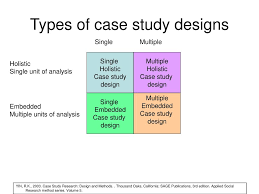
As with other social science methods, no single research design dominates case study research. Case studies can use at least four types of designs. First, there may be a “no theory first” type of case study design, which is closely connected to Kathleen M. Eisenhardt’s methodological work. A second type of research design highlights the distinction between single- and multiple-case studies, following Robert K. Yin’s guidelines and extensive examples. A third design deals with a “social construction of reality”, represented by the work of Robert E. Stake. Finally, the design rationale for a case study may be to identify “anomalies”. A representative scholar of this design is Michael Burawoy. Each of these four designs may lead to different applications, and understanding their sometimes unique ontological and epistemological assumptions becomes important. However, although the designs can have substantial methodological differences, the designs also can be used in explicitly acknowledged combinations with each other.

While case studies can be intended to provide bounded explanations of single cases or phenomena, they are often intended to theoretical insights about the features of a broader population.

Case Selection and Structure

Case selection in case study research is generally intended to both find cases that are a representative sample and which have variations on the dimensions of theoretical interest. Using that is solely representative, such as an average or typical case is often not the richest in information. In clarifying lines of history and causation it is more useful to select subjects that offer an interesting, unusual or particularly revealing set of circumstances. A case selection that is based on representativeness will seldom be able to produce these kinds of insights.

While random selection of cases is a valid case selection strategy in large-N research, there is a consensus among scholars that it risks generating serious biases in small-N research. Cases should generally be chosen that have a high expected information gain. For example, outlier cases (those which are extreme, deviant or atypical) can reveal more information than the potentially representative case. A case may also be chosen because of the inherent interest of the case or the circumstances surrounding it. Alternatively it may be chosen because of researchers’ in-depth local knowledge; where researchers have this local knowledge they are in a position to “soak and poke” as Richard Fenno put it, and thereby to offer reasoned lines of explanation based on this rich knowledge of setting and circumstances.

Beyond decisions about case selection and the subject and object of the study, decisions need to be made about purpose, approach and process in the case study. Gary Thomas thus proposes a typology for the case study wherein purposes are first identified (evaluative or exploratory), then approaches are delineated (theory-testing, theory-building or illustrative), then processes are decided upon, with a principal choice being between whether the study is to be single or multiple, and choices also about whether the study is to be retrospective, snapshot or diachronic, and whether it is nested, parallel or sequential.

John Gerring and Jason Seawright list seven case selection strategies:

Typical cases are cases that exemplify a stable cross-case relationship. These cases are representative of the larger population of cases, and the purpose of the study is to look within the case rather than compare it with other cases.

  1. Diverse cases are cases that have variation on the relevant X and Y variables. Due to the range of variation on the relevant variables, these cases are representative of the full population of cases.
  2. Extreme cases are cases that have an extreme value on the X or Y variable relative to other cases.
  3. Deviant cases are cases that defy existing theories and common sense. They not only have extreme values on X or Y (like extreme cases), but defy existing knowledge about causal relations.
  4. Influential cases are cases that are central to a model or theory (for example, Nazi Germany in theories of fascism and the far-right).
  5. Most similar cases are cases that are similar on all the independent variables, except the one of interest to the researcher.
  6. Most different cases are cases that are different on all the independent variables, except the one of interest to the researcher.

For theoretical discovery, Jason Seawright recommends using deviant cases or extreme cases that have an extreme value on the X variable.

Arend Lijphart, and Harry Eckstein identified five types of case study research designs (depending on the research objectives), Alexander George and Andrew Bennett added a sixth category:

  1. In atheoretical (or configurative idiographic) case studies the goal is to describe a case very well, but not to contribute to a theory.
  2. In interpretative (or disciplined configurative) case studies the goal is to use established theories to explain a specific case.
  3. In hypothesis-generating (or heuristic) case studies the goal is to inductively identify new variables, hypotheses, causal mechanisms and causal paths.
  4. In theory testing case studies the goal is to assess the validity and scope conditions of existing theories.
  5. In plausibility probes the goal is to assess the plausibility of new hypotheses and theories.
  6. In building block studies of types or subtypes the goal is to identify common patterns across cases.

In terms of case selection, Gary King, Robert Keohane, and Sidney Verba warn against “selecting on the dependent variable”. They argue for example that researchers cannot make valid causal inferences about war outbreak by only looking at instances where war did happen (the researcher should also look at cases where war did not happen). Scholars of qualitative methods have disputed this claim, however. They argue that selecting on the dependent variable can be useful depending on the purposes of the research.

King, Keohane and Verba argue that there is no methodological problem in selecting on the explanatory variable, however. They do warn about multicollinearity (choosing two or more explanatory variables that perfectly correlate with each other).

Engineering students participate in a case study competition.

Uses and Limits

Uses

Case studies have commonly been seen as a fruitful way to come up hypotheses and generate theories. Case studies are also useful for formulating concepts, which are an important aspect of theory construction. The concepts used in qualitative research will tend to have higher conceptual validity than concepts used in quantitative research (due to conceptual stretching: the unintentional comparison of dissimilar cases). Case studies add descriptive richness. Case studies are suited to explain outcomes in individual cases, which is something that quantitative methods are less equipped to do. Through fine-gained knowledge and description, case studies can fully specify the causal mechanisms in a way that may be harder in a large-N study. In terms of identifying “causal mechanisms”, some scholars distinguish between “weak” and “strong chains”. Strong chains actively connect elements of the causal chain to produce an outcome whereas weak chains are just intervening variables.

Case studies of cases that defy existing theoretical expectations may contribute knowledge by delineating why the cases violate theoretical predictions and specifying the scope conditions of the theory Case studies are useful in situations of causal complexity where there is equifinality, complex interaction effects and path dependency Case studies can identify necessary and insufficient conditions, as well as complex combinations of necessary and sufficient conditions. They argue that case studies may also be useful in identifying the scope conditions of a theory: whether variables are sufficient or necessary to bring about an outcome.

Limitations

Designing Social Inquiry, an influential 1994 book written by Gary King, Robert Keohane, and Sidney Verba, primarily applies lessons from regression-oriented analysis to qualitative research, arguing that the same logics of causal inference can be used in both types of research. The authors’ recommendation is to increase the number of observations (a recommendation that Barbara Geddes also makes in Paradigms and Sand Castles), because few observations make it harder to estimate multiple causal effects, as well as increase the risk that there is measurement error, and that an event in a single case was caused by random error or unobservable factors. KKV sees process-tracing and qualitative research as being “unable to yield strong causal inference” due to the fact that qualitative scholars would struggle with determining which of many intervening variables truly links the independent variable with a dependent variable. The primary problem is that qualitative research lacks a sufficient number of observations to properly estimate the effects of an independent variable. They write that the number of observations could be increased through various means, but that would simultaneously lead to another problem: that the number of variables would increase and thus reduce degrees of freedom.

The purported “degrees of freedom” problem that KKV identify is widely considered flawed; while quantitative scholars try to aggregate variables to reduce the number of variables and thus increase the degrees of freedom, qualitative scholars intentionally want their variables to have many different attributes and complexity. For example, James Mahoney writes, “the Bayesian nature of process tracing explains why it is inappropriate to view qualitative research as suffering from a small-N problem and certain standard causal identification problems.” By using Bayesian probability, it may be possible to makes strong causal inferences from a small sliver of data.

A commonly described limit of case studies is that they do not lend themselves to generalizability. Some scholars, such as Bent Flyvbjerg, have pushed back on that notion.

As small-N research should not rely on random sampling, scholars must be careful in avoiding selection bias when picking suitable cases. A common criticism of qualitative scholarship is that cases are chosen because they are consistent with the scholar’s preconceived notions, resulting in biased research.

Alexander George and Andrew Bennett note that a common problem in case study research is that of reconciling conflicting interpretations of the same data.

The post Case Study Methodology in Management Research appeared first on HKT Consultant.

]]>
Overview of Action Research Methodology https://phantran.net/overview-of-action-research-methodology.htm Wed, 23 Oct 2019 09:07:44 +0000 https://phuongphapnghiencuu.com/?p=8494 What is Action Research? Definition Action research is known by many other names, including participatory research, collaborative inquiry, emancipatory research, action learning, and contextual action research, but all are variations on a theme. Put simply, action research is “learning by doing” – a group of people identify a problem, do something to resolve it, see

The post Overview of Action Research Methodology appeared first on HKT Consultant.

]]>
What is Action Research?

Definition

Action research is known by many other names, including participatory research, collaborative inquiry, emancipatory research, action learning, and contextual action research, but all are variations on a theme. Put simply, action research is “learning by doing” – a group of people identify a problem, do something to resolve it, see how successful their efforts were, and if not satisfied, try again.  While this is the essence of the approach, there are other key attributes of action research that differentiate it from common problem-solving activities that we all engage in every day.  A more succinct definition is,

“Action research…aims to contribute both to the practical concerns of people in an immediate problematic situation and to further the goals of social science simultaneously.  Thus, there is a dual commitment in action research to study a system and concurrently to collaborate with members of the system in changing it in what is together regarded as a desirable direction.  Accomplishing this twin goal requires the active collaboration of researcher and client, and thus it stresses the importance of co-learning as a primary aspect of the research process.”

What separates this type of research from general professional practices, consulting, or daily problem-solving is the emphasis on scientific study, which is to say the researcher studies the problem systematically and ensures the intervention is informed by theoretical considerations.  Much of the researcher’s time is spent on refining the methodological tools to suit the exigencies of the situation, and on collecting, analyzing, and presenting data on an ongoing, cyclical basis.

Several attributes separate action research from other types of research.  Primary is its focus on turning the people involved into researchers, too – people learn best, and more willingly apply what they have learned, when they do it themselves.  It also has a social dimension – the research takes place in real-world situations, and aims to solve real problems.  Finally, the initiating researcher, unlike in other disciplines, makes no attempt to remain objective, but openly acknowledges their bias to the other participants.

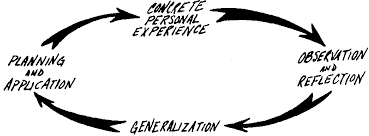
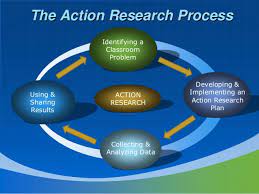
The Action Research Process

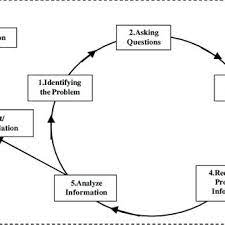
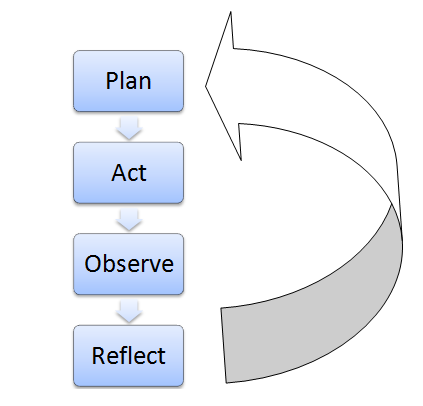
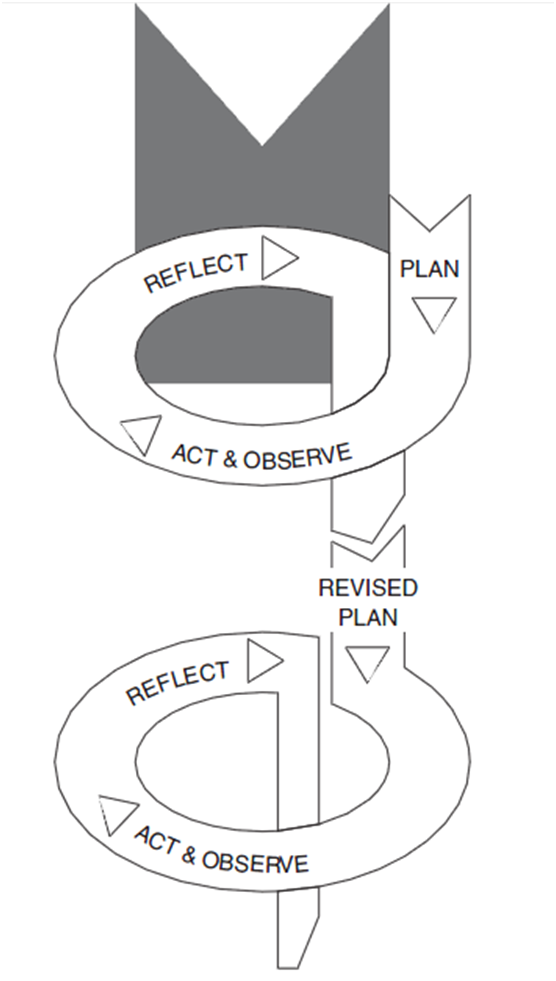
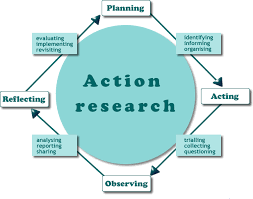
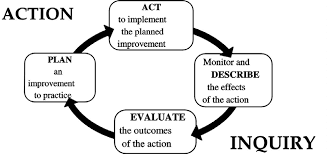
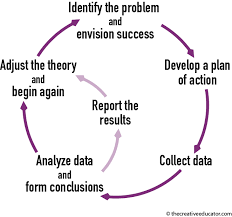
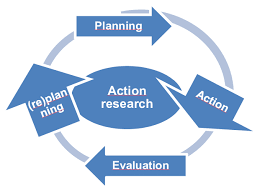
Stephen Kemmis has developed a simple model of the cyclical nature of the typical action research process (Figure 1).  Each cycle has four steps: plan, act, observe, reflect.

Figure 1 Simple Action Research Model

(from MacIsaac, 1995)

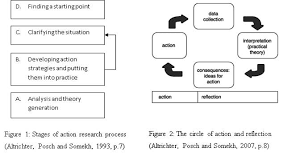
Gerald Susman (1983) gives a somewhat more elaborate listing.  He distinguishes five phases to be conducted within each research cycle (Figure 2).  Initially, a problem is identified and data is collected for a more detailed diagnosis.  This is followed by a collective postulation of several possible solutions, from which a single plan of action emerges and is implemented.  Data on the results of the intervention are collected and analyzed, and the findings are interpreted in light of how successful the action has been.  At this point, the problem is re-assessed and the process begins another cycle.  This process continues until the problem is resolved.

Figure 2 Detailed Action Research Model

(adapted from Susman 1983)

Principles of Action Research

What gives action research its unique flavour is the set of principles that guide the research.  Winter (1989) provides a comprehensive overview of six key principles.

1) Reflexive critique

An account of a situation, such as notes, transcripts or official documents, will make implicit claims to be authoritative, i.e., it implies that it is factual and true.  Truth in a social setting, however, is relative to the teller.  The principle of reflective critique ensures people reflect on issues and processes and make explicit the interpretations, biases, assumptions and concerns upon which judgments are made.  In this way, practical accounts can give rise to theoretical considerations.

2) Dialectical critique

Reality, particularly social reality, is consensually validated, which is to say it is shared through language.  Phenomena are conceptualized in dialogue, therefore a dialectical critique is required to understand the set of relationships both between the phenomenon and its context, and between the elements constituting the phenomenon.  The key elements to focus attention on are those constituent elements that are unstable, or in opposition to one another.  These are the ones that are most likely to create changes.

3) Collaborative Resource

Participants in an action research project are co-researchers.  The principle of collaborative resource presupposes that each person’s ideas are equally significant as potential resources for creating interpretive categories of analysis, negotiated among the participants.  It strives to avoid the skewing of credibility stemming from the prior status of an idea-holder.  It especially makes possible the insights gleaned from noting the contradictions both between many viewpoints and within a single viewpoint

4) Risk

The change process potentially threatens all previously established ways of doing things, thus creating psychic fears among the practitioners.  One of the more prominent fears comes from the risk to ego stemming from open discussion of one’s interpretations, ideas, and judgments.  Initiators of action research will use this principle to allay others’ fears and invite participation by pointing out that they, too, will be subject to the same process, and that whatever the outcome, learning will take place.

5) Plural Structure

The nature of the research embodies a multiplicity of views, commentaries and critiques, leading to multiple possible actions and interpretations.  This plural structure of inquiry requires a plural text for reporting.  This means that there will be many accounts made explicit, with commentaries on their contradictions, and a range of options for action presented.  A report, therefore, acts as a support for ongoing discussion among collaborators, rather than a final conclusion of fact.

6) Theory, Practice, Transformation

For action researchers, theory informs practice, practice refines theory, in a continuous transformation.  In any setting, people’s actions are based on implicitly held assumptions, theories and hypotheses, and with every observed result, theoretical knowledge is enhanced.  The two are intertwined aspects of a single change process.  It is up to the researchers to make explicit the theoretical justifications for the actions, and to question the bases of those justifications.  The ensuing practical applications that follow are subjected to further analysis, in a transformative cycle that continuously alternates emphasis between theory and practice.

When is Action Research used?

Action research is used in real situations, rather than in contrived, experimental studies, since its primary focus is on solving real problems.  It can, however, be used by social scientists for preliminary or pilot research, especially when the situation is too ambiguous to frame a precise research question.  Mostly, though, in accordance with its principles, it is chosen when circumstances require flexibility, the involvement of the people in the research, or change must take place quickly or holistically.

It is often the case that those who apply this approach are practitioners who wish to improve understanding of their practice, social change activists trying to mount an action campaign, or, more likely, academics who have been invited into an organization (or other domain) by decision-makers aware of a problem requiring action research, but lacking the requisite methodological knowledge to deal with it.

Situating Action Research in a Research Paradigm

Positivist Paradigm

The main research paradigm for the past several centuries has been that of Logical Positivism.  This paradigm is based on a number of principles, including: a belief in an objective reality, knowledge of which is only gained from sense data that can be directly experienced and verified between independent observers.  Phenomena are subject to natural laws that humans discover in a logical manner through empirical testing, using inductive and deductive hypotheses derived from a body of scientific theory. Its methods rely heavily on quantitative measures, with relationships among variables commonly shown by mathematical means.  Positivism, used in scientific and applied research, has been considered by many to be the antithesis of the principles of action research (Susman and Evered 1978, Winter 1989).

Interpretive Paradigm

Over the last half century, a new research paradigm has emerged in the social sciences to break out of the constraints imposed by positivism.  With its emphasis on the relationship between socially-engendered concept formation and language, it can be referred to as the Interpretive paradigm.  Containing such qualitative methodological approaches as phenomenology, ethnography, and hermeneutics, it is characterized by a belief in a socially constructed, subjectively-based reality, one that is influenced by culture and history.  Nonetheless it still retains the ideals of researcher objectivity, and researcher as passive collector and expert interpreter of data.

Paradigm of Praxis

Though sharing a number of perspectives with the interpretive paradigm, and making considerable use of its related qualitative methodologies, there are some researchers who feel that neither it nor the positivist paradigms are sufficient epistemological structures under which to place action research (Lather 1986, Morley 1991).  Rather, a paradigm of Praxis is seen as where the main affinities lie.  Praxis, a term used by Aristotle, is the art of acting upon the conditions one faces in order to change them.  It deals with the disciplines and activities predominant in the ethical and political lives of people. Aristotle contrasted this with Theoria – those sciences and activities that are concerned with knowing for its own sake.  Both are equally needed he thought.  That knowledge is derived from practice, and practice informed by knowledge, in an ongoing process, is a cornerstone of action research.  Action researchers also reject the notion of researcher neutrality, understanding that the most active researcher is often one who has most at stake in resolving a problematic situation.

Evolution of Action Research

Origins in late 1940s

Kurt Lewin is generally considered the ‘father’ of action research.  A German social and experimental psychologist, and one of the founders of the Gestalt school, he was concerned with social problems, and focused on participative group processes for addressing conflict, crises, and change, generally within organizations.  Initially, he was associated with the Center for Group Dynamics at MIT in Boston, but soon went on to establish his own National Training Laboratories.

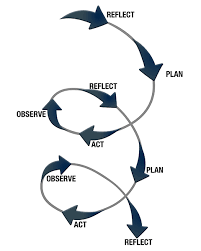
Lewin first coined the term ‘action research’ in his 1946 paper “Action Research and Minority Problems”,[v] characterizing Action Research as “a comparative research on the conditions and effects of various forms of social action and research leading to social action”, using a process of  “a spiral of steps, each of which is composed of a circle of planning, action, and fact-finding about the result of the action”.

Eric Trist, another major contributor to the field from that immediate post-war era, was a social psychiatrist whose group at the Tavistock Institute of Human Relations in London engaged in applied social research, initially for the civil repatriation of German prisoners of war. He and his colleagues tended to focus more on large-scale, multi-organizational problems.

Both Lewin and Trist applied their research to systemic change in and between organizations.  They emphasized direct professional – client collaboration and affirmed the role of group relations as basis for problem-solving.  Both were avid proponents of the principle that decisions are best implemented by those who help make them.

Current Types of Action Research

By the mid-1970s, the field had evolved, revealing 4 main ‘streams’ that had emerged: traditional, contextural (action learning), radical, and educational action research.

Traditional Action Research

Traditional Action Research stemmed from Lewin’s work within organizations and encompasses the concepts and practices of Field Theory, Group Dynamics, T-Groups, and the Clinical Model.  The growing importance of labour-management relations led to the application of action research in the areas of Organization Development, Quality of Working Life (QWL), Socio-technical systems (e.g., Information Systems), and Organizational Democracy.  This traditional approach tends toward the conservative, generally maintaining the status quo with regards to organizational power structures.

Contextural Action Research (Action Learning)

Contextural Action Research, also sometimes referred to as Action Learning, is an approach derived from Trist’s work on relations between organizations.  It is contextural, insofar as it entails reconstituting the structural relations among actors in a social environment; domain-based, in that it tries to involve all affected parties and stakeholders; holographic, as each participant understands the working of the whole; and it stresses that participants act as project designers and co-researchers.  The concept of organizational ecology, and the use of search conferences come out of contextural action research, which is more of a liberal philosophy, with social transformation occurring by consensus and normative incrementalism.

Radical Action Research

The Radical stream, which has its roots in Marxian ‘dialectical materialism’ and the praxis orientations of Antonio Gramsci, has a strong focus on emancipation and the overcoming of power imbalances.  Participatory Action Research, often found in liberationist movements and international development circles, and Feminist Action Research both strive for social transformation via an advocacy process to strengthen peripheral groups in society.

Educational Action Research

A fourth stream, that of Educational Action Research, has its foundations in the writings of John Dewey, the great American educational philosopher of the 1920s and 30s, who believed that professional educators should become involved in community problem-solving.  Its practitioners, not surprisingly, operate mainly out of educational institutions, and focus on development of curriculum, professional development, and applying learning in a social context.  It is often the case that university-based action researchers work with primary and secondary school teachers and students on community projects.

Source: O’Brien, R. (2001). Um exame da abordagem metodológica da pesquisa ação [An Overview of the Methodological Approach of Action Research]. In  Roberto Richardson (Ed.), Teoria e Prática da Pesquisa Ação [Theory and Practice of Action Research]. João Pessoa, Brazil: Universidade Federal da Paraíba. (English version) Available: http://www.web.ca/~robrien/papers/arfinal.html (Accessed 20/1/2002)

The post Overview of Action Research Methodology appeared first on HKT Consultant.

]]>
Content Analysis Method and Examples https://phantran.net/content-analysis-method-and-examples.htm Wed, 23 Oct 2019 11:37:34 +0000 https://phuongphapnghiencuu.com/?p=8596 Content analysis is a research tool used to determine the presence of certain words, themes, or concepts within some given qualitative data (i.e. text). Using content analysis, researchers can quantify and analyze the presence, meanings and relationships of such certain words, themes, or concepts. As an example, researchers can evaluate language used within a news

The post Content Analysis Method and Examples appeared first on HKT Consultant.

]]>
Content analysis is a research tool used to determine the presence of certain words, themes, or concepts within some given qualitative data (i.e. text). Using content analysis, researchers can quantify and analyze the presence, meanings and relationships of such certain words, themes, or concepts. As an example, researchers can evaluate language used within a news article to search for bias or partiality. Researchers can then make inferences about the messages within the texts, the writer(s), the audience, and even the culture and time of surrounding the text.

Sources of data could be from interviews, open-ended questions, field research notes, conversations, or literally any occurrence of communicative language (such as books, essays, discussions, newspaper headlines, speeches, media, historical documents). A single study may analyze various forms of text in its analysis. To analyze the text using content analysis, the text must be coded, or broken down, into manageable code categories for analysis (i.e. “codes”). Once the text is coded into code categories, the codes can then be further categorized into “code categories” to summarize data even further.

Quantitative content analysis highlights frequency counts and objective analysis of these coded frequencies. Additionally, quantitative content analysis begins with a framed hypothesis with coding decided on before the analysis begins. These coding categories are strictly relevant to the researcher’s hypothesis. Quantitative analysis also takes a deductive approach.

Siegfried Kracauer provides a critique of quantitative analysis, asserting that it oversimplifies complex communications in order to be more reliable. On the other hand, qualitative analysis deals with the intricacies of latent interpretations, whereas quantitative has a focus on manifest meanings. He also acknowledges an “overlap” of qualitative and quantitative content analysis. Patterns are looked at more closely in qualitative analysis, and based on the latent meanings that the researcher may find, the course of the research could be changed. It is inductive and begins with open research questions, as opposed to a hypothesis.

Three different definition of content analysis are provided below.

  • Definition 1: “Any technique for making inferences by systematically and objectively identifying special characteristics of messages.” (from Holsti, 1968)
  • Definition 2: “An interpretive and naturalistic approach. It is both observational and narrative in nature and relies less on the experimental elements normally associated with scientific research (reliability, validity and generalizability) (from Ethnography, Observational Research, and Narrative Inquiry, 1994-2012).
  • Definition 3: “A research technique for the objective, systematic and quantitative description of the manifest content of communication.” (from Berelson, 1952)

Uses of Content Analysis

  • Identify the intentions, focus or communication trends of an individual, group or institution
  • Describe attitudinal and behavioral responses to communications
  • Determine psychological or emotional state of persons or groups
  • Reveal international differences in communication content
  • Reveal patterns in communication content
  • Pre-test and improve an intervention or survey prior to launch
  • Analyze focus group interviews and open-ended questions to complement quantitative data

Types of Content Analysis

There are two general types of content analysis: conceptual analysis and relational analysis. Conceptual analysis determines the existence and frequency of concepts in a text. Relational analysis develops the conceptual analysis further by examining the relationships among concepts in a text. Each type of analysis may lead to different results, conclusions, interpretations and meanings.

Conceptual Analysis

Typically people think of conceptual analysis when they think of content analysis. In conceptual analysis, a concept is chosen for examination and the analysis involves quantifying and counting its presence. The main goal is to examine the occurrence of selected terms in the data. Terms may be explicit or implicit. Explicit terms are easy to identify. Coding of implicit terms is more complicated: you need to decide the level of implication and base judgments on subjectivity (issue for reliability and validity). Therefore, coding of implicit terms involves using a dictionary or contextual translation rules or both.

To begin a conceptual content analysis, first identify the research question and choose a sample or samples for analysis. Next, the text must be coded into manageable content categories. This is basically a process of selective reduction. By reducing the text to categories, the researcher can focus on and code for specific words or patterns that inform the research question.

General steps for conducting a conceptual content analysis:

1. Decide the level of analysis: word, word sense, phrase, sentence, themes

2. Decide how many concepts to code for: develop pre-defined or interactive set of categories or concepts. Decide either: A. to allow flexibility to add categories through the coding process, or B. to stick with the pre-defined set of categories.

  • Option A allows for the introduction and analysis of new and important material that could have significant implications to one’s research question.
  • Option B allows the researcher to stay focused and examine the data for specific concepts.

3. Decide whether to code for existence or frequency of a concept. The decision changes the coding process.

  • When coding for the existence of a concept, the researcher would count a concept only once if it appeared at least once in the data and no matter how many times it appeared.
  • When coding for the frequency of a concept, the researcher would count the number of times a concept appears in a text.

4. Decide on how you will distinguish among concepts:

  • Should text be coded exactly as they appear or coded as the same when they appear in different forms? For example, “dangerous” vs. “dangerousness”. The point here is to create coding rules so that these word segments are transparently categorized in a logical fashion. The rules could make all of these word segments fall into the same category, or perhaps the rules can be formulated so that the researcher can distinguish these word segments into separate codes.
  • What level of implication is to be allowed? Words that imply the concept or words that explicitly state the concept? For example, “dangerous” vs. “the person is scary” vs. “that person could cause harm to me”. These word segments may not merit separate categories, due the implicit meaning of “dangerous”.

5. Develop rules for coding your texts. After decisions of steps 1-4 are complete, a researcher can begin developing rules for translation of text into codes. This will keep the coding process organized and consistent. The researcher can code for exactly what he/she wants to code. Validity of the coding process is ensured when the researcher is consistent and coherent in their codes, meaning that they follow their translation rules. In content analysis, obeying by the translation rules is equivalent to validity.

6. Decide what to do with irrelevant information: should this be ignored (e.g. common English words like “the” and “and”), or used to reexamine the coding scheme in the case that it would add to the outcome of coding?

7. Code the text: This can be done by hand or by using software. By using software, researchers can input categories and have coding done automatically, quickly and efficiently, by the software program. When coding is done by hand, a researcher can recognize error far more easily (e.g. typos, misspelling). If using computer coding, text could be cleaned of errors to include all available data. This decision of hand vs. computer coding is most relevant for implicit information where category preparation is essential for accurate coding.

8. Analyze your results: Draw conclusions and generalizations where possible. Determine what to do with irrelevant, unwanted or unused text: reexamine, ignore, or reassess the coding scheme. Interpret results carefully as conceptual content analysis can only quantify the information. Typically, general trends and patterns can be identified.

Relational Analysis

Relational analysis begins like conceptual analysis, where a concept is chosen for examination. However, the analysis involves exploring the relationships between concepts. Individual concepts are viewed as having no inherent meaning and rather the meaning is a product of the relationships among concepts.

To begin a relational content analysis, first identify a research question and choose a sample or samples for analysis. The research question must be focused so the concept types are not open to interpretation and can be summarized. Next, select text for analysis. Select text for analysis carefully by balancing having enough information for a thorough analysis so results are not limited with having information that is too extensive so that the coding process becomes too arduous and heavy to supply meaningful and worthwhile results.

There are three subcategories of relational analysis to choose from prior to going on to the general steps.

  1. Affect extraction: an emotional evaluation of concepts explicit in a text. A challenge to this method is that emotions can vary across time, populations, and space. However, it could be effective at capturing the emotional and psychological state of the speaker or writer of the text.
  2. Proximity analysis: an evaluation of the co-occurrence of explicit concepts in the text. Text is defined as a string of words called a “window” that is scanned for the co-occurrence of concepts. The result is the creation of a “concept matrix”, or a group of interrelated co-occurring concepts that would suggest an overall meaning.
  3. Cognitive mapping: a visualization technique for either affect extraction or proximity analysis. Cognitive mapping attempts to create a model of the overall meaning of the text such as a graphic map that represents the relationships between concepts.

General steps for conducting a relational content analysis:

1. Determine the type of analysis: Once the sample has been selected, the researcher needs to determine what types of relationships to examine and the level of analysis: word, word sense, phrase, sentence, themes.
2. Reduce the text to categories and code for words or patterns. A researcher can code for existence of meanings or words.
3. Explore the relationship between concepts: once the words are coded, the text can be analyzed for the following:

  • Strength of relationship: degree to which two or more concepts are related.
  • Sign of relationship: are concepts positively or negatively related to each other?
  • Direction of relationship: the types of relationship that categories exhibit. For example, “X implies Y” or “X occurs before Y” or “if X then Y” or if X is the primary motivator of Y.

4. Code the relationships: a difference between conceptual and relational analysis is that the statements or relationships between concepts are coded.
5. Perform statistical analyses: explore differences or look for relationships among the identified variables during coding.
6. Map out representations: such as decision mapping and mental models.

Reliability and Validity

Reliability: Because of the human nature of researchers, coding errors can never be eliminated but only minimized. Generally, 80% is an acceptable margin for reliability. Three criteria comprise the reliability of a content analysis:

  1. Stability: the tendency for coders to consistently re-code the same data in the same way over a period of time.
  2. Reproducibility: tendency for a group of coders to classify categories membership in the same way.
  3. Accuracy: extent to which the classification of text corresponds to a standard or norm statistically.

Validity: Three criteria comprise the validity of a content analysis:

  1. Closeness of categories: this can be achieved by utilizing multiple classifiers to arrive at an agreed upon definition of each specific category. Using multiple classifiers, a concept category that may be an explicit variable can be broadened to include synonyms or implicit variables.
  2. Conclusions: What level of implication is allowable? Do conclusions correctly follow the data? Are results explainable by other phenomena? This becomes especially problematic when using computer software for analysis and distinguishing between synonyms. For example, the word “mine,” variously denotes a personal pronoun, an explosive device, and a deep hole in the ground from which ore is extracted. Software can obtain an accurate count of that word’s occurrence and frequency, but not be able to produce an accurate accounting of the meaning inherent in each particular usage. This problem could throw off one’s results and make any conclusion invalid.
  3. Generalizability of the results to a theory: dependent on the clear definitions of concept categories, how they are determined and how reliable they are at measuring the idea one is seeking to measure. Generalizability parallels reliability as much of it depends on the three criteria for reliability.

Advantages of Content Analysis

  • Directly examines communication using text
  • Allows for both qualitative and quantitative analysis
  • Provides valuable historical and cultural insights over time
  • Allows a closeness to data
  • Coded form of the text can be statistically analyzed
  • Unobtrusive means of analyzing interactions
  • Provides insight into complex models of human thought and language use
  • When done well, is considered a relatively “exact” research method
  • Content analysis is a readily-understood and an inexpensive research method
  • A more powerful tool when combined with other research methods such as interviews, observation, and use of archival records. It is very useful for analyzing historical material, especially for documenting trends over time.

Disadvantages of Content Analysis

  • Can be extremely time consuming
  • Is subject to increased error, particularly when relational analysis is used to attain a higher level of interpretation
  • Is often devoid of theoretical base, or attempts too liberally to draw meaningful inferences about the relationships and impacts implied in a study
  • Is inherently reductive, particularly when dealing with complex texts
  • Tends too often to simply consist of word counts
  • Often disregards the context that produced the text, as well as the state of things after the text is produced
  • Can be difficult to automate or computerize

The post Content Analysis Method and Examples appeared first on HKT Consultant.

]]>
How phenomenology can help us learn from the experiences of others https://phantran.net/how-phenomenology-can-help-us-learn-from-the-experiences-of-others.htm Wed, 23 Oct 2019 11:49:02 +0000 https://phuongphapnghiencuu.com/?p=8601 What is phenomenology? In simple terms, phenomenology can be defined as an approach to research that seeks to describe the essence of a phenomenon by exploring it from the perspective of those who have experienced it [6]. The goal of phenomenology is to describe the meaning of this experience—both in terms of what was experienced and how it was experienced

The post How phenomenology can help us learn from the experiences of others appeared first on HKT Consultant.

]]>

What is phenomenology?

In simple terms, phenomenology can be defined as an approach to research that seeks to describe the essence of a phenomenon by exploring it from the perspective of those who have experienced it [6]. The goal of phenomenology is to describe the meaning of this experience—both in terms of what was experienced and how it was experienced [6]. There are different kinds of phenomenology, each rooted in different ways of conceiving of the what and how of human experience. In other words, each approach of phenomenology is rooted in a different school of philosophy. To choose a phenomenological research methodology requires the scholar to reflect on the philosophy they embrace. Given that there are many different philosophies that a scientist can embrace, it is not surprising that there is broad set of phenomenological traditions that a researcher can draw from. In this manuscript, we highlight the transcendental and the hermeneutic approaches to phenomenology, but a broader phenomenological landscape exists. For instance, the Encyclopedia of Phenomenology, published in 1997, features articles on seven different types of phenomenology [7]. More contemporary traditions have also been developed that bridge the transcendental/hermeneutic divide. Several of these traditions are detailed in Tab. 1 [8,9,10].

Table 1 Description of three contemporary approaches to phenomenology

Phenomenological approach Description Key figures
Lifeworld research A blended approach that explores how daily experiences manifest in the lifeworld of individuals through consideration of selfhood, sociality, embodiment, temporality, and spatiality [8] Peter Ashworth, Karin Dahlberg
Post-intentional phenomenology A blended approach that treats the phenomenon as the unit of analysis but asserts that phenomena are multiple, partial, contextual, and in flux; being simultaneously produced and producing [9] Mark Vagle
Interpretive phenomenological analysis (IPA) A blended approach that aims to provide detailed examination of the lived experience of a phenomenon through participant’s personal experiences and personal perception of objects and events. In contrast to other approaches, in IPA the researcher performs an active role in the interpretive process [10] Jonathan Smith

To understand any of these approaches to phenomenology, it is useful to remember that most approaches hold a similar definition of phenomenology’s object of study. Phenomenology is commonly described as the study of phenomena as they manifest in our experience, of the way we perceive and understand phenomena, and of the meaning phenomena have in our subjective experience [11]. More simply stated, phenomenology is the study of an individual’s lived experience of the world [12]. By examining an experience as it is subjectively lived, new meanings and appreciations can be developed to inform, or even re-orient, how we understand that experience [13].

From this shared understanding, we now address how transcendental (descriptive) phenomenology and hermeneutic (interpretive) phenomenology approach this study in different ways. These approaches are summarized in Tab. 2.

Table 2 Comparison of transcendental and hermeneutic phenomenology

Transcendental (descriptive) phenomenology Hermeneutic
(interpretive) phenomenology
Philosophical origins Husserl Heidegger
Gadamer
Ontological assumptions Reality is internal to the knower; what appears in their consciousness Lived experience is an interpretive process situated in an individual’s lifeworld
Epistemological assumptions Observer must separate him/herself from the world including his/her own physical being to reach the state of the transcendental I; bias-free; understands phenomena by descriptive means Observer is part of the world and not bias free; understands phenomenon by interpretive means
Researcher role in data collection Bracket researcher subjectivity during data collection and analysis Reflects on essential themes of participant experience with the phenomenon while simultaneously reflection on own experience
Researcher role in data analysis/writing Consider phenomena from different perspectives, identify units of meaning and cluster into themes to form textural description (the what of the phenomenon). Use imaginative variation to create structural (the how) description. Combine these descriptions to form the essence of the phenomenon Iterative cycles of capturing and writing reflections towards a robust and nuanced analysis; consider how the data (or parts) contributed to evolving understanding of the phenomena (whole)
Methodological texts Polkinghorne [28] Moustakas [18] Giorgi [27] Van Manen [12]
Examples Takavol [32] Bynum [2]

Transcendental phenomenology

Phenomenology originates in philosophical traditions that evolved over centuries; however, most historians credit Edmund Husserl for defining phenomenology in the early 20th century [14]. Understanding some of Husserl’s academic history can provide insight into his transcendental approach to phenomenology. Husserl’s initial work focused on mathematics as the object of study [15], but then moved to examine other phenomena. Husserl’s approach to philosophy sought to equally value both objective and subjective experiences, with his body of work ‘culminating in his interest in “pure phenomenology” or working to find a universal foundation of philosophy and science [13].’ Husserl rejected positivism’s absolute focus on objective observations of external reality, and instead argued that phenomena as perceived by the individual’s consciousness should be the object of scientific study. Thus, Husserl contended that no assumptions should inform phenomenology’s inquiry; no philosophical or scientific theory, no deductive logic procedures, and no other empirical science or psychological speculations should inform the inquiry. Instead, the focus should be on what is given directly to an individual’s intuition [16]. As Staiti recently argued, this attitude towards phenomenology is akin to that of ‘a natural scientist who has just discovered a previously unknown dimension of reality [17].’ This shift in focus requires the researcher to return ‘to the self to discover the nature and meaning of things [18].’ As Husserl asserted: ‘Ultimately, all genuine and, in particular, all scientific knowledge, rests on inner evidence [19].’ Inner evidence—that is, what appears in consciousness—is where a phenomenon is to be studied. What this means for Husserl is that subjective and objective knowledge are intimately intertwined. To understand the reality of a phenomenon is to understand the phenomenon as it is lived by a person. This lived experience is, for Husserl, a dimension of being that had yet to be discovered [17]. For Husserl, phenomenology was rooted in an epistemological attitude; for him, the critical question of a phenomenological investigation was ‘What is it for an individual to know or to be conscious of a phenomenon [20]?’ In Husserl’s conception of phenomenology, any experienced phenomenon could be the object of study thereby pushing analysis beyond mere sensory perception (i. e. what I see, hear, touch) to experiences of thought, memory, imagination, or emotion [21].

Husserl contended that a lived experience of a phenomenon had features that were commonly perceived by individuals who had experienced the phenomenon. These commonly perceived features—or universal essences—can be identified to develop a generalizable description. The essences of a phenomenon, according to Husserl, represented the true nature of that phenomenon. The challenge facing the researcher engaging in Husserl’s phenomenology, then, is:

To describe things in themselves, to permit what is before one to enter consciousness and be understood in its meanings and essences in the light of intuition and self-reflection. The process involves a blending of what is really present with what is imagined as present from the vantage point of possible meanings; thus, a unity of the real and the ideal [18].

In other words, the challenge is to engage in the study of a person’s lived experience of a phenomenon that highlights the universal essences of that phenomenon [22]. This requires the researcher to suspend his/her own attitudes, beliefs, and suppositions in order to focus on the participants’ experience of the phenomenon and identify the essences of the phenomenon. One of Husserl’s great contributions to philosophy and science is the method he developed that enables researchers ‘to suspend the natural attitude as well as the naïve understanding of what we call the human mind and to disclose the realm of transcendental subjectivity as a new field of inquiry [17].’

In Husserl’s’ transcendental phenomenology (also sometimes referred to as the descriptive approach), the researcher’s goal is to achieve transcendental subjectivity—a state wherein ‘the impact of the researcher on the inquiry is constantly assessed and biases and preconceptions neutralized, so that they do not influence the object of study [22].’ The researcher is to stand apart, and not allow his/her subjectivity to inform the descriptions offered by the participants. This lived dimension of experience is best approached by the researcher who can achieve the state of the transcendental I—a state wherein the objective researcher moves from the participants’ descriptions of facts of the lived experience, to universal essences of the phenomenon at which point consciousness itself could be grasped [23]. In the state of the transcendental I, the researcher is able to access the participants’ experience of the phenomenon pre-reflectively—that is ‘without resorting to categorization on conceptualization, and quite often includes what is taken for granted or those things that are common sense [13].’ The transcendental I brings no definitions, expectations, assumption or hypotheses to the study; instead, in this state, the researcher assumes the position of a tabula rasa, a blank slate, that uses participants’ experiences to develop an understanding of the essence of a phenomenon.

This state is achieved via a series of reductions. The first reduction, referred to as the transcendental stage, requires transcendence from the natural attitude of everyday life through epoche, also called the process of bracketing. This is the process through which the researchers set aside—or bracket off as one would in a mathematical equation—previous understandings, past knowledge, and assumptions about the phenomenon of interest. The previous understandings that must be set aside include a wide range of sources including: scientific theories, knowledge, or explanation; truth or falsity of claims made by participants; and personal views and experiences of the researcher [24]. In the second phase, transcendental-phenomenological reduction, each participant’s experience is considered individually and a complete description of the phenomenon’s meanings and essences is constructed [18]. Next is reduction via imaginative variation wherein all the participants’ descriptions of conscious experience are distilled to a unified synthesis of essences through the process of free variation [25]. This process relies on intuition and requires imagining multiple variations of the phenomenon in order to arrive at the essences of the phenomenon [25]. These essences become the foundation for all knowledge about the phenomenon.

The specific processes followed to realize these reductions vary across researchers engaging in transcendental phenomenology. One commonly used transcendental phenomenological method is that of psychologist Clark Moustakas, and other approaches include the works of: Colaizzi [26], Giorgi [27], and Polkinghorne [28]. Regardless of the approach used, to engage rigorously in transcendental phenomenology, the researcher must be vigilant in his/her bracketing work so that the researcher’s individual subjectivity does not bias data analysis and interpretations. This is the challenge of reaching the state of the transcendental I where the researcher’s own interpretations, perceptions, categories, etc. do not influence the processes of reduction. It is important to note that modern philosophers continue to wrestle with Husserl’s notions of bracketing. If bracketing is successfully achieved, the researcher sets aside the world and the entirety of its content—including the researcher’s physical body [17]. While dedication to this bracketing is challenging to maintain, Husserl asserts that it is necessary. Suspending reliance on and foundations in physical reality is the only way to abandon our human experiences in such a way as to find the transcendent I. Researchers might borrow [29] practices from other qualitative research methods to achieve this goal. For instance, a study could be designed to have multiple researchers triangulate [30] their reductions to confirm appropriate bracketing was maintained. Alternatively, a study could involve validation of data [18] via member checking [31] to ensure that the identified essences resonated with the participants’ experiences.

Husserl’s transcendental phenomenology has been employed by HPE researchers. For example, in 2012, Tavakol et al. studied medical students’ understanding of empathy by engaging in transcendental phenomenological research [32]. The authors note that medial students’ loss of empathy as they transition from pre-clinical to clinical training is well documented in the medical literature [33], and has been found to negatively impact patients and the quality of healthcare provided [34]. Tavakol et al. [32] used a descriptive phenomenological approach (i. e. using the methodology of Colaizzi and Giorgi) to report on the phenomenon of empathy as experienced by medical students during the course of their training. The authors identified two key factors impacting empathic ability: innate capacity for empathy and barriers to displaying empathy [32].

Hermeneutic phenomenology

Hermeneutic phenomenology, also known as interpretive phenomenology, originates from the work of Martin Heidegger. Heidegger began his career in theology, but then moved into academia as a student of philosophy. While Heidegger’s philosophical inquiry began in alignment with Husserl’s work, he later challenged several key aspects of Husserl’s transcendental phenomenology. A foundational break from his predecessor was the focus of phenomenological inquiry. While Husserl was interested in the nature of knowledge (i. e., an epistemological focus), Heidegger was interested in the nature of being and temporality (i. e., an ontological focus) [21]. With this focus on human experience and how it is lived, hermeneutic phenomenology moves away from Husserl’s focus on ‘acts of attending, perceiving, recalling and thinking about the world [13]’ and on human beings as knowers of phenomenon. In contrast, Heidegger is interested in human beings as actors in the world and so focuses on the relationship between an individual and his/her lifeworld. Heidegger’s term lifeworld referred to the idea that ‘individuals’ realities are invariably influenced by the world in which they live [22].’ Given this orientation, individuals are understood as always already having an understanding of themselves within the world, even if they are not constantly, explicitly and/or consciously aware of that understanding [17]. For Heidegger, an individual’s conscious experience of a phenomenon is not separate from the world, nor from the individual’s personal history. Consciousness is, instead, a formation of historically lived experiences including a person’s individual history and the culture in which he/she was raised [22]. An individual cannot step out of his/her lifeworld. Humans cannot experience a phenomenon without referring back to his/her background understandings. Hermeneutic phenomenology, then, seeks ‘to understand the deeper layers of human experience that lay obscured beneath surface awareness and how the individual’s lifeworld, or the world as he or she pre-reflectively experiences it, influences this experience [35].’ Hermeneutic phenomenology studies individuals’ narratives to understand what those individuals experience in their daily lives, in their lifeworlds.

But the hermeneutic tradition pushes beyond a descriptive understanding. Hermeneutic phenomenology is rooted in interpretation—interpreting experiences and phenomena via the individual’s lifeworld. Here, Heidegger’s background in theology can be seen as influencing his approach to phenomenology. Hermeneutics refers to the interpretation of texts, to theories developed from the need to translate literature from different languages and where access to the original text (e. g., the Bible) was problematic [36]. If all human experience is informed by the individual’s lifeworld, and if all experiences must be interpreted through that background, hermeneutic phenomenology must go beyond description of the phenomenon, to the interpretation of the phenomenon. The researcher must be aware of the influence of the individual’s background and account for the influences they exert on the individual’s experience of being.

This is not to say that the individual’s subjective experience—which is inextricably linked with social, cultural, and political contexts—is pre-determined. Heidegger argued that individuals have situated freedom. Situated freedom is a concept that asserts that ‘individuals are free to make choices, but their freedom is not absolute; it is circumscribed by the specific conditions of their daily lives [22].’ Hermeneutic phenomenology studies the meanings of an individual’s being in the world, as their experience is interpreted through his/her lifeworld, and how these meanings and interpretations influence the choices that the individual makes [13]. This focus requires the hermeneutic phenomenologist to interpret the narratives provided by research participants in relation to their individual contexts in order to illuminate the fundamental structures of participants’ understanding of being and how that shaped the decisions made by the individual [37].

Another key aspect that distinguishes hermeneutic phenomenology is the role of the researcher in the inquiry. Instead of bracketing off the researcher’s subjective perspective, hermeneutic phenomenology recognizes that the researcher, like the research subject, cannot be rid of his/her lifeworld. Instead, the researcher’s past experiences and knowledge are valuable guides to the inquiry. It is the researcher’s education and knowledge base that lead him/her to consider a phenomenon or experience worthy of investigation. To ask the research to take an unbiased approach to the data is inconsistent with hermeneutic phenomenology’s philosophical roots. Instead, researchers working from this tradition should openly acknowledge their preconceptions, and reflect on how their subjectivity is part of the analysis process [16].

The interpretive work of hermeneutic phenomenology is not bound to a single set of rule-bound analytical techniques; instead, it is an interpretive process involving the interplay of multiple analysis activities [35]. In general, this process:

Starts with identifying an interesting phenomenon that directs our attention towards lived experience. Members of the research team then investigate experience as it is lived, rather than as it is conceptualized, and reflect on the essential [phenomenological] themes that characterize the participant’s experience with the phenomenon, simultaneously reflecting on their own experiences. Researchers capture their reflections in writing and then reflect and write again, creating continuous, iterative cycles to develop increasingly robust and nuanced analyses. Throughout the analysis, researchers must maintain a strong orientation to the phenomenon under study (i. e., avoid distractions) and attend to the interactions between the parts and the whole. This last step, also described as the hermeneutic circle, emphasizes the practice of deliberately considering how the data (the parts) contribute to the evolving understanding of the phenomena (the whole) and how each enhances the meaning of the other [35].

In the hermeneutic approach to phenomenology, theories can help to focus inquiry, to make decisions about research participants, and the way research questions can be addressed [22]. Theories can also be used to help understand the findings of the study. One scholar whose engagement with hermeneutic phenomenology is widely respected is Max van Manen [38]. Van Manen acknowledges that hermeneutic phenomenology ‘does not let itself be deceptively reduced to a methodical schema or an interpretative set of procedures [39].’ Instead, this kind of phenomenology requires the researcher to read deeply into the philosophies of this tradition to grasp the project of hermeneutic phenomenological thinking, reading, and writing.

A recent study published by Bynum et al. illustrates how hermeneutic phenomenology may be employed in HPE [2]. In this paper, Bynum et al. explored the phenomenon of shame as an emotion experienced by medical residents and offer insights into the effects of shame experiences on learners. As a means in scholarly inquiry, this study demonstrates how hermeneutic phenomenology can provide insight into complex phenomena that are inextricably entwined in HPE.

Source: Neubauer, B.E., Witkop, C.T. & Varpio, L. How phenomenology can help us learn from the experiences of others. Perspect Med Educ 8, 90–97 (2019). https://doi.org/10.1007/s40037-019-0509-2

The post How phenomenology can help us learn from the experiences of others appeared first on HKT Consultant.

]]>
Choosing a Research Approach: Qualitative or Quantitative? https://phantran.net/choosing-a-research-approach-qualitative-or-quantitative.htm https://phantran.net/choosing-a-research-approach-qualitative-or-quantitative.htm#respond Mon, 26 Jul 2021 04:01:41 +0000 https://phantran.net/?p=34078 Researchers have to decide what type of approach they want to use to collect and to analyze their data. In other words, how they are going to tackle the empirical side of their research. We begin this section by examining what distinguishes a qualitative from a quantitative approach. We then show how these two approaches

The post Choosing a Research Approach: Qualitative or Quantitative? appeared first on HKT Consultant.

]]>
Researchers have to decide what type of approach they want to use to collect and to analyze their data. In other words, how they are going to tackle the empirical side of their research. We begin this section by examining what distinguishes a qualitative from a quantitative approach. We then show how these two approaches can be complementary.
1. Qualitative and Quantitative Approaches

It is conventional in research to make a distinction between the qualitative and the quantitative. However this distinction is both equivocal and ambiguous.1 The distinction is equivocal as it is based on a multiplicity of criteria. In con­sulting works on research methodology we find, in sections discussing the dis­tinction between qualitative and quantitative, references to ‘qualitative or quantitative data’ (Downey and Ireland, 1979; Glaser and Strauss, 1967; Miles, 1979; Miles and Huberman, 1984b; Silverman, 1993); to quantitative and quali­tative variables (Evrard et al., 1993; Lambin, 1990), and to ‘qualitative methods’ (Jick, 1979; Silverman, 1993; Van Maanen, 1979). The distinction between quali­tative and quantitative is, moreover, ambiguous because none of these criteria allow for an absolute distinction between the qualitative and the quantitative approach. We will turn now to a critical examination of the various criteria involved: the nature of the data, the orientation of the research, the objective or subjective character of the results obtained and the flexibility of the research.

As data collection methods, which are among the distinguishing characteris­tics of both qualitative and quantitative approaches, are discussed at length in another chapter in this book (Chapter 9), we will restrict our discussion here to other distinguishing characteristics.

1.1. The qualitative/quantitative distinction and the nature of our data

Does the distinction between qualitative and quantitative go back to the very nature of a researcher’s data?
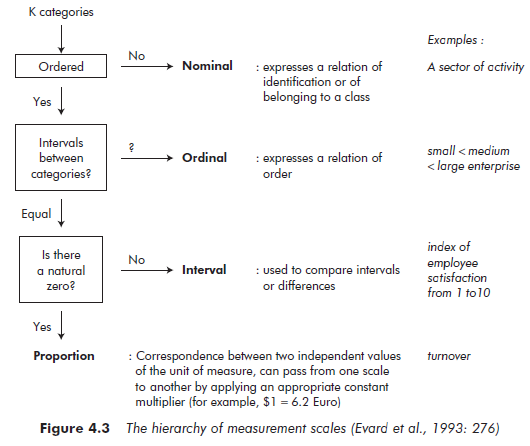
Many authors distinguish between qualitative and quantitative data. For Miles and Huberman (1984b), qualitative data corresponds to words rather than figures. Similarly, Yin (1989: 88) explains that ‘numerical data’ provides quantitative information, while ‘non-numerical data’ furnishes information that is clearly of a qualitative nature. All the same, the nature of the data does not necessarily impose an identical method of processing it. The researcher can very well carry out, for example, a statistical and consequently quantitative analysis of nominal variables.

According to Evrard et al. (1993: 35), qualitative data corresponds to vari­ables measured on nominal and ordinal (non-metric) scales, while quantitative data is collected using interval scales and proportion scales. These scales can be arranged hierarchically according to the quality of their mathematical pro­perties. As shown in Figure 4.3, this hierarchy goes from a nominal scale, the weakest one from a mathematical point of view, to the proportional scale, the best of the measurement scales.

As Figure 4.3 shows, measuring variables on nominal scales allows us to establish relationships of identification or of belonging of a class. The fact that these classes may be identified by numbers (a department number, for example, or an arbitrarily chosen number) does not in any way change their properties. The one statistical calculation permitted is that of frequency.

Often a classification can be obtained using variables measured on ordinal scales, but the origin of the scale remains arbitrary. If the intervals between categories are unequal, statistical calculations are limited to measures of position (median, quartiles, deciles …). Arithmetical calculations cannot be performed with this data. Once the intervals between categories become equal, however, we can speak of interval scales. More statistical calculations can be carried out on variables measured on this type of scale, as here we move into data said to be ‘quantitative’, or to ‘metric’ scales, for which we can compare intervals and determine ratios of differences or distances. Means and standard deviations can be calculated, however, zero is defined arbitrarily.

The best-known example of an interval scale is that used to measure tem­perature. We know that 0 degrees on the Celsius scale, the freezing point of water, corresponds to 32 degrees on the Fahrenheit scale. We can convert a data item from one scale to another by a positive linear transformation (y = ax + b, where a > 0). However, if there is no natural zero, relationships cannot be estab­lished between absolute quantities. For example, it is misleading to say that ‘yesterday was half as hot as today’, when we mean that ‘the temperature was 50 per cent less in degrees Fahrenheit than today’. If the two temperatures are converted into Celsius, it will be seen that ‘half as hot’ is not correct. The arbi­trary choice of zero on the measuring scale has an effect on the relationship between the two measurements.

Where a natural zero exists, we come to proportional scales. Common examples include measurements of money, length or weight. This kind of data is therefore the richest in terms of the possible statistical calculations that can be operated on it, since the researcher will be able to analyze relationships in terms of absolute values of variables such as wage levels or company seniority.

The different aspects of qualitative and quantitative data that we have con­sidered in this chapter clearly show that the nature of the collected data does not dictate the employment of a qualitative or a quantitative research approach. To choose between a qualitative or a quantitative approach we have to evaluate other criteria.

1.2. The qualitative/quantitative distinction in relation to the orientation of the research: to construct or to test

Research in management is characterized by two main preoccupations: con­structing and testing theoretical objects. When researchers direct their work towards verification, they have a clear and definite idea of what they are look­ing for. On the other hand, if they are carrying out explorative research, typi­fied by theoretical construction, researchers are often far less sure of what they may find (see Chapter 3).

It is conventional to correlate investigation with a qualitative approach and verification with a quantitative. Silverman, for example, distinguishes between two ‘schools’ in the social sciences, one oriented towards the quantitative testing of theories, and the other directed at qualitatively developing theories (1993: 21). Once again, however, we find that this association is a received idea – researchers can equally well adopt a quantitative or a qualitative approach whether they are constructing or testing (see Chapter 3). ‘There is no fundamental clash between the purposes and capacities of qualitative and quantitative methods or data … Each form of data is useful for both verification and generation of theory’ (Glaser and Strauss, 1967: 17-18).

We should point out here, though, that researchers rarely choose a qualitative approach with the sole intention of testing a theory. This choice is generally accompanied by a fairly definite orientation towards construction. This tendency can be explained by the cost, particularly in time, of using a qualitative approach just to test a theory. If the test turns out to be positive, the researcher will have no choice but to test it again – by conducting another data collection and analysis process. The qualitative approach in effect locks the researcher into a process of falsification, as the only aim can be to refute the theory and not to validate it in any way.

The qualitative approach is not designed to evaluate to what extent one can generalize from an existing theory. In his discussion of the case study, which he positions within the qualitative method, Stake argues that ‘by counter-example, the case study invites a modification of the generalization’ (1995: 8). This modi­fication involves a construction. The limitation of qualitative approaches lies in the fact that such studies are necessarily carried out within a fairly delimited context. Although a researcher can increase the external validity of a qualitative study by including several contexts in the analysis, in accordance with a repli­cation logic (see Chapter 10), the limitations of the qualitative approach in terms of generalization lead us to attribute more external validity to quantitative approaches. Conversely, the qualitative approach gives a greater guarantee of the internal validity of results. Rival explanations of the phenomenon being studied are often far easier to evaluate than they are when a quantitative approach is taken, as researchers are in a better position to cross-check their data. The quali­tative approach also increases the researcher’s ability to describe a complex social system (Marshall and Rossman, 1989).

The choice between a qualitative and a quantitative approach therefore seems to be dictated primarily in terms of each approach’s effectiveness in relation to the orientation of the research; that is, whether one is constructing or testing.

Guarantees of internal and external validity should be considered in parallel, whatever type of research is being carried out. But in order to choose between a qualitative and a quantitative approach, researchers have to decide on the priority they will give to the quality of causal links between variables, or to the generalization of their results. Of course, it would be ideal to assure the greatest validity in results by employing both of these approaches together.

1.3. Qualitative/quantitative research for objective/ subjective results

It is generally acknowledged that quantitative approaches offer a greater assu­rance of objectivity than do qualitative approaches. The necessary strictness and precision of statistical techniques argue for this view. It is, then, not surprising that the quantitative approach is grounded in the positivist paradigm (Silverman, 1993).

While the objective or subjective nature of research results is often seen as forming a divisive line between qualitative and quantitative approaches, there are in fact several areas of possible subjectivity in management research, depending on the particular type of qualitative approach taken. A number of proponents of the qualitative approach have also discussed ways of reducing the subjectivity historically attributed to this research tradition.

According to Erickson (1986), the most distinctive feature of qualitative inves­tigation is its emphasis on interpretation – not simply that of the researcher but, more importantly, that of the individuals who are studied. This emphasis is com­parable to that of ethnographic research, which seeks ‘to reconstruct the cate­gories used by subjects to conceptualize their own experience and world view’ (Goetz and LeCompte, 1981: 54). Other writers, however, emphasize the subjec­tivity of the researcher more than that of the subjects. According to Stake (1995), researchers must position themselves as interpreters of the field they are study­ing, even if their own interpretation may be more labored than that of the research subjects. In fact, the qualitative approach allows for both the subjectivity of the researcher and that of the subjects at the same time. It offers an opportu­nity to confront multiple realities, for it ‘exposes more directly the nature of the transaction between investigator and respondent (or object) and hence makes easier an assessment of the extent to which the phenomenon is described in terms of (is biased by) the investigator’s own posture’ (Lincoln and Guba, 1985: 40).

However, the qualitative approach does not rule out an epistemological pos­ture of objectivity of the research with regard to the world that it is studying. This criterion of objectivity can be seen as an ‘intersubjective agreement’. ‘If multiple observers can agree on a phenomenon, their collective judgment can be said to be objective’ (Lincoln and Guba, 1985: 292). Some proponents of the qualitative approach, notably Glaser and Strauss (1967), have developed a posi­tivist conception of it. For Miles and Huberman (1984b) while the source of social phenomena may be in the minds of the subjects, these phenomena also exist in the real world. These authors argue for an amended positivism, advo­cating the construction of a logical chain of evidence and proof to increase the objectivity of results.

To sum up, data collection and analysis must remain consistent with an explicit epistemological position on the part of the researcher. Although the quali­tative approach allows the researcher to introduce a subjectivity that is incom­patible with the quantitative approach, it should not, however, be limited to a constructivist epistemology.

1.4. The qualitative/quantitative distinction in relation to the flexibility of the study

The question of the flexibility available to the researcher in conducting his or her research project is another crucial factor to consider in choosing whether to use a qualitative or a quantitative approach.

When a qualitative approach is used, the research question can be changed midway, so that the results are truly drawn from the field (Stake, 1995). It is obviously difficult to modify the research question during the more rigid process that is required by the quantitative approach, taking into account the cost that such a modification would entail. With the qualitative approach, too, the researcher usually has the advantage of greater flexibility in collecting data, whereas the quantitative approach usually involves a stricter schedule. Another problem is that once a questionnaire has been administered to a large sample of a population, it can be difficult to assess new rival explanations without taking the research program back to the draft stage.

2. Combined Approaches: Using Sequential Processes and Triangulation Strategies

One way researchers can exploit the complementary nature of qualitative and quantitative approaches is by using a sequential process:

Findings from exploratory qualitative studies may … provide a starting point for further quantitative or qualitative work. In multi-method projects, group discussions and in-depth interviews are frequently used in piloting to clarify concepts and to devise and calibrate instrumentation for inclusion in structured questionnaires.

(Walker, 1985: 20)

The qualitative approach can in this way constitute a necessary and remu­nerative stage in an essentially quantitative study. Given the considerable degree of irreversibility inherent to the quantitative approach, the success of such a research project very much depends on the researcher taking necessary precautions along the way.

Another practical way researchers can combine qualitative and quantitative approaches is by means of a triangulation. This involves using the two appro­aches simultaneously to take advantage of their respective qualities. ‘The achieve­ments of useful hypothetically realistic constructs in a science requires multiple methods focused on the diagnosis of the same construct from independent points of observation through a kind of triangulation’ (Campbell and Fiske, 1959: 81). The idea is to consider a formalized problem by formalizing along two complementary axes. The differential effect can then provide invaluable information for the researcher. Triangulation strategies aim to improve the pre­cision of both measurement and description.

Triangulation allows the research design to be put to the test, by ensuring that findings are not just a reflection of the methodology used (Bouchard, 1976). This does not simply mean commingling the two types of data and methods. Using complementary data does not of itself constitute a triangulation, but a natural action used in the majority of research projects (Downey and Ireland, 1979). It is a mistake to think that the ‘qualitative’ researcher does not make use of quantitative data, or that he or she is somehow opposed to measurement (Miles, 1979). The fact that a researcher uses a symbolic numerical system or a symbolic verbal system to translate an observed reality does not necessarily define the type of approach they are using. In their manual on qualitative analysis, for example, Miles and Huberman (1984b) suggest counting data items to highlight recurrence, for the reason that figures are more economical and easier to manipulate than are words, as well as having greater visibility in terms of trends.

The combination of qualitative and quantitative approaches, that is, their complementary and dialectical use, enables researchers to institute a dialogue distinguishing between what is observed (the subject of the research) and the two ways of symbolizing it:

Qualitative methods represent a mixture of the rational, serendipitous, and intuitive in which the personal experiences of the organizational researcher are often key events to be understood and analyzed as data. Qualitative investigators tend also to describe the unfolding of social processes rather than the social structures that are often the focus of quantitative researchers.

(Van Maanen, 1979: 520)

Triangulation allows the researcher to benefit from the advantages of the two approaches, counterbalancing the defects of one approach with the qualities of the other (Jick, 1979).

Source: Thietart Raymond-Alain et al. (2001), Doing Management Research: A Comprehensive Guide, SAGE Publications Ltd; 1 edition.

The post Choosing a Research Approach: Qualitative or Quantitative? appeared first on HKT Consultant.

]]>
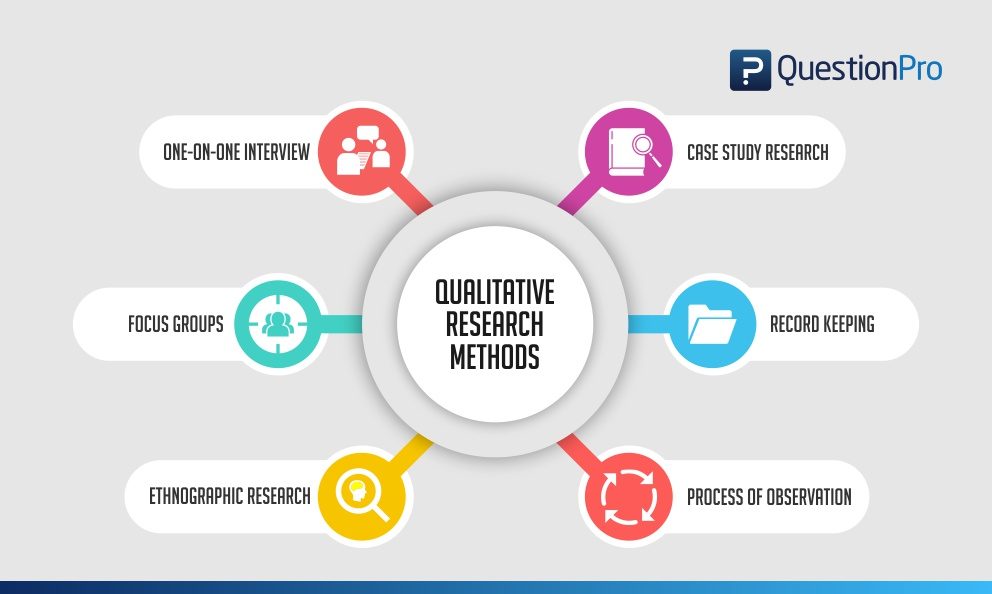
https://phantran.net/choosing-a-research-approach-qualitative-or-quantitative.htm/feed 0