Observation Methods – Definition, Types, Examples, Advantages

The observation method is described as a method to observe and describe the behavior of a subject. As the name suggests, it is a way of collecting relevant information and data by observing. It is also referred to as a participatory study because the researcher has to establish a link with the respondent and for this has to immerse himself in the same setting as theirs. Only then can he use the observation method to record and take notes.

Meaning and examples

Observation method is used in cases where you want to avoid an error that can be a result of bias during evaluation and interpretation processes. It is a way to obtain objective data by watching a participant and recording it for analysis at a later stage.

Observation method in data collection can be

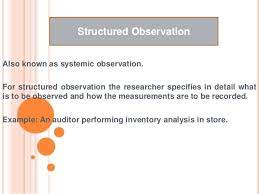
  • Structured observation method – This is a systematic observation method where data is collected as per a pre-defined schedule. The specific variable is used in this method for data collection.
  • Unstructured observation method – The unstructured observation method is conducted in a free and open manner without using any pre-determined objectives, schedules or variables.

Sampling methods for Observational Data

The researcher has a vital role to play as he will have to collect, record and classify the data appropriately. The primary sampling methods are

  • Event sampling – In the event sampling observation method the researcher decides beforehand what events or behavior he will record and which ones he is going to ignore
  • Time sampling – In the time sampling observation method, the researcher chooses the time when he will observe. He makes a record of the occurrence only in the specified and pre-determined period
  • Target-time or instantaneous sampling –  In the target-time or instantaneous sampling observation method, the researcher decides beforehand the moments when the observation will happen and will be recorded at that moment. Everything that happens before or after that moment is of no consequence hence is typically ignored

Types of observation method

The different types of observation method are as follows:

1) Controlled observations

The controlled observation is carried out in a closed space. It is the researcher who has the authority to decide the place and the time where and when the observation will take place. He also decides who the participants will be and in what circumstances will he use the standardized process.

The participants are chosen for a variable group randomly. The researcher observes and records a detailed and descriptive data of behavior and divides it into a distinct category. Sometimes the researcher codes the action as per an agreed scale by using a behavior schedule. The coding can include letters or numbers or a range to measure behavior intensity and describe its characteristics.

The collected data is often turned into statistics. In a controlled observation method, the participants are informed by the researcher about the aim of the research. This makes them aware of being observed. The researcher avoids direct contact during the observation method and generally uses a two-way mirror to observe and record details.

Advantages of controlled observation method

  1. The data and information received from a controlled observation method are structured and analytical. It is thus easy to analyze it quickly and is considered less time-consuming than the other observation methods
  2. Other researchers can easily replicate the report that has been created through the controlled observation method. They use a similar observation schedule, and this makes it easy to test for reliability.
  3. As the controlled observation method is several quick observations can be conducted within a short time frame. Thus the researcher can collect large samples which makes it easier for him to generalize a large population

Limitations of controlled observation method 

  1. The controlled observation method lacks validity because when the participants are aware of being observed their behavior will automatically change

2) Naturalistic observations

Social scientists and psychologists generally use the naturalistic observation method. The process involves observing and studying the spontaneous behavior of the participants in open or natural surroundings. The role of the researcher is to find and record whatever he can see and observe in natural habitat.

Advantages of naturalistic observation method 

  1. When a participant is in a natural habitat, his flow of behavior is natural and not forced.
  2. The studies have gained better ecological validity than the controlled observation method
  3. The naturalistic observation method is used by the researchers to create new ideas. The researcher has the chance to observe the total situation and can find avenues that other people have not thought about

Limitations of naturalistic observation methods

  1. The naturalistic observation method facilitates observations on a micro-scale. It often lacks a representative sample and thus cannot help the researcher in making a generalization that relates to a broader society
  2. In this type of observation method, the researcher needs proper training to recognize aspects that are significant and worth attention.
  3. The observations through naturalistic observation method are not as reliable as the researcher wants them to be because it is not possible to control some variables. This is why other researchers cannot similarly repeat the study or research.
  4. Establishing the cause and effect relationship is not possible because the researcher cannot manipulate the variables

3) Participant observations

The participant observation method is often considered a variant of the naturalistic observation method because it has some similarities with it. The point of difference is that the researcher is not a distant observer anymore because he has joined the participants and become a part of their group. He does this to get a more in-depth and greater insight into their lives.

The researcher interacts with other members of the group freely, participates in their activities, studies their behavior and acquires a different way of life. Participant observation can be overt or covert.

  1. Overt –When the researcher asks permission from a group to mingle the observation method is known as overt. He does so by revealing his true purpose and real identity to the group with whom he wants to mingle
  2. Covert– When the researcher does not show either his true identity or real meaning to the group he wants to join then the observation is known as covert. He keeps both concealed and takes on a false role and identity to enter and mingle in the group. He generally acts as if he is a genuine member of that group

Advantages of Participant Observation methods

  1. It is easy to study and observe the natural behavior of the participants in the group by becoming a part of that group. The respondents generally do not know that they are being observed and behavior recorded, so they are not restrained or constrained in their activities and behavior
  2. The researcher becomes understanding by following the events of the respondents from such a close angle.
  3. During the participant observation method, the researcher develops a good and healthy relationship with the respondents. This rapport helps him to participate in all the activities and make observations with a detached mind
  4. The participant observation method helps the research to observe the actual behavior of the respondents and create an inclusive and intensive case study of that group
  5. Actual participation in the activities provides the researcher with an opportunity to converse freely with other members about various events, their meaning and their importance to them. He gains an in-depth knowledge which would not have been possible only by observation.

Limitations of Participant Observation methods

  1. It is challenging to work undercover. For example, the researcher will have only to observe and not record in front of others because he will not want to blow his cover. He relies heavily on his memory which can be faulty at times
  2. Sometimes the researcher becomes too involved in the intricacies of that group. There is a higher chance of losing his objectivity because his reporting will be selective and dependent on his memory
  3. The emotional participation of the researcher can result in bias interpretation. He will be influenced to some degree and a time might come when he would start supporting them unconditionally because their views and behavior will ultimately become his. This will result in a personal viewpoint of the scenario and not an objective or scientific report
  4. In the participant observation method, the researcher’s experience becomes intense because of his proximity to the group members but the range becomes limited
  5. The researcher misses many vital points because of his familiarity
  6. Proximity with the group will involve him in group factionalism, and he will have to take sides. He then loses his objectivity as an impartial observer with whom everyone is ready to cooperate.

Advantages of Observation Method

  • Provides direct access to research phenomena
  • By observing firsthand, the researcher can collect, check and record accurate data
  • Greater flexibility in terms of application
  • Generate a permanent record of phenomena and the researcher or others can refer with it later
  • The organization method is one of the simplest methods of data collection. It does not require too much technical knowledge
  • The observation method is one of the best ways to formulate a hypothesis. The researcher can observe and come to know about the activities, perceptions, likes and dislikes to form a theory on his subject
  • Observation method is one of the most common methods used in all sciences and is very easy to follow and accept
  • In some instances observation is the only available tool to collect essential data and information
  • The observation method does not require the willingness of the participant to record. The researcher can observe from a distance and record his findings

Disadvantages of Observation Method

  • Faces a severe disadvantage because it takes a longer time frame compared to other data collection methods
  • There is a chance of higher observer bias in the observation method
  • Several personal behaviors are not open for observation and this proves a limitation in case of observation method
  • There is a higher chance of the observer influencing the behavior of a sample group elements
  • Uncertainties of the event cannot determine the actual time when the event will take place, and this is why every occurrence that is open to observation cannot be observed
  • Many of the incidents are abstract like love, affection and the researcher can’t gain an exact and correct account of those
  • The social phenomena generalization made by observation are not considered reliable as it cannot be used for lab experiments
  • In some cases, it is seen that two persons observing the same phenomena come at different results and this can lead to faulty perceptions
  • Observation method is considered an expensive affair as it requires hard effort, plenty of time and high cost

Introduction to observation

Observation has one overpowering claim to validity: it deals not with what people say they do but what they actually do – to the extent that their behaviour is open to observation, and insofar as observation is as objective as it seems to be. Two questions follow from this. In the first place why don’t we just take what we are told, because surely people know themselves better than anyone else does? And secondly, if observation is more valid why is it not used more often in social research?

For some dimensions of human experience asking people is the only feasible way of finding out, particularly the ‘invisible’ elements: thoughts, feelings, intentions, attitudes and the like. Sometimes these can be inferred from beha­viour but in the main we can only speculate. The question of validity (how accurate these self-reports are) is not a simple one because people ‘construct’ their understanding of themselves; and how is anyone to say whether these self­constructions are accurate? It is not a meaningful question: such formulations represent how people manage them­selves, changing with age and experience, a process of per­manent revision in an attempt to find an effective way of being. It is an entirely subjective ‘reality’ even if sometimes appearing to verge on self-delusion: we all have a preferred way of viewing ourselves.

Words and deeds

Whether people report their behaviour accurately is a dif­ferent matter; and here the notion of accuracy has a different meaning. We can observe what people do and that includes observing ourselves. Comparing observed beha­viour with the acknowledged subjectivity of self-perception, it is easy to assign to observation an unchallenged objectivity. Less easy is to acknowledge that observation is to a greater or lesser degree a process of selection and reconstruction. Interestingly, it is research on the validity of witness state­ments (traditionally highly valued in criminal courts) that has shown how much omission, reconstruction and unvarnished error there can be in such reports.

We can accept that we may not be entirely accurate in our recollection of past events, including our own behaviour. That we may not accurately know how we behave in the pre­sent is another matter. If you have ever had to keep a work diary as part of a job evaluation exercise you will know that the pattern is often rather different from your unanalysed impression; in particular that the productive elements are fewer than you would like to think. And that is evident at the more mundane level of how we spend our money – an exercise that most of us are driven to at some point when our bank balance is inexplicably depleted or a credit card bill far beyond what was expected.

The simple fact is that we don’t normally feel the need to have an explicit record of what we do so that we can’t ‘know’ ourselves in that fashion – and, therefore, cannot be other than approximately accurate. We have an impression of how we conduct ourselves and how other people behave in a range of social situations. In the ordinary business of living that is all we need: self-invigilation is unnecessary. But research requires a more rigorous approach.

In social research on human behaviour survey methods of one kind or another (interviews, questionnaires) predominate. Some are more expensive on time and resources than others; questionnaires are often preferred for that reason. But none is as time-consuming as observation; and this is the main answer to our earlier question as to why it is less often used.

Structured observation is the most economical form with its highly specific focus and systematic checking of the ele­ments of behaviour – for example, bullying incidents in a playground; stopping to look at a picture in a gallery; fre­quency of donations to a street beggar and so on. Here the observation is of the restricted non-participant variety. At the other extreme essentially unstructured participant observation, typically in the theoretical framework of ethnography (usually describing a particular sub-culture in our own society) involves a much longer duration – weeks and usually months, exceptionally even longer than that.

Such groups are investigated in this way for a number of reasons (to be considered later) but also because their mem­bers may not be willing, or sufficiently ‘organized’, to answer questions about themselves. One of the under-recognized weaknesses of survey methods is the implicit assumption that people have their self-knowledge arranged in such a way that they can be easily interrogated about it. This is part of the contemporary expectation in Western society that people should be able to explain themselves. Compliance with such expectations is one reason why self-reports have to be treated with caution: responses to survey questions may be little more than an artefact of the method employed.

[title text=”Main contents” link_text=”See more from basic to advanced” link=”/category/methodology/qualitative-research/qualitative-methods/observation/”]

[blog_posts style=”normal” col_spacing=”xsmall” columns=”3″ columns__md=”1″ depth_hover=”2″ auto_slide=”5000″ cat=”221″ posts=”3″ offset=”44″ show_date=”false” excerpt_length=”25″ comments=”false” image_height=”60%” image_size=”original” image_hover=”zoom” text_align=”left”]

[blog_posts style=”normal” col_spacing=”xsmall” columns=”3″ columns__md=”1″ depth_hover=”2″ auto_slide=”6000″ cat=”221″ posts=”3″ offset=”41″ show_date=”false” excerpt_length=”25″ comments=”false” image_height=”60%” image_size=”original” image_hover=”zoom” text_align=”left”]

[blog_posts style=”normal” col_spacing=”xsmall” columns=”3″ columns__md=”1″ depth_hover=”2″ auto_slide=”7000″ cat=”221″ posts=”6″ offset=”35″ show_date=”false” excerpt_length=”25″ comments=”false” image_height=”60%” image_size=”original” image_hover=”zoom” text_align=”left”]

[blog_posts style=”normal” col_spacing=”xsmall” columns=”3″ columns__md=”1″ depth_hover=”2″ auto_slide=”8000″ cat=”221″ posts=”6″ offset=”29″ show_date=”false” excerpt_length=”25″ comments=”false” image_height=”60%” image_size=”original” image_hover=”zoom” text_align=”left”]

[blog_posts style=”normal” col_spacing=”xsmall” columns=”3″ columns__md=”1″ depth_hover=”2″ auto_slide=”5000″ cat=”221″ posts=”6″ offset=”23″ show_date=”false” excerpt_length=”25″ comments=”false” image_height=”60%” image_size=”original” image_hover=”zoom” text_align=”left”]

[blog_posts style=”normal” col_spacing=”xsmall” columns=”3″ columns__md=”1″ depth_hover=”2″ auto_slide=”6000″ cat=”221″ posts=”6″ offset=”17″ show_date=”false” excerpt_length=”25″ comments=”false” image_height=”60%” image_size=”original” image_hover=”zoom” text_align=”left”]

[blog_posts style=”normal” col_spacing=”xsmall” columns=”3″ columns__md=”1″ depth_hover=”2″ auto_slide=”7000″ cat=”221″ posts=”6″ offset=”11″ show_date=”false” excerpt_length=”25″ comments=”false” image_height=”60%” image_size=”original” image_hover=”zoom” text_align=”left”]

[blog_posts style=”normal” col_spacing=”xsmall” columns=”3″ columns__md=”1″ depth_hover=”2″ auto_slide=”8000″ cat=”221″ posts=”11″ offset=”0″ show_date=”false” excerpt_length=”25″ comments=”false” image_height=”60%” image_size=”original” image_hover=”zoom” text_align=”left”]

[row style=”small” class=”form-lien-he”]

[col span=”2″ span__sm=”12″]

[/col]
[col span=”4″ span__sm=”12″]

[button text=”Home” color=”secondary” style=”gloss” radius=”5″ depth=”2″ depth_hover=”3″ expand=”true” icon=”icon-star” icon_pos=”left” link=”https://phantran.net/”]

[/col]
[col span=”4″ span__sm=”12″]

[button text=”See basic to advanced” style=”gloss” radius=”5″ depth=”2″ depth_hover=”3″ expand=”true” icon=”icon-checkmark” icon_pos=”left” link=”/category/methodology/qualitative-research/qualitative-methods/observation/”]

[/col]
[col span=”2″ span__sm=”12″]

[/col]

[/row]

Source: Gillham Bill (2008), Observation Techniques: Structured to Unstructured, Continuum; Illustrated edition.

Observation and self-report: similarities and Differences

Both self-report (as in questionnaires and interviews) and observation techniques can differ in their degree of struc­ture. The first of these may involve short, prescriptive question-and-answer formats that are easily analysed in quantitative terms. Using structured observation schedules which involve the recording and counting of pre-determined categories of behaviour is an almost exact analogy.

On the other hand, interviewing can be largely unstructured, apart from identifying the broad area of interest, following directions determined mainly by those being interviewed. Observation can be similarly open-ended, recording what turns up at a level of fine detail, with analysis deferred (as well as final purposes, research questions, theoretical interpretation etc.).

Whether surveys or various methods of observation are employed, the differing levels of structure lead to different kinds of data being collected. For the researcher the ques­tion becomes: what kind of data do I need? Table 1.1 pro­vides a simple contrast.

This polarized distinction is false in two respects:

  • the extremes can be used in combination to complement each other
  • the extremes represent points on a graded scale because there are techniques with varying degrees of structure (as is the case with interviews).

A structured observation schedule has to be preceded by an unstructured phase – otherwise how would the researcher know what to focus on? However, this kind of unstructured observation is more likely to be of the detached, non­participant variety (see page 23 for more on this ‘fly-on-the- wall’ technique).

The need for a combination of structured and unstruc­tured methods commonly arises when the researcher derives an unsatisfactorily impressionistic judgement from partici­pant observation alone. Conversely, it may be that struc­tured, detached data raise more questions than they answer (as in surveys based on questionnaires) so that supplemen­tary participant observation is required to get at what the data actually mean (the qualitative dimension).

What do structured and unstructured methods have in common ?

The broad common characteristic is that both are systematic, because in taking this approach we come to see things, events and the connections between them that would either be overlooked or not recognized as significant. Detailed recording, in words or images, brings into focus what is there to be seen or understood.

It is a fallacy to suppose that because something (an object, human behaviour) is within our field of view that we ‘see it’. We have all had the experience of ‘not seeing’ something we were looking for even though it was there to be seen all the time (I commonly ‘lose’ something on my desk). But there is another and more profound point: we tend not to see things that we do not know about or understand, that we cannot relate to our existing knowl­edge. Systematic observation: checking, specifying and seeking explanation forces us out of our preconceptions, leading to a shift in understanding.

Source: Gillham Bill (2008), Observation Techniques: Structured to Unstructured, Continuum; Illustrated edition.

The uses of observation as research method

The most general use of observation in research is exploratory, as it is in real life. When we take up a new job, enter university, move to a different part of the country (or to a different country), or even just go on holiday to a new region, we look around us. In that novel setting everything is going on presumably as normal; we nodce differences, of course, but our main preoccupation is how things work in the social sense, what the ‘rules’ are: because every social setting operates in a different way. This is a familiar and often surprising experience when we change jobs, even within the same regulated profession, or to another insti­tution governed by the same, standardized legal require­ments. A different school, hospital, police force has its own character, operates its own ‘rules’ within the same regulatory framework. If we have any sense we don’t make overt com­parisons but ‘research’ the sub-culture we find ourselves in. This kind of initial, exploratory phase is adaptive: we learn lessons that we can act upon, avoid blundering on in a state of ignorance. It is also widely applicable in the preliminary stage of much social research, from which purpose, ques­tions and methods emerge.

Observation as an initial technique may lead to quite dif­ferent methods in the main study: surveys, problem-focused action research, focused case studies, experiments of one kind or another. None of these would be possible, or sen­sible, without preliminary observation of an unfamiliar social context. Such early immersion also guides reading and, as the issues are identified, we come to know what to search for in the literature – the beginning of an iterative cycle of first­hand experience and studying the research reports of others.

Source: Gillham Bill (2008), Observation Techniques: Structured to Unstructured, Continuum; Illustrated edition.

Observation in multi-method research

In the same way that surveys can give the bigger picture within which more in-depth interviews are nested, so can observation provide a wider descriptive framework. In a school, for example, it would make only limited sense to interview teachers about their views on the official dis­ciplinary policy without some account, by direct observation, of how student behaviour was routinely dealt with. Both approaches have their strengths and limitations; in combi­nation these balance out.

Because of the difficulty of getting a comprehensive pic­ture via any one method in social research, during the past 20 years or so there has been increasing interest in the complementary strengths of different methods. A key text, recommended for further reading (but not for its read­ability) is Brewer and Hunter’s 1989 book Multi-method Research: A Synthesis of Styles. Case study research methods (see Gillham, 2000), with the emphasis on multiple sources of evidence, are part of the same movement. The notion of taking multiple perspectives on a complex social phenom­enon (teenage pregnancies, for example) is a commonsense one. Interviews, national level statistics and demographic patterns can combine with participant observation – going with these young women on their daily routines, visiting them in their homes, helping them with the practicalities of claiming allowances, and so on – all these factors in com­bination enable outsiders (perhaps neither young, nor female, nor pregnant, nor poor) to grasp the wider issues. And the observational element adds something vivid and ‘real*, which may not be apparent even from loosely struc­tured interviews with the teenagers concerned.

Source: Gillham Bill (2008), Observation Techniques: Structured to Unstructured, Continuum; Illustrated edition.

Structured observation in practice

For the moment the terms structured, detached and non­participant are used almost interchangeably: that is not quite correct (see page 19) but sufficiently so to equate their meaning. All introductory classifications simplify reality.

Structured observation (specifying exact behaviours and recording their frequency over short, usually intermittent, periods of time) is something that figures regularly in text­books; less often in the real world of research. It has had a vogue in educational research and survivals appear occa­sionally in Master’s dissertations, as I have reason to know. One can understand the appeal of the technique: it renders tangible an approach to complex, fast-moving situations like school classrooms or playgrounds. The fall from favour has much to do with its ‘thin’ mechanistic quality and, it has to be said, the obsessional complexity of some of the proce­dures advocated. See, for example, Flanders’ Interaction Ana­lysis Categories (FLAC) devised by the American educationist of that name (Flanders, 1970) where in classroom observa­tion during a minute, and every three seconds, one of 20 categories of teacher and pupil behaviour is checked. One can only admire the rigour of such a scheme but its use is less than enthralling.

However, the basic principle of identifying people and (precisely) what they do is capable of a more practicable but still valid use. Let us take an example.

Structured observation in practice

I am currently exploring the practice of street begging in Glasgow. This can be approached in several ways: getting anywhere near a full picture is not easy and this is spelt out in Chapter 6 Work in Progress.

Begging is commonplace in the city. You may be approached in the street but the focus of my investigation is those who site themselves in a carefully chosen position, usually with a plastic cup for donations. For want of a better term I call these ‘stationary’ beggars and they are most often encountered in and around the pedestrianized sections of three main shopping streets. To begin with I observed them in an unstructured fashion and for varying periods of time (15-30 minutes) – sufficient for me to see how I might carry out a more structured observation. All the ‘stationary’ beg­gars (those who just sit and wait as against those who walk around accosting people in the street) were male; while most of the donations appeared to come from women usually, by my estimate, in the younger age range (under 45).a

Source: Gillham Bill (2008), Observation Techniques: Structured to Unstructured, Continuum; Illustrated edition.

Event sampling in Structured observation

1. Event sampling

Event sampling is used when the behaviour of interest is discontinuous and low frequency, where you would miss the events if you didn’t observe continuously. The behaviour has to be specified exactly (making a monetary donation, engaging in conversation) so that it can be recorded on an observation schedule in a simple check-mark fashion.

Now, my impression when passing these street beggars was that they didn’t get much custom: continuous observation showed a highly variable picture. But it also led me to expand the interaction categories as follows:

  • ‘silent’ donation where nothing is said
  • donation plus some conversation
  • conversation but no donation.

Men were more likely to come into the first category. The last category, usually male, were different again; I came to describe them as ‘hangers on’ and some beggars had more of these than others.

In other words, even the simplest scheme requires amplification in practice. The point to watch is that it does not become too fragmented or unmanageable. For example, the ‘silent’ donation is a bit of a misnomer as I caught a hint of non-verbal communication now and then, usually eye contact, but too subtle for me to be sure of it. Note also that I was trying to identify unambiguous ‘chunks of behaviour’, not elusive fragments.

Defining the ‘events’

What the above discussion demonstrates is that defining a ‘simple’ event is not all that simple. I had thought initially in terms of a donation interaction but, once I had started observing, it became clear that that was not adequate. I had to define the events in terms of the kind of interaction. The interactions could have been further divided, for example in terms of different levels of conversation (the odd remark to a longer exchange). I decided against that on grounds of manageability: it is possible to create a recording schedule that is so exhaustive (exhausting?) as to be impractical. What I did was to observe one of the subjects of study for an hour and record each donating ‘event’. So I recorded frequency (how many times in the hour) and who donated (gender and my estimate of age 45+-). My first use of the developed schedule produced the results shown in Table 2.1.

The main point is that even when you try to keep it simple you have to develop your categories to be anywhere near adequate; and that there is a preceding phase of develop­ment where you try out your initial assumptions following a period of unstructured impressionistic observation. You might think that this preliminary stage should be sufficient to identify the categories. In fact, it is only by attempting to record these events that their limitations become apparent, because you don’t really observe in a focused way until you have the task of recording. This being ‘work in progress’, what is said here is neither a full account nor the last word – see Chapter 6 for a narrative account of this particular project.

2. Linked events

One of the virtues of continuous structured observation is that you can link events over time. It may be something as simple as noting the time someone joins a queue at an enquiry desk up to the time their enquiry is dealt with. Such a start-to-finish observation has multiple uses, for example ‘shopping behaviour’: a customer browsing a display up to the point of making a purchase. Other examples could be how long a child in a class has to wait to get a response from the teacher; how long people spend scanning an under­ground map, or reading a product instruction booklet before using the product and so on. This touches on the area of ‘experimental observation’ (see Chapter 3).

The limits of event sampling

The continuous recording of behavioural events works well when those events are not too frequent: it gets more difficult as the frequency increases, the main strain being on your capacity for sustained attention. This overload experience usually arises when observing several individuals in a group, such as a whole class of children. When the events are very high frequency – happening simultaneously and/or so often that continuous recording verges on the impossible – you have a number of options. These are:

  • narrowing your category(ies) so you are observing only one or two types of behaviour clearly defined, i.e. picking them out of the flow
  • carrying out time sampling where you observe, at intervals, for very short periods of time (a few seconds to a few minutes)
  • constructing a narrative account – essentially unstruc­tured, selective and, to a degree, impressionistic; this takes us out of the ‘structured’ frame entirely but there comes a point where any kind of specified behavioural sampling is not only impractical but inadequate.

Source: Gillham Bill (2008), Observation Techniques: Structured to Unstructured, Continuum; Illustrated edition.

Time sampling in Structured Observation

This is also known as interval sampling because you observe for a specified duration at specified intervals – like taking a succession of snapshots, an analogy which is pretty close. Sampling means estimating the frequency of events in a continuous time sequence from a much shorter period (or periods) of time. The main practical challenge is deciding on the length of time for the sample estimate; there is a certain amount of trial and error in this.

The general principle is that the higher the frequency of the ‘events’ the shorter the periods of observation. There is a kind of gradient here: at some point, which can only be determined by the practicalities of recording as well as ‘representativeness’, the choice moves from event sampling to interval sampling (or the other way). With discontinuous interval sampling (as in taking a population sample for a survey) the level of representativeness needs to be gauged in some way.

Alternate sampling

Interval sampling has one important advantage in that you can alternate the focus of your observation. The focus could be:

  • on some individuals in a group, e.g. boys as against girls in a classroom
  • on some specific behaviours, e.g. how many children are not ‘actively learning’ in a classroom setting or more specifically are engaged in a particular learning activity – or not, as the case may be
  • on different sites, e.g. in a public art gallery how many people are looking at one painting rather than another, or one kind of painting rather than another.

The question remains, however: how do you decide on the duration of the ‘interval’ in practice? Initially you should take a short interval – say every three minutes where you record for perhaps ten seconds – and then work out whether a longer interval (or a shorter duration of observation) would suffice. If the purpose of the research is the difference in gender response to teachers’ ques­tions then you might move the focus of recording from boys to girls (and back again) every other recording per­iod or you might cover all the children at the same time. Note that you would have to define in terms of specific behaviours what you mean by a ‘response’ (volunteering an answer, signalling the desire to do so, following work instructions).

And because children’s work in a classroom has a ‘devel­opmental’ sequence, in that it evolves throughout the les­son, then a consideration for sampling is whether these phases are adequately represented.

Source: Gillham Bill (2008), Observation Techniques: Structured to Unstructured, Continuum; Illustrated edition.

Validating observation sampling

In survey research a sample of the population (however defined) is taken because it is much more economical to do so. A ‘valid’ – i.e. representative – sample is achieved in various ways (not our concern here but see the book in the present series dealing with social surveys (Gillham, 2008)). Validating interval sampling is achieved by taking a given period of observation, dividing it up into, say, three-minute intervals and then calculating whether by taking every other three-minute interval (i.e. every six minutes) you obtain a similar picture to the more frequent sampling. Table 2.2 illustrates a hypothetical example of observed classroom behaviour (children engaged or not in active learning). Here the intervals are every three minutes; the period of observation (counting/recording) is ten seconds – but it could be less. It is usually easier to record the ‘inactive’ children, defined as those who are not:

  • reading or writing individually
  • choosing a book
  • using a computer
  • using apparatus or equipment
  • involved in making something or painting
  • engaged with a teacher or classroom assistant on a learning activity
  • working cooperatively with other children.

It is not a difficult matter to record the individual children involved and their gender (you need to be able to identify the children and simply check them at each observation). If you do this ten-second check every three minutes during a 30-minute period you will quickly identify those for whom active learning is a problem; but the total observation time is less than two minutes.

There are two elements here:

  • deciding on the length of the interval (when you’re not recording)
  • deciding on the duration of the active recording of behavioural events (a function of the frequency of the behaviour and the time needed for recording).

Duration needs to be only as long as is required to check the behavioural events – a practical question; frequency needs to be often enough to give a representative sample. The frequency of observation copes with individual children’s on task/off task variation.

Table 2.2 shows that the average number of ‘inactive’ children at three-minute intervals is 5.5. If we take six- minute intervals it is 5.4: not much in that. But if we are interested in individual children then the higher frequency of observation might be important; for example the hypo­thetical example in Table 2.3.

In other words the less frequent interval does not differ­entiate so well in this respect, i.e. those who are more reg­ularly ‘inactive’ are underestimated.

Why sample ?

Since in the above instance you are only ‘active’ as an observer for less than two minutes out of 30 why not carry out continuous monitoring of the children? The answer is that, quite apart from the burden of the task, you don’t get as clear a picture. The successive snapshots tell the story with a precision that is not spurious; and you can validate these frequencies against a class-teacher’s subjective judgement.

To take another example: if an art student is interested in comparing the public’s response to different styles of con­temporary painting (e.g. abstract v. representational) in a public art gallery then the task could be to observe how many people stop to look at these different kinds of painting for at least 15 seconds. Looking at paintings is not a momentary business but if no-one stops to look for more than three minutes then a ten-minute interval and 120 sec­onds for observation would make it unlikely that anyone was counted twice. The student can then move to a room where paintings of the other genre are hung and repeat the exercise; if both kinds are present in the same site then it becomes a simple matter of shifting the observational focus. This is an example of the ‘alternate site’ situation. Within an hour the number of people looking at each of two paintings is observed every five minutes for 120 seconds, alternating one to the other.

This last example is introduced because it commonly leads to this question: surely people know which kinds of painting they prefer? The answer is that it depends on their knowl­edge and experience; and their ability to express it. In any case we may give a view or opinion but find our eyes drawn to the kind of abstract painting that we might dismiss in response to a general, hypothetical question. We don’t always know what is going to interest or appeal; only our behaviour shows that.

So here we come back to the point made in the first chapter: that you study behaviour not just for its own sake but because it reflects those elusive internal states that underlie what people do, and of which they may not be fully aware.

Source: Gillham Bill (2008), Observation Techniques: Structured to Unstructured, Continuum; Illustrated edition.

Semi-structured Observation Method

If observation is a primary technique of real-world social research one can be forgiven for thinking that structured observation, with its ‘count’ emphasis and fragmented character, is not the best way of doing it. Sometimes that level of specificity is necessary and useful and it is to be hoped that we have done justice to this approach in the preceding chapter.

As a representation of the reality of what people do, structured observation is as accurate as a questionnaire is of what people think. You know exactly what you want to find out and the form of the data is precisely specified. The limitations are roughly the same as for questionnaires: not much scope for discovery and the underlying reasons lag somewhere behind.

However, being relatively unstructured in approach does not mean you don’t know what you are looking for. In the semi-structured variety of observation you go in with quite specific questions but they are ‘open’ so that you cannot predict what you are going to find. It is particularly suited to the kind of research which seeks to identify practical pro­blems people experience; and then what can be done about them.

An example of how this approach works is the study of the difficulties older people experience in maintaining an independent living style. You don’t need to be a demographic expert (or a pension fund actuary) to know that we are part of an ageing population, and that old age is accompanied by a range of disabilities, many of them rela­tively minor. Helping people to manage their disability has a long tradition; the profession of occupational therapy has a distinguished role in this respect. But the problem has become much broader and, in a sense, mainstream.

A major consequence of the ageing process is when peo­ple find they cannot cope, or only cope with difficulty, in their normal environment. At a mobility level this is easy to appreciate: stair-lifts, adapted bathrooms and lavatories, wheelchair access, although not cheap, can help older people and their carers with problems that are almost self­evident.

But an accumulation of less conspicuous disabilities can make independent living more difficult and, in total, become as much a barrier as the more high-profile pro­blems. We can go further than that: people often cope well with major disabilities – the conspicuous problems of living. It seems to call forth their emotional resources and a helpful response from others. What wears people down are the multiple, minor defeats of everyday. On their own they may not amount to much: in total they can lead to a non-coping depressive state. At this point we need to take a theoretical side-step.

1. Ecological psychology

Ecology is a term dinned into us by the media: it’s about being ‘green’ – sensitive to environmental issues. But that is only one application of the term.

Ecological psychology is about the interaction of people and their environment in terms of its effect on their psy­chological make-up: at the detailed level of the behaviour and mental experience of individuals. It emphasizes that those psychological dimensions are only meaningfully understood in the context in which they occur, and that the environment facilitates or constrains people’s behavioural or mental state. It is from this standpoint that we can approach the notion of disability. This is not just something about the individual: a disability occurs in a given situation. It is an interactive (person <-> environment) problem which can be approached from either end or, indeed, from both.

People don’t just have to adapt to their environment: their environment can also be adapted to them – at a level of functional detail. A simple example is the problem of lifting and carrying experienced by many people with moderate disabilities. They can be taught more effective, less effortful techniques; as well as being provided with aids that make the tasks easier such as the ‘helping hand’ – rather like the tool used by litter collectors – that makes it easier to pick things up or pull them towards you, or the dycem,, a non-slip mat to keep things steady – jars and tins, for example. These are relatively ‘minor’ problems with simple solutions: they have to be multiplied many times and viewed as part of a persis­tent daily struggle for many people. Helping them to cope practically is to help them emotionally and a practical focus has to be reckoned in terms of these benefits as well.

2. Observing the problems of living

You can learn a lot about helping people maintain their independence by talking to them. But this approach is lim­ited for two reasons:

  • they may accept their problems as being normal and ‘only what you can expect’
  • they may not even realize they have difficulties in living for which they could get help, as often people adapt when they don’t need to.

Inclusive design

An ergonomically-minded designer brings a particular mind-set to issues such as these. Designers are trained to analyse the functional problems posed by the myriad man­made objects that form part of our domestic existence. The purpose of design is not just to produce something that looks good but something that is also reliable and easy to use. An important principle is that design which makes life easier for people with disabilities can mean products that are easier to use for everyone. The recent Focus range of cars from Ford is an example of this. Designs that only the fully able­bodied can use are exclusive – hence the reverse term.

That trend in design exists as a corollary of observational methods that direct the designer’s attention. Not that this is just for such specialists: there is a straightforward common- sense dimension to identifying difficulties that points the way to possible solutions.

Take, for example, the case of a man in his seventies who has suffered a stroke that has resulted in a degree of paralysis to the left side of the body. He lives on his own but is still mobile and speech is only slightly impaired. The major problem is the limited use of his left hand – in most people the sub-dominant hand. This is not so severe a han­dicap as it might have been because he was normally right­handed, so it could have been worse. But the problems are numerous, nonetheless, and by no means obvious.

It is instructive to spend an hour or so as if your sub­dominant hand were not functional. You can’t exactly replicate the difficulties this person might have. But you soon come to see that even a relatively minor disability leads to many problems – some more marked than others. Take something as simple as writing a letter or making a shopping list: you write with your dominant hand but you need the other one to stop the paper from sliding around. This is the kind of thing you don’t normally need to think about but the examples are multiple – not just obviously intricate ones like threading a needle but larger movements like holding a cupboard door open with one hand to stop it swinging closed so that you can take something out with the other; and so on.

The context focus

The strategy for observation is straightforward.

An initial period of ‘open’ observation is required: getting a sense of the person in his or her context, making pre­liminary notes of particular tasks that look problematic. You ask questions as you go but watching is the primary method. Most people can tell you what causes their difficulty but they cannot necessarily analyse it: at least at the level of devising a solution.

It is only by spending time ‘on site’ and through the routine of a person’s day that you can arrive at a ‘disability map’ highlighting those features which require attention. Occupational therapists in particular are well aware of the problems associated with particular disabilities so that, in many cases, the solutions are readily available. But some are specific to an individual and to a particular context and not so straightforward to resolve.

So, in the case of our hypothetical stroke patient, we may find he is unable to use a conventional cooker because he cannot stoop down and do the two-handed job of taking something out of the oven. A waist-level or microwave oven on a flat surface is one solution. If he likes to heat a tin of soup for his lunch he may have difficulty in using the wall- mounted can-opener – normally holding the tin in the left hand and operating the opener with the right – as the two actions need to be simultaneous. But he can’t achieve the necessary left-hand grip on the can. Again this is a case where there are ready-made design solutions – openers with single-handed or even no-hands operation. But there are many other problems not so well-focused – as you will dis­cover from trying out a one-handed style of operation yourself.

Source: Gillham Bill (2008), Observation Techniques: Structured to Unstructured, Continuum; Illustrated edition.

Semi-structured Observation in training, teaching and learning

1. Observation in training

In a sense we are all ‘disabled’ when it comes to operating an unfamiliar and relatively complicated piece of equipment: the controls in a new car, the sequence of operations in a new piece of software or a washing machine with a more elaborate choice of programmes – all of these can have us poring irritably over a not-entirely-clear instructional hand­book. Those who produce these manuals know what they’re presenting: and that’s the problem. They cannot see it from the perspective of the first-time user. It is surprising that more manufacturers don’t use the relatively inexpensive medium of a demonstrational DVD. Such things are more easily grasped by observation. That’s one point.

The other, and relevant to training, is ‘expert’ observation of a novice’s attempt to use equipment or a technique. Apart from focusing guidance on the actual difficulties of an individual attempting to master the procedure, there are implications for design and instructional guidance. Training therefore needs to proceed from:

  • an informed position based on familiarity with the diffi­culties likely to be experienced
  • an awareness of the importance of observing an individual who is learning the procedure.

2. Teaching and learning

An uncritical assumption these two terms are synonymous: the contrary case is that if there is no learning there has been no teaching. Even the most clear and careful teaching is not enough to guarantee learning; in the same way the present book is not sufficient for the effective practice of the techniques described. The apprentice researcher has to try them out with tutorial guidance and corrective feedback.

The teaching-learning gap is most apparent in the case of practical skills – those which you have to execute. There is a world of difference, for example, in knowing how to swim and being able to swim. In that case it is fairly obvious.

Demonstration is the critical first stage, where key skills are emphasized and the learner’s difficulties anticipated. This is different from observing a smoothly polished performance which lacks an instructional focus; and discourages the novice. The trouble with expert performance is that it looks ‘easy’ and gives no indication of the training and practice that led up to it – until you try to replicate that low, scooping backhand you observed on the centre court at Wimbledon.

The range of applications is vast: the use of machine tools for engineering apprentices; classroom management skills for probation teachers; dealing with aggressive or unco­operative patients in nursing training; or the handling of people in distress by social workers and others in the ‘caring’ professions.

Training in research skills is, in many respects, no differ­ent. Research is largely practical, as are its component activities: you need to know how to do things – as well as appreciating their intellectual significance. Take, for exam­ple, the use of interview techniques (commonly used in qualitative research). There are methods texts on the sub­ject, some more practical than others; with varying degrees of effort they can be read with a level of (intellectual) understanding. But practical training (which can be self­managed to a large extent) is indispensable. Actually doing an interview is, in itself, highly instructive. And this can be built on by making a video recording of your performance and then viewing it perhaps with a supervisor but, in any case, with structured guidance as to what to look for. A checklist example to guide observation is given in Table 3.1.

Table 3.1 Interview observation checklist

  1. Do you explain the purpose of the interview?
  2. Do you introduce yourself clearly – who you are and what research you are involved in?
  3. Do you take time to setde in the interviewee, checking if they have any questions they want to ask you?
  4. Do you explain how long the interview will take and that you plan to record it (have they agreed to that)?
  5. Do the questions you ask, topics you raise, have a developmental sequence where one leads on to the other?
  6. Are you sensitive to the direction indicated by the interviewee?
  7. Do you allow ‘space’ for the interviewee to respond?
  8. Do you avoid ‘portmanteau’ questions, i.e. two or more questions joined up?
  9. Are your own questions economical in content and style?
  10. Do you tend to overtalk or finish off what the inter­viewee is saying?
  11. Do you follow through topics sufficiently?
  12. Do you (unobtrusively) ‘steer’ the interviewee in the direction you want to go?
  13. Are you sensitive to the mood and uncertainty of the interviewee?
  14. Are you alert to non-verbal signals from the interviewee?
  15. Do you make good use of non-verbal communication yourself?
  16. Do you round off the interview, e.g. summarizing, checking your understanding of what they have told you?
  17. Do you ‘close’ the interview in an appreciative way?
  18. Do you explain what you will be doing with the interview recording?
  19. Do you offer to let them know about the outcome of the research?
  20. Do you explain how confidentiality is protected?

Note that there are two elements to learning here:

  • observation followed by practice
  • critical analysis of performance largely carried out by the person who is learning (hence the importance of a video recording).

The particular example given here could be paralleled in other domains. It can be applied to the learning of any skilled performance where explicit techniques can be spe­cified; and, as in the instances given, these do not need to be low-level and mechanistic in character. There are levels of skill in any new task, some straightforward and basic (but still important); others more interpretive and evaluative. For instance, thinking in terms of research skills, the use of bibliographic software like Endnote involves fundamental how-to-do-it operations that have to be mastered which then lead on to a wide range of applications such as integration with other databases. Becoming confident (and competent) in such procedures should involve following set exercises and then evaluating the results: different dimensions of preparing academic texts – citation, footnotes and endnotes, referencing systems and the like – all part of mastering the use of this important aid to preparing academic texts whe­ther in book, paper or thesis format.

The point needs be laboured no further, except to emphasize that a similar approach (observation, practice, guided stf/fabservation) should form part of any learning programme, at all levels and in all areas of skilled performance.

Source: Gillham Bill (2008), Observation Techniques: Structured to Unstructured, Continuum; Illustrated edition.

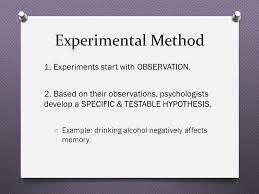
Observation as an Experimental Method

We commonly talk of ‘experimenting’ with things – whether it is a new multi-function mobile phone or an elaborate recipe culled from a magazine – by which we mean trying something out and seeing what happens, what results we get. Formal experiments lie at the heart of scientific research and there are two main kinds: theory testing (if this theory is correct we ought to get this result) and significant effects testing (empirical research) which is quite close to our commonsense usage above.

Consider, for example, medical researchers evaluating a new drug. A recipe that doesn’t work is of little importance; a drug that doesn’t do what it is supposed to do can lead to a waste of resources and even damage human health – hence the controlled conditions and elaborate safeguards involved in such research. We shall take lessons from the careful procedures of medical scientists.

1. Formal experiments

Let us assume that a new drug for treating hypertension (high blood pressure) is being tested.

The scientists would first ask themselves: does the drug have an independent effect on blood pressure (itself a variable phenomenon)? The standard procedure is to use an experimental group (who get the drug) and a control group (who get an inert placebo). They might also employ multi­ple experimental groups trying out the drug at different dosage levels.

Obviously they would try out the drug on people who suffer from hypertension, and there are levels of this – mild, moderate and severe. However these human guinea pigs are selected, the medical scientists still have to ensure that the two groups to be compared are equivalent. This is done by allocadng patients randomly to each group – note that this is a technical procedure designed to ensure that there is no systematic bias in selecting patients.

The patients are tested before and after the (real or pla­cebo) drug treatment, and here great care has to be taken to ensure:

  • no patients know which they have been given
  • the doctors administering the ‘drug’ do not know either
  • the medical researchers who measure blood pressure before and after the administration don’t know to which group the patients belong.

This kind of triple-blind study effectively removes the bias that comes from expectation (by the patients, but also the doc­tors and researchers). Of course that level or kind of rigour won’t be needed in what is to be described here; but it points the lesson that we should be alert to sources of bias in our findings.

2. A practical example

We live in a world of mass-produced, designed objects. In the previous chapter we stressed the need to observe, nat- uralistically, the fine detail of daily living, where people have to deal with the, usually minor, challenges of routine prac­ticalities. That can be done systematically but it does not amount to an ‘experiment’. In a practical experiment we construct a setting and then observe how different groups (by age or whatever) cope with it: we manipulate or control what we observe.

Designers work to a particular brief and with a particular purpose in mind. A familiar example is that of safety botde caps – for medicines and potentially toxic household fluids such as bleach, disinfectant and paint stripper. These have been a significant source of harm (sometimes fatal) to young children. Most serious accidents to this age group occur in the home because that is where they spend most of their time. The contribution of design to child safety is an important one, with many successes.

Safety bottle caps, so designed that they require a (pre­sumably) adult level of understanding and dexterity to unscrew them, are a good example. But as with most ‘solu­tions’ they can create problems in their turn. A characteristic design is one where you have to squeeze the top at certain points, push down and then turn. This creates difficulties for older adults who have arthritic hands or muscular weakness; but in truth we all have some difficulty with this type of cap. And it can lead to other kinds of accidents – for example to an older person trying to lever the top off.

So we have two problems that require a design solution: botde caps which can’t easily be opened by young children but can be opened without difficulty by adults with mild disabilities. How could a design which seeks to overcome these conflicting problems be evaluated?

The experimental setting

We could try out the new design with three groups:

  • children aged 3-5 (a particularly vulnerable age)
  • bodily able adults aged 25-35 years
  • adults over 65 with the kind of mild manual disabilities outlined above.

The researcher would give each of them, individually, the ‘test’ bottle simply saying: See if you can get this cap off (in the case of the children first screwing the cap on while they watch so that they are ‘cued in’).

Their attempts would have to be videoed because the designer/researcher would need to analyse each attempt retrospectively. It would also be necessary to time each indi­vidual because, even if successful, any delay might be critical to safety in young children (as many parents can testify); and conversely might try the patience of older people struggling to remove the cap.

The results of such an experiment can be surprising. For example, we might find that the new design defeats the attempts of all the children, half of the older group with manual disabilities, but also some of the physically able younger adult group. That would be interesting in its own right. But the most important element is what lies behind the results and it is here that the video analysis makes its contribution, allowing repeated observation of the same sequence as necessary, showing how the individuals attemp­ted to remove the cap and what seemed to be the problem elements.

A short video interview could also be used to supplement the observation sequence, asking (the adults) what they found difficult about the operation of the cap.

What we have described comes under the heading of evaluative research and it is here that systematic ‘experi­mental’ observation is particularly appropriate. Does it work in the way intended? And what lessons can be learned from a study of how the individuals concerned tried to operate the safety cap (or whatever was being tried out)?

Using comparison groups

In the previous, hypothetical, experiment we proposed three different age/ability groups, giving them all the same task.

Another approach would be to have groups made up of approximately the same kind of people (loosely matched in terms of age, gender, ability and experience) and give them different versions of the same task, for example evaluating different approaches to software training:

  • a group that watched a ‘live’ demonstration
  • a group that studied the manual
  • a group that had access to a video demonstration and a ‘key points’ printed summary.

Note that this is not a tightly controlled conventional experiment seeking significant differences between the groups on some pre- and post-test performance criterion. Rather the different methods would be compared in terms of:

  • the kind of questions people asked in training
  • the difficulties they experienced in their subsequent use of the software, perhaps against a performance checklist.

We are not out to demonstrate the superiority of Method A over Method B or C; in real life you learn something from observing each method.

So the emphasis may not be quantitative but it is systematic. We are after insight into the practicalities of learning a procedure. There will be hints and clues from the successes and difficulties of those using the software; and we can ask them what they found useful or not, as the case may be, in the form of training they were given.

Although the comparisons are carefully specified and the whole procedure systematically organized and analysed, it is a long way from a traditional experiment where you would have random allocation of subjects to groups, exact equiva­lence of training times, pre- and post-tests on a precisely specified performance test (of the outcome or dependent vari­able) and so on.

If experimentally-minded social scientists see this as the thin end of the wedge, they should be warned that our exposition is about to get wider by taking ‘experiments’ lit­erally outside into a real-world setting.

3. Devising signage systems

A well-designed environmental setting like a road layout or piece of equipment almost speaks for itself in the sense that without specific instructions or even too much thought you know what to do. Ambiguous road layouts or control panels on a car are at least irritating, at worst can lead to accidents. Both employ what are known as signage systems to supple­ment the guidance that comes from the overall perception of the design layout. Such systems almost amount to an international language and for road signs, in the European Union at least, are regulated to that end.

Devising signs that are easily and unambiguously read is an industry in its own right. The most easily read signs (like primitive languages) are pictographic. For example on a video or DVD player we would all recognize:

<<<< = rewind/retum

>>>> = fast forward

Note that the use of multiple arrow heads seems to con­note movement; you get something similar in the kind of road sign that emphasizes you are travelling to the left or right (or should be!).

On amplifying equipment this kind of visual movement may be incorporated to show an increase in volume, espe­cially if it has a ‘growing’ gradient as you press the button. These pictographic visual clues are fairly straightforward but there is a range of more abstract signs; and first we need to clarify these different ‘written’ language systems.

Types of written language

Pictographic signs – where simple schematic picture-signs are employed – are the most basic and straightforward: for example the signs for wheelchair access to lavatories, those for men and women, or baby-changing facilities. Picto­graphic languages are the most primitive because they are the least capable of representing more abstract and complex language functions such as the expression of thought. In western cultures we mostly have an alphabetic language sys­tem – where the written symbols are linked reasonably directly to the way in which the ‘signs’ are said.

But the third main type of written language system is logographic: that is where the sign represents a concept, which may be abstract in character. The written Chinese language is logographic – it conveys meaning but not how the signs are spoken – thus the two main spoken Chinese languages, Mandarin and Cantonese, are mutually incomprehensible, though the speakers can communicate in writing. This may sound strange but we have a parallel in our own culture in the system of numerals and mathematical symbols; these are almost universal but a Frenchman would probably not understand a Norwegian who ‘spoke’ a formula such as 3(52 )/10.54 – yet both could read it (although to compli­cate the example most Europeans use a comma to indicate a decimal point). Many established signage systems are ‘logographic’, i.e. universal in that sense, and they are con­stantly developing. And product marketing depends heavily on instantly identified logograms – hence logos – from the Nike ‘swoosh’ to the controversial design for the 2012 Olympics.

4. Testing signage systems

It would be wrong to assume that pictographic signs are always easy and unambiguous to read; also, some of them are ‘in between’ – for example the skull-and-crossbones sign to indicate danger (why not a graveyard?). Here the picture represents a concept; but there is a limit to how far pictures can depict the abstract. The relationship between sign and symbol, signifier and signified, is too deep a theoretical issue for us to consider here. It is sufficient to say that some ‘abstract’ symbols are more easily ‘read’ than others, whe­ther they are conventional or not. Consider what these examples might mean (some more established than others).

The last two have a well-established signification of gender – but are you entirely sure which is which? And why} (Answers are given at the end of the chapter.)

Signs in context

Signs, like words, are supported in their meaning by the context in which they appear and these contextual factors all have a bearing on whether signs are ‘seen’ as well as ‘read’. You can, of course, test signs as a paper exercise – as above, i.e. what do you think these might mean? But a more ade­quate test is the behavioural response of people to the sign.

This needs to be spelled out because it involves juggling several variables in an actual live setting – too complex and difficult to define for a tightly controlled experiment. Both structured and semi-structured observation have a role here, and perhaps interviewing as well. The experimental dimension is the manipulation of the contextual factory we would pre­viously have found out whether people read the signs cor­rectly once they have seen/noticed them. So the experiment is about presentational and contextual factors, for example:

  • size and colour contrast of signs
  • precise location (proximity to what is being signed, ‘gui­dance’ from the layout)
  • association with/or distinction from other signs (relevant linking, avoiding confusion or ambiguity)
  • height at which signs are placed
  • ‘confusion’ factors – the visual busyness of the surroundings.

If signs on equipment are being tested then mock-ups are appropriate but here again other factors come into play (sequence, visibility, size, and so on), all of these being relevant to how, and whether, the signs are read correctly. For example, if on a piece of equipment there is a sequence in operating the controls – whatever signs are used – the signs will be more easily ‘read’ if they are placed in a left-to- right arrangement in the required order.

In researching these situations video recordings may be useful: the direction of attention, hesitation and uncertainty displayed in relation to public space signage; the number of correct operations of keys etc. on technological equipment. In the latter case the use (and design) of product manuals is an additional dimension. In general it is unaided responses that are the primary data. The more help you need, the less suc­cessful the overall design and sign system employed.

And in all cases, the user dimension is a factor. Different groups – by age, ability, experience – are going to respond differently to ‘tasks’ of this kind. In the case of specified usage this may not be relevant. But, to repeat a point made earlier: something that works well is that which presents fewer problems for everyone.

Source: Gillham Bill (2008), Observation Techniques: Structured to Unstructured, Continuum; Illustrated edition.

Unstructured Observation: The Rise of Ethnography Method

Observation can vary in its degree of structure – how far the researchers’ approach is pre-formed, in the sense of know­ing what they want to find out or how they plan to do it. But no research, however open-ended, lacks structure. It would be chaotic if it were. So the chapter heading is not exactly correct.

An alternative is to assign the degree of participation, conventionally divided into non-participant and participant varieties. If anything these terms are even more unsatisfac­tory. No observation is entirely non-participant if there is any contact with, or awareness by, those being observed; but it’s relative. Much of what is described as participant observa­tion is not so, in the sense that the researcher is not a nor­mal part of the group being observed, nor does she/he usually behave in a fully participant way in the group’s activities (which in some contexts may be minimal). Fully participant observation can only be carried out by an insider: someone who already belongs to the group being resear­ched. Two studies of this kind – by Burgess (1983) of a comprehensive school, and by Holdaway (1983) of a police force – are discussed later. It is sufficient for the moment to keep these limitations in mind.

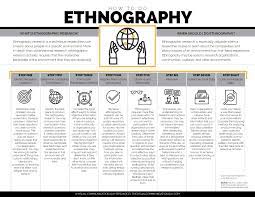
 1. What is ethnography?

The Oxford English Dictionary gives a first usage of this term as 1842 but it has only come into common use since the 1970s. Before that it was comparatively rare and a classic text of the genre, Whyte’s 1943 study of street-comer gangs in Boston, doesn’t use the term at all.

So what does it mean? Quite simply ethnography began as the descriptive arm of social anthropology where the focus of the latter was on the study of ‘primitive’ societies. It aimed to describe the rules and practices of a culture. Since the 1970s it has become applied in particular to the study of sub­cultures in Western society. Some of these will be reviewed later in detail but it is worth considering briefly the moti­vation underlying this surge in research activity.

The concept of a ‘multi-cultural’ society is conventionally applied to a population of different ethnic and religious origins. But an alternative is to view the whole range of essentially distinct minority groups, about whom the majority of outsiders know little, as subjects of sub-cultural study. The range of possibilities is vast: not only anti-social football fans, the chronically unemployed, those in the ‘black’ economy or casual migrant workers; but also parti­cular communities defined by occupation or affiliation: the informal operation of a hospital, or a prison or a police force; black religious groups, West End gentlemen’s clubs, Freemasons; or ‘deviant’ groups – for example, urban gangs or users of illicit hard drugs. In all cases ethnographers seek to gain an inside perspective, perhaps covertly (see Chapter 9); one reason for this research interest being that we are either ignorant of differences or make shorthand, unin­formed judgements (adverse or otherwise) about the char­acter of these sub-cultures.

A recurrent theme in such studies is that in taking a defined focus on these minority groups we come to under­stand mainstream society better. Since, whether viewed as ‘deviant’ or not, these sub-cultures are often the subject of social or political action, the use or validity of such action is going to depend on an adequate understanding of the group in question.

What do ethnographers do?

The basic procedures are easily summarized.

  • They immerse themselves in a particular social setting for an extensive period of time, depending on access to the group. This is usually a matter of months, occasionally more than that: Whyte (1993) spent three years in a ‘slum’ area of Boston researching for Street Comer Society.
  • They make protracted observations of what people in that setting do and say.
  • They talk to people in the group in a naturalistic way as the occasion arises.
  • They may interview key informants in the group and iden­tifying these figures is part of the method: someone who will explain to the researcher those elements of social organization which are not easily viewed or self-evident.
  • They seek to understand and explicate the rules govern­ing behaviour and social relations in the group and how these relate to the physical and economic context of the setting.
  • They keep detailed notes of their observations which they may check out with their key informants.
  • They collect any other material which supports the descriptive process or aids understanding – photographs, sketches, videos, or ‘documents* of one kind or another.

How is this different from case study research methods?

In terms of the kind of data collected it may not differ at all: both involve accumulating multiple forms of evidence on a social phenomenon of interest, of which no one variety is adequate for explanation on its own.

The difference is in focus:, ethnography is concerned with elucidating the character of a particular culture. A case study may involve an individual, or individuals, in widely different settings or institutions – such as a national organization of professionals – which is not located in a single or simple setting.

2. Gaining access

Most ethnographic studies are carried out by people who are outsiders, so for them the key problem is access. How do you gain entry, and acceptance once you’re admitted to the group? How do you get into a position where you can achieve understanding? Identifying and establishing trust with key informants is the most important factor.

In Whyte’s study the key informant was the gang leader whom he called ‘Doc’. A direct quotation conveys the character of this. At their first meeting Doc listened to what he had to say and then responded:

Well, any nights you want to see anything, I’ll take you around. I can take you to the joints – gam­bling joints – I can take you around to the street corners. Just remember that you’re my friend. That’s all they need to know. I know these places, and, if I tell them that you’re my friend, nobody will bother you. You just tell me what you want to see, and we’ll arrange it. (Whyte, 1993, p. 291.)

This extract shows just how fortunate Whyte was, which brings us to an element that does not usually figure in research methods texts: that the social researcher, particu­larly in the role of ethnographer, is heavily dependent on luck. The converse is that with the best will in the world you can find yourself excluded, treated with suspicion.

3. In it but not of it

Not all ethnographers are in the position of needing to negotiate access and acceptance. Some ethnographic research is carried out by people who are normal members of the group. Burgess was able to study a Roman Catholic comprehensive school because he was employed as a part­time teacher (but identified and legitimized as a researcher) (Burgess, 1983). Within professional groups that kind of researcher membership, though not without difficulties, is usually a privileged and relatively straightforward business.

With deviant or culturally distinct groups no such fully legitimate membership is possible; so that even if someone gains acceptance that does not imply being seen as ‘one of them’. Indeed, any attempt to be ‘one of the boys’ is likely to be perceived as false. Whyte provides an amusing example of this describing how on one occasion, in the company of the gang, he started swearing ‘trying to enter into the spirit of the small talk … [They] came to a momentary halt as they all stopped and looked at me in surprise. Doc shook his head and said: “Bill, you’re not supposed to talk like that. That doesn’t sound like you”.’ Whyte continued: ‘I learned that people did not expect me to be just like them; in fact they were interested and pleased to find me different, just so long as I took a friendly interest in them’ {op. cit., p. 304).

That last quotation expresses the stance very well and is cited to emphasize that falsifying oneself is more likely to create barriers than otherwise. There are exceptions. Patrick’s (1973) role in his study of a Glasgow gang was covert (or at least largely so); but he is not typical.

4. The lack of prior theoretical commitment

One of the most striking things about these sub-cultural ethnographic studies is their atheoretical stance. Patrick describes his research as containing ‘no new theory, no integrating thesis, no synoptic overview of juvenile or gang delinquency’ (Patrick, 1973, p. 155). He cites Merton (1957, p. 93) as calling this type of empirical research ‘post factum sociological interpretation’ where analysis and explanation take place after the observations have been made and where there is no testing of a pre-designated hypothesis. According to Merton such interpretations ‘remain at the level of plau­sibility’ (low evidential value).

Ethnographic research by its very nature is not pre­determined even as to broad direction, let alone its theo­retical orientation. Whyte (1993) describes how he was 18 months in the field before he knew where his research was going. He also challenged the utility of the conventional prior literature review – a problem he had to grapple with in getting his study accepted for a PhD. In the end he pro­duced a review as a conventional appendix but it bore no organic relation to his work.

Taylor’s 1993 literature review in her study of women drug users is conventional (being based on her PhD) but also marks out its irrelevance in the main to the work of an ethnographer studying a very specific group, at least in terms of preparation and orientation.

In Chapter 10 we return to these issues which have major implications for the real-world research process and con­stitute a challenge to conventional academic thinking.

5. ‘Thick description’

If there is a lack of a priori theoretical commitment (in advance of the evidence) that does not mean that interpretation is not one of the aims of ethnographic research. Clarifying the rules governing social behaviour and the social structure of the ‘culture’ being studied are primary aims.

But the starting point is that of meticulous and detailed description – what the American cultural anthropologist Clifford Geertz calls thick description. This term is exemplified in his 1973 book The Interpretation of Cultures. Two points he makes are that it is only by detailed description that one will see what is there: and that such description is basic to interpretation. Such interpretation can only be supported, as a theoretical argument, if the descriptive style ‘takes the reader there’. There may be disagreements about the interpretation but the substantive basis for the theorizing provides a reference point.

In reading ethnographic studies one is struck by the amount of detailed description, typically in a straightforward narrative style, often with extended quotations from indivi­duals in the group being studied; this is characteristic and somehow belies the need for elaborate ‘interpretation’. To a large extent the data are allowed to speak for themselves although it has to be noted that a process of selection is involved in what is presented. An example of this, taken from Patrick’s study of Glasgow gangs, describes the arrival of a district gang leader in a bar.

A slightly-built boy, no taller than five feet eight, was being pointed out even by some of the bar­men. He was dressed in a light-grey suit of the latest fashion, white shirt, and a red tie with a white polka dot and matching handkerchief. His long fair hair was well-groomed, parted just to the left of centre and combed down over his ears. Behind him walked a much taller boy, who looked stronger with broad shoulders and deep chest, wearing a light blue suit and a black casual. In their tour of the bar, Dick [gang leader] led the way, shaking hands with everyone and smiling;

Bob (whose name I learned later) followed behind at a respectful distance … Dick had a few words to say to all members of his gang, refused drink after drink, and accepted the deference of boys and young men much broader and taller than himself. Within twenty minutes they had toured the bar and gone. (Patrick, 1973, p. 44.)

What is immediately evident is that the effort to achieve a clear account of social relations in a specific context results in a good piece of writing. Of course, much descriptive writing in ethnography is much plainer in content: not that this detracts from its significance. Burgess (1983) devotes a section of his book to the informal groupings in the school staff-room with a schematic sketch of where their groups were clustered.

He comments:

I recognized that many of these groups were formed on the basis of the members holding similar positions in the formal organization of the school. None of these groups had an exclusive membership, that is, not all those who sat in the young women’s group were either young or female and, likewise, not all those who sat in the heads of houses group were house heads. How­ever, I have given titles to these groups on the basis of their main members and their recogni­tion by other teachers. (Burgess, 1983, p. 73.)

6. The difficulties of recording

Burgess had the great advantage of overtly (with the knowledge of colleagues) carrying out his research in a setting where making written notes, etc., was a normal activity. When you are engaged in studying gang culture (like Whyte and Patrick) then conspicuous recording may be neither practical nor, indeed (as in Patrick’s case) entirely safe. Ditton (1977), in a study of fiddling and petty theft in a bakery, had recourse to making his notes in the only private place available, and on lavatory paper. Whatever the setting, recording what you have seen and heard needs to be carried out as soon as possible. Very shorthand notes can act as prompts; a recommended procedure using these prompts is to expand them soon after in an audio recording, which then becomes another level of data for analysis. However they are made, these notes need to be made close to the time of the events while memory is still clear and vivid.

Street Comer Society, an ethnographic classic

First published in 1943, in Whyte’s lifetime this classic text ran to four editions and references here are to the 1993 4th edition. For a book of this kind to be re-issued 50 years after its original publication is some kind of testimony to its enduring worth. Of all the studies cited, it is the one which can be designated as essential reading, even if you read no other.

What Whyte did was to live in a slum area of Boston (the Italian quarter) for three years (1938-40) during which time he married and took his wife there: evidently a man of clear priorities. Coming from an advantaged background himself (with a Junior Fellowship from Harvard) he was concerned to understand the sub-culture, particularly the gang culture, of that area about which there were many judgemental opinions and related explanations, but little real knowledge of what living there and being part of that social network was actually like.

He structured his study of the district from the perspective of the gang and members of it who had their own ‘street corner’ – in effect a meeting place, hence the title. The focus is on the social structure of what Whyte called ‘Cor- nerville’ relating it to the gang culture. So such dimensions as different kinds of ‘clubs’, social mobility, politics and racketeering are all approached, and interpreted, in this way.

Whyte sought to achieve the insider perspective and comments (Whyte, 1993, p. xvi): ‘The middle-class person looks upon the slum district as a formidable mass of con­fusion, a social chaos. The insider finds in Comerville a highly organized and integrated social system (emphasis added)’. His stance could therefore be described as ‘appreciative’: but it is an appreciation based on intimate knowledge. The implications of such understanding for social action are discussed in our concluding chapter, and re-appear else­where; but one of the main lessons of studying such sub­cultures is that sound-bite judgements – for example, about drug users – do not stand up to scrutiny.

Here we concentrate on the major contribution Whyte makes to the process of carrying out ethnographic research. In the 1993 edition of his book he includes a section dealing with the evolution of Street Comer Society (Appendix A, pp. 279-373). Going beyond ethnography it is virtually an exposition of a strategy for real-world research-in-context.

He writes:

… I am convinced that the actual evaluation of research ideas does not take place in accord with the formal statements we read on research methods. The ideas grow up in part out of our immersion in the data and out of the whole pro­cess of living. Since so much of this process of analysis proceeds on the unconscious level, I am sure that we can never present a full account, {op. cit9 p. 280.)

He goes on to describe how his interest in the topic origi­nated and developed: elements typically missing from research reports which conventionally give the explicit ‘logical’ impression of having emerged from a prior study of the research literature. He describes his initial attempts to prepare outlines of his intended research (a typical requirement for funding purposes) and comments: ‘the most impressive thing about them was their remoteness from the actual study I carried out’ (p. 285).

The approach he adopted was that of studying the social organization of the community by observing the patterns of interaction between people – what they did and said in their social relations, what rules or conventions governed their social behaviour. Because this organization was largely informal: ‘Life in Cornerville did not proceed on the basis of formal appointments’ (p. 293), he had to spend a lot of time with the group he was studying and from day to day.

The influence of Whyte’s study can hardly be over­estimated and that is because of the general lessons he provides; it is rare to find a contemporary ethnographic study where it is not included in the bibliography.

A much later criticism of his work which he discusses (pp. 370-2) is that the account is his construction of the ‘truth’. This constructivist perspective is valid to the extent that all knowledge, in the sense of interpretation and explanation including the results of scientific experiments, is a matter of choice. Whyte, with characteristic reasonableness, says that it reduces to the argument whether ‘my “truth” is better than your “truth” ’ (p. 371).

When you have read the book you can form your own judgement.

7. Urban ethnography: two studies

Here we review two studies carried out in the city of Glasgow, both of which have been cited earlier: Patrick’s 1973 account of a juvenile gang and Taylor’s 1993 study of female intra­venous drug users. Both exemplify the challenges and opportunities awaiting the urban ethnographer. In reading them you come to see the distinctive character of this kind of study: like no other in social research.

The over-powering impression – and it is a seductive one – is of the vivid reality of the material obtained. As one comes to appreciate the commitment involved, in terms of time and coverage, it is easy to understand why such data are scarce; and why society in general so little understands those sub-cultures that exist within it.

Glasgow gangs

Patrick’s study is unusual. Working as a young teacher (and looking younger than his age) in what was then known as an ‘approved school’ he struck up a friendship with one of the older boys, Tim, who invited him to ‘come and see for himself what the gangs were like on the next weekend leave (a usual arrangement at that time); an invitation that with some misgivings he took up.

He describes his investigation as:

… a descriptive account of a participant obser­vation study of one such gang between October 1966 and January 1967. In all I spent just under 120 hours in the field; and as my involvement with the gang deepened, so the hours lengthened, until towards the end of January I was in the company of the gang during one weekend from seven o’clock on Friday evening until six on Sunday morning. (Patrick, 1973, p. 9.)

His research was covert in the sense that he did not identify himself as a researcher but as a friend of Tim’s from the approved school who was there for housebreaking. Any doubts as to the ethical stance involved are removed as one reads his account of a culture so violent and dangerous that concealment was the only possible strategy; and not without its risks even then. So, although the amount of fieldwork was limited, it is remarkable that it was obtained at all. Patrick’s time in the field was curtailed because of the threat of vio­lence to him (because he’d avoided participation in a weekend gang war).

Not the least of its illuminating qualities is the perspective it offers on the institutions of society; as for example a time when he was taken into custody by the police:

The police quickly realized that I had no infor­mation to give them, and so, finally, they told me to empty my pockets. The moment I put my hands into my trouser pockets to comply with the order, I was punched in the back by one police­man and kicked from behind by another as I fell.

After a few more punches and kicks, the police withdrew and the door was locked, (p. 58)

An incidental benefit of this episode was that it validated his acceptance by the gang.

Female drug users

Taylor’s study had its own share of dangers, a concern that recurs throughout the book; in fact, no harm came to her, which was a subject of remark.

Her research was more intensive than Patrick’s; she recounts how for 15 months she spent most of her days, and many nights, participating in and observing the activities of a group of female injecting drug users in Glasgow. Since she was a married woman with children this shows exceptional dedication arising out of her high level of motivation. She observed 50 such women during this period and with 26 of them carried out in-depth unstructured interviews at the end of the project.

Taylor’s stance was ‘appreciative’ in the sense that she sought not just to observe but to understand the women’s behaviour by exploring the meaning they attached to what they did. Without promoting any notion that drug-taking was a ‘good thing’ she argued that:

… against the stereotypical view of pathetic, inadequate individuals, women drug users in this study are shown to be rational, active people making decisions based on the contingencies of their drug-using careers and their roles and status in society. Such an approach also allows the ordinariness as well as the more deviant aspects of their lives to be seen, showing that women drug users have many of the same concerns, fears and hopes as other women. (Taylor, 1993, p. 8.)

Although both studies were radically different in focus there were several common features distinctive to this kind of fieldwork research.

Sponsors and key informants

These are critical to gaining access to the group under study, as previously noted in the case of ‘Doc’ in Street Comer Society (Whyte, 1993) and Tim in Patrick’s 1973 study. They are often one and the same. The sponsor validates you and gives you entry: while the key informant answers your questions and generally keeps you briefed and aware. As in Taylor’s case this last group may comprise several people. Her sponsor was a local drug worker in the area who was known to, and trusted by, the women. He was able to introduce the first couple of contacts and accompanied her on these occasions. Making more contacts was a slow business at first but gradually, as she became known and accepted (Are you the woman who is interested in women junkies ?), so the study group expanded. But there was a nucleus of eight women who were her key informants with whom she could raise questions and seek clarification.

8. ‘Speaking for themselves’

An obvious criticism of an ethnographer (to be discussed more fully later) is that she/he is interpreting, selecting and so constructing the ‘reality’ presented. Straight but com­prehensive description of events is one strand to counter this (legitimate) objection; reporting spontaneous speech is another. Patrick (1973, p. 16) writes: ‘Whenever possible, I shall let events and characters speak for themselves’. Taylor takes an identical stance (1993, p. 7): ‘Much of the text allows the women to speak for themselves, describing from their point of view the lifestyles which have evolved round their use of illicit drugs’.

Interestingly, although Taylor and Patrick were bom and bred in Glasgow they found the rapid patter in the broad accent of the groups they were studying something of a problem (Taylor, p. 14; Patrick, p. 15) and both found it necessary to ask their informants what particular words meant and to include a glossary in their books.

In the contexts in which both of these researchers were working, on-the-spot note-making was out of the question. Taylor is particularly clear in this respect, but found that by writing up her experiences at the end of each day she could recall detail better than she expected. However, most of the direct quotation came from extended interviews with some of the women at the end of her study.

9. Risk-taking

As noted above, Patrick had to curtail his investigation because of the threat of physical violence; he certainly wit­nessed a great deal. He was a witness also in a different sense, that of seeing criminal activity in which he might be seen as complicit.

Taylor (op. cit., p. 20) had a similar concern that ‘remained with me throughout the fieldwork [which] arose from the illegal nature of much of the information I came across’. On only one occasion did she find herself in actual physical danger ‘from a mentally disturbed drug user who was stabbing people who merely spoke or even looked at him’. She did, however, take precautions, first in her choice of area to work, not giving her home address and making her telephone number ex-directory. But, as she became more confident and ‘accepted’ she took what might be regarded as risks, on occasion being alone with drug-users, male and female. Real-world research such as this does involve risks because that is what parts of our society are like.

These two studies have been outlined here mainly in terms of their procedure: the roughly generalizable lessons to be gained from them. They are strongly recommended for further reading because the detailed sense of what urban ethnography is like requires this kind of thoughtful reading – summaries and quotations are not enough.

It is first-hand experience that brings these lessons into sharp focus. The next chapter describes some current work of the author on street-begging in Glasgow.

Source: Gillham Bill (2008), Observation Techniques: Structured to Unstructured, Continuum; Illustrated edition.

Process of observation methodology

This chapter is written ‘as it happened’ so that much of it has an episodic quality. The chronological form of presentation also demonstrates the nature of the research process, including the development of the author’s thinking.

When I first came to work in Glasgow in the mid-1980s one of the things that struck me was the number of people begging in the street, some apparently more habitual in this respect than others. It is still a common experience to be accosted, sometimes by women or children, to be asked for their ‘bus fare home’ or some such.

I soon came to see that this casual, direct approach kind of begging was different from those who sited themselves, usually strategically, with a plastic cup in front of them. The latter group, always men, appeared never directly to ask for money. Here there were also two groups: those with a dog and those without. The no-dog group often held a card­board notice in front of them: one, who sited himself next to a cash-point in Buchanan Street, had a card which read: HOMELESS AND HUNGRY – PLEASE HELP – GOD BLESS YOU. Their stance – typically withdrawn, eyes cast down – presented a picture of utter dejection. This may be just a ‘style’ but whenever I attempted to do so, I was never able to make eye contact, let alone draw them into conversation. I was puzzled as to how I might get to know more about what appeared to be a distinct culture of longstanding.

For some time these street beggars, who seemed to com­prise both a shifting and a regular population (I came to recognize faces), were something that remained on the margin of my interest but I was intrigued by the normalcy of this street phenomenon and began to read around the topic (usually only dealt with incidentally). Interestingly, begging never has been illegal in Scotland, as in England where it was made an offence under the 1837 Vagrancy Act. Devine in his book The Scottish Nation 1700-2000 (1999) describes how begging in Scotland was a recognized, locally-licensed activity (p. 100), in effect part of the pattern of poor relief. Sydney Smith, the early nineteenth-century clerical wit and Canon of St Paul’s, writes in a letter dated 4 November 1798 of his impressions on a visit to Scotland:

I suppose there are at least 3 beggars in this country for every one in England, and there is not here the same just reason for putting an end to the abuse. They beg in a very quiet, gentle way, and thus lose the most productive act of the profession, Importunity. (N. C. Smith [ed.], 1956, p. 120

After more than 200 years Sydney Smith’s observations still apply in my experience; I disagree, however, with his jud­gement on the effectiveness of their style (see page 63).

My impression was that those beggars who ‘set out their stall’ usually with a remarkably docile dog sleeping on a cover, were more ‘open’ than their more withdrawn breth­ren. I determined to try and establish contact with one of them and so to get a perspective on this sub-culture which, I suspected, had its own characteristics, unknown except to those voluntary social workers who sought to help the homeless as these men presumably were. However, I didn’t want to approach the topic through people with their own preconceptions, however well-informed.

I began by plotting the location of these street beggars in three, largely pedestrianized, intersecting main shopping streets (Sauchiehall Street, Buchanan Street, Argyle Street) so I came to see how carefully they placed themselves to get a maximum flow of passers-by, balanced against unwanted attention from the police: in that they might be held to be causing an obstruction. It was also apparent that they picked their time of day – across lunch-time being the preferred period.

1. Making contact

I made a tentative approach to one of the ‘regulars’ who occupied a pitch on Argyle Street. On the first occasion it was raining and he had had the thoughtful (and witty) notion of erecting a small and colourful women’s umbrella over his dog, a brown and white specimen of indeterminate breed. I stopped, commented on this, had a friendly response, put a few coins in his cup, asked him his name (Ian) and told him mine, saying I would drop by again.

Being out of town, it was almost three weeks before I saw Ian next. I dropped some money in his cup, crouched down next to him, said that I was from Strathclyde University doing a study of people like him – and could I ask him questions?

Ian was willing to talk. He told me he was there every day usually from about eleven in the morning to two in the afternoon. I asked if he had a place to ‘stay’ (i.e. live) and he told me he sometimes stayed with a friend but that he usually slept rough where he could – different places. I asked him whether he had trouble with the police and he talked about this at some length: ‘they say I’m in people’s way’ and that he was sometimes taken into custody. I offered to get him something to eat but he declined. I said that I would drop by again and could I buy him cigarettes? His face lit up at that so I took my chance and asked if I could come back and observe who gave him money. He said he was perfectly happy about that. I arranged to be there the next day.

When I turned up he was clearly waiting for me. He said: ‘you’ve just missed about ten people’. I handed over a packet of cigarettes, which he immediately started opening, a box of matches; and a packet of chews for his dog. In characteristically oblique fashion he started talking about his dog (Misty, about nine years old). He was keen to tell me how he’d detected a tumour and took her to the free veterinary service (the PDSA) and the vet couldn’t find it but ‘I know my dog’. This side-tracked into an account of how he’d tried to leave the dog ‘with a lassie’ but the dog had looked at him as if to say ‘don’t do it … ’.

As he talked it became clear that he was very attached to Misty (‘she sleeps where I sleep’) and that having the dog with him on his pitch was not just a ploy to attract custom – although it did, as I was to observe. People often looked at the dog even if they didn’t give something.

Ian was a bit uneasy about being observed (‘how long is this going to take?’) and suggested I sit on a bench about 15 yards away where I would have a good view. Apart from the business of recording I was able to see how Ian regulated his pitch. Periodically he removed larger coins from the plastic cup and put them in a pocket. At only one time did he actually solicit a donation – from a young man part of a group, and as a result of a rapid exchange of Glaswegian banter, incomprehensible to me.

Donations were usually made swiftly and deliberately – in one passing movement, so to speak. As Table 2.1 (page 12) shows, younger women were the most likely to give some­thing and particularly to talk at some length: one young woman crouched down beside him talking and stroking the dog for five minutes. There was only one non-donor who gave Ian and the dog attention. He seemed to be of the type I had noted in my phase of unstructured observations (i.e. ‘hangers-on’).

I felt that Ian was rather conscious of my observing him but seemed concerned that it should work for me. ‘Nae bother’, he said when I thanked him.

I tried to get some account of his sources of income; as far as I could understand what he said, begging was his main and most reliable source. My estimate is that he took in at least £15 in that hour but I didn’t feel I could ask him directly.

One incidental benefit of an hour’s continuous observa­tion was that I gained a sense of the ‘street culture’: difficult to analyse but with a quite different feel from passing through as a preoccupied shopper. One market researcher, armed with a clipboard like mine, and mistaking my pur­pose, remarked: ‘It’s a boring job, isn’t it?’ I didn’t feel I could contradict her …

2. Where next?

From my work so far I could see the following developments:

  • determining a focus for a literature search on the culture and practice of begging in Scotland and other urban areas
  • building on my relationship with Ian
  • attempting to establish similar contact with others like him.

On this last point I soon realized that Ian was unusual in always being at his post: others comprised a relatively shift­ing population even when the same sites were inhabited. So the question became: what was the ‘turnover’ and how did these men differ from Ian (if they did)?

I had to be away from Glasgow for almost two months but made a point of looking for Ian the day after my return, supplying myself with a packet of cigarettes.

He had moved his pitch to the other side of the doorway from his usual place. He greeted me as if I had only been gone a day or two. As I bent down to give him the cigarettes he whispered: ‘Do you have any change? I don’t usually ask but it’s not been a good day’, and he nodded towards a police van stationed nearby. I took this as some sort of recognition and gave him what loose change I had, talking to him for a while before I asked him if I could come back to photograph him a couple of days later (illustrated on page 72). ‘Nae problem’, he said. I had in mind to take a sequence of photographs eventually, but starting off with a single shot to gauge Ian’s acceptance of being photo­graphed. I also speculated as to whether video would be a possibility at some later date.

Note that I had decided to focus more on Ian, for the moment, because I felt there was a lot more to learn from studying him and because of the tentative relationship of trust that was being built up. As have others engaged in this kind of urban ethnography, I found myself increasingly interested (concerned?) in Ian’s welfare, not just as an object of study.

On the appointed day the weather was fine for photo­graphy and Ian was doing brisk business in the crowded shopping street. I observed that instead of a plastic cup he had a plastic lid with a few (low denomination) coins in it. The effect of this seemed to be that people put the money in his hand. Being more visible it may have been that people felt it too conspicuous to put their contribution in the lid. I didn’t ask Ian why he’d made the change, but I doubt that it was deliberate – on a later visit he just had a scrap of plastic bag, weighted down with coins.

I explained that I would be taking about a dozen shots in quick succession, and that I would give him one of the photographs. My impression was that he liked the attention and it occurred to me, really for the first time, that his street pitch was for Ian a part (the main part?) of his social life.

In conversation afterwards he said, quite proudly: ‘A lot of people know me. They know I’m always here.’ Coming away I felt I was right to allow the pace to go slowly; partly because it seemed wrong to do too much questioning and partly because if you are patient, not only are your half-formed questions often answered but you’re likely to be told things it wouldn’t occur to you to ask. That was to be borne out at the time of my next visit.

3. Extending the project

It was only at this stage that I started a search of the journal literature for papers on urban street begging in western countries. This was because I had wanted to see for myself first without preconceptions from the work of others. I would be able to read these sources with a context of my own to which I could relate them.

When I saw Ian about ten days later I said I had a pho­tograph for him and would drop it off the next day. I gave him some change and took the opportunity to ask him how long he had been on his present pitch. After some hesitation he said about eight years and before that he’d been in Sauchiehall Street for two years when he’d had an Alsatian dog. I asked him if he’d had a job before that and he launched into an involved tale, hard to follow, about how he’d been described as a bad influence on ‘the others’ but I couldn’t get it any clearer than that. I have decided that this kind of piecemeal questioning is the only way I can proceed.

Later I went to another regularly inhabited pitch – not always occupied by the same person as far as I could judge – on a pedestrian way between Sauchiehall Street and Bath Street. I found the occupant quite friendly and forthcoming. He said his name was Dougie and that he was there most days between twelve and five ‘but sometimes I go out with my girlfriend – I’ve got kids’ and on those occasions a friend ‘he sells the Big Issue’ filled in for him. (More forthcoming than others I’ve seen on this pitch – perhaps another useful informant here: something to build on.)

Back after about ten days I took Ian one of the photo­graphs I’d taken, which seemed to please him. But he looked troubled so I asked him if he was OK. T can’t tell you,’ he said at first, ‘you’ll no believe me.’ I said that was up to him, but could I help? He shook his head: ‘There’s a guy over there watching me and when I go he’s going to follow me’. I couldn’t make out what it was about and Ian refused to identify him. Later that same day I paid a visit to Dougie who seemed disgruntled: ‘Nobody’s giving me anything’. I dropped a coin in his plastic cup; it was not the moment to ask questions. He remembered me: ‘You’re Bill aren’t you?’ So, a small increment.

A week later and Ian greeted me as an old friend. He was eager to show me a photograph of a painting (oil?) of himself and Misty: ‘It’s a girl from the gallery over the way’. Had he been to the gallery to see it? No, he hadn’t. What about the man who’d been watching him at the time of my previous visit: had anything happened? He shook his head: ‘He was just a nutcase’. I’d assumed something more sinis­ter; certainly Ian had been very troubled at the time.

I explained that I was only in Glasgow for a few days. Ian grinned: ‘You’re always away!’ – adding sententiously, ‘you get a lot of knowledge going to different countries’.

That brief episode confirmed my view that Ian took an interest in people, as people did in him: and that contrary to a superficial impression was not a ‘pathetic’ character, even if he was financially dependent on others. He was ‘good value’ in return in a way that Dougie was not.

A month later: a sunny day and Ian had erected an umbrella as a sunshade over Misty. I took the opportunity to ask him if he had any family. He said his mother lived in Glasgow but he hadn’t seen her for three years because it was ‘nae use’, and he had a sister as well but he shook his head. I asked him who would look after him if he were ill.

He said: ‘I’m not well now – it’s my throat’. He’d mentioned something about that before but I hadn’t understood him: to be followed up.

4. The research literature: a comparative review

In what has been written so far no reference has been made to the research literature on urban street begging and associated factors; indeed none was actually read until a first­hand knowledge base (a restricted one, admittedly) had been established.

Two main studies were identified: one by the housing charity Crisis: We are Human Too: A Study of People Who Beg (Murdoch, 1994); and ‘Begging, rough sleeping and social exclusion: Implications for social policy’ (Kennedy and Fitzpatrick, 2001).

These were relatively large-scale projects. The Crisis report dealt with 145 people who begged in Central London; the paper by Kennedy and Fitzpatrick reported on 66 beggars in Glasgow and Edinburgh. They make fascinating reading and provide more extensive information than in the present chapter. Of interest from the methodological point of view – and relevant to the present book – is that neither is an observational study although Kennedy and Fitzpatrick car­ried out a brief structured observational audit of who was begging and where.

This lack of observational data leads to a central weakness in the definition of begging: Kennedy and Fitzpatrick (2001, p. 2001) define it as ‘asking passers-by for money in a public place’. Now from my observational experience this defini­tion is only true of those who walk around accosting mem­bers of the public. Those whom I have called ‘stationary’ beggars (page 10) do not usually ask for money, even non­verbally by extending a hand. Ian (page 60) seemed to regard this as not what he usually did at all and my observations had also confirmed this. In part, of course, it depends what you mean by ‘asking’ – having a plastic cup with a few coins in it is a kind of request. But it is necessary to distinguish different styles of begging.

In both studies the main method employed was the interview (structured in the case of the Crisis study; descri­bed as ‘biographical’ in the Kennedy and Fitzpatrick study).

The stance taken is that begging is a problem to be dealt with; but Kennedy and Fitzpatrick argue that ‘homelessness’ is not a sufficient focus and that what is required is ‘an individually tailored “resettlement” package which met their particular needs’ (op. cit., p. 2012). Both acknowledge that begging is part of a lifestyle: e.g. ‘Both rough sleeping and the bed and breakfast/hostel circuit help create a life­style that is quite different from that of people with homes and jobs. There was definitely a sense of begging being part of that lifestyle’ (Murdoch, 1994, p.10).

Kennedy and Fitzpatrick take the view that ‘begging is properly viewed as a product of social exclusion’ (p. 2003). But ‘social exclusion’ is a political notion which presumably places a particular value on ‘inclusion’/conformity. In get­ting to know Ian I have come to understand that his way of life is an adaptive response not just to circumstances but to how and what he feels psychologically comfortable in being. The notion of a ‘resettlement’ package which met his par­ticular needs is to beg the question: according to whose definition of needs and system of values? This is not an attempt to romanticize his style or situation but to question the assumptions that underlie a mainstream interpretation.

With all that in mind I continue with an observational approach which is more neutral, and seeks to describe and understand the street culture of which beggars are a part. Note that even the limited empirical work I have been able to carry out has enabled me to qualify what I have found in the published research.

Source: Gillham Bill (2008), Observation Techniques: Structured to Unstructured, Continuum; Illustrated edition.

Visual Ethnography Method

It seems obvious: if you want to describe a culture, making your account vivid and ‘real’, what more direct method could there be than the use of visual media? And surely, if photographs and video are used you are dealing with a direct representation of reality rather than one conjured up by words?

The commonsense appeal of this assertion is so strong that it may seem absurd to question or qualify it. In fact, it raises issues both practical and philosophical, not least what is involved in something as apparently ‘real’ as observation.

1. How real is visual representation?

We inhabit a world of multimedia visual representation. The ubiquity of television, in particular, is such that for most people it is unthinkable to have a life without it. The con­stant bombardment of carefully contrived images is an almost inescapable experience. Popular magazines and newspapers are similarly image-dominated, text often having little more than a supplementary role. Being a ‘normal’ part of our lives they create a cultural unawareness of the fact that we are encountering a mediated reality. But in truth, all ‘reality’ is mediated by our understanding, however formed.

Of course, at one level we know that television is not ‘real’, but the distinction is not a sharp one and becomes increasingly blurred with familiarity, to the point that the distinction may no longer be made. But can we ever be unaware that we are dealing with representation? Every morning we see ourselves in the bathroom mirror – except that we don’t. What we see is a flat representation of the upper half of the front of our body. We don’t see a side or back view, or how we look when moving or in interaction. But, more importantly, because most often forgotten, we see a reverse image: and that is not how we actually are.

Are photographs realistic ?

If mirrors are a cultural convention so too are photographs. Wright (1990, p. 6) cited in Pink (2007, p. 33) argues that photographs ‘are only perceived as real by cultural conven­tion: they only appear realistic because we have been taught to see them as such’.

Even when we accept that in our kind of society photo­graphs reflect a shared convention, they still require to be interpreted; different people won’t necessarily put the same construction on the same photograph. This brings us to the heart of the dilemma about visual media: that all observation is an act of selection and reconstruction. And what guides that process? We are usually unaware of it.

The fact that we have to interpret a text is easier to appreciate. People get different things from the same book; see it differently, although this is often not intuitively obvious. At the age of 20 I read for the first time Graham Greene’s novel The Heart of the Matter and, in truth, found it a mystifying experience. Returning to it at the age of 45,1 read a different book.

A photograph, or a novel, represents something; but exactly what is to a greater or lesser degree a matter of subjective interpretation and that differs not only from person to person but in the same person over time.

Can photographs lie? We know that photographs of peo­ple can be retouched to improve their shape or remove lines and blemishes from the face; while a not infrequent occur­rence in political history was to remove discredited or undesirable figures entirely. But more familiar are those newspaper photographs (selected from many) which, in an unfortunate fraction of a second, show politicians looking bewildered or anxious or just plain evasive; trade union leaders with an arm apparently raised in a crypto-fascist salute; members of the royal family appearing bored at official functions. That malign ‘construction’ of reality has its more innocent counterpart. An ethnographer may take photographs (and select from them) according to barely formulated assumptions. In what sense is that selection ‘representative’? Whose ‘reality’ is it?

Constructing ‘reality ’

If we accept, as we surely must, that ‘realistic’ photographs are as much a selective subjective construction as text, that does not mean they are equivalent. They can do different though related things (true of different kinds of visual media: see below).

The sociologist, Sarah Pink, argues for ‘a reassessment of the aspects of human experience that images and writing best represent and a related analysis of the relationship between the visual and other senses … ’. (Pink, 2007, p. 3). Different media can do different things; provide different tools for the observer/ethnographer. But before consider­ing that we need to deal with the ubiquity of multimedia representation in relation to experienced reality: a book- length philosophical topic that we have to dispose of in a few paragraphs.

2. Reality and representation

We know the world only through our representations of it and these are constantly evolving; perhaps only babies have direct, unmediated sensory experience of the world – before they have developed representational abilities – and they will later have no conscious memory of it. These inner repre­sentations are mainly in the form of language and mental images, but other sensory representations play their part (movement, touch, taste, smell). Those who are born deaf or blind (or both) develop the latter representational abilities to a remarkable degree: they have no choice.

For most of us verbal language and visual images are the primary modes of representation: we employ developed symbol systems so that these representations can be elabo­rated. And these are the means by which we know anything, including ourselves. It is probable that we know nothing in a direct, unmediated fashion – even our own self. A pioneer in the development of what has come to be known as symbolic interactionism (although it was not a term he used) was G. H. Mead whose major work Mind, Self and Society was first pub­lished in 1934. His thesis was that in relating to (interacting with) other people we do so through our symbolic representation of ourselves and those others.

Observation, and perhaps ‘participant’ observation in particular, presents the challenge of being alert to the eth­nographer’s self-representation in relation to the self­construction of the people in the culture being studied. This is the notion of inter-subjectivity. So the issue is much more than considering what images and writing best represent, important though that is. These tools of external repre­sentation are part of the inter-subjective process.

Now these paragraphs smack of intellectual shadow-play but the issue reduces to the difficulty of knowing another person (the meaning and purpose of what they do; how they perceive themselves and their actions) even within the same culture; even more so when we are interpreting a different culture.

Source: Gillham Bill (2008), Observation Techniques: Structured to Unstructured, Continuum; Illustrated edition.

Text and images in Visual Ethnography

1. Text and images

This discursive introduction in what is intended to be a practical book is because of the need to draw back from the apparent obviousness of visual ‘reality’ expressed in the opening paragraphs.

That caution is not intended to devalue visual repre­sentation: on the contrary, why not use images to ‘describe’? The question is pertinent because most observational stu­dies, even those which deal with an unfamiliar culture or sub-culture, do so almost exclusively in text, an apparently unquestioned practice up to the 1990s.

There are reasons for this omission, apart from an unquestioned convention and the matter of cost – less of an issue now thanks to the digital revolution. These caveats need reflection:

  • photography can make ‘observation’ more intrusive (and more obvious)
  • people may object to being photographed
  • photography may infringe anonymity
  • photography may affect the behaviour of those being observed.

These may be seen as problems of research procedure – of the use of photography in the practice of data collection. Put­ting those issues (partly ethical) to one side for the moment we can turn attention to the different qualities of data in the form of text as against images.

2. Distinctive characteristics

A simple listing of these in tabular form might be as shown in Table 7.1.

The first and last contrasts here are perhaps those which polarize the media most emphatically.

The old saying that ‘a picture is worth a thousand words’ is false – they are not equivalent in any ratio. Words may evoke but they do not shorn point one. Point two is that language can be, commonly is, intrinsically more abstract, more ana­lytic, than visual depiction. So the issue is one of recognizing what the different media do best in the research area we are dealing with. As Pink puts it:

Visual research methods are not purely visual. Rather they pay particular attention to visual aspects of culture. Similarly, they cannot be used independently of other methods; neither a purely visual ethnography nor an exclusively visual approach to culture can exist. (Pink, 2007, p. 21.)

This is not just an argument for what is best expressed in visual terms but also for ‘a shift from word-and-sentence- based anthropological thought to image-and-sequence- based anthropological thought’ (MacDougall, 1997, p. 292, cited in Pink, ibid., p.ll). In other words, a shift in emphasis is required to those visual dimensions of culture that have often been omitted and which constitute a particular form of knowledge. How then is this material to be represented and interpreted?

3. Images and meaning

Traditionally in the research literature, where they have been used at all, photographs (and film/video) have been treated as ‘illustrations’ to enhance text. Two elements have been neglected:

  1. The ‘reading’ of photographs – the elements of meaning they convey and how they relate to each other (like words and syntax in text).
  2. The extent to which an extended narrative account or ‘argument’ can be presented in a sequence of still photo­graphs: a more comprehensive account (as in extended text) made up of the ‘sentences’ contained in a single photograph.

Reading photographs

Take as an example the photograph of Ian, the Glasgow street beggar, described in the previous chapter (see p. 72).

At the time of writing this is the only kind of photograph I have taken of him. What are the ‘signifiers’ – elements that communicate meaning – it contains? Considering this question alerts you to the particular properties of still pho­tographs in observational research.

First, although you get an immediate impression from a photograph, you don’t ‘see it all at once’. We know this in relatively objective terms from research on visual perception. Using a special camera that records eye movements and fixations, it is clear that the eye inspects a display in a suc­cession of saccades: sweeping movements between brief sta­tionary fixations. That is, the eye ‘reads’ the display in a sequential manner. Something very similar, but in a more regulated fashion, occurs in the reading of text. But in both cases the extraction of meaning takes place in the mind of the reader, and it will be constructed to some extent dif­ferently from one person to another.

What signifiers can you see in Ian’s photograph? And what meanings do you derive from it? Here is my own list of the main elements (Table 7.2).

Note that both the identification of signifiers and even more the signified (attributed meaning) is a matter of choice. Nor is there any implication that Ian has consciously thought through, in any analytic fashion, the elements of his appeal. But, to take point (1): had Ian been sitting on a chair, or even a cushion, the appeal would have been lessened; as it is he is sitting on the cold, hard pavement. Point (2) there is (to me) no suggestion of artifice in the presence of Ian’s dog, even though it is commonplace for street beggars; but without it the appeal would certainly be less. Point (3): the throw-away plastic saucer (or cup) itself has layers of meaning; consider the difference a collecting box would make (and the meanings that would connote). And point (4) a neat rucksack (or even a very shabby one) would connote different qualities/meanings from the disposable plastic bag.

Now all of these interpretations are my constructions: meaning is always an attribute. There might well be agree­ment, perhaps negotiated, between different people. But to return in this practical example to themes discussed earlier, although there is a physically ‘objective’ photograph, inter­pretations of it are necessarily subjective. These ‘inter­pretations’ are part of research data, and differing judgements can be compared including one’s own changed judgements over time. I see Ian differently now from my first impression of someone passive and pathetic. Note that this whole issue is quite different from the positivist psycho­metric notion of reliability (a technical term relating to the consistency of observations or test scores) and which implies that there is a true reality and that observers/interpreters are flawed instruments in the recording of it.

Every picture tells a story

But it has to be read – as demonstrated above. A photograph with its signified elements is not like a list of isolated words: these elements are part of a (visually) structured relation­ship. We have used words to demonstrate it in this instance, but what is required is a more analytic approach to reading images; to repeat the point, you don’t just ‘see’ them. The need is to establish (non-constraining) conventions for reading visual observational material so that the contribu­tion of these kinds of data is given fuller recognition.

The challenge for the researcher is well expressed by Pink (2007, p. 6) when she writes:

This means abandoning the possibility of a purely objective social science and rejecting the idea that the written word is essentially a superior medium of ethnographic representation. While images should not necessarily replace words as the dominant mode of research or representation, they should be regarded as an equally meaningful ele­ment of ethnographic work (emphasis added).

But this kind of call to action is no more than rhetoric unless it can be translated into the detail of practice.

Source: Gillham Bill (2008), Observation Techniques: Structured to Unstructured, Continuum; Illustrated edition.

Photographic sequences as a structured narrative

Chapter 2 described how I first observed and recorded interaction between members of the public and Ian in Glasgow’s Argyle Street. As I did so I could see that his experience as a street beggar could be told as a sequence of wordless photographic images which could be ‘read’ as a textual narrative could be read. What is suggested here is that the practice of visual ethnography should employ the universal notion and use of narrative as (to borrow a term from linguistics) a kind of frame grammar- a unit of meaning between a paragraph and a complete account.

One might call these ‘anecdotes’, but note that this typi­cally has pejorative connotations (it’s merely anecdotal evidence, etc.). Yet anecdotal narratives are how people understand themselves, how they construct themselves. The American psychologist Jerome Bruner, in an important paper entitled ‘Life as narrative’ (1987), gives to narrative the primary role in self-construction.

I believe that the ways of telling and the ways of conceptualizing that go with narrative forms become so habitual that they finally become recipes for structuring experience itself, for laying down routes into memory, for not only guiding the life narrative up to the present but directing it into the future. I have argued that a life as led is inseparable from a life as told – or more bluntly, a life is not ‘how it was’ but how it is interpreted and reinterpreted, told and retold. (Bruner, 1987, p. 31.)

For researchers adhering to the scientific-realist tradition this can be difficult to take. What about objective validity?

The dilemma (for such adherents at least) is apparent when considering interview data. In the kind of interviews which are relatively unstructured: that is, where the structure and content are largely determined by the interviewee, then the ‘validity’ of the interview is a function of the freedom interviewees have to tell their story. A common objection to this is that people are ‘just telling stories’ and ‘how would you know they were true?’ To which the answer is: how else would they do it? And: what would a ‘true’ account be like?

Selecting elements for a narrative

Any photography or video used by an ethnographic researcher to present a narrative account of the culture being studied is the researcher’s own composition: some material is selected for inclusion and other material is left out.

In that sense it is a partial and also an optional account. It is not wrong to do so, provided that there is an explicit awareness that such a process is open to challenge, together with a justification for the selection process. This process of content analysis has a parallel in writing an account of an interview where substantive statements are selected and categorized and then interpreted, and where the researcher has to show the successive stages of data selection and reduction.

Source: Gillham Bill (2008), Observation Techniques: Structured to Unstructured, Continuum; Illustrated edition.

The use of video

Video might seem to get round the issue of the process of selection which is self-evident in still photographs. Certainly continuous filming of a sequence of events does demon­strate the chronological relationship as well as providing more options for the abstraction of specific elements. But what is put in front of the camera is still a matter for choice; and editing down carries that process further – hence the common complaint of politicians that they have been quo­ted or shown ‘out of context’, perhaps with some justice. But there it is a matter of journalistic priorities where the imperative is to ‘get a story’ which grabs attention rather than the plainer and more balanced priority of a researcher to present a valid and representative account.

The almost continuous character of video recording does leave many interpretive options open. Of these perhaps the repeated re-running of sequences is the most important, making it possible to see elusive aspects, especially of social interactions, which one might miss on a single take. In the days when video was an exciting new toy for researchers, expensive and cumbersome as it was, I was working in a university department of psychology where there was much interest in the early stages of interactive communication between mothers and their babies. So fleeting were some aspects of this interaction, that it was only apparent from the repeated viewing and analysis of the same video sequences.

In ethnography something similar is possible, not least the more detailed reading of narrative sequences from the same stretch of recording. I am particularly aware of the value this would have in the street beggar study, especially in the area of ‘donor’ behaviour.

Source: Gillham Bill (2008), Observation Techniques: Structured to Unstructured, Continuum; Illustrated edition.

Ethnographic collaboration with members of the ‘culture’ being studied

Human research, even of the culturally sensitive variety, can be seen as something done to people, the passive recipients of the researcher’s attention. But perhaps this is to overstate the case. The appeal of ethnographic research is a lot to do with the personal relationships – sometimes enduring long past the period of formal study – that are established between the researcher and those in the community; to the extent that a kind of research partnership is established.

Whyte (1993, p. 31), describing his relationship with Doc, the gang leader, writes:

As we spent more time together, I ceased to treat him as a passive informant. I discussed with him quite frankly what I was trying to do, what pro­blems were puzzling me, and so on. Much of our time was spent in this discussion of ideas and observations, so that Doc became, in a very real sense, a collaborator in the research.

This is, of course, a wider issue than a consideration of the selection and interpretation of visual material, wider than ethnography. In any social research checking things out with members of the group being studied at least qualifies the researchers’ interpretations and may reconstruct them entirely. The frame of knowledge of those in the commu­nity, not least their knowledge of the ‘historical’ background of current events, means they bring to the current situation perspectives that are not apparent from observation. When we are considering the interpretation of photographs and video, the meaning(s) of what is represented may only be fully appreciated with this kind of help; and there may be different views on this within the community.

There is a difference between checking out one’s under­standing of visual data, and seeking the collaboration of those in the ‘culture’ in collecting such material: for example, asking them to take photographs using disposable cameras of the patterns and practices of research interest, or asking to see photographs they have taken themselves for other reasons. The events that people choose to record are part of the meaning they attribute to the world they live in. This kind of material may not have been made or retained for research purposes but can still form part of what an ethnographer collects, if it fits the broad frame of the investigation.

Source: Gillham Bill (2008), Observation Techniques: Structured to Unstructured, Continuum; Illustrated edition.

Self-Observation method

Self-observation is best known as a way of enhancing per­formance, via video recording, widely used in interview training. Actors whose performances are filmed have long had the advantage over the rest of us of knowing how they look and behave. That kind of feedback can have a salutary effect, not always conscious. But here we are concerned with self-observation as a research method,, and one which deals not just, or even mainly, with ‘external’ behaviour.

1. Research and objectivity

Research is commonly viewed as involving the objective appraisal of ‘evidence’ which can be independently checked and, where possible, measured. How can subjective experi­ence ever meet that criterion? It doesn’t and if that is the criterion for the admissibility of research evidence then all our mental experience goes out of the window. In research terms self-observation is a distinct methodology (way of knowing) and the appropriate approach for some areas of human knowledge; if not the only possible one.

We still have to consider why it should be so widely held that research is an ‘objective’ process. While some philoso­phers of science, notably Karl Popper in The Logic of Scientific Discovery (1959), have expounded precisely this case, the main influence on popular understanding is likely to stem from the way research findings are usually presented in the media, without qualification, as proven fact. And this in turn derives from the way academic papers are constructed and the style of presentation employed. These are conventionally written in an ‘objective’ depersonalized style: where the use of first person pronouns (I, we, etc.) is largely excluded (an editor once said to me that it detracted from the authority of the writing). By the same token the passive voice is preferred to the active (‘it was found’ rather than ‘we found’); and so on. Yet the papers are written by individuals, with their own motives, purposes and preferences.

2. Research as ‘adventures of the mind’

Some kinds of research are inextricably individual. In sci­entific research it is those early stages of investigation which Medawar (1964) called ‘adventures of the mind’. It is during these stages that the foundations of what will later be con­structed more formally are laid down. In a sense this is where the real conceptual discoveries are made though rarely reported in that way, being later reconstructed into the formal logic of a scientific paper.

In the arts the process of research is almost entirely made up of these ‘adventures’ experienced as a part of practice, but they may also go unreported because the artist is con­centrating on the practical or conceptual resolution of the creative problem. Particularly in the visual arts there is a resistance to taking a self-observing research stance: a fear that it will interfere with a delicate process, distract the artist from the main purpose, damaging or even destroying the creative spark. Almost certainly a mistaken view it is, none­theless, one that has been firmly held.

That such a process of self-observation might actually add to self-knowledge and facilitate artistic development is only slowly gaining ground (see Gillham and McGilp, 2007). As well as enhancing practice it also offers the potential to develop a new research methodology, as relevant to the social and natural sciences as it is to the ‘subjective’ world of the arts. Certainly in the social sciences the scientific-realist position, so long predominant, is in retreat before an increasing awareness that objective realism is a doubtful commodity when applied not just to people’s (mental) constructions of themselves and their social world, but also to how researchers view social behaviour.

This all sounds very well but needs to be translated into practical detail. We shall argue here that self-observation gives access to material – particularly mental events – that could hardly be obtained in any other way.

3. Research as a creative process

Thoughts, feelings, insights, intentions and discoveries in understanding are all things that are more or less invisible. And usually they go unrecorded, the exceptions typically being fragmentary – and so interesting that one can only regret that more of this material has not been preserved. Ghiselin’s (1985) book dealing with the creative process is made up of fragments of writing by leading creative figures of the past 250 years from across the arts and sciences, which provide a fascinating insight into their ways of working. Of particular note are the commonalities across radically dif­ferent disciplines: for example the role of the unconscious in mathematical creation (Poincare) and poetry (Amy Lowell).

Creativity is much discussed in a facile, abstract fashion which leaves us none the wiser. Here we define it as what characterizes the way that original work of quality is pro­duced: in other words, what is distinctive about people whom we would describe as truly creative? Everyone seems to agree that creativity is to be valued without, at a level of detail, appreciating the conditions, both internal and external, that foster it.

Self-observation provides a way into this level of detailed recording which, as we noted above, has no parallel method. The observer is always present in us; and as with other methods the challenge is to make the process of observation more systematic and analytic in approach.

4. Recording the process

In the busy work of pursuing a particular outcome (whatever it happens to be) the details of process – which may be as important as the result – are often discarded and obscured, irretrievably lost.

But there is more to recording the process than the pre­servation of material that may later be viewed as important. Agnew (1993), a design historian writing about the unrec­orded history of the development of the Spitfire in the 1930s and 1940s, argues for ‘a new kind of comprehensiveness in the most creative stages of design … The insight… is often more general in its implications than the … solution that follows it. All too often the insight may later be entirely lost’ (p. 129).

The act of recording means that those who ‘create* come to understand better how they work so that they can enhance their performance – rather than ‘interfering’ with it.

What should be recorded ?

This material can be divided loosely into internal and external evidence. We shall deal with the latter first. External evidence could of course be ‘observed’ by others, if they were always present. So, it’s anything that can be seen or heard, for example:

  • notes, sketches
  • letters, reports
  • plans, models, prototypes
  • photographs, video recordings
  • successive revisions (thoughts written down)
  • audio recordings (thoughts spoken)
  • material by others which has been used in some way
  • diary, journal, log-book.

What is apparent here is first, that a deliberate policy of preserving those elements is involved and second, that they have to be stored in a way which renders them accessible – a particular consideration because there may be a lot of material. Crucially there has also to be a conscious habit of keeping a record of those mental events or habits of beha­viour which otherwise would not be externalized at all – evident from some of the items listed above.

Perhaps the most important of these is the log-book (sometimes referred to as a diary or journal) in which are recorded those elements which otherwise fade very quickly, for example:

  • origins of ideas (things read or talked about, observed or experienced)
  • initial purposes/directions
  • hunches, insights, intuitions, i.e. the kinds of thing that are hard to make explicit
  • difficulties, uncertainties, problems (and their resolution)
  • discoveries, especially reformulations
  • refining of ideas and methods – and so on.

Deciding what to record has to err on the generous side; not least because what can appear a minor element at the time (a passing doubt, a simple notion) might turn out to presage more significant consequences.

In many ways it is this recording of ‘in-the-head’ material that is the more important part of the methodology. And it is often only fully appreciated and understood when reviewed as it occurred and in chronological order. This last has its own kind of logic in that the relationship between elements needs to be understood in terms of their sequence in the time-frame, which may not be ‘logical’ in other terms. The great virtue is the recording of the research process as it happens and you get no real awareness of this from reading conventional academic reports. The structure of these is often misleading if one seeks to understand how the research evolved. There are here two levels of discourse, the formal reconstructed logic of an academic paper and what might be described as the ‘chronologic’ of a narrative account. Neither is intrinsically right or wrong, they serve different purposes; but the narrative format constitutes a truer account of the process.

Source: Gillham Bill (2008), Observation Techniques: Structured to Unstructured, Continuum; Illustrated edition.