Is the Proliferation of Job Titles Helping or Hurting?

The phrase is familiar: “Too many chiefs, not enough Indians.” In retailing, where so many firms employ thousands of people, the adage hardly seems applicable. Then again, the CEO and other C-suite regulars are now sharing the “chief’ prefix with a growing list of colleagues. Macy’s has a chief digital officer, Kohl’s has a chief customer officer, and Target has a chief infor­mation security officer. In recent years, there’s been a rise in the number of chief customer and chief digital officers hired; some predict that an upsurge in chief content and chief social officer appointments is next.

Retail experts say these new positions reflect the fast­paced change within an industry jumping headfirst into digital transformation. The newly appointed chiefs are tasked with cre­ating business agility, tearing down function-focused silos, and applying their skills to the ever-mounting mission of exceeding customer expectations.

Nevertheless, there are those who are wary. Is the influx of new titles creating more silos than it is removing? Do the new chiefs have a boardroom seat? Will these roles be required 10 years from now—or is this a fad? Not all the newly minted chiefs are regulars in the executive boardroom, but most are reporting to the CEO in some capacity.

“Data show that from the mid-1980s to 2010, the average C-suite doubled. Today that continues,” says Eamonn Kelly, a director with Deloitte Consulting. “Almost all the growth has been in functional, specialized areas. The goal is to transform a business to remain competitive and to focus on the customer holistically. Still achieving that coherence and alignment across multiple strategies is a challenge.”

Maryam Morse, national retail practice leader for Hay Group, maintains that the retail executive team “needs to be close to where innovation and change are happening, and, thus, we’re seeing more positions at the top. It’s not about E-commerce or technology. It’s about putting the customer at the core of decision making.”

It’s become commonplace to link industry trends to the transformation of the customer experience and the rise of digital technology. Several years ago when the role of marketing began taking on amplified importance, the position of chief marketing officer quickly took root and discussions about collaborating with the CIO reached a fevered pitch. Overnight, it seemed, CMOs were tasked with leading dramatic change within their organiza­tions while technology continued to evolve at a rapid-fire pace.

At many companies, the CMO realized that delivering a seamless experience to today’s customer—making shopping more personalized and communicating with engaging con- tent—would require more exacting functional expertise.

“Different skill sets and organizational structures are needed in a digitally driven world,” says Susan Hart, co-leader of Spencer Stuart’s global retail, apparel, and luxury goods prac­tice. “The idea that one single person can do it all may require a change in perception. That’s part of why we’re seeing not just a chief digital officer, but a chief content officer and a chief analyt­ics officer. Tasking people to take on these specialized roles is intended to move the retailer closer to the customer.”

“The number of new chiefs in retail is more a reaction to new developments in the industry than expanding the C-suite,” comments Tom Cole, partner in the retail and consumer group at Kurt Salmon. “There are perhaps more pyramid heads than in the past, but they’re still reporting up to the CEO or the COO.” He adds that naming chiefs goes a long way toward clarifying responsibilities. “It designates who’s at the top of the pyramid and it sends a clear signal—both internally and externally— about the importance of the role inside that retail company.” Morse concurs. “Titles reflect company strategy. Elevating ‘customer experience’ or ‘security’ responsibility to a ‘chief’ sends a message about where the retailer is making its bets and what it values.”

Source: Barry Berman, Joel R Evans, Patrali Chatterjee (2017), Retail Management: A Strategic Approach, Pearson; 13th edition.

Competition and Quick Foodservice

Consumers have a need for convenient, quick, high-quality pre­pared foods. As traditional convenience store (c-store) products slip in demand, c-store operators must place a stronger empha­sis on prepared foods to improve profits. A growing number of c-store chains are providing high-quality, quick food supported by appealing, food-forward marketing. For quick-service restaurants (QSRs), this means many c-stores are now direct competitors.

Grocery stores are also focusing on prepared foods. Gro­cery retailers were once very different from restaurants, serv­ing customers’ needs for in-home meal preparation. But today, prepared, ready-to-eat meals and snacks are readily available in this channel. Grocery stores’ prepared meals offer quality and are growing in variety.

C-stores and grocery stores, historically different, now compete in the same space as traditional QSRs for the same customer and the same occasion. Most customers use multiple channels to purchase food for immediate consumption. Fewer than one in four U.S. consumers are exclusive QSR users for these meal occasions. Those who are exclusive QSR customers are just as likely to dine in or take away as other QSR users. Off-premise visits made by exclusive QSR buyers are likely vulnerable to shifts to other channels. The extent of the cus­tomer-sharing, as seen through NPD research, demonstrates the channel blurring happening among retail and traditional quick foodservice segments.

Quick and convenient food from c-stores and grocery stores incrementally adds customers to the fast food/foodser- vice market. Further, the number of fast-food purchases made by customers using these outlets is more than six visits higher in an average four-week period. Traditional QSRs offering morn­ing meals are most likely to feel the impact of c-stores on their customer base. These occasions are likely in-and-out, grab-and- go visits where convenience and fast service trump QSR chain preference.

Between-meal purchases/snacks is another competitive time of the day. C-stores hold their highest share of these product categories: coffee, snacks, breakfast foods, and soft drinks. Prod­uct offerings vary, with some c-store chains emphasizing pre­pared foods more than others. Grocery stores hold a high share of purchases of chicken, side dishes, and salads. They provide a ready-to-consume meal for the family —easy, convenient, and an opportunity to meet the needs of multiple family members.

Retail foodservice at c-stores and grocery stores is growing and expected to continue to grow. This growth delivers new and very different insights about the structure of the quick food- service market from a consumer perspective. Consumers have a need for convenient, quick, high-quality prepared foods and whichever channel fills that need is where they will visit.

The challenge for all retailers offering quick-serve food is to find the best way to stand out among a diverse set of competi­tors in order to grow market share. Figures 1 through 3 provide more information on the competitive battle. Note: Wawa is a c-store chain.

Source: Barry Berman, Joel R Evans, Patrali Chatterjee (2017), Retail Management: A Strategic Approach, Pearson; 13th edition.

Ideas Worth Stealing

1. Introduction

Feeling a day late and a dollar short for the retail innovation party? Not to worry; STORES has you covered. This year’s ros­ter of the top “ideas worth stealing” offers copious opportunities for catching up. Retailers, small and large, have had a banner season of creatively making things work in this increasingly demanding industry—and many of their inspired concepts can be scaled up or down to fit other companies. Here, we celebrate their successes while broadening the guest list of possibility. Cheers!

2. Coalesce Product, Lifestyle, and Experience

Consider looking at marketing through a different lens. Warby Parker’s #seesummerbetter campaign encouraged consumers to “enjoy the ride” of the season by downloading a map of must- see destinations across the United States, along with a Spotify playlist. Woven throughout, naturally, were the hottest styles in sunglasses. The free offerings were the perfect fit for a company founded on the premise that eyeglasses are too expensive; the fun, quirky graphics were aligned with the creative energy for which the company has become known. Destinations included Cadillac Ranch in Amarillo, Texas; Stax Museum of American Soul Music in Memphis, Tennessee; and the world’s largest ketchup bottle in Collinsville, Illinois, among others (including the company’s stores).

Warby Parker, incidentally, was named Fast Company’s Most Innovative Company of 2015, lauded for being the first great made-on-the-Internet brand. Warby Parker continues to expand its bricks-and-mortar presence with great success—so a road trip or two may well be in order.

3. Empower Success for Others

A sizable part of business is competition—but not all. Rent the Runway and global financial services provider UBS teamed up in 2015 to help women entrepreneurs across the country build high-growth, high-impact businesses through Project Entrepreneur.

Launched in September 2015 as the first initiative of the nonprofit Rent the Runway Foundation, Project Entrepreneur is a venture competition open to those beyond ideation and intending to build a high-growth company using an existing prototype or beta technology. The top 200 finalists attended an April 2016 workshop in New York, with three winning teams awarded $10,000 each and given a spot in a 5-week accelerator program. A series of free educational summits also took place.

Rent the Runway CEO Jennifer Hyman notes that despite the many entrepreneurial women founding businesses, only 4 percent generate $500,000 or more in annual revenue. There’s still space on the far side of the glass ceiling, and efforts like this can help lead to breakthrough.

4. Give Customers an Insider’s View

New York’s Fashion Week is the place where trendsetters come together. Now a fashionista in Iowa or Montana can do the same—without leaving the couch.

When Lauren Conrad’s collection for Kohl’s made its debut at the September 2015 Fashion Week, the actress-turned- designer’s company wanted to bring along a few thousand friends. Using Conrad’s active and robust social media presence (nearly 11 million followers among several social-media sites) to issue invites, Kohl’s hosted the fashion show on the video streaming site Periscope. Those watching could chat and com­ment live, or they could shop: The fashion items were instantly available for online purchase.

Traffic to Kohl’s Web site increased 600 percent during the show, and viewers even got a backstage peek before show time. It is just further proof that today’s consumers want to feel personally connected to a brand, and to feel that the brand likes them back.

5. Show Appreciation

Never forget: Little gestures can go a long way in helping employees feel valued and appreciated. Barbara Bradley Baek- gaard, co-founder and chief creative officer of Vera Bradley, has maintained a personal touch throughout the impressive growth of her handbag, luggage, and accessories to $509 million in annual sales.

She recently told Fortune: “My father always said, ‘In business, you sell yourself first, your company second, and the product third; and he was right. Business is all about forming relationships and having a company that reflects your values.”

So how does that play out? Baekgaard told the magazine that when the company first started, the leadership would put $50 cash in employees’ birthday cards and instructed, “This has to be spent on you.” As the company has expanded to 3,000 employees, there’s still a $50 bill in each card. “Finance asks every year if we can just put the money in people’s paychecks, and I say no,” she said. “When you have found money in cash, it’s just more meaningful.”

6. Give Associates an Insider’s View

Kohl’s gets another mention here, hosting a question-and-answer session with designer Vera Wang, who visited the retailer’s new Innovation Center near headquarters in Menomonee Falls, Wis­consin. Associates in IT, store design, purchasing, and supply chain operations—who began moving into the new center in the summer—had the chance to interact with Wang and Kevin Mansell, Kohl’s chairman, president, and CEO.

The event, which Kohl’s called an opportunity to learn from the industry’s top talent, is part of Kohl’s multiyear Great­ness Agenda strategy, which has “Winning Teams” as one of the core components. It is a realization that the retailer of the future will rely more heavily on associates than ever. Investing in developing their skills—and giving them access to top-notch experts—develops a lot more commitment than comes with just a steady paycheck.

7. Build Lasting Relationships through Innovative Memberships

At their best, neighborhood coffee shops are all about commu­nity, the chance to see familiar faces over a steaming hot cup o’ joe. One New York City coffee shop, however, has expanded that idea—forgive us— quite a latte. Greenwich Village’s Fair Folks & a Goat is based on a subscription model: $25 a month gets members as many coffees, teas, and lemonades as they desire.

The shop, which opened in 2012, also features clothing, art, home design pieces, and other items that consumers don’t have to be members to purchase. Members do receive discounts on select merchandise, as well as invitations to various events and “access to a community and a home away from home.” A second location has been added in the East Village, and the community continues to expand; referred friends receive a free month’s membership. We can raise a mug to that.

8. Relearn to Sell Commodities

It’s been said that we live in a disruptive environment. Who knew that a bra needed disrupting? Fashion label Chromat and designer Becca McCharen have been doing just that.

McCharen’s background in architecture and urban design is focused on the human body, specifically in making architec­turally structured foundations for garments like bras, swimwear, sportswear, and lingerie. Sure, it may be the more outlandish designs—such as architectural cages—that get the attention, especially when they appear on Beyonce during a Super Bowl performance or at the Video Music Awards, but it’s the func­tional aspects of some pieces that deserve notice.

In 2015, Chromat teamed with Intel to create two pieces using the technology company’s Curie Module: a bra that opens vents to cool down the body when it senses heat and sweat, and a 3D-printed dress that measures adrenaline levels and expands to mimic the “fight or flight” mode. It is proof that, in this dis­ruptive age, even the most basic products are going high-tech and retailers will need to rethink sales strategies.

9. Foster Community with Shared Memories and Stories

A long time ago, in a boardroom far, far away, a Target leader must have fondly remembered space adventures gone by. In addition to hosting a “Shop the Force” event to promote Lucas- film’s “Star Wars: Episode VII—The Force Awakens” with toys, apparel, and other items related to the film starting at midnight on September 4, 2015, the retailer offered a “Share the Force” experience both online and in stores.

In stores, consumers were given the opportunity to enjoy photo ops, giveaways, and demos of Star Wars toys on September 5. Online at SharetheForce.com, those consum­ers were able to turn memories into “holograms” among the stars. The collected memories will eventually be archived at Lucasfilm (which is owned by Disney). It is a place, as Darth Vader might say, we can all meet again, at last. The circle is now complete.

10. Fight Unfairly for Shelf Space

There is no doubt that getting a new product onto a store’s shelves is a daunting task. Without proper placement, the prod­uct simply won’t succeed. But barkTHINS, a chocolate snack, did anything but play fair: It used samples of its product to sweet-talk its way onto the store shelves.

Working with brand growth strategists at Switch, bark- THINS hired area brand managers, typically health-conscious chocolate lovers, in select markets. The company not only stocked the area brand managers with samples of the product, but brand managers were allowed to negotiate with retailers when necessary. BarkTHINS was able to keep an eye on the progress of the area brand managers using a dashboard to monitor account visits, demos performed, and incremental retail sales. In today’s competitive environment, different strategies are required.

11. Confront Gender Stereotypes and Sexism

Nearly two-thirds of Brazilian women don’t agree with the way they are portrayed in advertising, according to a creative activ­ism group. That’s likely impacted by the fact that only 10 per­cent of the country’s advertising creatives are women. So what do you do with a product like beer? It depends: Is it Cerveja Feminista?

This “feminist beer,” introduced in 2015 by a group called 65/10 in conjunction with Beauvoir Brewing, is as much a conver­sation starter as it is a beverage. It’s a red ale, somewhere between the darker beers typically associated with men and the blonder brews associated with women. The label is in no way gender- specific. But the conversation is rich. Cerveja Feminista has been covered by Fast Company, The Independent, and others, in stories that speak as much about women’s treatment as the beer. A Bra­zilian a woman is killed every 90 minutes by domestic violence. The group 65/10 asserts that when women are objectified, they are considered possessions—which eventually leads to brutality.

12. Shake Up Perceptions

As an upscale retailer well entrenched in successful marketing initiatives, Nordstrom would be forgiven for playing it safe, especially where new technology is concerned. That relation­ship with the tried and true became somewhat complicated in 2015: To promote its summer sale, Nordstrom took to the roof with a 3D installation, mimicking its Leith leopard-print body dress as part of one giant Instagram post.

A 55-foot version of the dress, including a 25-foot-long wooden hanger, was installed on the roof of Nordstrom’s Seat­tle flagship location. The entire installation—which included a woman walking across the roof wearing the leopard dress—was filmed by drones and posted live on social-media accounts. A time-lapse video of the installation was also created and shared via Instagram. This type of comprehensive social-media cam­paign may not have resonated with its typical affluent customer, but Nordstrom was laying the groundwork to develop the next generation of shoppers.

13. Make the Most of Instagram

A picture is worth a thousand . . . sales? Visual commerce plat­form Curalate has joined forces with eBay Enterprise to launch Like2Buy, which lets users click directly from Instagram photos to E-commerce product pages.

The best part? The easy-to-deploy system works for pub­lishers of all sizes, so the partnership gives users fast access to more than 100,000 publishers in the eBay Enterprise Affiliate Network. One publisher, according to Curalate, found that 60 percent of visitors clicked through to relevant content, as well as spent 37 percent more time on the site than that publisher’s average mobile visitor.

eBay Enterprise considers the effort a “huge opportunity” to remove barriers from the buying experience, since 30 percent of total E-commerce spending is driven by mobile devices. It’s exactly what we all need: More reasons to spend time perusing photos.

14. Craft an Experience—and Listen for Cues

Step into an Alton Lane showroom and you might find yourself casually having a drink and an engaging conversation about your hobbies.

The premium tailored apparel retailer is creating a bit of a revolution in bespoke menswear, attempting to know its cus­tomers well enough to create “the best experience possible,” according to CEO and co-founder Colin Hunter. “We want our team to be observant hosts and hostesses, so we try to pick up on the small cues that naturally come up in conversation.”

Style preferences, clothing needs, and personal interests all help determine the best offerings. As for the customer data, that’s taken care of through NetSuite’s integrated customer relationship management, financial, inventory, and order man­agement software.

Hunter considers the partnership a “game- changer,” allowing Alton Lane to track and access data as effortlessly as striking up a chat.

15. Take Advantage of Cutting-Edge Technology

Maybe it’s time for the Internet of Things (IoT) to move to the storefront. London’s Dandy Lab has done just that, using Cisco’s IoT technology and third-party software. The storefront was originally designed as a home for small independent Brit­ish fashion designers, and while that is still at the base of the products, technology is used to drive sales.

Because people like a good story with their purchases, a customer can pick up a product, place it on a near-field com­munication terminal, and see more about the brand on a large flat screen. Tablet-sized screens are embedded into the walls, displaying price, product details, and stock levels when an item is held in front of the screen. Another area allows a customer to show a product, color, or pattern and receive advice on other items that might pair—or clash—with it. In today’s increas­ingly wired world, the Dandy Lab serves as something of a playground for retail’s next big wave.

16. Create a New Definition of “Showrooming”

Beijing-based Li Ning Company Limited (named for its founder, famed Chinese Olympic gymnast Li Ning) recently upped its game with a new model: physical showrooms where sporting goods customers can touch and feel products, but not buy.

The shift to online-only purchasing, as part of a strategy to overcome losses in recent years, has allowed the popular brand to keep thousands of locations open but distribute goods from a single warehouse, according to Bloomberg. That means reduc­tions in costs plus improvements in inventory management.

During the first month the strategy garnered the equivalent of $3.5 million in sales.

Li Ning is not alone in its approach. According to Bloom­berg, Haier Electronics also featured display-only inventory in a number of its stores across China, and Hong Kong-based online clothing retailer Grana opened showrooms in Singapore, Aus­tralia, and the United States in 2016.

17. Get Exposure in New Ways

When HGTV wanted to furnish its 2015 Urban Oasis, it turned to Overstock.com’s shelves. Overstock provided furniture, home decor, sporting goods, clothing, and accessories for the 1,300-square-foot bungalow in Asheville, North Carolina. It wasn’t just the contest winner who came out on top. The Urban Oasis giveaway received Overstock contributions for its $500,000 grand-prize package awarded to one lucky viewer, and Overstock got additional exposure from the heavily pro­moted giveaway.

Overstock received an added bonus: Since it provided more than furnishings (including a kayak), Overstock got to show its extensive lifestyle products. In addition to the television show, which offered a tour of the bungalow, and advertising, a dedi­cated Web page featured copious images of the products used to pull the look together.

This is just one step in a blossoming relationship between Overstock and HGTV. The two also paired up on the TV shows “Vacation House for Free” and “Holiday House 2015.” The retailer took full advantage, creating dedicated Web pages that allowed viewers to shop and purchase the looks used on the programs.

18. Strategize Traditional Standbys

With the ever-increasing customization of retail, traditional ad

circulars can seem a bit too one-size-fits-all. But personalized digital media company Catalina has introduced My Favorite Deals, allowing those circulars to be tailored for individual shoppers based on past purchases.

Delivered in-store, online, through E-mail, and on cell phones, My Favorite Deals brings five or more of the most rel­evant offers to shoppers, increasing sales, driving retail trips, and building loyalty. Catalina found that 66 percent or more of weekly shoppers don’t buy a single item from a typical circular; with My Favorite Deals, retailers have seen an increase of up to 1.5 percent in sales to targeted shoppers and an incremental lift of 1.5 to 5 percent in sales of promoted items.

Better yet, Catalina touts, My Favorite Deals needs no hardware or system changes for retailers, and the firm’s network already includes more than 28,000 U.S. grocery, drug, and mass merchandise stores.

19. Take Advantage of “X” Month

It seems like every day, week, and month offers some special theme. When it came time for Family Meals Month, midwest­ern grocer Hy-Vee was ready to provide a solution to one of the greatest barriers to family meals: someone to plan and cook them.

The Dinner Crasher promotion selected a family shopping in selected stores to have a Hy-Vee chef and dietician “crash” dinner and create a custom dinner experience. After the family was selected in the store, dietary needs and preferences were discussed with the crash taking place later that week.

The takeaway for savvy retailers here is the notion of capi­talizing on a themed day/week/month with a promotion that both offers customer appreciation and solves issues: a win-win.

Source: Barry Berman, Joel R Evans, Patrali Chatterjee (2017), Retail Management: A Strategic Approach, Pearson; 13th edition.

Retail Institutions Characterized by Ownership

Retail firms may be independently owned, chain-owned, franchisee-operated, leased departments, owned by manufacturers or wholesalers, or consumer-owned.

Although retailers are primarily small (three-quarters of all stores are operated by firms with one outlet and more than one-half of all firms have two or fewer paid employees), there are also very large retailers. The five leading U.S.-based retailers annually total $700 billion in U.S. sales alone and employ about 3 million people in the United States. Ownership opportunities abound. According to the U.S. Census Bureau (www.census.gov), women own one million retail firms, African Americans (men and women) 120,000 retail firms, Hispanic Americans (men and women) 185,000 retail firms, and Asian Americans (men and women) 200,000 retail firms.

Each ownership format serves a marketplace niche, if the strategy is executed well:

  • Independent retailers capitalize on a highly targeted customer base and please shoppers in a friendly, informal way. Word-of-mouth communication is important. These retailers should not try to serve too many customers or enter into price wars.
  • Chain retailers benefit from their widely known image and from economies of scale and mass promotion possibilities. They should maintain their image chainwide and not be inflexible in adapting to changes in the marketplace.
  • Franchisors have strong geographic coverage—due to franchisee investments—and the moti­vation of franchisees as owner-operators. They should not get bogged down in policy disputes with franchisees or charge excessive royalty fees.
  • Leased departments enable store operators and outside parties to join forces and enhance the shopping experience, while sharing expertise and expenses. They should not hurt the image of the store or place too much pressure on the lessee to generate store traffic.
  • A vertically integrated channel gives a firm greater control over sources of supply, but it should not provide consumers with too little choice of products or too few outlets.
  • Cooperatives provide members with cost savings due to pooled purchasing and joint own­ership of a warehouse. They should not expect too much involvement by members or add facilities that raise costs too much.

1. Independent

An independent retailer owns one retail unit. We estimate that there are 2.3 million independent U.S. retailers—accounting for about one-quarter of total store sales. Seventy percent of indepen­dents are run by the owners and their families; and those firms generate just 3 percent of U.S. store sales (averaging under $100,000 in annual revenues) and have no paid workers (there is no payroll).

The high number of independents is associated with the ease of entry into the marketplace, due to low capital requirements and no, or relatively simple, licensing provisions for many small retail firms. The investment per worker in retailing is usually much lower than for manufacturers, and licensing is pretty routine. Each year, tens of thousands of new retailers, mostly independents, open in the United States.

The ease of entry—which leads to intense competition—is a big factor in the high rate of failures among newer firms. One-third of new U.S. retailers do not survive the first year, and two-thirds do not continue beyond the third year. Most failures involve independents. Annually, thousands of U.S. retailers (of all sizes) file for bankruptcy protection—besides the thousands of small firms that simply close.2

The U.S. Small Business Administration (SBA) has a Small Business Development Cen­ter (SBDC) to assist current and prospective small business owners (www.sba.gov/content/ small-business-development-centers-sbdcs). There are 63 lead SBDCs (at least one in every state) and more than 900 local SBDCs, satellites, and specialty centers. The purpose is to assist “small businesses with financial, marketing, production, organization, engineering, and technical problems and feasibility studies.” Centers offer free counseling, seminars and training sessions, conferences, and information through the Internet, as well as in person and by phone. The SBA also has a lot of free downloadable information at its Web site (www.sba.gov). See Figure 4-2.

COMPETITIVE ADVANTAGES AND DISADVANTAGES OF INDEPENDENTS Independent retailers have various advantages and disadvantages. The following are among the advantages:

  • There is flexibility in choosing retail formats and locations and in devising strategy. Because only one location is involved, detailed specifications can be set for the best site and a thorough search undertaken. Uniform location standards are not needed, as they are for chains, and independents do not have to worry about stores being too close together. Independents have great latitude in selecting target markets. Because they often have modest goals, small seg­ments may be selected rather than the mass market. Assortments, prices, hours, and other factors are then set consistent with the segment.
  • Investment costs for leases, fixtures, workers, and merchandise can be held down; and there is no duplication of stock or personnel. Responsibilities are clearly delineated within a store.
  • Independents frequently act as specialists in a niche of a particular goods/service category. They are then more efficient and can lure shoppers interested in specialized retailers.
  • Independents exert strong control over their strategies, and the owner-operator is often on the premises. Decisions are centralized and layers of management personnel are minimized.
  • There is a certain image attached to independents, particularly small ones that chains cannot readily capture. This is the image of a personable retailer with a comfortable atmosphere in which to shop.
  • Independents can easily sustain consistency in their efforts since only one store is operated.
  • Independents have “independence.” They do not have to fret about stockholders, board of directors meetings, and labor unrest. They are often free from unions and seniority rules.
  • Owner-operators typically have a strong entrepreneurial drive. They have made a personal investment and there is a lot of ego involvement. Research shows that independent retailers are more likely to “put customers’ interests first.” Their personal interaction with customers, flat organizational structure, and limited resources lead to efficient and effective customer- oriented planning that improves profitability.3

These are some of the disadvantages of independent retailing:

  • In bargaining with suppliers, independents may not have much power because they often buy in small quantities. Suppliers may even bypass them. Reordering may be difficult if minimum order requirements are high. Some independents, such as hardware stores, belong to buying groups to increase their clout.
  • Independents generally cannot gain economies of scale in buying and maintaining inventory. Due to financial constraints, small assortments are bought several times per year. Transporta­tion, ordering, and handling costs per unit are high.
  • Operations are labor intensive, sometimes with little computerization. Ordering, taking inven­tory, marking items, ringing up sales, and bookkeeping may be done manually. This is less efficient than computerization. In many cases, owner-operators are unwilling or unable to spend time learning how to set up and apply computerized procedures.
  • Due to the relatively high costs of TV ads and the broad geographic coverage of magazines and some newspapers (too large for firms with one outlet), independents are limited in their access to certain media. Yet, there are various promotion tools available for creative inde­pendents (see Chapter 19).
  • A crucial problem for independents is overdependence on the owner. All decisions may be made by that person, and there may be no management continuity when the owner-boss is ill, on vacation, or retires. Financial concerns like how to pay bills, collect accounts receivables, and make payroll or the bank loan can overwhelm an independent retailer. This can also affect employee morale and long-run success.4
  • A limited amount of time is allotted to long-run planning because the owner is intimately involved in daily operations of the firm.

2. Chain

A chain retailer operates multiple outlets (store units) under common ownership; it usually engages in some level of centralized (or coordinated) purchasing and decision making. In the United States, there are more than 110,000 retail chains that operate about 1 million establishments.

The relative strength of chain retailing is great, even though the number of firms is small (less than 5 percent of all U.S. retail firms). Chains today operate about 30 percent of retail establish­ments, and because stores in chains tend to be considerably larger than those run by independents, chains account for roughly three-quarters of total U.S. store sales and employment. Although the majority of chains have 5 or fewer outlets, the several hundred firms with 100 or more outlets account for more than 60 percent of U.S. retail sales. Some big U.S. chains have at least 1,000 outlets each. There are also many large foreign chains, as seen in Figure 4-3.

Chain dominance varies by type of retailer. Chains generate at least 75 percent of total U.S. category sales for department stores, discount department stores, and grocery stores. On the other hand, stationery, beauty salon, furniture, and liquor store chains produce far less than 50 percent of U.S. retail sales in their categories.

COMPETITIVE ADVANTAGES AND DISADVANTAGES OF CHAINS There are numerous competitive advantages for chain retailers:

  • Many chains have bargaining power due to their purchase volume. They receive new items when introduced, have orders promptly filled, get sales support, and obtain quantity discounts. Large chains may also gain exclusive rights to certain items and have private-label goods produced under the chains’ brands.
  • Chains achieve cost efficiencies when they buy directly from manufacturers and in large vol­ume, ship and store goods, and attend trade shows sponsored by suppliers to learn about new offerings. They can sometimes bypass wholesalers, which results in lower supplier prices.
  • Efficiency is gained by sharing warehouse facilities, purchasing standardized store fixtures, and so on; by centralized buying and decision making; and by other practices. Chains typi­cally give headquarters’ executives broad authority for personnel policies and for buying, pricing, and advertising decisions.
  • Chains use computers in ordering merchandise, taking inventory, forecasting, ringing up sales, and bookkeeping. This increases efficiency and reduces overall costs.
  • Chains, particularly national or regional ones, can take advantage of a variety of media, from TV to magazines to newspapers to online blogs.
  • Most chains have defined management philosophies, with detailed strategies and clear employee responsibilities. There is continuity when managerial personnel are absent or retire because there are qualified people to fill in and succession plans in place. See Figure 4-4.
  • Many chains expend considerable time on long-run planning and assign specific staff to plan­ning on a permanent basis. Opportunities and threats are carefully monitored.

Chain retailers also have a number of disadvantages:

  • After chains are established, flexibility may be limited. New nonoverlapping store sites may be hard to find. Consistent strategies must be maintained throughout all units, including prices, promotions, and product assortments. It may be difficult to adapt to local diverse markets. Investments are higher due to multiple leases and fixtures. There is higher investment in inventory due to the number of store branches that must be stocked.
  • Managerial control is complex, especially for chains with geographically dispersed branches. Top management cannot maintain the control over each branch that independents have over their single outlet. Lack of communication and delays in making and enacting decisions are particularly problematic.
  • Personnel in large chains often have limited independence because there are several manage­ment layers and unionized employees. Some chains empower personnel to give them more authority.

3. Franchising

Franchising involves a contractual arrangement between a franchisor (a manufacturer, whole­saler, or service sponsor) and a retail franchisee, which allows the franchisee to conduct business under an established name and according to a given pattern of business. The franchisee typically pays an initial fee and a monthly percentage of gross sales in exchange for the exclusive rights to sell goods and services in an area. Small businesses benefit by being part of a large, chain-type retail institution.

In product/trademark franchising, a franchisee acquires the identity of a franchisor by agreeing to sell the latter’s products and/or operate under the latter’s name. The franchisee operates rather autonomously. There are some operating rules, but the franchisee sets hours, chooses a loca­tion, and determines facilities and displays. Product/trademark franchising represents 60 percent of retail franchising sales. Examples are auto dealers and many gasoline service stations.

With business format franchising, there is a more interactive relationship between a fran­chisor and a franchisee. The franchisee receives assistance on site location, quality control, accounting systems, startup practices, management training, and responding to problems besides the right to sell goods and services. Prototype stores, standardized product lines, and coopera­tive advertising foster a level of coordination previously found only in chains. Business format franchising arrangements are common for restaurants and other food outlets, real-estate, and service retailing. Due to the small size of many franchisees, business formats account for about 80 percent of franchised outlets, although just 40 percent of total sales (including auto dealers). See Figure 4-5.

McDonald’s (www.aboutmcdonalds.com/mcd/franchising.html) is a good example of a busi­ness format franchise arrangement. The firm provides franchisee training at Hamburger Univer­sity, a detailed operating manual, regular visits by service managers, and brush-up training. In return for a 20-year franchising agreement with McDonald’s, a traditional franchisee generally must put up a minimum of $500,000 of nonborrowed personal resources and typically pays ongo­ing royalty fees totaling at least 12.5 percent of gross sales to McDonald’s.

SIZE AND STRUCTURAL ARRANGEMENTS Although auto and truck dealers provide more than one-half of all U.S. retail franchise sales, few sectors of retailing have been unaffected by franchising’s growth. In the United States, there are more than 3,000 retail franchisors doing busi­ness with 350,000+ franchisees. They operate 850,000 franchisee- and franchisor-owned outlets, employ several million people, and generate one-third of total store sales. In addition, hundreds of U.S.-based franchisors have foreign operations, with tens of thousands of outlets.

About 85 percent of U.S. franchising sales and franchised outlets involve franchisee- owned units; the rest involve franchisor-owned outlets. If franchisees operate one outlet, they are independents; if they operate two or more outlets, they are chains. Today, a large number of franchisees operate as chains.

As Figure 4-6 shows, three structural arrangements dominate retail franchising:

  1. Manufacturer-retailer. A manufacturer gives independent franchisees the right to sell goods and related services through a licensing agreement.
  2. Wholesaler-retailer.
    • Voluntary. A wholesaler sets up a franchise system and grants franchises to individual retailers.
    • Cooperative. A group of retailers sets up a franchise system and shares the ownership and operations of a wholesaling organization.
  3. Service sponsor-retailer. A service firm licenses individual retailers so they can offer specific service packages to consumers.

COMPETITIVE ADVANTAGES AND DISADVANTAGES OF FRANCHISING Franchisees receive several benefits by investing in successful franchise operations:

  • They own a retail enterprise with a relatively small capital investment.
  • They acquire well-known names and goods/service lines.
  • Standard operating procedures and management skills may be taught to them.
  • Cooperative marketing efforts (such as regional or national advertising) are facilitated.
  • They obtain exclusive selling rights for specified geographical territories.
  • Their purchases may be less costly per unit due to the volume of the overall franchise.
  • Some potential problems do exist for franchisees:
  • Oversaturation could occur if too many franchisees are in one geographic area.
  • Due to overzealous selling by some franchisors, franchisees’ income potential, required mana­gerial ability, and investment may be incorrectly stated.
  • They may be locked into contracts requiring purchases from franchisors or certain vendors. Cancellation clauses may give franchisors the right to void agreements if provisions are not satisfied.
  • In some industries, franchise agreements are of short duration.
  • Royalties are often a percentage of gross sales, regardless of franchisee profits.

The preceding factors contribute to constrained decision making, whereby franchisors limit franchisee involvement in the strategic planning process.

The Federal Trade Commission (FTC) has a rule as to disclosure requirements and business opportunities (www.ftc.gov/tips-advice/business-center/guidance/amended-franchise-rule-faqs) that applies to all U.S. franchisors. It is intended to provide adequate information to potential franchisees prior to their investment. Although the FTC does not regularly review disclosure statements, nearly 20 states check them and may require corrections. Several states (including Arkansas, California, Hawaii, Illinois, Indiana, Maryland, Michigan, Minnesota, Mississippi, Nebraska, South Dakota, Virginia, Washington, and Wisconsin) have fair practice laws that do not let franchisors terminate, cancel, or fail to renew franchisees without just cause. The FTC has a franchising Web site (https://goo.gl/ivfnSW), as highlighted in Figure 4-7.

Franchisors accrue lots of benefits by having franchise arrangements:

A national or global presence is developed more quickly and with less franchisor investment.

  • Franchisee qualifications for ownership are set and enforced.
  • Agreements require franchisees to abide by stringent operating rules set by franchisors.
  • Money is obtained when goods are delivered rather than when they are sold.
  • Because franchisees are owners and not employees, they have more incentive to work hard.
  • Even after franchisees have paid for their outlets, franchisors receive royalties and may sell products to the individual proprietors.

Franchisors also face potential problems:

  • Franchisees harm the overall reputation if they do not adhere to company standards.
  • A lack of uniformity among outlets adversely affects customer loyalty.
  • Intrafranchise competition is not desirable.
  • The resale value of individual units is injured if franchisees perform poorly.
  • Ineffective franchised units directly injure franchisors’ profitability that results from selling services, materials, or products to the franchisees and from royalty fees.
  • Franchisees, in greater numbers, are seeking to limit franchisors’ rules and regulations.

Further information on franchising is in the appendix at the end of this chapter. Also, visit our blog for a lot of posts on this topic (www.bermanevansretail.com).

4. Leased Department

A leased department is a department in a retail store—usually a department, discount, or specialty store—that is rented to an outside party. The leased department proprietor is responsible for all aspects of its business (including fixtures) and normally pays a percentage of sales as rent. The host retailer earns a steady income renting out extra space and the leased department gets market access at a smaller footprint at a lower negotiated cost. The store sets operating restrictions for the leased department to ensure overall consistency and coordination.7

Leased departments (sometimes called “stores within a store” or kiosks with even smaller footprints) are used by store-based retailers to broaden their offerings into product categories that often are on the fringe of the store’s major product lines. They are most common for in-store beauty salons; banks; photographic studios; and shoe, jewelry, cosmetics, watch repair, and shoe repair departments. Leased departments are also popular in shopping center food courts. They account for $20 billion in annual department store sales. More luxury brands, such as Gucci and Dior, are leasing out departments to have greater control over the way their products are sold. Data on overall leased department sales are not available.

The stores-within-a-store concept provides host retailers and their lessees with opportunities to cross-market their brands and reach new demographics. Leased spaces can add excitement to the customers’ shopping experience, add variety to the retailer’s product assortment, and encourage customers to linger longer and make impulse purchases. The success and failure of this strategy for the retailer depends on the choice of the right retail partners, making sure they complement the host retailer and have the potential to attract a new customer base for the host retailer. The strategy must also be supported by an appropriate level of advertising by both the host retailer and retail partners to generate awareness of the locations of the leased department stores. A successful example is Sephora, which has operated leased departments in J.C. Penney stores since 2006. Sephora’s presence has helped energize and reinvent Penney’s image.

Here are other examples: CVS bought the rights to run Target’s pharmacies and health clinics at 1,660 locations for $1.9 billion; it rebranded them as CVS with added digital healthcare tools. This increased CVS’s retail footprint by 20 percent and helped capture pharmacy purchases made in general merchandise stores. Target can offer customers integrated pharmacy services with CVS expertise, and focus on improving performance in its core product areas.8 Finish Line offers an exclusive shoe line in its almost 600-branded shops at Macy’s department stores. As a result, Fin­ish Line has enjoyed strong sales and Macy’s has seen an increase in foot traffic.9

For retailers facing declining sales, leasing out space may be part of a retrenchment strategy, to reduce their footprint while generating stable income. Sears hosts the trendy Forever 21, a women’s fashions business. Walmart Realty says it has almost 400 in-store leases ready for some well-matched retailer that sees a benefit in letting “Walmart’s repeat customers become [their] repeat customers.” Retailers in Europe and Asia have used the concept extensively—nearly all major Chinese retailers are really a conglomeration of ever-changing smaller stores that stand up in competition or are pruned from the landscape.10

COMPETITIVE ADVANTAGES AND DISADVANTAGES OF LEASED DEPARTMENTS From the stores’ perspective, leased departments offer a number of benefits:

The market is enlarged by providing one-stop customer shopping.

  • Personnel management, merchandise displays, and reordering are undertaken by lessees.
  • Regular store personnel do not have to be involved.
  • Leased department operators pay for some expenses, thus reducing store costs.
  • A percentage of revenues is received regularly.

There are also some potential pitfalls from the stores’ perspective:

  • Leased department operating procedures may conflict with store procedures.
  • Lessees may adversely affect stores’ images.
  • Customers may blame problems on the stores rather than on the lessees.

For leased department operators, there are these advantages:

  • Stores are known, have steady customers, and offer immediate sales for leased departments.
  • Some costs are reduced through shared facilities, such as security equipment and display windows.
  • Their image is enhanced by their relationships with popular stores.
  •  The operators have greater control over their own image and selling strategy than if the retail­ers act as the resellers.

    Lessees face these possible problems:


  • There may be inflexibility as to the hours they must be open and the operating style.


  • The goods/service lines are usually restricted.


  •  If they are successful, stores may raise rent or not renew leases when they expire.


  • In-store locations may not generate the sales expected.

An example of a thriving long-term lease arrangement is one between Luxottica and Macy’s. Luxottica started with Sunglass Hut shops in Macy’s stores in 2009 to offer optical products and services to Macy’s customers. Sunglass Hut shops have grown to 670 Macy’s locations; and in April 2016, Luxottica agreed to establish LensCrafters shops in 500 Macy’s locations.11

5. Vertical Marketing System

A vertical marketing system consists of all the levels of independently owned businesses along a channel of distribution. Goods and services are normally distributed through one of these systems: independent, partially integrated, and fully integrated. See Figure 4-8.

In an independent vertical marketing system, there are three levels of independently owned firms: manufacturers, wholesalers, and retailers. Such a system is most often used if manufacturers or retailers are small, intensive distribution is sought, customers are widely dispersed, unit sales are high, company resources are low, channel members seek to share costs and risks, and task specialization is desirable. Independent vertical marketing systems are used by many stationery stores, gift shops, hardware stores, food stores, drugstores, and many other firms. They are the leading form of vertical marketing system.

With a partially integrated system, two independently owned businesses along a channel perform all production and distribution functions. It is most common when a manufacturer and a retailer complete transactions and shipping, storing, and other distribution functions in the absence of a wholesaler. This system is most apt if manufacturers and retailers are large, selective or exclusive distribution is sought, unit sales are moderate, company resources are high, greater channel control is desired, and existing wholesalers are too expensive or unavailable. Partially integrated systems are often used by furniture stores, appliance stores, restaurants, computer retailers, and mail-order firms.

Through a fully integrated system, one firm performs all production and distribution func­tions. The firm has total control over its strategy, direct customer contact, and exclusivity over its offering; it also keeps all profits. This system can be costly and requires a lot of expertise. In the past, vertical marketing was employed mostly by manufacturers, such as Avon and Sherwin- Williams. At Sherwin-Williams, its own 4,100 paint stores account for nearly 60 percent of total company sales.12 Today, more retailers (such as Kroger) use fully integrated systems for at least some products.

Some firms use dual marketing (a form of multichannel retailing) and engage in more than one type of distribution arrangement. Thus, firms appeal to different consumers, increase sales, share some costs, and retain a lot of strategic control. One example is Sherwin-Williams which sells Sherwin-Williams paints at company stores, but it sells Dutch Boy paints in home-improvement stores, full-line discount stores, hardware stores, and others. See Figure 4-9. As another example, in addition to its traditional standalone outlets, Dunkin’ Donuts and Baskin-Robbins share facilities in numerous locations, so as to attract more customers and increase the revenue per transaction.

Besides partially or fully integrating a vertical marketing system, a firm can exert power in a distribution channel because of its economic, legal, or political strength; superior knowledge and abilities; customer loyalty; or other factors. With channel control, one member of a distribution channel dominates the decisions made in that channel due to the power it possesses. Manufactur­ers, wholesalers, and retailers each have a combination of tools to improve their positions relative to one another.

Manufacturers exert control by franchising, developing strong brand loyalty, pre-ticketing items (to designate suggested prices), and using exclusive distribution with retailers that agree to certain standards in exchange for sole distribution rights in an area. Wholesalers exert influence when they are large, introduce their own brands, sponsor franchises, and are the most efficient members in the channel for tasks such as processing reorders. Retailers exert clout when they represent a large percentage of a supplier’s sales volume and when they foster their own brands. Private brands let retailers switch vendors with no impact on customer loyalty, as long as the same product features are included.

Strong long-term channel relationships often benefit all parties. They lead to scheduling effi­ciencies and cost savings. Advertising, financing, billing, and other tasks are greatly simplified.

6. Consumer Cooperative

A consumer cooperative is a retail firm owned by its customer members. A group of consumers invests, elects officers, manages operations, and shares the profits or savings that accrue.13 In the United States, there are several thousand such cooperatives, from small buying clubs to Recre­ational Equipment Inc. (REI), with $2.5 billion in annual sales. Consumer cooperatives have been most popular in food retailing. Yet, the 500 or so U.S. food cooperatives account for less than 1 percent of total grocery sales.

Consumer cooperatives exist for these basic reasons: Some consumers feel they can operate stores as well as or better than traditional retailers. They think existing retailers inadequately fulfill customer needs for healthful, environmentally safe products. They also assume existing retailers make excessive profits and that they can sell merchandise for lower prices.

Recreational Equipment Inc. sells outdoor recreational equipment to 5.5 million mem­bers and other customers. It has about 140 stores, a mail-order business, and a Web site (www.rei.com). Unlike other cooperatives, REI is run by a professional staff that adheres to policies set by the member-elected board. There is a $20 one-time membership fee, which allows customers to shop at REI, vote for directors, and share in profits (based on the amount spent by each member). REI’s goal is to distribute a regular dividend to members.

Cooperatives are only a small part of retailing because they involve consumer initiative and drive, consumers are usually not expert in retailing functions, cost savings and low selling prices are often not as expected, and consumer boredom in running a cooperative frequently occurs.

Source: Barry Berman, Joel R Evans, Patrali Chatterjee (2017), Retail Management: A Strategic Approach, Pearson; 13th edition.

The Dynamics of Franchising

This appendix is presented because of franchising’s strong retailing presence and the exciting opportunities in franchising. Over the past two decades, annual U.S. franchising sales have more than tripled! Here, we go beyond the discussion of franchising in Chapter 4 and provide informa­tion on managerial issues in franchising and on franchisor-franchisee relationships.

Consider this, for example: In 1999, Tariq and Kamran Farid opened their first Edible Arrangements store in East Haven, Connecticut. The initial franchised store opened dur­ing 2001 in Waltham, Massachusetts. Now, due to franchising, Edible Arrangements has over 1,200 stores worldwide, mostly franchised. The firm was recently ranked number 9 on Forbes magazine’s “Top Franchises for the Money” and number 1 in its category in “Entre­preneur Magazine’s Franchise 500” (for nine consecutive years) and also regularly appears in Entrepreneur’s “Top 50 of the “Fastest-Growing Franchises,” and “America’s Top Global Franchises,”1

How about Dunkin’ Donuts? It is the number 1 retailer of hot and iced regular coffee-by-the- cup in the United States and the largest coffee and baked goods chain in the world. Dunkin’ Donuts sells over 1.7 billion cups of coffee per year with 70 varieties of donuts and over a dozen coffee beverages (as well as bagels, breakfast sandwiches, and other baked goods).There are over 8,000 franchised Dunkin’ Donuts in the United States and an additional 3,200 shops in over 32 countries throughout the world. Financial requirements are a minimum net worth of $500,000 and a mini­mum liquid capital of $250,000.2

U.S. franchisors are situated in over 170 countries, a number that is rising due to these fac­tors: U.S. firms see the foreign market potential. Franchising is accepted as a retailing format in more nations. And trade barriers are fewer due to such pacts as the North American Free Trade Agreement, which makes it easier for firms based in the United States, Canada, and Mexico to operate in each other’s marketplaces.

The following Web sites will give you more information on franchising:

  • Federal Trade Commission (https://www.ftc.gov/tips-advice/business-center/guidance/ consumers-guide-buying-franchise)
  • International Franchise Association (http://www.franchise.org/)
  • Small Business Administration (https://www.sba.gov/starting-business/how-start-business/ business-types/franchise-businesses)

1. Managerial Issues in Franchising

Franchising appeals to franchisees for several reasons. Most franchisors have easy-to-learn, stan­dardized operating methods that they have perfected. Also, new franchisees do not have to learn from their own trial-and-error method. Additionally, franchisors often have facilities where fran­chisees are trained to operate equipment, manage employees, keep records, and improve customer relations; there are usually follow-up field visits.

A new outlet of a nationally advertised franchise (such as Burger King) can attract a large customer following rather quickly and easily because of the reputation of the firm. And not only does franchising result in good initial sales and profits but it also reduces franchisees’ risk of failure if the franchisees affiliate with strong, supportive franchisors.

Investment and startup costs for a franchised outlet can be as low as a few thousand dollars for a personal service business to as high as several million dollars for a hotel. In return for its expenditures, a franchisee gets exclusive selling rights for an area; a business format franchisee gets training, equipment and fixtures, and support in site selection; as well as supplier negotiations, advertising, and so on. Besides receiving fees and royalties from franchisees, franchisors may sell goods and services to them. This may be required—more often, for legal reasons, such purchases are at the franchisees’ discretion (subject to franchisor specifications). Each year, franchisors sell billions of dollars’ worth of items to franchisees.

Table A4-1 shows the franchise fees, startup costs, and royalty fees for new franchisees at 10 leading franchisors in various business categories. Financing support—either through in-house financing or third-party financing—is offered by most of the firms cited in Table A4-1. In addition, with its guaranteed loan program, the U.S. Small Business Administration is a good financing option for prospective franchisees, and some banks offer special interest rates for franchisees affiliated with established franchisors.

Franchised outlets can be bought (leased) from franchisors, master franchisees, or existing franchisees. Franchisors sell either new locations or company-owned outlets (some of which may have been taken back from unsuccessful franchisees). At times, they sell rights in entire regions or counties to master franchisees, which deal with individual franchisees. Existing franchisees usually have the right to sell their units if they first offer them to their franchisor, if potential buyers meet all financial and other criteria, and/or if buyers undergo training. Of interest to prospective fran­chisees is the emphasis a firm places on franchisee-owned outlets versus franchisor-owned ones.

One last point regarding managerial issues in franchising concerns the failure rate of new franchisees. For many years, it was believed that success as a franchisee was a “sure thing”—and much safer than starting a business—due to the franchisor’s well-known name, its experience, and its training programs. However, some recent research has shown franchising to be as risky as opening a new business. Why? Some franchisors have oversaturated the market and not provided promised support, and unscrupulous franchisors have preyed on unsuspecting investors.

Figure A4-1 has a checklist by which potential franchisees can assess opportunities. In using the checklist, franchisees should also obtain full prospectuses and financial reports from all fran­chisors under consideration, and talk to existing franchise operators and customers.

2. Franchisor-Franchisee Relationships

Many franchisors and franchisees have good relationships because they share goals for company image, operations, the goods and services offered, cooperative ads, and sales and profit growth.

Nonetheless, for several reasons, tensions do sometimes exist between various franchisors and their franchisees:

  • The franchisor-franchisee relationship is not one of employer to employee. Franchisor con­trols are often viewed as rigid.
  • Many agreements are considered too short by franchisees.
  • The loss of a franchise often means eviction, and the franchisee gets nothing for “goodwill.”
  • Some franchisors believe their franchisees do not reinvest enough in their outlets or care enough about the consistency of operations from one outlet to another.
  • Franchisors may not give adequate territorial protection and may open new outlets or allow other franchisees to locate near existing ones.
  • Franchisees may refuse to participate in cooperative advertising programs.
  • Franchised outlets up for sale must usually be offered first to franchisors, which also have approval of sales to third parties.
  • Some franchisees believe franchisor marketing support is low.
  • Franchisees may be prohibited from operating competing businesses.
  • Restrictions on suppliers may cause franchisees to pay more and have limited choices.
  • Franchisees may band together to force changes in policies and exert pressure on franchisors.
  • Sales and profit expectations may not be realized.

Tensions can lead to conflicts—even litigation. Potential negative franchisor actions include ending agreements; reducing marketing support; and adding red tape for orders, data requests, and warranty work. Potential negative franchisee actions include ending agreements, adding competi­tors’ items, not promoting goods and services, and not complying with data requests.

Although franchising has been characterized by franchisors having more power than fran­chisees, this inequality is being reduced. First, franchisees affiliated with specific franchisors have joined together. For example, the Association of Kentucky Fried Chicken Franchisees and National Coalition of Associations of 7-Eleven Franchisees represent thousands of franchisees. Second, large umbrella groups, such as the American Franchisee Association (www.franchisee .org) and the American Association of Franchisees & Dealers (www.aafd.org), have been formed. Third, many franchisees now operate more than one outlet, so they have greater clout. Fourth, there has been a substantial rise in litigation.

Better communication and better cooperation help resolve problems. Two progressive tactics are the International Franchise Association (www.franchise.org/mission-statementvisioncode-of- ethics), which has an ethics code for its franchisor and franchisee members, founded on the prin­ciple that each franchisor-franchisee relationship requires mutual commitment by both parties. The National Franchise Mediation Program seeks to resolve franchisor-franchisee disagreements. All mediation efforts are voluntary, confidential, nonbinding, and informal: “Typically, disputes that are mediated are concluded expeditiously at moderate cost compared to disputes that are arbitrated or litigated. Since its inception in 1993, a success rate of approximately 90 percent has been achieved in mediations in which the franchisee agreed to participate and in which a mediator was needed. Many cases are resolved without intervention of a mediator.”3

The Business Owner’s Toolkit (www.bizfilings.com/toolkit) is an excellent resource for the independent retailer.

Source: Barry Berman, Joel R Evans, Patrali Chatterjee (2017), Retail Management: A Strategic Approach, Pearson; 13th edition.

Considerations in Planning a Retail Strategy Mix

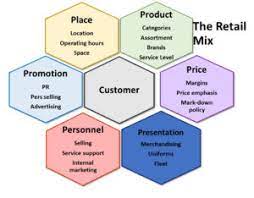
A retailer may be categorized by its strategy mix, the firm’s particular combination of store loca­tion, operating procedures, goods/services offered, pricing tactics, store atmosphere and customer services, and promotional methods.

Store location refers to the use of a store or nonstore format, placement in a geographic area, and the kind of site (such as a shopping center). Operating procedures include the person­nel employed, management style, store hours, and other factors. The goods/services offered may encompass many product categories or just one; quality may be low, medium, or high. Pricing refers to the use of prestige pricing (creating a quality image), competitive pricing (setting prices at the level of rivals), or penetration pricing (underpricing other retailers). Store atmosphere and customer services are reflected by the physical facilities and personal attention, return policies, delivery, and more. Promotion involves activities in such areas as advertising, displays, personal selling, and sales promotion. By combining the elements, a retailer can devise a unique strategy.

To flourish today, a retailer should strive to be dominant in some way. The firm may then reach destination retailer status, whereby consumers view the company as distinctive enough to be loyal to it and go out of their way to shop there. We tend to link “dominant” with “large geographic footprint.” Yet, both small and large retailers can be influential in different ways, by dominating their consumer’s choices based on time, money spent, or status upheld. As shown here, there are many ways to be a destination retailer, and combining two or more approaches can yield even greater appeal for a given retailer:

  • Be price-oriented and cost-efficient to attract price-sensitive shoppers.
  • Be upscale to attract full-service, status-conscious consumers.
  • Be convenient to attract those consumers who want shopping ease, nearby locations, or extended hours.
  • Offer a dominant assortment in the product lines carried to appeal to customers interested in variety and in-store shopping comparisons.
  • Offer superior customer service to attract those frustrated by the decline in retail service.
  • Be innovative or exclusive and provide a unique way of operating (such as kiosks at airports) or carry products/brands not stocked by others to reach people who are innovators or bored.

Before looking at specific strategy mixes, let’s consider three concepts that help explain the use of these mixes: the wheel of retailing, scrambled merchandising, and the retail life cycle—as well as the ways in which retail strategies are evolving.

1. The Wheel of Retailing

According to the wheel of retailing theory, retail innovators often first appear as low-price opera­tors with low costs and low profit margin requirements. Over time, the innovators upgrade the products they carry and improve their facilities and customer service (by adding better-quality items, locating in higher-rent sites, providing credit and delivery, and so on), and prices rise. As innovators mature, they become vulnerable to new discounters with lower costs—hence, the wheel of retailing.1 See Figure 5-1.

The wheel is based on four principles: (1) Many price-sensitive shoppers will trade customer services, wide selections, and convenient locations for lower prices. (2) Price-sensitive shoppers are often not loyal and will switch to retailers with lower prices. In contrast, prestige-oriented customers enjoy shopping at retailers with high-end strategies. (3) New institutions are frequently able to have lower operating costs than existing formats. (4) As retailers move up the wheel, they typically do so to increase sales, broaden the target market, and improve their image.

For example, when traditional department store prices became too high for many consum­ers, the growth of the full-line discount store (led by Walmart) was the result. The full-line discount store stressed low prices because of such cost-cutting techniques as having a small sales force, situating in lower-rent store locations, using inexpensive fixtures, emphasizing high stock turnover, and accepting only cash or check payments for goods. Then, as full-line discount stores prospered, they typically sought to move up a little along the wheel. This meant enlarging the sales force, improving locations, upgrading fixtures, carrying a greater selection of merchandise, and accepting credit. These improvements led to higher costs, which led to somewhat higher prices. The wheel of retailing again came into play as newer discounters, such as off-price chains, factory outlets, and permanent flea markets, expanded to satisfy the needs of the most price-conscious consumer. More recently, we have witnessed the birth of discount Web retailers, some of which have very low costs because they do not have “brick- and-mortar” facilities.

As indicated in Figure 5-1, the wheel of retailing reveals three basic strategic positions: low end, medium, and high end. The medium strategy may have some problems if retailers in this position are not perceived as distinctive. In a mature format such as department stores, competitors at the higher-end and lower-end can steal market share from a middle-of-the-road retailer such as Sears. Its merchandising strategy of selling a vast array of mid-priced goods and services, and a failure to anticipate and react as department stores have diverged into two separate approaches (one at the low end and one at the high end), is threatening its survival as a retailer.2 Figure 5-2 shows the opposing alternatives in considering a strategy mix.

The wheel of retailing suggests that established firms should be wary of adding services or converting a strategy from low end to high end. Because price-conscious shoppers are not usu­ally loyal, they are apt to switch to lower-priced firms. Furthermore, retailers may then eliminate the competitive advantages that initially led to profitability. This occurred with the retail catalog showroom, a now defunct retail format.

2. Scrambled Merchandising

Whereas the wheel of retailing focuses on product quality, prices, and customer service, scrambled merchandising involves a retailer increasing its width of assortment (the number of different prod­uct lines carried). Scrambled merchandising occurs when a retailer adds goods and services that may be unrelated to each other and to the firm’s original business. See Figure 5-3.

Scrambled merchandising is popular for many reasons: Retailers want to increase overall revenues; fast-selling, highly profitable goods and services are usually the ones added; con­sumers make more impulse purchases; people like one-stop shopping; different target markets may be reached; and the impact of seasonality and competition is reduced. In addition, the popularity of a retailer’s original product line(s) may decline, causing it to scramble to main­tain and grow the customer base. For example, although Starbucks’ in-store coffee sales are still strong, it now faces more competition in the coffee market from Dunkin’ Donuts (www .dunkindonuts.com), McDonald’s (www.mcdonalds.com), and other chains that have upgraded their offerings. Today, Starbucks (www.starbucks.com) carries many items outside its original coffee business, including pastries, hot breakfasts, salads, sandwiches, smoothies, and even wine at some locations.

Scrambled merchandising is contagious. Drugstores, bookstores, florists, kitchenware stores and gift shops are all affected by supermarkets’ scrambled merchandising. A significant amount of U.S. supermarket sales are from general merchandise, health and beauty aids, and other non­grocery items, such as pharmacy items, magazines, flowers, and kitchen items. In response, drugstores and others are pushed into scrambled merchandising to fill the sales void caused by supermarkets. Drugstores have added toys and gift items, greeting cards, batteries, and cameras. This then creates a void for additional retailers, which are also forced to scramble.

The prevalence of scrambled merchandising means greater competition among different types of retailers, and distribution costs are affected as sales are dispersed over more retailers. There are other limitations to scrambled merchandising, including the potential lack of retailer expertise in buying, selling, and servicing unfamiliar items; the costs associated with a broader assortment (including lower inventory turnover); and the possible harm to a retailer’s image if scrambled merchandising is ineffective.

3. The Retail Life Cycle

The retail life cycle concept states that retail institutions—like the goods and services they sell— pass through identifiable life stages: introduction (early growth), growth (accelerated develop­ment), maturity, and decline. The direction and speed of institutional changes can be interpreted from this concept.3 Take a look at Figure 5-4. The figure shows the five stages of the retail life cycle, with a brief description of each. Examples of each stage are shown at the bottom of the figure.

Let’s examine the retail life cycle as it applies to individual institutional formats and highlight specific examples. During the first stage of the cycle, introduction, there is a strong departure from the strategy mixes of existing retail institutions. A firm in this stage significantly alters at least one element of the strategy mix from that of traditional competitors. Sales and then profits often rise sharply for the first firms in the new category. At this stage, long-run success is not assured. There are risks that new institutions will not be accepted by shoppers, and there may be large initial losses due to heavy investments.

One retail format in the innovation stage is the online flash-sale retail Web site. Many flash- sale Web sites specialize in selling few items in limited sizes and colors of high-end brand apparel at significantly lower-prices for a short time—often a few hours—to bargain-seeking customers who subscribe to their service.

The early category leader was Gilt Groupe (www.gilt.com), which was launched in the United States in 2007 and is owned by Hudson’s Bay. Others include Rue La La (www.rulelala.com), Ideel (www.ideel.com), Haute Look (www.hautelook.com), The RealReal (www.therealreal.com), and Zulily (www.zulily.com), which caters to mothers and young children and is the only publicly traded company in this category.4 During the economic downturn starting in 2008, store sales of high-end brands dropped dramatically, which resulted in manufacturers and retailers needing to find buyers quickly to unload excess inventory of high-end products. This provided the perfect opportunity for flash sales to emerge and succeed in the market.

The economy and consumers’ financial situations have since improved and demand for high- end items has increased. Some high-end brands scaled back production during the recession and are now more conservative about increasing production despite higher demand. Given the lower volume of liquidated high-end goods, and the purchasing power of off-price retailers such as T. J. Maxx, which can make early buys, some flash-sale sites are struggling to get inventory. Sparser selections and higher shipping rates compared to larger apparel retailers have led to a slowdown in growth.5 Flash sites are adapting by merging with larger players, diversifying into multiple product categories such as art, household goods (Beyond the Rack), and consignments (The RealReal) or to a hybrid retail model—offering curated collections (Trunk Club) or personal closet service (Gilt Groupe).6

In the growth stage, both sales and profits exhibit rapid growth. Existing firms expand geo­graphically, and newer companies of the same type enter. Toward the end of accelerated develop­ment, cost pressures (to cover a larger staff, a more complex inventory system, and extensive controls) may begin to affect profits.

The interactive electronic video kiosk is an institution in the growth stage. Today, kiosks sell everything from clothing to magazines to insurance to personal computers (PCs). Kiosks come in many forms: self-checkout machines; ticketing kiosks (at amusement parks, parking facilities, movie theaters, etc.); check-in kiosks (at hotels); food-ordering kiosks; postal kiosks (to mail packages and letters); and miscellaneous kiosks (such as DVD rental). According to one research report, U.S. retail revenues generated by kiosks exceeded $1 trillion as of 2015.7 This format is examined further in Chapter 6.

The third stage of the retail life cycle, maturity, is characterized by slow sales growth for the institutional type. Although overall sales may continue to go up, that rise is at a much lower rate than during prior stages. Profit margins may have to be reduced to stimulate purchases. Maturity is brought on by market saturation caused by the high number of firms in an institutional format, competition from newer institutions, changing societal interests, and inadequate management skills to lead mature or larger firms. Once maturity is reached, the goal is to sustain it as long as possible and not to fall into decline.

The beer, wine, and liquor store—a specialty store—is in the maturity stage; sales are rising, but slowly compared to earlier times. This is due to competition from membership clubs, mail­order wine retailers, and supermarkets (in states allowing wine or liquor sales); changing lifestyles and attitudes regarding alcoholic beverages; a national 21-year-old drinking age requirement; and limits on nonalcoholic items that these stores are permitted to sell in some locales.

The final stage in the retail life cycle is decline, whereby industrywide sales and profits for a format fall off, many firms abandon the format, and newer formats attract consumers previously committed to that retailer type. In some cases, a decline may be hard or almost impossible to reverse. In others, it may be avoided or postponed by repositioning the institution.

After peaking in the 1980s, the retail catalog showroom declined thereafter; it vanished in the United States in 1998 as the leading firms went out of business. With this format, consumers chose items from a catalog, shopped in a warehouse setting, and wrote up orders. Why did it fade away? Many other retailers cut costs and prices, so showrooms were no longer low-price lead­ers. Catalogs had to be printed far in advance. Many items were slow-sellers or had low margins. Some people found showrooms crowded and disliked writing orders, a lack of displays reduced browsing, and the paucity of apparel goods held down revenues. Note: Great Britain’s Argos chain (www.argos.co.uk), part of Home Retail Group, operates 845 catalog showrooms, making it the largest general goods retailer in Great Britain.8

On the other hand, conventional supermarkets have slowed their decline by placing new units in suburban shopping centers, redesigning interiors, lengthening store hours, offering lower prices, expanding the use of scrambled merchandising, closing unprofitable smaller units, and converting to larger outlets.

The life-cycle concept highlights the proper retailer response as formats evolve. Expansion should be the focus initially, administrative skills and operations become critical in maturity, and adaptation is essential at the end of the cycle.

Source: Barry Berman, Joel R Evans, Patrali Chatterjee (2017), Retail Management: A Strategic Approach, Pearson; 13th edition.

How Retail Institutions are Evolving

Forward-looking firms know their individual strategies must adapt as retail institutions evolve over time. Complacency is not appropriate. Many retailers have witnessed shrinking profit mar­gins due to intense competition and consumer interest in lower prices. This puts pressure on them to tighten internal cost controls and to promote higher-margin goods and services while eliminating unprofitable items. Let’s examine how firms are reacting to this formidable challenge through mergers, diversification, and downsizing, as well as cost containment and value-driven retailing.

1. Mergers, Diversification, and Downsizing

Some retail firms use mergers and diversification to sustain sales growth in a highly competitive environment (or when the institutional category in which they operate matures). For stronger firms, this trend is expected to carry over into the future.

Mergers involve the combination of separately owned retail firms. Some mergers take place between retailers of different types, such as the ones between Sears (the department store chain) and Kmart (the full-line discount store chain) and between upscale Saks Fifth Avenue and Lord & Taylor (both owned by mainstream Hudson’s Bay). Other mergers occur between similar types of retailers, such as two banks (Bank of America acquiring Commerce Bank) and supermarket chain Royal Ahold merging with Delhaize Group. By merging, firms can jointly maximize resources, enlarge their customer base, improve productivity and bargaining power, limit weaknesses, and gain competitive advantages. It is a way for resourceful retailers to grow more rapidly and for weaker ones to enhance their long-term prospects for survival (or sell assets).

With diversification, retailers become active in businesses outside their normal operations, perhaps adding stores in different goods/service categories. That is why Bed Bath & Beyond now owns and operates Christmas Tree Shops (a bargain store chain), Harmon, and Harmon Face Values (discount store chains that emphasize cosmetics and health-and-beauty aids), as well as buybuy BABY (a store chain with 20,000-plus items targeted to parents of infants and young children).

Although the size of some retail chains has grown due to mergers and diversification, not all firms have done well with that approach. Even though stronger firms are expanding, we are also witnessing downsizing—whereby unprofitable stores are closed or divisions are sold off—by retailers unhappy with performance. Because Kmart’s diversification efforts had poor results, it closed or sold its ventures outside the general merchandise store field (including Borders book­stores, Builders Square, Office Max, Payless shoe stores, and Sports Authority). It also closed many Kmart stores after merging with Sears.

The interest in downsizing will likely continue. Various retailers have overextended them­selves and do not have the resources or management talent to succeed without retrenching. In their quest to open new stores, certain firms have chosen poor sites (having already saturated the best locations). Retailers such as Barnes & Noble are more interested in operating fewer, but larger, stores and more effectively using the Web. Supermarket retailers are finding they can do better if they are regional rather than national.

2. Cost Containment and Value-Driven Retailing

With a cost-containment approach, retailers strive to hold down both initial investments and operating costs. Many use this strategy due to intense competition from discounters, the need to control complicated chain or franchise operations, high land and construction costs, the volatility of the economy, and a desire to maximize productivity. The mature, highly saturated market; a slow-growth environment; competitive pressure to serve customers through multiple channels; and firms’ inability to raise prices make it imperative for retailers to drive down costs. They must examine every aspect of their businesses to streamline processes and costs. See Figure 5-5.

Cost containment can be accomplished by one or more of these approaches:

  • Standardize operating procedures, store layouts, store size, and product offerings.
  • Use secondary sites, freestanding units, and locations in older strip centers or occupy sites abandoned by other retailers (second-use locations).
  • Place stores in smaller communities where building regulations are less strict, labor costs are lower, and construction and operating costs are reduced.
  • Use inexpensive construction materials, such as bare cinder-block walls and concrete floors.
  • Use plainer fixtures and lower-cost displays.
  • Buy refurbished equipment.
  • Join cooperative buying and advertising groups.
  • Encourage manufacturers to finance inventories.
  • Use shipping techniques that reduce inventory carrying costs.

A driving force behind cost containment is the quest to provide good value to customers. However, value is typically subjective. It can be based on price, quality, service, convenience, or a combination of them. Price usually has a big role in what shoppers purchase and the firms they patronize. The pricing strategies of some retailers—especially discount retailers—encourage people to look for bargains and to be wary of sale prices. Smart shoppers have learned that price may not be a true measure of quality. They can get good quality with everyday low pricing.9

Source: Barry Berman, Joel R Evans, Patrali Chatterjee (2017), Retail Management: A Strategic Approach, Pearson; 13th edition.

Retail Institutions Categorized By Store- Based Strategy Mix

Selected aspects of the strategy mixes of 14 store-based retail institutions, divided into food- oriented and general merchandise groups, are highlighted in this section and in Table 5-1. Although not all-inclusive, these strategy mixes provide a good overview of store-based strategies. Please note that width of assortment is the number of different product lines carried by a retailer; depth of assortment is the selection within the product lines stocked.

1. Food-Oriented Retailers

The following food-oriented strategic retail formats are described next: convenience store, con­ventional supermarket, food-based superstore, combination store, box (limited-line) store, and warehouse store.

CONVENIENCE STORE A convenience store is typically a well-located, food-oriented retailer that is open long hours and carries a moderate number of items. The store facility is small (only a fraction of the size of a conventional supermarket) and has average to above-average prices and average atmosphere and customer services. The ease of shopping at convenience stores and the impersonal nature of many large supermarkets make convenience stores particularly appealing to their customers, many of whom are male.

There are more than 154,000 U.S. convenience stores (excluding stores where food is a small fraction of revenues), and total annual sales are $215 billion (excluding gasoline).10 7-Eleven (www .7-eleven.com), Circle K (www.circlek.com), Casey’s General Store (www.caseys.com), and Wawa (www.wawa.com) are major food-based U.S. convenience store chains. Speedway (www.speedway .com) is a leading gasoline service-station-based convenience store chain with 2,770 outlets.11

Items such as milk, eggs, and bread once represented the major portion of convenience store sales; today, healthy food options such as packaged salads and fresh whole or cut fruits and veg­etables are generating the fastest growth in sales.12 Sandwiches, tobacco products, snack foods, soft drinks, general merchandise, beer and wine, ATMs, and lottery tickets are also key items. Lately, many convenience stores are adding prepared foods. Gasoline generates 30 percent or more of total sales at most of the convenience stores that carry it.

This format’s advantages are its usefulness when a person does not want to travel to or shop at a supermarket, when fill-in items and gas are needed, when store hours are long, and when drive-thru windows are available. Many shoppers visit multiple times a week, and the average transaction is small. Due to limited space, stores get frequent deliveries and have high handling costs. Buyers are less price-sensitive than at other food-oriented stores.

The convenience stores industry does have problems: Some areas are saturated with stores; some stores have become too big, making shopping less convenient; supermarkets now offer longer hours and more nonfood items; a decrease in tobacco purchasing, which is a big sales category; and some chains have had financial woes.

CONVENTIONAL SUPERMARKET A supermarket is a self-service food store with grocery, meat, and produce departments and a minimum annual sales of $2 million. Included are conventional supermarkets, food-based superstores, combination stores, box (limited-line) stores, and ware­house stores. See Figure 5-6.

A conventional supermarket is a departmentalized food store with a wide range of food and related products; sales of general merchandise are rather limited. This institution started more than 85 years ago when it was recognized that large-scale operations would let a retailer combine volume sales, self-service, and low prices. Self-service enabled supermarkets to cut costs as well as increase volume. Personnel costs were reduced, and impulse buying increased. The car and the refrigerator contributed to the supermarket’s success by lowering travel costs and adding to the life span of perishables.

For several decades, overall supermarket sales have been about 70 to 75 percent of U.S. grocery sales, with conventional supermarkets now yielding a fraction of total supermarket sales. There are over 26,000 conventional units, with annual sales of $420 billion.13 Chains account for the great majority of sales. Among the leaders are Kroger (www.kroger.com), Safeway (www .safeway.com), and Publix (www.publix.com), although a number of these firms’ stores are now food-based superstores. Many independent supermarkets are affiliated with cooperative or volun­tary organizations such as IGA (www.iga.com) and Supervalu (www.supervalu.com).

Conventional supermarkets generally rely on high inventory turnover (volume sales). Their profit margins are low. In general, average gross margins (selling price less merchandise cost) are 20 to 22 percent of sales, and net profits are 1 to 3 percent of sales.

These supermarkets face intense competition from other food stores: Convenience stores offer easier shopping; food-based superstores and combination stores have more product lines and greater variety within them, as well as better margins; and box and warehouse stores have lower operating costs and prices. Delivery-based food services such as Fresh Direct and AmazonFresh offer the convenience of online ordering and in-home scheduled delivery. Membership clubs (discussed later), with low prices, also provide competition—especially now that they have many expanded food lines. Variations of the supermarket are covered next.

FOOD-BASED SUPERSTORE A food-based superstore is larger and more diversified than a con­ventional supermarket but usually smaller and less diversified than a combination store. This format originated in the 1970s as supermarkets sought to stem sales declines by expanding store size and the number of nonfood items carried. Some supermarkets merged with drugstores or general merchandise stores, but more grew into food-based superstores. There are 12,000 food- based U.S. superstores, with sales of $280 billion.14

A food-based superstore occupies at least 30,000 to 50,000 square feet of space, and 20 to 25 percent of sales are from general merchandise, such as garden supplies, flowers, small appliances, and DVDs. It caters to complete grocery needs, along with fill-in general merchandise.

Like combination stores, food-based superstores are efficient, offer a degree of one-stop shop­ping, stimulate impulse purchases, and feature high-profit general merchandise. They also have other advantages: It is easier and less costly to redesign and convert supermarkets into food-based superstores than into combination stores. Many people feel more comfortable shopping in true food stores than in huge combination stores. Management expertise is more focused.

Numerous U.S. supermarket chains have turned more to food-based superstores. They have expanded and remodeled existing supermarkets and built new stores. Many independents have also converted to food-based superstores.

COMBINATION STORE A combination store unites supermarket and general merchandise in one facility, with general merchandise accounting for 25 to 40 percent of sales. The format began in the late 1960s and early 1970s, as common checkout areas were used for separately owned super­markets and drugstores or supermarkets and general merchandise stores. The natural offshoot was integrating operations under one management. The thousands of U.S. combination stores (includ­ing supercenters) have annual sales of several hundred billion dollars.15 Combination store leaders are Meijer (www.meijer.com), Fred Meyer (www.fredmeyer.com), and Albertson’s (www .albertsons.com).

Combination stores are large, from 30,000 up to 100,000 or more square feet. This means operating efficiencies and cost savings. Most consumers like one-stop shopping and will travel the extra distance to patronize them. Impulse sales are high. General merchandise often has better margins than food items. Supermarkets and drugstores have commonalities in customers served and the low-price, high-turnover items sold. Drugstore and general merchandise customers are drawn to the store more frequently.

A supercenter is a combination store blending an economy supermarket with a discount department store. It is the U.S. version of the even larger hypermarket (the European institution pioneered by firms such as Carrefour [www.carrefour.com] that did not succeed in the United States). As a rule, the majority of supercenter sales are from nonfood items. Stores usually range from 75,000 to 150,000 square feet in size, and they stock up to 50,000 or more items—much more than the 30,000 or so items carried by other combination stores. Walmart and Target both operate a growing number of supercenters.

BOX (LIMITED-LINE) STORE The box (limited-line) store is a food-based discounter that focuses on a small selection of items, moderate hours of operation (compared with other supermarkets), few services, and limited manufacturer brands. This type of store carries under 2,000 items, few refrigerated perishables, and few sizes and brands per item. Items are displayed in cut cases, and prices are shown on shelves or overhead signs. Customers bag their own purchases. Box stores rely on low-priced, private-label brands. Their prices are 20 to 30 percent below those in supermarkets.

The box store originated in Europe and was exported to the United States in the mid-1970s. The growth of these stores has not been as anticipated, and sales have actually fallen modestly in recent years. Some other food stores have matched box-store prices. Many people are loyal to manufacturer brands, and box stores cannot fulfill one-stop shopping needs. There are 2,500 box stores in the United States, with sales of $14 billion.16 The leading box store operators are Save- A-Lot (http://save-a-lot.com) and Aldi (www.aldi.com).

WAREHOUSE STORE A warehouse store is a food-based discounter that offers a moderate num­ber of food items in a no-frills setting. It appeals to one-stop food shoppers, concentrates on special purchases of popular brands, uses cut-case displays, offers little service, posts prices on shelves, and locates in secondary sites. These stores began in the late 1970s. There are now 1,700 U.S. stores with $70 billion in annual sales.17

The largest warehouse store is known as a superwarehouse. There are more than 600 of them in the United States. They have annual sales exceeding $20 million each, and they contain a variety of departments, including produce. High ceilings accommodate pallet loads of groceries. Ship­ments are made directly to the store. Customers pack their own groceries in these types of stores. Superwarehouses are profitable at gross margins far lower than for conventional supermarkets. The leading super warehouse chain is Cub Foods (www.cub.com).

Many people do not like shopping in warehouse settings. Also, because products are usually acquired through special deals, brands may be temporarily or permanently out of stock. Table 5-2 shows selected characteristics for the food-oriented retailers just described.

2. General Merchandise Retailers

We now look at the general merchandise retail formats highlighted in Table 5-1: specialty store, traditional department store, full-line discount store, variety store, off-price chain, factory outlet, membership club, and flea market.

SPECIALTY STORE A specialty store concentrates on selling one type of goods or service line, such as young women’s apparel. It usually carries a narrow but deep assortment in the chosen cat­egory and tailors the strategy to a given market segment. This enables the store to maintain a better selection and sales expertise than its competitors, which are often department stores. Investments are controlled, and there is a certain amount of flexibility. Among the most popular categories of specialty stores are apparel, personal care, auto supply, home furnishings, electronics, books, toys, home improvement, pet supplies, jewelry, and sporting goods.

Consumers often shop at specialty stores because of the knowledgeable sales personnel, the variety of choices within a given category, customer service, intimate store size and atmosphere (although this is not true of the category killer store), the lack of crowds (also not true of the category killer store), and the absence of aisles of unrelated merchandise that they must pass through. Some specialty stores have elaborate fixtures and upscale merchandise for affluent shop­pers, whereas others are discount-oriented and aim at price-conscious consumers. See Figure 5-7.

Total specialty store sales are tough to determine because these retailers sell virtually all kinds of goods and services, and aggregate specialty store data are not compiled by the government. Spe­cialty store leaders include Home Depot (home improvement), Best Buy (consumer electronics), Staples (office supplies), Toys “R” Us (toys), GameStop (videogames), and Bed Bath & Beyond (household furnishings and small appliances).

One type of specialty store—the category killer—has gained particular strength. A category killer (also known as a power retailer) is an especially large specialty store. It features an enor­mous selection in its category and relatively low prices. Consumers are drawn from wide geo­graphic areas. Home Depot (www.homedepot.com), Barnes & Noble (www.barnesandnoble.com), Sephora (www.sephora.com), and Staples (www.staples.com) are among the chains almost fully based on the concept. Not only is Sephora the leading chain of perfume and cosmetics stores in France but it also has more than 1,900 stores in 29 countries around the world (including 360 stores located in North America). Sephora’s stores sell a broad range of brands in such product categories as makeup, skin care, fragrances, bath and body lotions, lip care, and hair care. In addi­tion, Sephora has its own private label.18

Nonetheless, smaller specialty stores (even ones with under 1,000 square feet of space) can prosper if they are highly focused, offer strong customer service, and avoid imitating larger firms. Shoppers looking to purchase products quickly may not want to spend the time and effort to search through multiple categories and brands at a huge category-killer store and instead may prefer to shop at a smaller specialty store. Some categories of merchandise, such as high-tech consumer electronics products, require greater support from specially trained, knowledgeable employees than the support typically offered at category-killer stores.

Any size specialty store can be adversely affected by seasonality or a decline in the popularity of its product category. This type of store may also fail to attract consumers who are interested in one-stop shopping for multiple product categories.

TRADITIONAL DEPARTMENT STORE A department store is a large retail unit with an extensive assortment (width and depth) of goods and services that is organized into separate departments for purposes of buying, promotion, customer service, and control. It has the most selection of any general merchandise retailer, often serves as the anchor store in a shopping center or district, has strong credit card penetration, and is usually part of a chain. To be classified as a department store, a retailer must sell a wide range of products (such as apparel, furniture, appliances, and home furnishings), and selected other items (such as paint, hardware, toiletries, cosmetics, photo equipment, jewelry, toys, and sporting goods) with no one merchandise line predominating.

Two basic types of retailers meet the preceding criteria: the traditional department store and the full-line discount store. Together, they generate about $680 billion in U.S. revenues annu­ally.19 The traditional department store is discussed next, followed by coverage on the full-line discount store.

At a traditional department store, merchandise quality ranges from average to quite good. Pricing is moderate to above average. Customer service ranges from medium levels of sales help, credit, delivery, and so forth to high levels of each. For example, Macy’s (www.macys.com) targets middle-class shoppers interested in assortment and moderate prices, whereas Bloomingdale’s (www.bloomingdales.com) aims at upscale consumers through more trendy merchandise and higher prices. Few traditional department stores sell all of the product lines that the category used to carry. Many place greater emphasis on apparel and may not carry such lines as furniture, elec­tronics, and major appliances.

Over its history, the traditional department store has contributed many innovations, such as advertising prices, enacting a one-price policy (whereby all shoppers pay the same price for the same item), developing computerized checkouts, offering money-back guarantees, adding branch stores, decentralizing management, and moving into suburban shopping centers. However, in recent years, the performance of traditional department stores has lagged far behind that of full­line discount stores. Today, traditional department store sales ($170 billion annually) represent one-quarter of total department store sales. These are some reasons for traditional department stores’ difficulties:

  • Price-conscious consumers are more attracted to discounters and online stores than to tradi­tional department stores.
  • These stores no longer have exclusive brands for many of the items they sell.
  • The growth of shopping centers has aided specialty stores because consumers can engage in one-stop shopping at several specialty stores in the same shopping center. Department stores do not dominate the smaller stores around them as they once did.
  • Specialty stores often have better assortments in the lines they carry.
  • Customer service has deteriorated. Often, store personnel are not as loyal, helpful, or knowl­edgeable as in prior years.
  • Some stores are too big and have a lot of unproductive space and low-turnover merchandise.
  • Many department stores have had a weak focus on market segments and a fuzzy image.
  • Such chains as Sears have repeatedly changed strategies, confusing consumers as to their image. (Is Sears a traditional department store chain or a full-line discount store chain?)
  • Some companies are not as innovative in their merchandise decisions as they once were.

Traditional department stores need to clarify their niche in the marketplace (retail position­ing); place greater emphasis on customer service and sales personnel; present more exciting, better-organized store interiors; use space better by downsizing stores and eliminating slow-selling items; and open outlets in smaller, less developed towns and cities (as Sears has done). They can also centralize more buying and promotion functions, do better research, and reach customers more efficiently (by such tools as targeted mailing pieces). See Figure 5-8.

FULL-LINE DISCOUNT STORE A full-line discount store is a type of department store with these features:

  • It conveys the image of a high-volume, low-cost outlet selling a broad product assortment for less than conventional prices.
  • It is more apt to carry the range of general merchandise once expected only at department stores, including electronics, furniture, and appliances—as well as auto accessories, garden­ing tools, and housewares.
  • Shopping carts and centralized checkout service are provided.
  • Customer service is not usually provided within store departments but at a centralized area. Products are normally sold via self-service with minimal assistance in any single department.
  • Nondurable (soft) goods often feature private brands, whereas durable (hard) goods empha­size well-known manufacturer brands.
  • Less fashion-sensitive merchandise is often carried.
  • Buildings, equipment, and fixtures are less expensive; and operating costs are lower than for traditional department stores and specialty stores.

Annual U.S. full-line discount store revenues are $510 billion (including general merchandise-based supercenters and leased departments), roughly 75 percent of all U.S. depart­ment store sales. Together, Walmart (www.walmart.com) and Target (www.target.com) operate 7,400 full-line discount stores (including supercenters) in the United States alone.20

The success of full-line discount stores is due to many factors. They have a clear customer focus: middle-class and lower-middle-class shoppers looking for good value. The stores fea­ture popular brands of average- to good-quality merchandise at competitive prices. They have expanded their goods and service categories and often have their own private brands. Full-line discount stores have worked hard to improve their image and provide more customer services. The average outlet (not the supercenter) tends to be smaller than a traditional department store, and sales per square foot are usually higher, which improves productivity. Some full-line discount stores are located in small towns where competition is less intense. Facilities may be newer than those of many traditional department stores.

The greatest challenges facing full-line discount stores are the competition from other retail­ers (especially lower-priced store discounters, category killer stores, and Web-based retailers such as Amazon.com and eBay), too rapid expansion of some firms, saturation of prime locales, and the dominance of Walmart and Target (as Kmart has fallen dramatically from its heyday). The industry has undergone a number of consolidations, bankruptcies, and liquidations.

VARIETY STORE A variety store handles an assortment of inexpensive and popularly priced goods and services, such as apparel and accessories, costume jewelry, notions and small wares, candy, toys, and other items in the price range. There are open displays and few salespeople. The stores do not carry full product lines, may not be departmentalized, and do not deliver products. Although the conventional variety store format has faded away, there are two successful spin-offs from it: dollar discount stores and closeout chains.

Dollar discount stores sell similar items to those in conventional variety stores but in plainer surroundings and at much lower prices. They generate $40 billion in yearly sales. Dollar General and Dollar Tree (which acquired Family Dollar in 2015) are the two leading dollar discount store chains. The two firms operate over 26,000 stores and have about $35 billion in annual sales. Closeout chains sell similar items to those in conventional variety stores but feature closeouts and overruns. They account for $8 billion in sales annually. Big Lots (www.biglots.com) is the leader in that category with about 1,460 stores and annual sales of $5.2 billion.21

The conventional variety store format (which included Woolworths and McCrorys) pretty much disappeared from the U.S. marketplace in the mid-1990s after a long, successful run. What happened? There was heavy competition from specialty stores and discounters, most of the stores were older facilities, and some items had low profit margins. At one time, Woolworths had 1,200 variety stores with annual sales of $2 billion.

OFF-PRICE CHAIN An off-price chain features brand-name (sometimes designer) apparel and accessories, footwear (primarily women’s and family), linens, fabrics, cosmetics, and/or house­wares and sells them at everyday low prices in an efficient, limited-service environment. It fre­quently has community dressing rooms, centralized checkout counters, no gift wrapping, and extra charges for alterations. The chains buy merchandise opportunistically, as special deals occur. Other retailers’ canceled orders, manufacturers’ irregulars and overruns, and end-of-season items are often purchased for a fraction of their original wholesale prices. The total sales of U.S. off- TJX (www.tjx.com)      price apparel stores are $55 billion. The biggest chains are T. J. Maxx (www.tjmaxx.com) and Marshalls (www.marshalls.com) (both owned by TJX), Ross Stores (www.rossstores.com), and  Burlington Coat Factory, now advertised as Burlington (www.burlingtoncoatfactory.com).

Oil-price chains aim at the same shoppers as traditional department stores do—but with prices reduced by 40 to 50 percent. Shoppers are also lured by the promise of new merchandise on a regular basis. See Figure 5-9.

The most crucial strategic element for off-price chains involves buying merchandise and establishing long-term relationships with suppliers. To succeed, the chains must secure large quantities of merchandise at reduced wholesale prices and have a regular flow of goods into the stores. Sometimes manufacturers use off-price chains to sell samples, products that are not doing well when they are introduced, and remaining merchandise near the end of a season. At other times, off-price chains employ a more active buying strategy. Instead of waiting for closeouts and canceled orders, they convince manufacturers to make merchandise during off-seasons and will pay cash for items early. Off-price chains are less demanding in terms of the support requested from suppliers; they do not return products and they pay promptly.

Off-price chains face some market pressure because of competition from other institutional formats that run frequent sales throughout the year, such as temporary pop-up stores and factory outlets. In addition, they have disadvantages associated with discontinuity of merchandise, poor management at some firms, insufficient customer service for some shoppers, and the shakeout of underfinanced companies.

FACTORY OUTLET A factory outlet is a manufacturer-owned store that sells closeouts, discontin­ued merchandise, irregulars, canceled orders, and sometimes in-season, first-quality merchandise. Manufacturers’ interest in outlet stores has risen for four basic reasons:

  1. Manufacturers can control where their discounted merchandise is sold. By placing outlets in out-of-the-way spots with low sales penetration of the firm’s brands, outlet revenues do not affect relationships with key specialty and department store accounts.
  2. Outlets are profitable despite prices being up to 60 percent less than customary retail prices. Profits are due to low operating costs—few services, low rent, limited displays, and plain store fixtures—and selling more merchandise made especially for outlet stores.
  3. The manufacturer decides on store visibility, sets promotion policies, removes labels, and ensures that discontinued items and irregulars are disposed of properly.
  4. Because many specialty and department stores are increasing private-label sales, manufactur­ers need revenue from outlet stores to sustain their own growth.

More factory stores now locate in clusters or outlet malls to expand customer traffic, and they use cooperative ads. The states with a large number of outlet centers are California, Florida, Texas, Pennsylvania, and New York. The largest U.S. factory outlet mall is Woodbury Common Premium Outlets (located in Central Valley, New York) with 904,000 gross leasable square feet.

There are more than 200 outlet malls nationwide.22 Firms with a major presence include Phillips-Van Heusen Corp. (Tommy Hilfiger, Calvin Klein, and Arrow); Ascena Retail Group (Dress Barn, Maurices, Justice, Lane Bryant, and Catherines); Gap Inc. (Gap and Banana Repub­lic); JAG Footwear; and Carter’s, Inc. (children’s clothing). Worldwide factory outlet sales equaled $46 billion in 2015.

Large outlet centers are in Connecticut, Florida, Georgia, New York, Pennsylvania, Tennessee, and other states. There are more than 15,000 U.S. factory outlet stores representing hundreds of manu­facturers, many in outlet malls. These stores have $27 billion in U.S. yearly sales, with three-quarters from apparel and accessories. Firms with a mall presence include Bass (footwear); Polo Ralph Lauren (apparel); Levi’s (apparel); Nike (apparel and footwear); Samsonite (luggage); and Totes (rain gear).

When deciding whether to utilize factory outlets, manufacturers must be cautious. They must evaluate their own retailing expertise, the investment costs, the impact on existing retailers that buy from them, and the response of consumers. Manufacturers do not want to jeopardize their products’ sales at full retail prices.

MEMBERSHIP CLUB A membership (warehouse) club straddles the line between whole­saling and retailing. It appeals to price-conscious consumers, who must be members to shop there. Some members are small business owners and employees who pay a membership fee to buy merchandise at wholesale prices. They make purchases for use in operating their firms or for personal use and yield 60 percent of club sales. Most members are final consumers who buy for their own use; they represent 40 percent of club sales. They must pay an annual fee to be a member. Prices may be slightly more than for business customers. There are over 1,500 U.S. membership clubs, with annual sales to final consumers of $75 billion. Costco www .costco.com) and Sam’s Club (www.samsclub.com) generate over 90 percent of industry sales.23

The operating strategy of today’s membership club centers on large stores (up to 100,000 or more square feet), inexpensive sites, opportunistic buying (with some product discontinuity), a fraction of the items stocked by full-line discount stores, little advertising, warehouse-style fix­tures, wide aisles to give forklift trucks access to shelves, concrete floors, limited delivery, and low prices. A typical club carries general merchandise, such as consumer electronics, appliances, computers, housewares, tires, and apparel (35 to 60 percent of sales); food (20 to 35 percent); and sundries, such as health and beauty aids, tobacco, liquor, and candy (15 to 30 percent). It may have a pharmacy, photo developing, a car-buying service, a gas station, and other items once seen as frills for this format. Inventory turnover is several times that of a department store.

The major retailing challenges relate to the allocation of efforts between business and final consumer accounts (without antagonizing one group or the other and without presenting a blurred image), the lack of interest by many consumers in shopping at warehouse-type stores, the power of the two industry leaders, and the potential for saturation caused by overexpansion.

FLEA MARKET At a flea market, many retail vendors sell a range of products at discount prices in plain surroundings. It is rooted in the centuries-old tradition of street selling—shoppers touch and sample items, and haggle over prices. Vendors used to sell only antiques, bric-a-brac, and assorted used merchandise. Today, they also frequently sell new goods, such as clothing, cosmet­ics, watches, consumer electronics, housewares, and gift items. See Figure 5-10.

Many flea markets are in nontraditional sites such as racetracks, stadiums, and arenas. Some are at sites abandoned by other retailers. Typically, vendors rent space; depending on location, a flea market might rent individual spaces for $30 to $100 or more a day. Some flea markets impose a parking fee or admission charge for shoppers.

There are a few hundred major U.S. flea markets, but overall sales data are not available. The credibility of permanent flea markets, consumer interest in bargaining, a broader product mix, availability of brand-name goods, and low prices all contribute to the format’s appeal. A popular site is the Rose Bowl Flea Market (www.rgcshows.com/rosebowl.aspx), which is open the second Sunday of each month. It regularly features 2,500 vendors and attracts 20,000 shoppers a day. The only restricted items are “food, animals, guns, ammunition, pornography, and services requiring physical contact.” A vendor space costs from $60 to $250 for 1 day.

At a flea market, price haggling is common, cash is the predominant currency, and many vendors gain their first real experience as retail entrepreneurs. One twenty first-century trend involves nonstore, Web-based flea markets such as eBay (www.ebay.com), eBid (www.ebid .com), OnlineAuction (www.onlineauction.com), and Skoreit! (www.skoreit.com). Online auction sites account for several billion dollars in sales annually and are popular among bargain hunters.

Many traditional retailers believe flea markets represent an unfair method of competition because the quality of merchandise may be misrepresented, consumers may buy items at flea markets and return them to other retailers for higher refunds, suppliers are often unaware their products are sold there, sales taxes can be easily avoided, and operating costs are quite low. Flea markets may also cause traffic congestion.

The high sales volume from off-price chains, factory outlets, membership clubs, and flea markets is explained by the wheel of retailing. These institutions are low-cost operators appeal­ing to price-conscious consumers who are not totally satisfied with other retail formats that have upgraded their merchandise and customer service, raised prices, and moved along the wheel.

Source: Barry Berman, Joel R Evans, Patrali Chatterjee (2017), Retail Management: A Strategic Approach, Pearson; 13th edition.

Direct Retailing Marketing

In direct marketing, a customer is first exposed to a good or service through a nonpersonal medium (direct mail, TV, radio, magazine, newspaper, computer, tablet, or mobile device) and then orders by mail, phone, or fax (and increasingly by computer, smartphone, or tablet. Annual U.S. sales are more than $475 billion (including the Web), and more than half of American adults make at least one such purchase a year. Japan, Germany, Great Britain, France, and Italy are among the direct-marketing leaders outside the United States. Popular products are gift items, apparel, magazines, books and music, sports equipment, home accessories, food, and insurance.

In the United States, direct-marketing customers are more apt to be middle class. Mail shop­pers are more likely to live in areas away from malls. And, because they want to avoid traffic and save time, phone shoppers are more likely to live in upscale metropolitan areas. The share of direct-marketing purchases made by men has grown: The average consumer who buys direct spends several hundred dollars per year, and he or she wants convenience, unique products, and good prices.

Direct marketers can be divided into two categories: general and specialty. General direct- marketing firms, such as Neiman Marcus (with its mail-order and Web businesses) and QVC (with its cable TV and Web businesses), offer a full line of products and sell everything from clothing to housewares. Specialty direct marketers focus on more narrow product lines. L.L. Bean, Publishers Clearinghouse, and Franklin Mint are among the thousands of U.S. specialty firms. See Figure 6-3.

Direct marketing has a number of strategic business advantages:

  • Many costs are reduced—even low startup costs are possible; inventories are reduced; no dis­plays are needed; a prime location is unnecessary; regularly staffed store hours are not impor­tant; a sales force may not be needed; and business may be run out of a garage or basement.
  • It is possible for direct marketers to have lower prices (due to reduced costs) than store-based retailers. A huge geographic area can be covered inexpensively and efficiently.
  • Customers shop conveniently—without crowds, parking congestion, or checkout lines. And they do not have safety concerns about shopping early in the morning or late at night.
  • Specific consumer segments are pinpointed through targeted mailings.
  • Consumers may sometimes legally avoid sales tax by buying from direct marketers not having retail facilities in their state (however, some states want to eliminate this loophole).
  • A store-based firm can supplement its regular business and expand its trading area (even becoming national or global) without adding outlets.

Direct marketing also has its limits, but they are not as critical as those for direct selling:

  • Products cannot be examined before purchase. Thus, the range of items purchased is more limited than in stores, and firms need liberal return policies to attract and keep customers.
  • Firms may underestimate costs. Catalogs can be costly. Computer systems must track ship­ments, purchases, and returns, and keep lists current. A 24-hour phone staff may be needed.
  • Even successful catalogs often draw purchases from less than 10 percent of recipients.
  • Clutter exists. Each year, billions of E-mails and catalogs are mailed in the United States alone.
  • Printed catalogs are prepared well in advance, causing difficulties in price and style planning.
  • Some firms have given the industry a bad name due to delivery delays and shoddy goods.

The Federal Trade Commission’s “30-day rule” is a U.S. regulation that affects direct market-ers. It requires firms to ship orders within 30 days of their receipt or notify customers of delays. If an order cannot be shipped in 60 days, the customer must be given a specific delivery date and offered the option of canceling an order or waiting for it to be filled. The rule covers mail, phone, fax, and computer orders.

Despite its limitations, long-run growth for direct marketing is projected. Consumer interest in convenience and the difficulty in setting aside shopping time will continue. More direct mar­keters will offer 24-hour ordering and improve their efficiency. Greater product standardization and the prominence of well-known brands will reduce consumer perceptions of risk when buying from a catalog or the Web. Technological breakthroughs, such as purchases on smartphones, will attract more and more consumer shopping.

Due to its vast presence and immense potential, our detailed discussion is intended to give you an in-depth look into direct marketing. Let’s study the domain of direct marketing, data­base retailing, emerging trends, steps in a direct marketing strategy, and key issues facing direct marketers.

1. The Domain of Direct Marketing

As defined earlier, direct marketing is a form of retailing in which a consumer is exposed to a good or service through a nonpersonal medium and then orders by mail, phone, fax, computer, or mobile media. It may also be viewed as a “data-driven, cross media, interactive, multichannel process for building and cultivating mutually beneficial relationships between companies and their customers and prospects.”5

Accordingly, we do include these following forms of direct marketing: any catalog; any mail, TV, radio, magazine, newspaper, phone directory, fax, or other ad; any computer-based or mobile app transaction; or any other nonpersonal contact that stimulates customers to place orders by mail, phone, fax, or computer (including interactive TV and mobile).

We do not include these as forms of direct marketing: (1) Direct selling—consumers are solicited by in-person sales efforts or seller-originated phone calls and the firm uses personal communication to initiate contact. (2) Conventional vending machines, whereby consumers are exposed to nonpersonal media but do not complete transactions via mail, phone, fax, or computer; they do not interact with the firm in a manner that allows a database to be generated and kept.

Direct marketing is involved in many computerized kiosk transactions; when items are shipped to consumers, there is a company-customer interaction and a database can be formed. Direct marketing is also in play when consumers originate phone calls, based on catalogs or ads they have seen.

2. The Customer Database: Key to Successful Direct Marketing

Because direct marketers often initiate contact with customers (in contrast to store shopping trips that are initiated by the consumer), it is imperative that they develop and maintain a comprehensive customer database. They can then pinpoint their best customers, make offers aimed at specific customer needs, avoid costly mailings to nonresponsive shoppers, and track sales by customer. A good database is the major asset of most direct marketers, and every thriving direct marketer has a strong database.

Database retailing is a way to collect, store, and use relevant information about customers. Such information typically includes a person’s name, address, background data, shopping inter­ests, and purchase behavior. Although databases are often compiled through large computerized information systems, they may also be used by small firms that are not overly computerized.

Reports on database retailing show that collecting individual-level customer data (ILCD) about online and store-based shopping behavior helps retailers more efficiently select and contact customers. Gathering ILCD also assists retailers in personalizing content and offers, enhancing customer experience, and improving purchase conversion of individual consumers or business buyers via individually interactive media (IIM) and other touchpoints. When a company can link customer purchases to the offers that spurred them, the data provide valuable clues for personal­izing the goods, services, and promotional offers that should be offered next to those particular customers and prospects. Knowing more about target audiences’ particular attitudes, propensities, and household composition provides clues about the channels, messages, and timing for the next offer.6 Database retailing is discussed further in Chapter 8.

3. Emerging Trends

Several trends are relevant for direct marketing: the evolving activities of direct marketers, chang­ing consumer lifestyles, increased competition, the greater use of omnichannel retailing, the newer roles for catalogs and TV, technological advances, and the interest in global direct marketing. Online retailing is discussed in depth later in this chapter.

EVOLVING ACTIVITIES OF DIRECT MARKETERS Over the past several decades, these direct market­ing activities have evolved:

  • Web and mobile technology has moved to the forefront in all aspects of direct marketing— from lead generation to order processing.
  • Multiple points of customer contact are offered by most firms today.
  • There is an increased focus on database retailing.
  • The emergence of database-driven direct marketing services is helping newer and smaller firms enter and diversify into new markets at a lower cost than in the past years.7
  • Firms now have well-articulated and widely communicated privacy policies.

CHANGING CONSUMER LIFESTYLES Consumer lifestyles in the United States have shifted, mostly due to the numerous women who are now in the labor force and the longer commuting time to and from work for suburban residents. Many consumers no longer have the time or inclination to shop at stores. They are attracted by the ease of purchasing through direct marketing. Some of the factors consumers consider in selecting a direct marketer are:

  • Company reputation (image)
  • Ability to shop whenever the consumer wants
  • Types of goods and services as well as the assortment and brand names carried
  • Availability of a toll-free phone number or Web site for ordering
  • Credit card acceptance
  • Speed of promised delivery time
  • Competitive prices
  • Satisfaction with past purchases and good return policies
  • Customer reviews and comments at retail sites and through social media

INCREASED COMPETITION AMONG FIRMS As direct marketing sales have risen, so has competi­tion; although there are a number of big firms, such as Guthy/Renker (www.guthy-renker.com), which has marketed such products as Proactiv acne solution, there are also thousands of small ones. According to the Direct Marketing Association, there are thousands of U.S. mail-order (and E-mail-based) companies alone.

Intense competition exists because entry into direct marketing is easier and less costly than entry into store retailing. A firm does not need a store; can operate with a small staff; can use low-cost 1-inch magazine ads, send brochures to targeted shoppers, and have an inexpensive Web site. It can also keep a low inventory and place orders with suppliers after people buy items (so long as it meets the “30-day rule”).

About one of every two new direct marketers fail. Direct marketing lures small firms that may poorly define their market niche, offer nondistinctive products, have limited experience, misjudge the needed effort, have trouble with supplier continuity, and get consumer complaints.

GREATER USE OF MULTICHANNEL AND OMNICHANNEL RETAILING Today, many stores add to their revenues by using ads, brochures, catalogs, and Web sites to obtain mail-order, phone, and computer-generated sales. They see that direct marketing is efficient, targets specific segments, appeals to people who might not otherwise shop with those firms, and needs a lower investment to reach other geographic areas than opening branch outlets.

Neiman Marcus Group is a good example of a luxury store-based retailer that has flourished with its distinctive omnichannel approach. It uses its strong print catalog experience to drive omnichannel efforts. Its catalogs, such as “The Book” for Neiman Marcus and “BG Magazine” for Bergdorf Goodman, play an important role in bringing the firm to life in a very tactile way to customers. Neiman Marcus started selling online through its Web site in 1999; today it accounts for 24 percent of total business. The company still asserts that there is a niche in the market for catalog services, and that catalogs play a role in moving customers across the demographic spec­trum through the purchase cycle. Neiman Marcus has successfully leveraged data and insights gained from its catalogs, its vendor relationships, and its fulfillment infrastructure in its E-com­merce efforts.8

NEWER ROLES FOR CATALOGS AND TV Direct marketers are recasting how they use their catalogs and their approach to TV retailing. We are witnessing three key changes in long-standing catalog tactics: (1) Many firms now print “specialogs” in addition to or instead of the annual catalogs showing all their products. With a specialog, a retailer caters to a particular customer segment, emphasizes a limited number of items, and reduces production and postage costs (a specialog is much shorter than a general catalog). Each year, such firms as L.L. Bean and Travelsmith send out separate specialogs by market segment or occasion. (2) To help defray costs, some companies accept ads from noncompeting firms that are compatible with their image. (3) To stimulate sales and defray costs, some catalogs are sold in bookstores, supermarkets, and airports, as well as at company Web sites. The percentage of consumers buying a catalog who actually make a purchase is far higher than that for those who get catalogs in the mail.

Television retailing has two major components (not including interactive TV shopping, which is now emerging): shopping networks and infomercials. On a shopping network, programming focuses on merchandise presentations and sales (often by phone). The two biggest players are cable giants QVC and Home Shopping Network (HSN), with combined annual worldwide rev­enues of $12.4 billion. QVC has access to a global TV audience of 350 million households, HSN to 94 million. They feature jewelry, women’s clothing, and personal-care items and do not focus on leading brands. Most items must be bought when they are shown to encourage shoppers to act quickly. Both firms have active Web sites (www.qvc.com and www.hsn.com) and mobile apps. Nearly half of their U.S. sales revenues (40 percent HSN and 49 percent QVC in 2015) are E-commerce orders, with mobile accounting for half of QVC’s E-commerce revenues.9

An infomercial is a program-length TV commercial (typically, 30 minutes) for a specific good or service that airs on cable or broadcast television, often at a fringe time. As they watch an infomercial, shoppers call in orders, which are delivered to them. Infomercials work well for products that benefit from demonstrations. Good infomercials present detailed information, include customer testimonials, are entertaining, and are divided into timed segments (since the average viewer watches only a few minutes at a time) with ordering information displayed in every segment. Infomercials account for several billion dollars in annual U.S. revenues. Popular info­mercials include those for the Total Gym, Life Lock, Proactiv Acne Treatment, Shark Rocket, and Copper Chef. The Electronic Retailing Association (www.retailing.org) is the trade association for infomercial firms.

TECHNOLOGICAL ADVANCES The technology revolution has improved operating efficiency as well as enhanced sales opportunities:

  • Market segments are better targeted. Through selective binding, bigger catalogs are sent to the best customers and shorter catalogs to new prospects.
  • Advances in computerized database technology has made it both easier and less costly to selectively reach individual customers.
  • Firms inexpensively use computers to enter mail and phone orders, arrange for shipments, and monitor inventory on hand.
  • Huge, automated distribution centers efficiently accumulate and ship orders.
  • Customers dial toll-free phone numbers or visit Web sites to place orders and get information. The cost per call for the direct marketer is quite low.
  • Consumers can conclude transactions from more sites, including kiosks at airports and train stations.
  • Cable and satellite programming and the Web offer 24-hour shopping and ordering.
  • In-home, at-work, and leisure-time Web-based shopping transactions can be conducted.

MOUNTING INTEREST IN GLOBAL DIRECT MARKETING More retailers are engaged with global direct marketing because of the growing consumer acceptance of nonstore retailing in other coun­tries. Among the U.S.-based direct marketers with a significant international presence are Brook- stone, Eddie Bauer, Lands’ End, and Williams-Sonoma.

Outside the United States, annual direct-marketing sales (by both domestic and foreign firms) amount to hundreds of billions of dollars. Direct-marketing trade associations—each represent­ing many member firms—exist in such diverse countries as Australia, Brazil, China, France, Germany, Japan, Russia, and Spain. In Europe alone, there are well over 10,000 direct-marketing companies; and the emerging Indian direct-marketing arena features numerous firms, domestic and international.10

4. The Steps in a Direct-Marketing Strategy

A direct marketing strategy has eight steps: business definition, generating customers, media selection, presenting the message, customer contact, customer response, order fulfillment, and measuring results, and maintaining the database. See Figure 6-4.

BUSINESS DEFINITION First, a company makes two decisions as to its business definition: (1) Is the firm going to be a pure direct marketer or is it going to engage in multichannel or omnichan­nel retailing? If the firm chooses one of the latter two strategies, it must clarify the role of direct marketing in its overall retail strategy. (2) Is the firm going to be a general direct marketer and carry a broad product assortment or will it specialize in one product category?

GENERATING CUSTOMERS A mechanism for generating business is devised next. A firm can:

Buy a printed mailing list or an E-mail list from a broker. For one mailing, a list usually costs up to $50 to $100 or more per 1,000 names and addresses; if printed, it is supplied in mailing- label format. Lists may be broad or broken down by gender, location, and so on. In purchasing a list, the direct marketer should check its currency.

  • Download a mailing list from the Web that is sold by a firm such as infoUSA (infousa .com), which has data on the home addresses of 100 million U.S. households. With a down­load, a retailer can use the list multiple times, but it is responsible for selecting names and printing labels.
  • Send out a blind mailing to all the residents in a particular area. This method can be expensive (unless done through E-mail) and may receive a very low response rate.
  • Advertise in a newspaper, magazine, Web site, or other medium, and ask customers to order by mail, phone, fax, or computer.
  • Contact consumers who have bought from the firm or requested information. This is effi­cient, but it takes a while to develop a database. To grow, a firm cannot rely solely on past customers.

MEDIA SELECTION Several media are available to the direct marketer:

  • Printed and/or online catalogs Direct mail ads and brochures
  • Inserts with monthly credit card and other bills (“statement stuffers”)
  • Freestanding displays with coupons, brochures, or catalogs (such as magazine subscription cards at the supermarket checkout counter)
  • Ads or programs in the mass media—newspapers, magazines, radio, TV Banner ads or hotlinks on the Web
  • Video kiosks

In choosing among media, the costs, distribution, lead time, and other factors should be considered.

PRESENTING THE MESSAGE The next step in a direct-marketing strategy is the firm prepares and presents its message in a way that engenders interest, creates (or sustains) the proper image, points out compelling reasons to purchase, and provides data about goods or services (such as prices and sizes). The message must also contain ordering instructions, including the payment method; how to designate the chosen items; shipping fees; and a firm’s address, phone number, and Web address.

The message, and the media in which it is presented, should be planned in the same way that a traditional retailer plans a store. The latter uses a storefront, lighting, carpeting, the store layout, and displays to foster an image. In direct marketing, the headlines, message content, use of color, paper quality, personalization of mail, space devoted to each item, return policy, product guarantees, and other elements affect a firm’s image.

CUSTOMER CONTACT For each campaign, a direct marketer decides whether to contact all cus­tomers in its database or to seek specific market segments (with different messages and/or media for each). It can classify prospective customers as regulars (those who buy continuously); non­regulars (those who buy infrequently); new contacts (those who have never been sought before by the firm); and nonrespondents (those who have been contacted but never made a purchase).

Regulars and nonregulars are the most apt to respond to a firm’s future offerings, and they can be better targeted because the firm has their purchase histories. For example, customers who have bought clothing before are prime prospects for specialogs. New contacts probably know less about the firm. Messages to them must build interest, accurately portray the firm, and present meaningful reasons for consumers to buy. This group is important if growth is sought.

Nonrespondents who have been contacted repeatedly without purchasing are unlikely to ever buy. Unless a firm can present a very different message, it is inefficient to pursue this group. Firms such as Publishers Clearinghouse send mailings to millions of people who have never bought from them; this is okay because they sell inexpensive impulse items and need only a small response rate to succeed.

CUSTOMER RESPONSE Customers respond to direct marketers in one of three ways: (1) They buy through the mail, phone, fax, computer, or smartphone. (2) They request further information, such as a catalog. (3) They ignore the message. Purchases are generally made by no more than 2 to 3 percent of those contacted. The rate is higher for specialogs, mail-order clubs (e.g., for books), and firms focusing on repeat customers.

ORDER FULFILLMENT A system is needed for order fulfillment. If orders are received by mail or fax, the firm must sort them, determine if payment is enclosed, see whether the item is in stock, mail announcements if items cannot be sent on time, coordinate shipments, and replenish inven­tory. If phone orders are placed, a trained sales staff must be available when people may call. Salespeople answer questions, make suggestions, enter orders, note the payment method, see whether items are in stock, coordinate shipments, and replenish inventory. If orders are placed by computer or smartphone, there must be a process to promptly and efficiently handle credit transactions, issue receipts, and forward orders to a warehouse. In all cases, names, addresses, and purchase data are added to the database for future reference.

Order fulfillment can also be conducted through “drop shipping,” wherein manufacturers and wholesalers handle packaging, shipping, and inventory storage functions. Drop shipping occurs when retailers have a lot of channel power relative to suppliers or when niche goods with low demand are sought by consumers. Although consumers may not know that items are drop shipped (because the invoice is from the retailer), they still expect the same level of prompt and accurate service as other goods shipped directly by the retailer.

In peak seasons, additional warehouse, shipping, order processing, and sales workers sup­plement regular employees. Direct marketers that are highly regarded by consumers fill orders promptly, have knowledgeable and courteous personnel, do not misrepresent quality, and provide liberal return policies.

MEASURING RESULTS AND MAINTAINING THE DATABASE The last step in a direct-marketing strategy is analyzing results and maintaining the database. Direct marketing often yields clear outcomes:

  • Overall response rate: The number and percentage of people who make a purchase after receiving or viewing a particular brochure, catalog, or Web site
  • Average purchase amount:By customer location, gender, and so forth
  • Sales volume by product category: Revenues correlated with the space allotted to each prod­uct in brochures, catalogs, and so forth
  • Value of list brokers:The revenues generated by various mailing lists

After measuring results, the firm reviews its database and makes sure that new shoppers are added, address changes are noted for existing customers, purchase and consumer information is current and available in segmentation categories, and nonrespondents are purged (when desirable). This stage provides feedback for the direct marketer as it plans each new campaign.

5. Key Issues Facing Direct Marketers

In planning and applying their strategies, direct marketers must keep certain issues in mind. Many consumer perceptions of aspects of direct marketing are negative. Nonetheless, in most cases, leading direct marketers are rated well by consumers. Factors leading to dissatisfaction include:

  • Delivery problems. Customer dissatisfaction includes late delivery or nondelivery, deceptive claims, broken or damaged items, receiving the wrong items, and the lack of information.
  • Clutter or “junk” mail. Most U.S. households report that they do open direct mail, but they would like to receive less of it. Firms are concerned about clutter and difficulty in being distinctive.
  • Privacy concerns. Many consumers are concerned that their names and other information are being sold by list brokers and retailers. They feel this is an invasion of privacy and that their decision to purchase does not constitute permission for the retailer to make secondary use of their personal data. To counteract this, members of the Direct Marketing Association remove people’s names from list circulation if they make a request.11

Multichannel and omnichannel retailers need a consistent image for both store-based and direct-marketing efforts. They must also recognize the similarities and differences in each approach’s strategy. Postal rates and paper costs makes mailing catalogs, brochures, and other promotional materials costly for some firms. Numerous direct marketers are turning more to newspapers, magazines, cable TV, and the Web.

Direct marketers must monitor the legal environment. They must be aware that, in the future, more states will probably require residents to pay sales tax on out-of-state direct-marketing pur­chases; the firms will have to remit the tax payments to affected states. New laws will be contested by some retailers.

Source: Barry Berman, Joel R Evans, Patrali Chatterjee (2017), Retail Management: A Strategic Approach, Pearson; 13th edition.

Direct Selling

Direct selling includes both personal contact with consumers in their homes (and other non­store locations such as offices) and phone solicitations initiated by a retailer. See Figure 6-5. Cosmetics, jewelry, vitamins, household goods and services (such as carpet cleaning), vacuum cleaners, and magazines and newspapers are among the items sometimes sold in this way. The industry has $35 billion in annual U.S. sales and employs more than 18.2 million people (more than 90 percent of whom work part time). Annual foreign direct-selling revenues are an additional $185 billion, generated by more than 100 million salespeople.12 Table 6-2 shows a U.S. industry overview.

A direct-selling strategy emphasizes convenient shopping and a personal touch, and detailed demonstrations can be made. Consumers often relax more at home than in stores. They are also apt to be attentive and are not exposed to competing brands (as in stores). For some, such as older consumers and those with young children, in-store shopping is difficult due to limited mobility. For the retailer, direct selling has less overhead cost because stores and fixtures are not necessary. Despite its advantages, direct selling in the United States is growing slowly:

  • Online transactions are easier and offer many more seller product options for shoppers.
  • More women work, and they may not be interested in or available for at-home selling.
  • The desire for full-time careers and job opportunities in other fields have reduced the pool of people interested in direct-selling jobs.
  • A firm’s market coverage is limited by the size of its sales force.
  • Sales productivity is low because the average transaction is small and most consumers are unreceptive—many will not open their doors to salespeople or talk to telemarketers.
  • Sales force turnover is high because employees are often poorly supervised part-timers.
  • To stimulate sales personnel, compensation is usually 25 to 50 percent of the revenues they generate. This means average to above-average prices.
  • There are legal constraints due to deceptive and high-pressure sales tactics. One is the FTC’s Telemarketing Sales Rule (https://www.consumer.ftc.gov/articles/0198-telemarketing-sales- rule). It mandates that firms must disclose their identity and that the call’s purpose is selling.
  • Because door-to-door has a poor image, the industry prefers the term direct selling.

Firms are reacting to these issues. Avon, for example, places greater emphasis on workplace sales, offers free training to sales personnel, rewards the best workers with better territories, pursues more global sales, and places cosmetics kiosks in shopping centers. Mary Kay hires community residents as salespeople and has a party atmosphere rather than a strict door-to-door approach; this requires networks of family, friends, and neighbors. And every major direct-selling firm has a Web site to supplement revenues.

Among the leading direct sellers are Avon and Mary Kay (cosmetics), Amway (household supplies), Tupperware (plastic containers), Shaklee (health products), Fuller Brush (small house­hold products), and Kirby (vacuum cleaners). Some stores, such as J. C. Penney, also use direct selling. Penney’s decorator consultants sell a complete line of furnishings, not available in its stores, to consumers in their homes (http://goo.gl/MkpvjI).

Source: Barry Berman, Joel R Evans, Patrali Chatterjee (2017), Retail Management: A Strategic Approach, Pearson; 13th edition.

Vending Machines

A vending machine is a cash- or card-operated retailing format that dispenses goods (such as beverages) and services (such as electronic arcade games). It eliminates use of sales personnel and allows 24-hour sales. Machines can be placed wherever convenient for consumers—inside or outside stores, in motel corridors, at train stations, or on street corners. See Figure 6-6.

Although there have been many attempts to “vend” clothing, magazines, and other general merchandise, the vast majority of the $65 billion in annual U.S. vending machine sales involve cold beverages, candy, snacks, and confections. The greatest sales at are public places such as ser­vice stations and at offices; colleges, universities, and elementary schools; factories; and hospitals and nursing homes.13 Newspapers on street corners and sidewalks, various machines in hotels and motels, and candy machines in restaurants and at train stations are visible aspects of vending but account for a small percentage of U.S. vending machine sales. Leading vending machine operators are Aramark Corporation and Canteen.

Items priced above $1.50 have not sold well; too many coins are required, and some vending machines do not have dollar bill changers. Consumers are reluctant to buy more expensive items that they cannot see displayed or have explained. However, their expanded access to and use of debit cards are having an impact on resolving the payment issue, and the video-kiosk type of vending machine lets people see product displays and get detailed information (and then place a credit or debit card order). Popular brands and standardized nonfood items are best suited to increasing sales via vending machines.

To improve productivity and customer relations, vending operators are being innova­tive. Popular products such as french fries are made fresh in vending machines. Machine malfunctions are reduced by applying electronic mechanisms to cash-handling controls. Microprocessors track consumer preferences, trace malfunctions, and record receipts. Some machines have voice synthesizers that are programmed to say “Thank you, come again” or “Your change is 25 cents.”

Operators must still deal with theft, vandalism, items out of stock, above-average prices, and a perception that vending machines should be used only when a fill-in convenience item is needed.

Major regulatory issues confronting the industry concern cigarette sales and beverages sold at public schools. Prior to age restrictions on cigarettes, cigarette sales at vending machines made up 25 percent of vending machine sales. They now comprise 1 percent of vending machine sales. New regulations imposed starting in the 2014-15 school year by the Healthy, Hunger-Free Kids Act of 2010 limit sodium, sugar, and calories in all snack items sold at school vending machines.

Source: Barry Berman, Joel R Evans, Patrali Chatterjee (2017), Retail Management: A Strategic Approach, Pearson; 13th edition.

Electronic Retailing: The Emergence of the World Wide Web

We are living through exciting changes from the days when retailing simply meant visiting a store, shopping from a printed catalog, greeting the Avon lady in one’s home, or buying candy from a vending machine. Who would have thought a generation or so ago that a person would have his or her own personal computer with which to research (“surf’ the Web) a stock, learn about a new product, search for bargains, save a trip to the store, and complain about customer service? These activities are taken for granted today. Let’s look at the Web (or the World Wide Web, as it was initially called) from a retailing perspective, remembering that selling on the Web is a form of direct marketing.

Our discussion begins with defining two terms that may be confusing: The Internet is a global electronic superhighway of computer networks that use a common protocol and that are linked by telecommunications lines and satellites. It acts as a single, cooperative virtual network and is maintained by universities, governments, and businesses. The World Wide Web (Web) is one way to access information on the Internet, whereby people work with easy-to-use Web addresses (sites) and pages. Users see words, charts, pictures, and video, and hear audio—which turn their comput­ers, smartphones, and tablets into interactive multimedia centers. People can easily move from site to site by pointing at the proper spot on the screen and clicking a mouse button, or by touching the screen. Browsing software, such as Google Chrome, Microsoft Edge, Mozilla Firefox, and Apple Safari—as well search engines such as Google, Bing, and Safari—facilitate “Web surfing.” Both the Internet and the Web convey the same theme: online interactive retailing. Because almost all online retailing is done via the Web, our discussion focuses on these topics: the role of the Web, the scope of Web retailing, characteristics of Web users, factors to consider in planning whether to have a Web site, and examples of Web retailers. Visit our blog (www.bermanevansretail .com) for lots of information on E-retailing.

1. The Role of the Web

From the vantage point of the retailer, the World Wide Web can serve manyone or more roles:

  • Project a retail presence and enhance the retailer’s image.
  • Generate sales as the major source of revenue for an online retailer or as a complementary source of revenue for a store-based retailer.
  • Reach geographically dispersed consumers, including foreign ones.
  • Provide information to consumers about products carried, store locations, usage information, answers to common questions, customer loyalty programs, and so on.
  • Promote new products and fully explain and demonstrate their features.
  • Furnish customer service in the form of E-mail, hotlinks, and other communications.
  • Be more “personal” with consumers by letting them point and click on topics they choose.
  • Conduct a retail business in a cost-efficient manner.
  • Obtain customer feedback and reviews, and encourage “conversations” via social media.
  • Foster two-way communication through social media.
  • Promote special offers and send coupons to Web customers.
  • Indicate employment opportunities.
  • Present information to potential investors, potential franchisees, and the media.

The role a retailer assigns to the Web depends on (1) whether its major goal is to communicate interactively with consumers, sell goods and services, or engage in both of these activities; (2) whether it is predominantly a traditional store-based retailer that wants to have a Web presence or a newer firm that wants to derive most or all of its sales from the Web; and (3) the level of resources the retailer wants to commit to site development and maintenance. Worldwide, there are millions of Web sites and 650,000+ retailers that each generate at least $1,000 in annual sales.

2. The Scope of Web Retailing

The potential for online retailing is enormous: As of mid-2016, there were 314 million Web users in North America, 604 million in Europe, 1.6 billion in Asia, 344 million in Latin America/Carib- bean, 330 million in Africa, and 123 million in the Middle East.14 Well over 90 percent of U.S. Web users have made at least one online purchase; and 80 + percent have made at least one online purchase in the last 6 months. A decade ago, U.S. shoppers generated 75 percent of worldwide online sales; the amount is now one-quarter and falling—as online shopping has grown around the globe. Today, Chinese online shoppers spend more than anywhere else.

Forrester, a leading Internet research firm, projects that U.S. shoppers will spend $530.1 billion online by 2020. This represents a 57 percent growth from online sales in 2015.15 The high growth of the Web will not be the death knell of store-based retailing. Instead, it will constitute another choice for shoppers, like other forms of direct marketing. There is much higher sales growth for “clicks-and-mortar” Web retailing (multichannel and omnichannel retailing) than “bricks-and-mortar” stores (single-channel retailing) and “clicks-only” Web firms (single-channel retailing). Many shoppers seek a “seamless omnichannel experience,” which enables them to buy online, and pick it up in a local store.

Despite economic challenges worldwide, global online revenues have increased steadily to $2.05 trillion in 2016 and are expected to reach $3.6 trillion in 2019.16 U.S. online retail revenues were $340.61 billion17 and mobile revenues were $89 billion in 2015.18 U.S. retail E-commerce sales as a percent of total retail sales has been increasing since 2006, and has a far higher growth rate than overall retail sales.19 Mobile commerce surged ahead of computer commerce in terms of time spent shopping for the first time in early 2015 (59 percent compared to 41 percent for computer); however, it still lags computers in share of online spending (15 percent to 85 percent).20 Figure 6-7 indicates the percentage of global consumers who have ever made online purchases by selected product category. Table 6-3 shows the most attractive countries in the world for online retailing, as determined by A. T. Kearney’s Global Retail E-Commerce Index.

Despite the foregoing data, the Web accounts for only 8 percent or so of U.S. retail sales! It will not be the death knell of store-based retailing; rather, it will service as another choice for shoppers, like other forms of direct marketing. There is much higher sales growth for “clicks-and- mortar” Web retailing (multichannel and omnichannel retailing) than “bricks-and-mortar” stores (single-channel retailing) and “clicks-only” Web firms (single-channel retailing). Store-based retailers account for more than three-quarters of U.S. online sales.

Consumers may switch between retail formats—online or in-store based on their shopping ori­entation at each purchase occasion. “Order online, pick up in store” is a very profitable retail option. Retailers need to respond to consumers’ changing habits. British retailer John Lewis used augmented reality to create an “endless showroom” to help its in-store customers browse through thousands of products in all varieties, sizes, colors, and fabrics—available in the store and online—and to get contextual information. This “endless showroom” enables the customers to make a more informed decision and buy faster. The future may mean that less stock is displayed in-store, but it is displayed with more flair as more space is available to create displays that make the consumer go Wow!21

3. Characteristics of Web Users

Web users in the United States have these characteristics, which are highlighted in Figure 6-8:

  • Gender. There are about as many males as females on the Web; however, females are some­what more likely to shop online.
  • Those who are ages18 to 29 are most likely to use the Web; those who are age 65 and older are least likely.
  • Community type.Suburban and urban residents are slightly more apt to use the Web than rural residents.
  • Nearly four-fifths of households with an annual income under $30,000 use the Web; in contrast, 99 percent of households with an annual income of at least $75,000 use the Web.
  • Those who have attended college are more likely to use the Internet than those who have not, especially those with a high school degree or less.

Following are some key factors for online shoppers regarding their continued patronage. (1) Web site design/interaction: All Web site elements (excluding customer service)—including navigation, information search, product and price offerings, product availability, order process­ing, and shipment tracking—impact the informational and experiential value customers seek. (2) Reliability: Customers want what they order based on the textual and visual description on the retailer’a Web site and delivery of the right product at the right price (billed correctly, etc.) in good condition within the promised time frame. (3) Service: Customer service expectations include insightful and supportive responses to inquiries and returns/complaints quickly during and after the sale. (4) Privacy/security: Shoppers want to know that their personal data are protected and to be assured that credit-card payments are secure during and after the sale.22

More Web users can be enticed to shop more often if they are assured of privacy, retailers are perceived as trustworthy, sites are easy to maneuver, there are strong money-back guarantees, they can return a product to a store, shipping costs are not hidden until the end of the purchase process, transactions are secure, they can speak with sales representatives, download time is fast, and the retailer has smartphone and tablet apps available.

4. Factors to Consider in Planning Whether to Have a Web Site

The Web offers many advantages for retailers. It is usually less costly to operate a Web site than a store. The potential marketplace is huge and dispersed, yet relatively easy to reach. Web sites can be quite exciting, due to their multimedia capabilities. People can visit Web sites at any time, and their visits can be as short or as long as they desire. Information can be targeted, so that, for example, a person visiting a toy retailer’s Web site could click on the icon labeled “Educational Toys—ages 3 to 6.” A customer database can be established and customer feedback obtained.

The Web also has disadvantages for retailers. For example, if consumers do not know the Web address, it may be hard to find. For various reasons, some people are not yet willing to buy online. There is tremendous clutter with regard to the number of Web sites. Because Web surfers are easily bored, a Web site must be regularly updated to ensure repeat visits. The more multi­media features a Web site has, the slower it may be for people with weak Internet connections to access. Some firms have been overwhelmed with customer service requests and questions from E-mail. It may be hard to coordinate store and Web transactions. There are few standards or rules as to what may be portrayed at Web sites. Consumers expect online services to be free and are reluctant to pay for them.

There is a large gulf between full-scale, integrated Web selling and a basic “telling”—rather than “selling”—Web site. A “telling” site emphasizes information about the retailer and where its stores are located; little attention is devoted to facilitating transactions. A “selling” site includes the features of a telling site, but is also a dynamic transaction-oriented approach. Many retailers have responded by simply transferring their existing strategies to an online channel. Instead, they should follow the nine stages highlighted in Figure 6-9.

In addition, to achieve profitable growth in this challenging environment, A. T. Kearney offers “10 Steps to Reach Online Sales Excellence.” These steps show how to shape and implement a strategy to address both the strengths and weaknesses of online retailing in an omnichannel setting. A. T. Kearney clients have seen revenue growth of 40 to 50 percent above the industry average when utilizing this approach:23

  • Shape your offering. (1) Define your omnichannel strategy. (2) Shape your assortment to target your customer. (3) Optimize pricing strategies.
  • Showcase your assortment.(4) Create interactive and responsive product presentations. (5) Customize the online user experience. (6) Promote your online channel.
  • Deliver customer value.(7) Enhance order fulfillment. (8) Boost after-sales services.
  • Develop your organization.(9) Analyze your business using big-data methods. (10) Shape your organization.

Web retailers should carefully consider these recommendations, which build on the preceding list. They are compiled from several industry experts:

Develop (or exploit) a well-known, trustworthy retailer name.

  • Tailor the product assortment for Web shoppers, and keep freshening the offerings.
  • With download speed in mind, provide pictures and ample product information.
  • Enable shoppers to make as few clicks as possible to get information and place orders.
  • Provide the best possible search engine at the firm’s Web site.
  • Capitalize on information about customers and relationships.
  • Integrate online and offline businesses, and look for partnering opportunities.
  • With permission, save customer data to make future shopping trips easier.
  • Indicate shipping fees upfront and be clear about delivery options.
  • Do not promote items that are out of stock; and let shoppers know immediately if items will not be shipped for a few days.
  • Offer online order tracking.
  • Use a secure order entry system for shoppers.
  • Prominently state the firm’s return and privacy policies.

See the checklist in Figure 6-10.

A firm cannot just put up a site and wait for consumers to visit it in droves and then expect them to happily come back. In many cases: (1) It is still difficult for people to find exactly what they are looking for. (2) The inability of the digital interface to convey spatial, haptic (sense of touch), and olfactory cues is a limitation if purchasing products that have experiential attributes. Some large retailers provide virtual online experiences in the form of 3D images and videos— applications that render augmented reality depictions of products; however, this technology is in its early stage of development and needs to be user-friendly. (3) Customer service may be lacking. (4) Friction and barriers between Web sites and their store operations may occur: “Send someone a gift from CompanyA.com and the recipient may be surprised to find it can’t be returned or exchanged at a Company A store.” (5) Privacy policies may not be consumer-oriented. Many online retailers are aggressive in their use of ad-retargeting technology, in which a customer who orders from a Web site, clicks on an E-mail newsletter, fills out a survey, or merely browses the Web site finds his or her E-mail box stuffed with junk mail.24

5. Mobile Apps Enabling Online Retailing

The retail industry has been an early adopter of mobile technology; certainly many retailers have made mobile applications central to their strategies, operations, and customer communications. Almost 30 percent of transactions at U.S. online retailers and travel firms are driven by mobile apps.25 Astute retailers recognize that their mobile app strategy is more than transferring Web site features and functions to the mobile platform; one in five mobile apps are tried once and never opened again.

Any retail mobile app should have the following basic elements: (1) An efficient customer login that provides clear reasons for requiring customers to register, collecting minimal infor­mation to personalize customer experiences, and assuring protection of the information. (2) An account management system that allows customers to check and manage their accounts and check rewards information quickly, and that provides links to the mobile site for more complex information requests. (3) Notifications that engage customers and nurture loyalty; 140-character messaging with personalized data, offers, or reward updates serve as reminders to click on the app and connect with the retailer. (4) A “browse products ” service that allows customers to browse products and check inventory online; omnichannel retailers should enable geotargeting so users selecting store pickup automatically default to a local store’s on-hand inventory. (5) A native shop­ping cart and payment system that allows customers to buy from the mobile app and close the deal, instead of bouncing them to the mobile Web site, which can add delays and increase purchase abandonment. (6) A store locator that gives targeted information about the local store address (connected to a mobile phone mapping app), telephone numbers, and hours.26

6. Examples of Web Retailing in Action

Amazon.com (www.amazon.com) is one of the largest retailers of any type by revenue; it is the largest pure Web retailer in the world, with revenues exceeding $107 billion in 2015, and has tens of millions of customers who buy from the firm each year.27 Amazon.com has three distinct lines: Business Prime, Marketplace, and Amazon Web Services (AWS). They differ in their customer base: AWS serves enterprise customers, Marketplace serves third-party retailers, and Prime serves the best retail customers.

Amazon.com started in 1995 as just an online bookseller. Its core business has greatly evolved. Amazon Prime is subscription-based—a “physical-digital hybrid” including not just free 2-day delivery of over 30 million items in 35 cities around the world but it also offers music, photo stor­age, the Kindle Owners’ Lending Library, and streaming films and TV shows. For example, Prime Video offers exclusive, original, Emmy-award winning shows. Amazon characterizes Prime Video as “feeding the Prime flywheel.” Amazon customers who watch Prime Video are more likely to convert from a free trial to a paid membership, and more likely to renew their annual subscriptions. In 2015, Amazon initiated Prime Day, when Prime members can buy select products at discounted price. It is also an effective way to increase Prime customer acquisition and retention.

Through the Amazon Marketplace, more than 70,000 third-party sellers offer their prod­ucts on Amazon (for a listing fee), increasing the assortment variety for Amazon customers and leveraging Amazon’s logistics capability for product delivery. Amazon.com has also produced cutting-edge, popular products—Kindle (E-book readers); Firestick and Fire-TV (streaming video and music from Amazon, Netflix, YouTube, and others); Dash (one-touch product ordering from Amazon; and Echo (a voice-enabled wireless speaker that operates as a home-automation hub).28

At the opposite end of the spectrum from Amazon.com is the specialty business of Seamless .com (www.seamless.com). Seamless offers small and large businesses an organized and cost­cutting way to order food for delivery and pick up from more than 12,000 restaurants and over 80 cuisine types. It provides interactive tools for the entire process—consolidated ordering and invoicing, the monitoring of food and catering expenses, and expense documentation that clients can use for tax purposes. Seamless is the nation’s largest online and mobile food ordering com­pany with more than one million members. It has made ordering food fast and easy for individual employees and business administrators by featuring interactive menus, ratings and reviews, and new restaurants. Office administrators can set ordering “rules” based on expense account allow­ances for each employee or department on computers or using their mobile applications on mul­tiple platforms. Seamless serves New York; Washington, D.C.; Boston; Chicago; San Francisco; Los Angeles; Philadelphia; London; and other U.S. cities.29

CarMax (www.carmax.com), as highlighted in Figure 6-11, is a leading bricks-and-clicks retailer that sells new and used cars and buys used cars. It has 150 retail outlets. On the Web site, shoppers can find the cars with the specific features that they want to buy, find out the exact prices of those cars (CarMax has no-haggle pricing), find the location of the nearest dealers, and schedule appointments to see the value of used cars that customers want to sell to Carmax.30

Dollar Tree (www.dollartree.com), as depicted in Figure 6-12, is another bricks-and-clicks retailer with a unique online strategy. It has one of the few sites where customers can shop for items priced at $1—the amount of every Dollar Tree product. On the Web site, customers can find information on Dollar Tree’s Value Seekers Club, access ads and catalogs, read a company blog, shop, and more. Because of its low-price policy, customers can order online and pick up in the store for no delivery fee, but they must pay a delivery fee if they want items shipped to them.

Other interesting Web retailing illustrations include eBay (www.ebay.com), Priceline.com (www.priceline.com), and uBid.com (www.ubid.com), all of which offer online auctions. Even the nonprofit Goodwill has an auction Web site (www.shopgoodwill.com) to sell donated items.

Source: Barry Berman, Joel R Evans, Patrali Chatterjee (2017), Retail Management: A Strategic Approach, Pearson; 13th edition.

Other Nontraditional Forms of Retailing

Two other nontraditional institutions merit discussion: video kiosks and airport retailing. Although both formats have existed for years, they are now more popular than ever. They appeal to retailers’ desires to use new technology (video kiosks) and to locate in sites with high pedestrian traffic (airports).

1. Video Kiosks

The video kiosk is a freestanding, interactive, electronic computer terminal that displays products and related information on a video screen. It often has a touch screen for consumers to make selec­tions. Retail store kiosks locate items in the store and enhance customer service. They also let consumers place orders, complete transactions (typically with a credit card), cross-sell products, sell tickets, and arrange for shipping. Kiosks can be linked to retailers’ computer networks or to the Web. There are more than 2.5 million video kiosks in use throughout the world, more than one million of which are Internet connected. In the United States, they generate $20 billion in annual retail sales. It is estimated that kiosks influence $1 trillion in global retail sales annually—by pro­viding product and warranty information, showing product assortments, displaying out-of-stock products, and listing products by price. Transactions at self-service kiosks are growing by more than 7 percent in North America, which accounts for the majority of kiosk sales, followed by the Pacific Rim, Europe, and the rest of the world.31

How exactly do video kiosks work? They are self-contained, computer-style terminals through which self-service shoppers can access information and facilitate transactions. Video kiosks can enable self-check-ins at airports, demonstrate products in stores, dispense tickets, offer DVD rentals, take and transmit meal orders, and a whole lot more. Kiosk systems use hardware designs that can include numerous peripherals, such as touch screens, printers, and barcode and QR code scanners. Consumers can use on-screen keyboards for data entry, along with card readers and barcode scanners. A thermal printer is the most common output device. Interactive kiosks may have a customized, hardened enclosure or be a standard PC that has been repurposed (for example, IBM’s Anyplace Kiosk). Almost all video kiosks are interactive.32

Video kiosks can be placed almost anywhere (from a store aisle to the lobby of a college dormitory to a hotel lobby), require few employees, and are an entertaining and easy way to shop. Many shopping centers and individual stores are putting their space to better, more profitable use by setting up video kiosks in previously underutilized areas. These kiosks carry everything from gift certificates to concert tickets to airline tickets. For example, Staples has launched omnichannel stores that feature endless-aisle kiosks and consultation areas for small-business customers—or what the company calls “the future of retail.” Staples said the stores allow it to leverage its real- estate and digital capabilities. The pilot stores, in Norwood, Massachusetts, and Dover, Delaware, also serve as test labs for new goods and services. The move is part of an effort to reduce the size of its stores by 15 percent.33

The average hardware cost to a retailer per video kiosk is several thousand dollars plus ongoing content development and kiosk maintenance. Hardware prices range from under $500 per kiosk to $10,000 to $15,000 or more per kiosk, depending on its functions—the more features, the higher the price.34

2. Airport Retailing

In the past, the leading airport retailers were fast-food outlets, tiny gift stores, and newspaper/ magazine stands. Today, airports are a major mecca of retailing. At virtually every large airport, as well as at many medium ones, there are full-blown shopping areas. And most small airports have at least a fast-food retailer and vending machines for newspapers, candy, and so forth.

The potential retail market is huge. Worldwide, more than 1,200 commercial airports handle nearly 5 billion passengers each year—with North America accounting for one-third of global passenger traffic. U.S. airports alone fly millions of passengers each day and employ nearly 2 million people (who often buy something for their personal use at the airport). There are more than 400 primary commercial U.S. airports. Overall, airport retailing generates $45 billion in global sales annually, and many airports generate annual retail revenues of at least $50 million.35 Retail sales at duty-free shops throughout the world are forecast to reach $74 billion in 2019. The largest categories of goods sold are personal care and drinks.36 See Figure 6-13.

Airline-related sales at most major airports account for 40 percent of revenue; the remaining 60 percent is derived from other sources (predominantly retail sales). Most airport hubs are nearing full-flight utilization; the only way they can grow is by increasing retail income. Airports in the  Middle East and Singapore are designed to be luxury retail and family experience destinations. The  at New York’s Kennedy Airport offers luxury accommodations for pets.37 Airport stores target teenagers, women, and bargain shoppers; retailers typically pay 10 percent more rent for the airport shopping area. Domestic leisure travelers spend more than an hour, on average, waiting in airports typifies the retailing after passing security and are likely to buy food and beverages and to shop than those who spend less time at the airport. Sales at airports are expected to increase by 73 percent from 2013 to 2019.38

Some of the distinctive features of airport retailing are:

  • There is a large group of prospective shoppers. In an average year, a big airport may have 20 million or more people passing through its concourses. In contrast, a typical regional shopping mall attracts 5 million to 6 million annual visits.
  • Air travelers are a temporarily captive audience at the airport who are looking to fill their waiting time, which could be up to several hours. They tend to have above-average incomes.
  • Sales per square foot of retail space are much higher than at regional malls. Rent is about 20 to 30 percent higher per square foot for airport retailers.
  • Airport stores are smaller, carry fewer items, and have higher prices than traditional stores.
  • Replenishing merchandise and stocking shelves may be difficult at airport stores because they are physically removed from delivery areas and space is limited.
  • The sales of gift items and forgotten travel items, from travelers not having the time to shop elsewhere, are excellent. Brookstone, which sells garment bags and travel clocks at airport shops, calls these products “‘I forgot”’ merchandise.
  • Passengers are at airports at all times of the day. Thus, longer store hours are possible.
  • International travelers are often interested in duty-free shopping.
  • There is much tighter security at airports than before, which has had a dampening effect on some shopping.

Source: Barry Berman, Joel R Evans, Patrali Chatterjee (2017), Retail Management: A Strategic Approach, Pearson; 13th edition.

Omnichannel Retailing

As noted at the beginning of this chapter, a retail firm relies on single-channel retailing if it sells to consumers through one format such as the Web or a store. In multichannel retailing, a firm has separate channels such as a store and the Web. In a traditional multichannel retail environment, consumers may not be able to view store inventories online, can be charged different prices in each channel, cannot arrange for store pickup on a Web order, or return Web-ordered purchases to a local store. With multichannel retailing, the Web site and store customer databases are separate.

In contrast, omnichannel retailing delivers a consistent, uninterrupted, and seamless experi­ence regardless of channel or devices. Omnichannel retailing assumes customers go through the shopping journey very differently by using different combinations of mobile, PC, tablet, and store activities. As an example, product discovery can be Web or social media-based, consumers can receive product information via the Web or through in-store observation, and consumers can buy an item via a mobile device but seek to pick it up and return it to a store (if unhappy). This appen­dix focuses on omnichannel retailing because so many firms are combining store and nonstore retailing—as well as using multiple store formats.

Planning and maintaining a well-integrated omnichannel strategy is not easy. At a minimum, it requires setting up an infrastructure that can effectively link multiple channels. A retailer that accepts a Web purchase for exchange at a retail store needs an information system to verify the purchase, the price paid, the payment method, and the transaction date. That firm also needs a mechanism for delivering goods regardless of which channel is used by a customer to purchase.

A December 2015 study of North American retailers sheds some light on the progress these firms have made in adopting omnichannel strategies. When asked about the effectiveness of their “buy online, pickup in the store” strategy, only 18 percent of respondents stated that this was available and working, whereas 24 percent stated that it was available but needed improvement. Similarly, 16 percent of the respondents reported that returns were accepted across channels, with 46 percent of respondents stating that this service was available but needed improvement.1

Home Depot, which annually generates billions of dollars in online sales, is a retailer that has been increasing its omnichannel presence. “We not only offered more spring season products online, but also leveraged digital media channels to highlight local in-store assortments,” CEO Craig Menear told investors and analysts on a conference call, referring to Home Depot’s mobile app’s in-store product location capabilities.2

These are some strategic and operational issues for omnichannel retailers to address:

  • What omnichannel cross-selling opportunities exist? A firm could list its Web site on business cards, store invoices, and shopping bags. It could also list the nearest store locations when a consumer inputs a ZIP code at the Web site.
  • How should the product assortment/variety strategy be adapted to each channel? How much merchandise overlap should exist across channels?
  • How well can a distribution center handle direct-to-store and direct-to-consumer shipping?
  • Should prices be consistent across channels (except for shipping and handling, as well as closeouts)?
  • How can a consistent image be devised and sustained across all channels?
  • What is the role of each channel? Some consumers prefer to search the Web to determine pricing and product information, and then they purchase in a store due to their desire to see the product, try it on, and gain the immediacy that accompanies an in-store transaction.
  • What are the best opportunities for leveraging a firm’s assets with an omnichannel strategy? Many catalog retailers have logistics systems that can be easily adapted to Web-based sales.
  • Do relationships with current suppliers prevent the firm from expanding into new channels?

1. Advantages of Omnichannel Retail Strategies

There are several advantages to a retailer’s enacting an omnichannel approach, including the selection of specific channels based on their unique strengths, opportunities to leverage assets, and opportunities for increased sales and profits by appealing to omnichannel shoppers.

1.1. Selecting Among Channels Based on Their Unique Strengths

A retailer with an omnichannel strategy can use the most appropriate channels to sell particular goods or services or to reach different target markets. Because each channel has a unique com­bination of strengths, an omnichannel retailer has the best opportunities to fulfill its customers’ shopping desires.

Store-based shopping enables customers to see an item, feel it, smell it (e.g., candles or per­fumes), try it out, and then pick it up and take it home on the same shopping trip without incur­ring shipping and handling costs. Catalogs offer high visual impact, a high-quality image, and portability (they can be taken anywhere by the shopper). The Web offers high-quality video and audio capabilities, an interactive format, a personalized customer interface, virtually unlimited space, the ability for a customer to verify in-stock position and order status, and, in some cases, tax-free shopping. Mobile marketing devices are always on, always connected, and always with the customer; they can be easily personalized and can generate location-sensitive offers.3

In-store kiosks are helpful for shoppers not having Web access. They can lead to less inven­tory in the store (and reduce the need to stock low-turnover items in each store), can facilitate self-service by providing information, and can offer high video/audio quality.

To plan an appropriate channel mix and the role of each channel, retailers must recognize how different channels complement one another. Best Buy (www.bestbuy.com), Costco (www.costco .com), Staples (www.staples.com), Home Depot (www.homedepot.com), and Walmart (www .walmart.com) are just a few of the retailers that have a broader selection of items on the Web to encourage consumers to shop online.

1.2. Opportunities to Leverage Assets

Omnichannel retailing presents opportunities for firms to leverage both tangible and intangible assets. A store-based retailer can leverage tangible assets by using excess capacity in its warehouse to service catalog or Web sales; that same firm can leverage its well-known brand name (an intan­gible asset) by selling online in geographic areas where it has no stores. Store-based retailers can also arrange to ship goods ordered online or through mobile devices from closely located stores rather than a centralized distribution center.

1.3. Opportunities for Increased Sales and Profits by Appealing to Omnichannel Shoppers

Omnichannel consumers, on average, spend more and have a higher lifetime value to retailers than single-channel consumers. For example, Macy’s found that its omnichannel customers are eight times as valuable as customers who confine their shopping experience to a single channel. Similarly, Target found that its omnichannel customers are its most valuable, as they spend three times more as those who shop in a single channel.4

2. Developing a Well-Integrated Omnichannel Strategy

A well-integrated omnichannel strategy requires linkages among all the channels. Customers should be able to easily make the transition from looking up products on the Web or in a catalog to picking up the products in a retail store. If these linkages are not properly established, sales can be lost. There should be a good deal of commonality in the description and appearance of each item regardless of channel. For example, in-store personnel should be able to verify a Web or catalog purchase and arrange for returns or exchanges.

Characteristics common to superior omnichannel strategies include the following: integrated promotions across channels; product consistency across channels; an integrated information sys­tem that shares customer, pricing, and inventory data across multiple channels; a store pickup process for items purchased on the Web or through a catalog; and the search for omnichannel opportunities with appropriate partners.

2.1. Integrating Promotions across Channels

Cross-promotion enables consumers to use each promotional forum in its best light. Following is a list of some cross-promotion tactics:

  • Include the Web site address on shopping bags, in catalogs, and in newspaper ads.
  • Provide in-store kiosks so customers can order out-of-stock merchandise without a shipping fee.
  • Include store addresses, phone numbers, hours, and directions on the Web site and in catalogs.
  • Make it possible for customers to shop for items on the Web using the catalog order numbers.
  • Distribute store coupons by direct mail, online. and mobile sources; offer catalogs in stores and at the Web site.
  • Encourage in-store shoppers to use their smartphones to scan barcodes and get more product information.
  • Target single-channel customers with promotions from other channels.
  • Send store-based shoppers targeted E-mails on their mobile device (on an opt-in basis) for selected goods and services.
  • Have a strong social media presence.

2.2. Ensuring Product Consistency across Channels

Too little product overlap across channels may result in an inconsistent image. However, too much overlap may result in a loss of sales opportunities. Omnichannel retailers often use the Web to offer very specialized merchandise that cannot be profitably offered in stores. This maximizes store space while, at the same time, fulfills specialized needs of niche market segments.

2.3. Having an Information System That Effectively Shares Data across Channels

To best manage an omnichannel system, a retailer needs an information system that shares cus­tomer, pricing, and inventory information across channels:

  • After a customer creates an online bridal registry account at Crate & Barrel, he or she can visit any of the chain’s stores and seamlessly synchronize the store’s scanners with their online accounts. This makes it easy for customers to add new items to their registry while in the store. Customers can also use an in-store computer to modify their product choices.5
  • Rebecca Minkoff—a chain specializing in accessible luxury handbags, accessories, footwear, and apparel—utilizes apps to create user profiles that link what customers view online with what the customers try on and purchase in stores.6
  • Macy’s recently combined its online and offline marketing operations to create one inventory system across channels. This system displays sales data, stock-on-hand, and on-order data.7

2.4. Enacting a Store-Pickup Process for Items Purchased on the Web or through a Catalog

In-store pickup requires that a retailer’s inventory database be integrated and that the firm has a logistics infrastructure that can select and route merchandise to customers. Increasingly, shoppers are ordering big-ticket items such as digital cameras, computers, and appliances online but picking them up at nearby stores. Consumers favor this approach to avoid shipping and handling charges, to reduce their having to navigate through a big-box store, and to avoid wasting time looking for items that may be out of stock.

Store pickup often enables shoppers to get items on the same day they make a purchase. Many customers also favor in-store pickup so that they can more easily return goods that do not meet their expectations.

2.5. Searching for Omnichannel Opportunities with Appropriate Partners

The retailer needs to understand that in almost all cases an omnichannel strategy requires added resources and competencies that are significantly greater than those demanded by a single-channel strategy. Some retailers may conclude that they do not have these competencies or resources; others look for strategic partnerships with firms having complementary resources.

3. Special Challenges

An omnichannel strategy is not right for every retailer. Not all retailers possess the financial and managerial resources to do pursue omnichannel opportunities. A big challenge for many retailers, particularly small- to middle-size ones, is the consolidation of their disparate retail management systems into one customer-focused system. A 2015 study of retail CEOs found that 75 percent of the respondents did not restructure operations to provide customers with seamless shopping.8

Many of today’s leading retailers began with one channel—typically bricks-and-mortar— and then added phone sales, Web sales, and mobile sales. As a result, these retailers usually devised separate information systems for each channel. Thus, each channel had a distinct infor­mation system with its own set of customer, product, sales, and inventory data. With a move to an omnichannel strategy, these retailers’ overall information centers had to be unified. In this way, they could determine whether a large Web site or catalog user base exists within the trading area of a proposed retail location.

Omnichannel retailers need to maintain the same branding identity for their products across diverse channels. Graphic designers need to establish specific guidelines and templates so that type fonts, colors, and key design elements are shared across channels. To complicate matters, products often look different in a catalog versus on a computer screen due to Web sites and smart­phones having lower resolutions than print. The same can be said for variations in colors. This may especially affect the purchase of apparel or furniture.

A final potential difficulty is the management of a retailer’s distribution center. Such a center requires efficient procedures for handling both large orders that are shipped directly to stores and small shipments that are made to thousands or tens of thousands of customers. The system for handling large store-based retail purchase orders (which are often full caseloads) is quite different from shipping individual items to a customer’s home.

Source: Barry Berman, Joel R Evans, Patrali Chatterjee (2017), Retail Management: A Strategic Approach, Pearson; 13th edition.

Do Power Players Rule?

A power player is any U.S. retailer with sales equal to or greater than 10 percent of those of the category leader.

1. Department Stores

Department stores have survived the rise of sectors specializ­ing in narrower product ranges, as well as the challenges of discount stores and other off-price retailers, and finally E-com­merce. Gerald Storch, CEO of Hudson’s Bay, parent of Saks Fifth Avenue and Lord & Taylor, says, “Increasingly, consumers don’t think of stores as physical locations, they think of stores as brands. The opportunity is to customize on a mass scale so you simulate the selling experience on a mobile device.”

2. Drugstores

National healthcare questions have been driving a lot of what has been going on in the drugstore industry. CVS is moving on several fronts: It broadened its pharmacy reach by acquiring Omnicare, which distributes prescription drugs to nursing homes, assisted liv­ing facilities, and so on. CVS has unveiled the makeover of the Navarro Discount Pharmacy sites it acquired. Carrying the banner “CVS pharmacy y mas,” the South Florida stores feature bilingual associates and 1,500+ “trusted Hispanic products.” It also acquired Target’s pharmacy businesses for about $1.9 billion.

3. General Apparel

Fast fashion has been rising among the ranks of apparel retail­ers. “There is an underlying sense of rebellion that comes through in today’s fashion,” notes Marshal Cohen, chief indus­try analyst with NPD Group. “The fashion industry has under­gone one of the most dramatic makeovers in recent history, no doubt influenced by the Millennial consumer.”

4. Home Improvement and Hardware

These have had to deal with some flooring issues. First, it was hardwood laminate flooring that was said to emit formaldehyde in excess of California state standards. Soon after, came a study of vinyl floor tiles, which found that 58 percent of samples bought from large home improvement dealers contained phthal- ates, several forms of which have been banned from children’s products since 2009. The Home Depot clicked on several fronts, including online.

5. Jewelry and Accessories

Signet, which bills itself as the world’s largest retailer of diamond jewelry, acquired Zale Corp. The company now operates stores and kiosks under a variety of banners, including Kay, Jared, and a number of regional brands in its Sterling division, along with Zale, Peoples, and Piercing Pagoda in its Zale division. Zale operations have been growing same-store sales faster than the company as a whole, and Signet expects that to continue.

6. Mass Merchants

Amazon has joined the ranks of mass merchant power players, selling everything from digital downloads to consumer electronics, toilet paper, books, and groceries. Its limited face- to-face interaction with consumers belies Amazon’s vast physi­cal presence around the country, where a network of fulfillment centers puts it near to customers. Amazon’s mass market tactics include spreading same-day delivery to more segments of the population.

7. Supermarkets

Although mergers and acquisitions have been a way of life, grocery remains the most fragmented segment of retailing. Alb­ertsons took over the remnants of Safeway’s network, covering much of North America, and Kroger completed its first full year with Harris Teeter stores under its wing. Then, after A&P and its affiliate brands were forced into bankruptcy in 2015, it was ultimately decided to sell off all the store locations to several major chains.

8. Women’s Apparel

The biggest news was a deal that closed in August 2015— Ascena Retail Group’s acquisition of Ann Taylor and Loft par­ent company Ann Inc. Ascena paid $2 billion to bring Ann Inc. into a diverse stable of brands that included Lane Bryant, Dress Barn, Maurices, and Justice.

Source: Barry Berman, Joel R Evans, Patrali Chatterjee (2017), Retail Management: A Strategic Approach, Pearson; 13th edition.

Will the Favorites of Today Remain Popular?

While competition constantly shifts, the top tier of consum­ers’ favorite online retailers is stable. There was little move­ment among the top 10 in a 2015 consumer survey by Prosper Insights & Analytics; the full list includes only six relative new­comers. This allows for greater insights about what motivates shoppers, where they like to shop, and what methods retail­ers are using to draw them in—and it’s all been represented in recent research.

So what does it all say—and more importantly, what does it all mean? Pam Goodfellow, director of consumer insights for Prosper, provides a deeper look at two recent surveys: one assessed shoppers’ favorite online retail sites; the other looked at consumer behavior. Each provides a clear message about where online retailing is today, as well as the fact that consum­ers still have their “favorites.”

“These are some of the biggest names in retail any­way,” Goodfellow says. “These are safer retailers for a lot of consumers to visit. Younger consumers are a little more trusting when it comes to online shopping. For Baby Boomers or some­one a little older, consumers see these as safe retailers when it comes to online shopping.”

It’s no surprise that Amazon continues to dominate among all age groups, even increasing its share slightly. Millennials ranked it even higher. Walmart.com ranks second, although its share dropped slightly from 2014; Walmart ranks higher among Millennials than it does among Baby Boomers. Does this mean Amazon has a lock on online retailing? Goodfellow points to Walmart’s status as the top bricks-and-mortar retailer. Still, “Walmart has its issues competing with Amazon,” she says. “For the foreseeable future, Amazon will be the one to beat. But that’s the interesting part of retail: It’s always changing.” There are newcomers that hope to chip away at big retail­ers’ dominance. Take Jet, which is tackling both Amazon and warehouse clubs. But Amazon has something that could make that tough. “Amazon has collected a loyal shopper base,” Good- fellow says. “Its customer service speaks for itself.” Even if Amazon Prime Day drew mixed reviews, “It shows that Ama­zon is trying different things and still testing.” A final thought on Amazon: It increased its share slightly. Goodfellow believes “this shows that people are still discovering Amazon.”

It might be easy to gloss over Best Buy’s move to number three on the list of favorites. The increase was relatively small, though it could signal a solution to an even bigger concern: show­rooming. “That had a lot of analysts wondering what the future was going to look like for Best Buy,” Goodfellow says. “With a focus on customer service and the price matching that it’s now doing, it has brought some consumers back into the fold.”

Those shopping at Best Buy and Walmart are apt to have triggers that drive them to the two Web sites: coupons for Walmart shoppers and a cable TV ad for Best Buy shoppers. Most triggering events—such as an online ad or text message— are apt to move a Walmart or Best Buy shopper to the online store more than Amazon shoppers who are more apt to be trig­gered by reading an article.

Data show several key insights about shoppers in general. It’s probably no surprise that Best Buy shoppers are the most mobile- savvy. But what may be surprising is those same shoppers are more likely to compare prices or ask for a price match, and are the most likely to look at another retailer’s Web site while in the store.

Source: Barry Berman, Joel R Evans, Patrali Chatterjee (2017), Retail Management: A Strategic Approach, Pearson; 13th edition.

Omnichannel Strategies of Top Retailers

It’s no longer bricks-and-mortar versus E-commerce— omnichannel is the path to success. Consumers have myriad ways to shop, and retailers must keep up. “New [technology] tools transform the way consumers want to shop,” says Anne Zybowski, a vice-president at Kantar Retail. In response, retail­ers are re-thinking operations, from infrastructure and inventory systems to delivery and marketing. As measured by STORES’ annual “Top 100 Retailers” report, by Kantar, the evolution of retailing displays the survival skills of long-time firms. Chart­topping stalwarts—Walmart, Kroger, Costco, Home Depot, Target, Walgreen, and CVS—have maintained dominance by meeting consumers’ changing desires, including for online shopping and digital interaction.

Amazon’s ascent continues, and although E-commerce has not proven to knock bricks-and-mortar off its pedestal, the old “location, location, location” mantra doesn’t carry the same weight that it once did. Instead, the two channels continue to converge: Store operators are seeing much digital success, whereas online merchants—including Amazon—are expand­ing with showrooms, pop-up shops, and other ways of meeting shoppers face-to-face.

“Omnichannel remains aspirational. Today’s omni-shop­pers know what they want,” Zybowski says, “retailers to offer whatever, wherever, whenever they want. When it comes to value, they want [to have] their cake and eat it too—they don’t expect to pay more for convenience.” The challenge is meet­ing consumers’ reset expectations. “Retailers must learn how to fundamentally transform their business models, ones built for maximum efficiency and scale, and transform them into more nimble, effective ones,” Zybowski adds.

Tom Cole, of Kurt Salmon Associates, says mobile is key in omnichannel’s push to seamless consumer experiences, although the mobile transactions’ volume is still low. Retail­ers need to build to omnichannel via legacy systems already in place. “Omnichannel is the new reality whether they engage or not. If you’re available where and when consumers look for you, great. If not, you lose to someone who is,” says Marge Laney, of Alert Technologies. “Online-only retailers lack the high engagement that the in-store experience can deliver. Offline-only retailers don’t deliver the comfortable experience that consumers utilize to make their shopping itineraries.”

“Digital is the connective tissue between online and in-store,” says Claude de Jocas, intelligence group director for L2. “Stores have been cast as a liability in an Amazon era, but they’ve been making a comeback as something that’s critical to a retail strategy.”

Nordstrom is advanced in all facets of its omnichannel approach. The retailer has nearly 1 million followers who can shop via Instagram; its network of fulfillment centers is grow­ing. Nordstrom has also launched a “scan-and-shop” feature within its catalog app that links readers of the print catalog to E- and M-commerce sites. “We hope that scan and shop creates a more seamless shopping experience for our customers who enjoy browsing our catalogs but also enjoy the many benefits technology affords the experience to make it more personal,” says spokesman Dan Evans, Jr.

Nordstrom is also connecting with teen shoppers via digital mall Wanelo; and in spring 2015, it unveiled a test of a “click- and-collect” service that included curbside pickup. This com­plements a more traditional buy online, pick up in-store program that Nordstrom has had since 2008. A third service, TextStyle, was launched in late May 2015 and involves all of Nordstrom’s full-line stores; it allows customers to make purchases from their personal stylist or sales associate using text messages.

Source: Barry Berman, Joel R Evans, Patrali Chatterjee (2017), Retail Management: A Strategic Approach, Pearson; 13th edition.

Omnichannel Food Retailing Still Needs Work

Grocery buying is changing due to the emergence of omnichan­nel retailing. Consumers want options, and grocers need to be ready to provide them. Thus, experts say retailers will have to deal with selling price, venue, payment, and customer experi­ence in all transactional channels. Doing so effectively is easier said than done, however.

One who understands that well is Jim Wisner, formerly a VP at Jewel Food Stores and Shaw’s Supermarkets. He states that omnichannel retailing is being able to operate, in any fash­ion, when and where the customer wants to interact. That can involve customer service via social media, online chat, E-mail, or phone; browsing or shopping in-store or online; receiving prod­ucts via home delivery or in-store pickup, or old-fashioned aisle browsing; or making coupons or discounts similar across chan­nels. “As much as the ultimate goal needs to be a complete inte­gration of ‘all things at all times,”’ says Wisner, now president of Wisner Marketing, “it is important to make sure that each indi­vidual piece can operate functionally and effectively on its own. Pasting an online shopping portal to a Web site that hasn’t been redesigned in years or mobile-optimized won’t attract shoppers.” DyShaun Muhammad, VP of consultancy Catapult, offers these three key steps for retailers:

1. Educate Yourself

Get to know shoppers, especially those who are most valu­able. What really drives a shopper to actually buy a particular category from you? What are the barriers to his or her doing more transactions with you? Where do tools like mobile apps, flexible fulfillment, digital couponing, and more traditional merchandising tools fit in his or her path to purchase for your priority categories? How could you best deploy these tactics to better deliver your retail proposition to drive stronger affinity and share with the shopper? How could your vendors help?

2. Evaluate Your Ecosystem

Once you have a good understanding of shoppers’ needs and key drivers, you must assess your own ecosystem. Do you have the technology, logistics, data, and organizational resources to operate against a unified view of shoppers and their activity across chan­nels? What are the gaps in your systems that impede delivering the quality of experiences that will drive the desired level of shop­per loyalty and conversion? What frustrations are shoppers com­municating to your customer service teams or via social channels?

3. Experiment to Find What Works

At this point, you can then engage in the hard work of determin­ing which things to experiment against, where to invest, and how to restructure your organization to deliver. It can’t be done all at once, but each step needs to be able to deliver meaningful value for shoppers and make it easier for them to accomplish their shopping goals with you.

As with any major new initiative, obstacles stand in the way of smooth implementation. Wisner, Muhammad, and oth­ers point to organizational silos in different departments as one challenge to overcome. “There are operational, organizational, and experiential issues to resolve,” affirms Channie Mize, gen­eral manager for the retail sector for Periscope, a McKinsey solution. “It’s easier to do multichannel, but that creates silos and doesn’t extend to customer service. Also, branding may not be consistent across the channels with a multichannel versus omnichannel approach.

“In more traditional multichannel environments,” Mize continues, “the chief merchant officer controls the merchan­dising in the physical stores, while the CIO, or ‘head of online,’ controls the offering in the online stores. They each have differ­ent agendas tied to different or misaligned incentive structures. This can cause the same retailer to cannibalize itself across channels, which inherently provides for less than optimal results for the customer.”

Source: Barry Berman, Joel R Evans, Patrali Chatterjee (2017), Retail Management: A Strategic Approach, Pearson; 13th edition.

What Are Consumers Finding Expendable?

Beyond an online connection and a way to access it from the palm of their hands, consumers are proving to be a relatively agnostic bunch. Hyperinformed, price-savvy, and emboldened by a post-recessionary survivor attitude, consumers assert that things like a new pair of jeans, dining in upscale restaurants, and buying high-end cosmetics or a luxury handbag are expendable.

Much like their grandparents or great-grandparents, many of whose attitudes to shopping were shaped by the Great Depression, the spending behaviors of today’s shoppers are lia­ble to be clouded by the recent Great Recession for some time. Still, even though they consider many products to be expend­able, they have no problem spending on the latest smartphone or on-demand video streaming. Therein lies the rub.

The good news is that the economy has been bouncing back—recent Wall Street hysteria over China and volatile oil prices notwithstanding. Although financial experts don’t think consumers will revert to their spendthrift ways, the latest installment of “Expendables vs. Untouchables” research, compiled by Prosper Insights and Analytics exclusively for STORES, shows clear signs of consumer spending optimism. See Tables 1 and 2.

Among the indicators: In 2009 (the first time STORES reported on this research), fitness and gym memberships were on the chopping block, with 86 percent of respondents citing them as expendable. In 2015, that figure slipped to 79 percent—72 percent among the 18- to 34-year-old cohort. In 2013, 73 percent of adults age 18 and older said that they planned to forego vacations; in 2015, that figure fell to 66 percent.

Shopping rebounded a bit as well. When consumers were asked how the current state of the U.S. economy has affected household spending plans, 40 percent indicated that they planned to spend less overall; 23 percent said they would be dining out less frequently. In 2014, 45 percent that they planned to spend less overall and 28 percent expected to dine out less often—notable shifts in shopper attitudes. When asked to describe their feelings about the chances for a strong econ­omy during the next 6 months, 46 percent of adults age 18 and older said they were either confident or very confident. See Table 3.

The data, which reflect the feedback of nearly 7,000 consumers across the country, are part of the December 2015 Monthly Consumer Survey taken by Prosper during the first 2 weeks of the month.

Source: Barry Berman, Joel R Evans, Patrali Chatterjee (2017), Retail Management: A Strategic Approach, Pearson; 13th edition.

Ongoing Recovery

“Year over year, the changes have been slim, but when you com­pare the December 2015 survey to data compiled in December 2008, it’s evident that consumer attitudes toward spending are heading in the right direction,” says Chrissy Wissinger, director of communications at Prosper.

“Communication trumps just about everything else for today’s consumer. They don’t want to be without Internet ser­vice or their smartphone, and the idea of streaming video on demand via Netflix or Hulu has become more important every year since we began watching the category. Consumers seem more comfortable with their financial situation,” Wissinger says. “They’ve made cutbacks over time and now they’re mak­ing tradeoffs in how they spend.”

NRF Chief Economist Jack Kleinhenz said he’s seen a trend toward more dollars being spent on services versus goods—a shift supported by these data. “Consumers are spending on ser­vices such as smartphone plans and on-demand streaming, and there’s some pent-up demand for vacations and entertainment in the form of movie tickets and eating out.”

However, “2016 was not expected to be very different from 2015 in terms of economic growth,” Kleinhenz adds. “Overall consumer spending looks good, employment is solid, and there don’t appear to be any significant recession risks cropping up now. But that said, there are a number of underpinnings that need to be closely monitored. Consumer spending has varied in certain regions of the country. Changes in housing and health­care continue to bear watching, as does the aging of the Baby Boomer generation and the rise of Millennials.”

Source: Barry Berman, Joel R Evans, Patrali Chatterjee (2017), Retail Management: A Strategic Approach, Pearson; 13th edition.